

A production engineer I once worked with recoated a fuel-tank farm with an aromatic polyurethane. It cured fast, looked hard, and came in under budget. Eighteen months later the film was chalky, yellowed, and lifting at the seams. The chemistry had not failed — the selection had. Aromatic isocyanates tend to degrade under prolonged UV, and that tank farm lived in sunlight. This article maps where polyurethane coatings actually earn their cost: which chemistry fits which substrate, which exposure classes matter, and which processing variables decide whether the film meets the data sheet or meets the scrap bin.
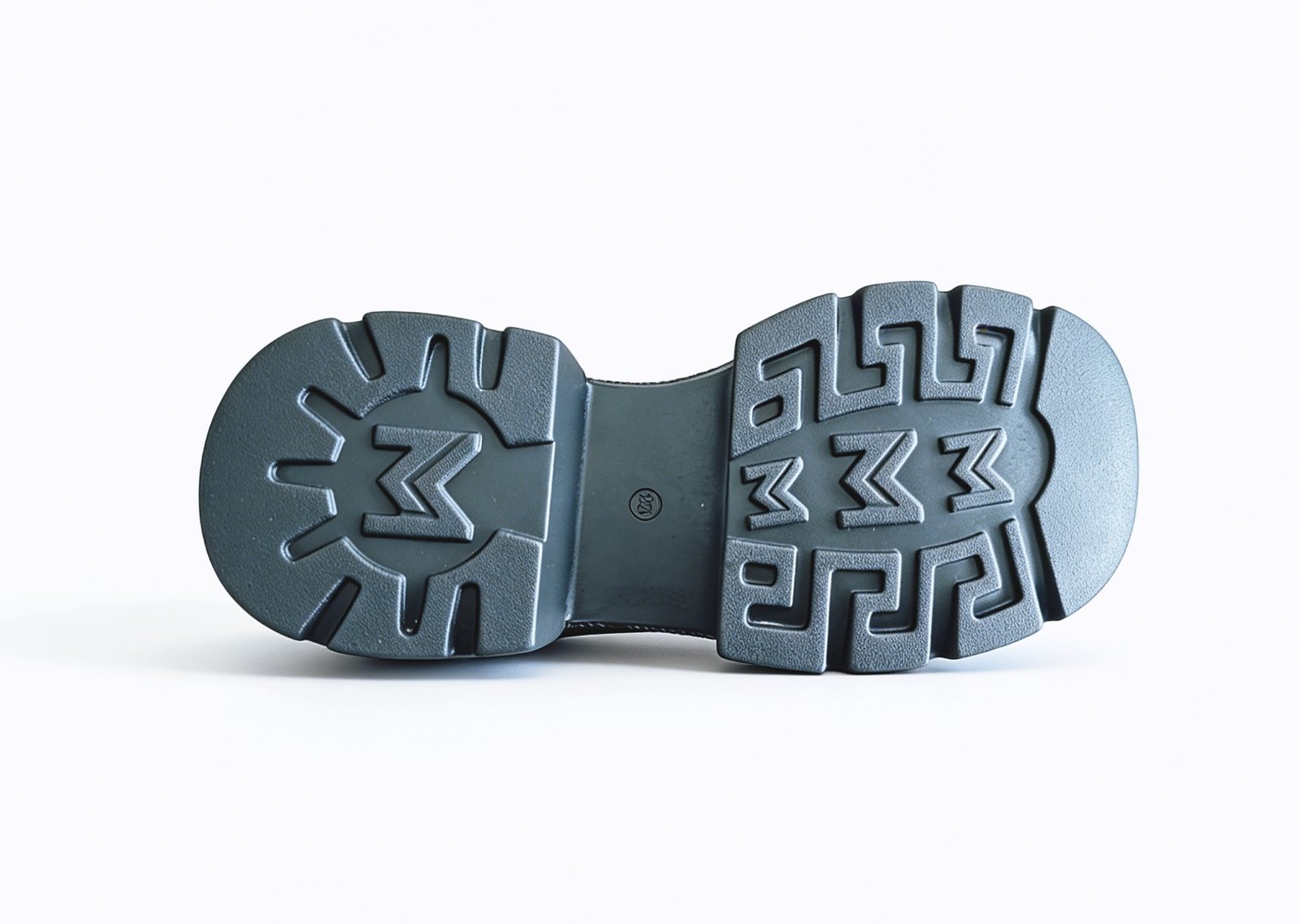
Polyurethane is not one coating. It is a family of systems — aromatic or aliphatic, one-component or two-component, solvent-borne, waterborne, or 100% solids. The choice that fails outdoors can be the right call indoors. The selection method below treats every application as a set of conditions, not a preference.
How Polyurethane Coatings Are Classified
Aromatic versus aliphatic is the first split. Aromatic systems, built on MDI or TDI, cure quickly and cost less, but tend to yellow and chalk under prolonged sunlight. Aliphatic systems, built on HDI or IPDI, hold gloss and color outdoors, so exterior topcoats and automotive clearcoats specify them. ISO 12944 groups protective paint systems by atmospheric-corrosivity category; aliphatic polyurethane topcoats are routinely specified for the highest categories where color and gloss retention matter [1].
One-component (1K) versus two-component (2K) is the second split. 1K moisture-cure urethanes crosslink by reacting with humidity. Touch-dry comes fast, but through-cure is slow in dry climates and film build is limited per pass. 2K systems mix polyol and isocyanate at a controlled ratio and cure by a reliable chemical reaction; pot life and handling are the price of control. Managing that balance is why plural-component metering matters.
Solvent-borne, waterborne, and 100% solids is the third split. Solvent-borne coatings give high film build but carry VOC limits under regulations such as US EPA 40 CFR Part 59 for architectural and industrial maintenance coatings [2]. Waterborne polyurethanes cut VOC while staying sprayable, at some cost in early water resistance. 100% solids systems remove solvent entirely, but they demand heated lines, exact ratio control, and good deaeration — equipment behavior replaces formulation behavior as the quality driver.
Best Applications by Industry and Substrate
The same polyurethane chemistry fails or succeeds on the substrate it meets. The applications below are grouped by that reality.
Steel and Corrosion Protection
Structural steel, storage tanks, pipelines, and bridges consume more protective polyurethane than any other industrial sector. The reasoning is simple: a 2K polyurethane topcoat bonds well to an epoxy or zinc-rich primer, resists atmospheric corrosion, and tolerates handling damage better than a hard, brittle epoxy film. Performance depends on two upstream steps. Surface preparation is the first: ISO 8501 defines the blast-cleaning grades that make adhesion possible [3]. Adhesion is the second: ASTM D3359 tape-test ratings verify that the film stays attached after cure [4]. Skip preparation, and the best chemistry fails at the interface, not in the film.
For tanks and pipe exteriors, plural-component spray equipment lays down a dense, pinhole-free film in fewer passes. Metering precision here is not cosmetic; an off-ratio mix shifts the crosslink density and turns a chemical-resistant barrier into a softer, permeable layer.
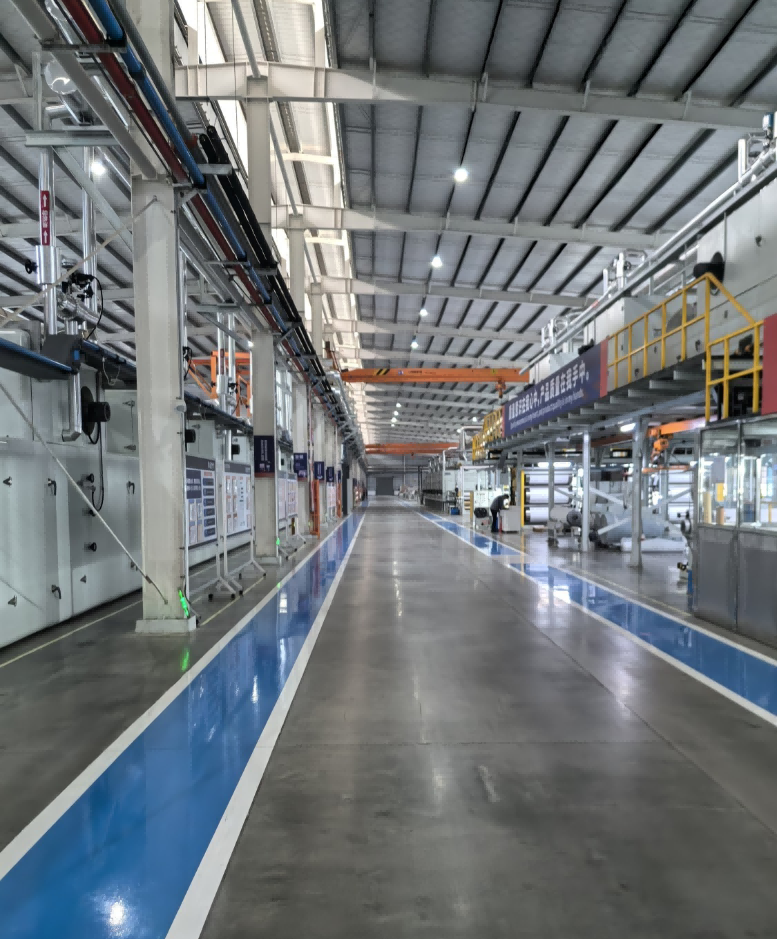
Concrete and Industrial Flooring
On concrete, polyurethane earns its place in two roles: flexible, abrasion-resistant topcoats and crack-bridging membranes. EN 1504-2 defines surface-protection systems for concrete, including coatings that resist carbonation, chloride ingress, and abrasion [5]. For warehouses and production floors, abrasion resistance is the number that decides whether a coating survives forklift traffic; Taber wear testing per ASTM D4060 quantifies that loss [6].
A common specification is an epoxy or polyurethane primer for substrate adhesion, a high-build body coat, and an aliphatic polyurethane topcoat for gloss, chemical resistance, and scuff recovery. The topcoat is what maintenance managers actually see, but the system’s life is set by the primer bond.
Wood, Leather, and Synthetic Leather
Waterborne polyurethane dominates wood furniture and flooring because it delivers hardness without the solvent load that fails indoor-air requirements. Two-component waterborne systems approach the chemical resistance of solvent-borne equivalents while staying low-odor. On synthetic leather, polyurethane is both the coating and the surface itself. A solvent-free PU coating line that replaced a solvent-based process raised finished-product compliance from 85% to 98% and dry-rub fastness to Grade 4, because servo-metered A/B ratio control stopped the cell instability that was driving rejects.
Automotive and Transportation
Automotive clearcoats are the highest-specification polyurethane coatings in volume production: 2K aliphatic systems that must hold gloss through years of UV, salt, and stone impact. Impact resistance per ASTM D2794 separates a clearcoat that shrugs off gravel from one that chips and opens corrosion paths [7]. The same durability logic applies to rail-interior and exterior components, where a film that flexes with the substrate outlives a harder, brittle one.
Marine and Offshore
Above the waterline, aliphatic polyurethane topcoats are a standard choice for color and gloss retention over epoxy anticorrosive systems on decks and superstructures. Below the waterline, polyurethane gives way to epoxy and antifouling systems, because prolonged immersion favors different chemistry. Selecting polyurethane here is about knowing which side of the waterline you are coating.
Spray-Applied Insulation and Waterproofing
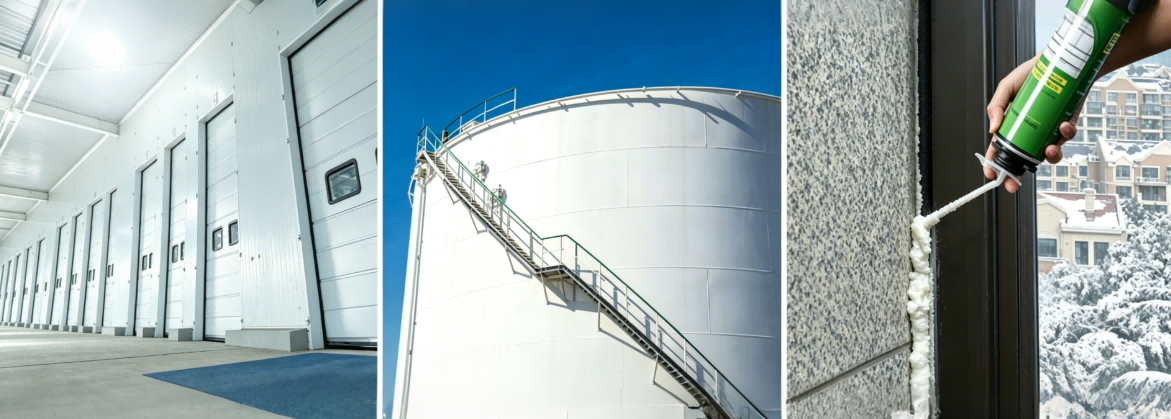
Plural-component spray polyurethane foam and elastomeric coatings seal roofs, cold-storage panels, and building envelopes. The value is a seamless, monolithic membrane with no lap joints to leak. The risk is the plural-component system itself: at the gun, one under-metered side means under-cured material, poor adhesion, and surface defects that no topcoat fixes.
High-solids and foam spray systems keep their properties only when the A/B ratio stays stable at the gun. What Is Spray Polyurethane Foam Composition And Application covers how the two-component composition and application conditions determine the finished film.
The Four Selection Criteria That Decide Coating Life
Coatings fail for four reasons, in this order: the chemistry does not match the substrate, the exposure was misclassified, the regulatory constraint was ignored, or the application process drifted. A selection table makes the first two explicit.
| Requirement | Preferred chemistry | Verification test |
|---|---|---|
| Exterior color/gloss retention | 2K aliphatic polyurethane | ISO 12944 exposure class [1] |
| Abrasion-heavy floors | High-build PU/epoxy topcoat | ASTM D4060 Taber [6] |
| Adhesion to blast-cleaned steel | 2K PU over zinc/epoxy primer | ASTM D3359 [4] |
| Impact and chip resistance | Flexible 2K aliphatic | ASTM D2794 [7] |
| Low-VOC compliance | Waterborne or 100% solids | 40 CFR Part 59 limits [2] |
| Hardness-controlled flexible film | Variable Shore hardness system | ASTM D2240 [8] |
The third criterion is regulatory: VOC class, isocyanate handling, and end-use restrictions decide whether solvent-borne chemistry is even available in your region. The fourth is processing: pot life, cure temperature, and whether your equipment can hold ratio across a shift.
How Metering and Mixing Equipment Affects Coating Quality
Coatings people often blame chemistry, but the film is built at the mixer. In a 2K system, the NCO:OH ratio sets crosslink density, which sets hardness, chemical resistance, and flexibility. A ratio error of a few percent is invisible in the mixing head but measurable in the cured film: soft spots, tack, solvent sensitivity, or brittleness. Closed-loop servo metering holds component ratio tight — on the order of ±0.3% across the full flow range — so the film the data sheet promises is the film the line produces.
Mixing head design is the second variable. Low-shear mixers leave striations and uncured pockets; high-shear impingement or dynamic mixing produces the homogeneous film that passes adhesion and abrasion testing. Material temperature control is the third: cold, viscous components mix poorly and cure slowly, while overheated material shortens pot life. Hardness testing per ASTM D2240 reads what these three produced [8] — but only if the operator reads it as a process signal, not a pass/fail stamp.
Hardness is the easiest film property to measure and the easiest to misread. Shore A Vs Shore D Hardness In Polyurethane covers what durometer readings do and do not tell you about a polyurethane film.
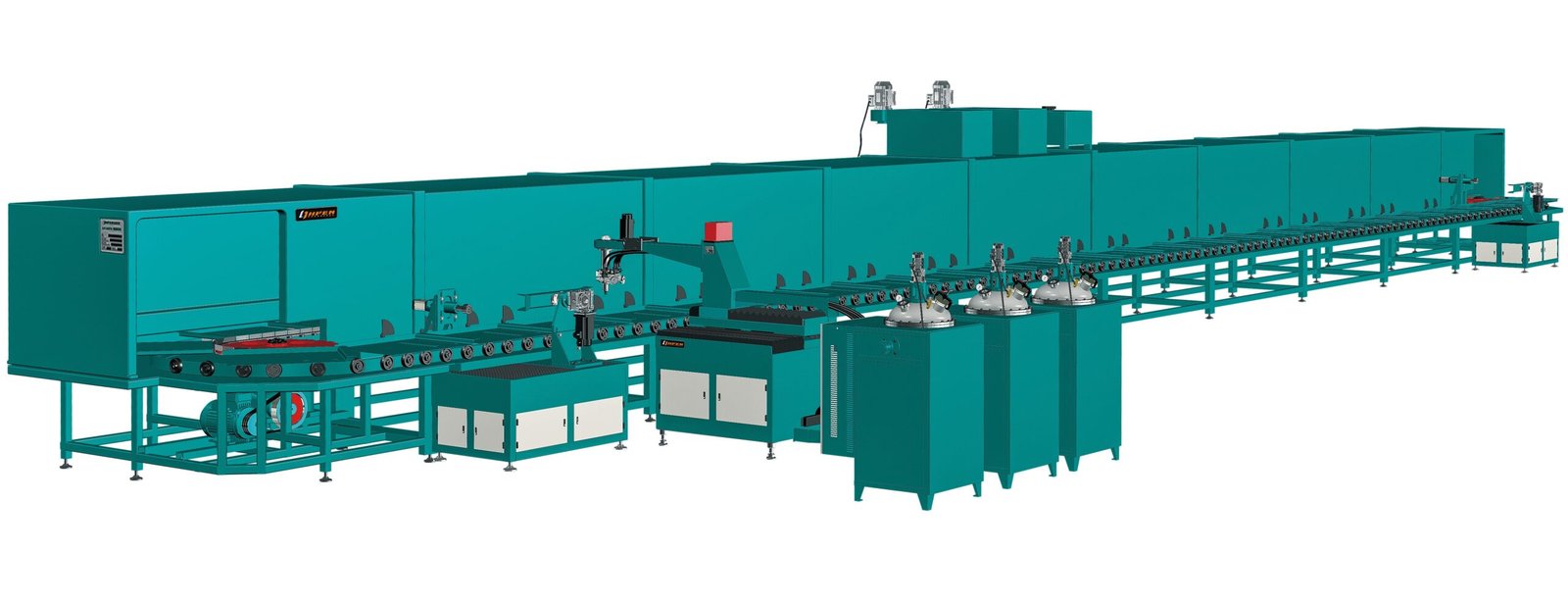
If your line is fighting ratio drift — film that is soft on one shift and brittle on the next — write down the current mixing ratio, material temperatures, and the exact defect you are chasing, then send it to Info@chinahaifeng.com or WhatsApp 86 13566296633. A short parameter review is usually enough to identify whether the fault is in the formulation, the metering, or the pressure balance between the two sides.
Common Coating Failure Modes and Their Causes
Blisters form when osmotic pressure pulls moisture through a film that did not bond uniformly — a classification problem, not a chemistry problem. ISO 4628-2 gives a standard rating scale for blistering density and size, and it is the language inspectors use [9]. Amine blush appears on fresh solvent-borne films cured in high humidity, as a waxy surface that blocks intercoat adhesion. Pinholes and micro-craters mean trapped air or moisture carried in by improper deaeration or surface contamination. Yellowing is the aromatic failure mode: UV exposure degrades the isocyanate backbone when the wrong chemistry sits outdoors. Shrinkage, finally, is the silent one — solvent release and crosslinking shrink the film and build stress at the interface, which shows up later as cracking or delamination.
Solvent release and crosslinking shrinkage concentrate stress at the film–substrate interface. Causes Of Shrinkage In Polyurethane Foam How To Control It covers the mechanisms behind shrinkage and the control points that stop it from becoming a cure-related failure.
The cure is the same across each failure: classify exposure honestly, prepare the substrate, hold the ratio, and let the data sheet be the starting point, not the finish line.
Get Application-Specific Coating Support
Haifeng Polyurethane Machinery engineers metering and mixing systems for the polyurethane processes above — anti-corrosion and insulation spray equipment, solvent-free coating lines, and plural-component proportioners that hold ratio across a shift. If you are selecting or re-tuning a coating line, send these five facts and we will map the equipment choices against them:
- The substrate and its surface-preparation grade.
- The exposure class: UV, moisture, chemical contact, temperature range.
- Target film thickness and cure window.
- Current chemistry: aromatic or aliphatic, 1K or 2K, solvent, waterborne, or 100% solids.
- Production rate and shift pattern.
Email Info@chinahaifeng.com or WhatsApp 86 13566296633. The goal is a coating line that matches the application conditions, not a machine spec sheet that matches a competitor’s.
Frequently Asked Questions
Which polyurethane coating lasts longest outdoors?
Two-component aliphatic polyurethane topcoats, generally. Aliphatic isocyanates resist UV so the film keeps gloss and color where aromatic systems chalk. Long outdoor life still depends on the primer system and blast-cleaning grade underneath, per ISO 12944 [1].
What is the difference between aromatic and aliphatic polyurethane coatings?
Aromatic systems built on MDI or TDI cure faster and cost less but yellow and chalk under UV. Aliphatic systems built on HDI or IPDI cost more and keep color and gloss outdoors. Use aromatic indoors or below a UV-stable topcoat; use aliphatic where appearance must last.
How much surface preparation does a polyurethane coating need?
On steel, the answer is usually a defined blast-cleaning grade from ISO 8501 before priming [3]. On concrete, mechanical preparation to remove laitance and open the surface. Preparation, not coating thickness, is the first determinant of adhesion.
Are waterborne polyurethane coatings as durable as solvent-based?
Modern two-component waterborne polyurethanes approach solvent-based chemical resistance and are the practical choice where VOC limits apply [2]. They are more sensitive to humidity during application, so cure conditions and film build need tighter control.
What equipment parameters most affect final coating quality?
Mixing ratio, mixing-head shear, and material temperature. Off-ratio 2K material changes crosslink density; low shear leaves uncured pockets; cold or overheated components shift cure behavior. Closed-loop metering and temperature control turn these from variables into setpoints.
References
- ISO 12944-5:2019, Paints and varnishes — Corrosion protection of steel structures by protective paint systems — Part 5: Protective paint systems, International Organization for Standardization.
- U.S. Environmental Protection Agency, 40 CFR Part 59 — National Volatile Organic Compound Emission Standards for Architectural and Industrial Maintenance (AIM) Coatings.
- ISO 8501-1:2007, Preparation of steel substrates before application of paints and related products — Visual assessment of surface cleanliness, International Organization for Standardization.
- ASTM D3359-17, Standard Test Methods for Rating Adhesion by Tape Test, ASTM International.
- EN 1504-2:2004, Products and systems for the protection and repair of concrete structures — Part 2: Surface protection systems for concrete, European Committee for Standardization.
- ASTM D4060-19, Standard Test Method for Abrasion Resistance of Organic Coatings by the Taber Abraser, ASTM International.
- ASTM D2794-93(2019), Standard Test Method for Resistance of Organic Coatings to the Effects of Rapid Deformation (Impact), ASTM International.
- ASTM D2240-15(2021), Standard Test Method for Rubber Property — Durometer Hardness, ASTM International.
- ISO 4628-2:2016, Paints and varnishes — Evaluation of degradation of coatings — Part 2: Assessment of degree of blistering, International Organization for Standardization.
If you’re interested, check out these related articles:
What Is Semi Rigid Polyurethane Foam
Causes Of Shrinkage In Polyurethane Foam How To Control It
Shore A Vs Shore D Hardness In Polyurethane
How Polyurethane Rollers Are Made From Casting To Cure
What Is Spray Polyurethane Foam Composition And Application





