
Composite Leaf Spring HP-RTM Molding Solution
HP-RTM systems for thick-section composite leaf springs. The reference project reports 65% lower spring weight and over one million fatigue cycles for its qualified component configuration.
Heavy-Duty HP-RTM Solutions for Composite Leaf Springs
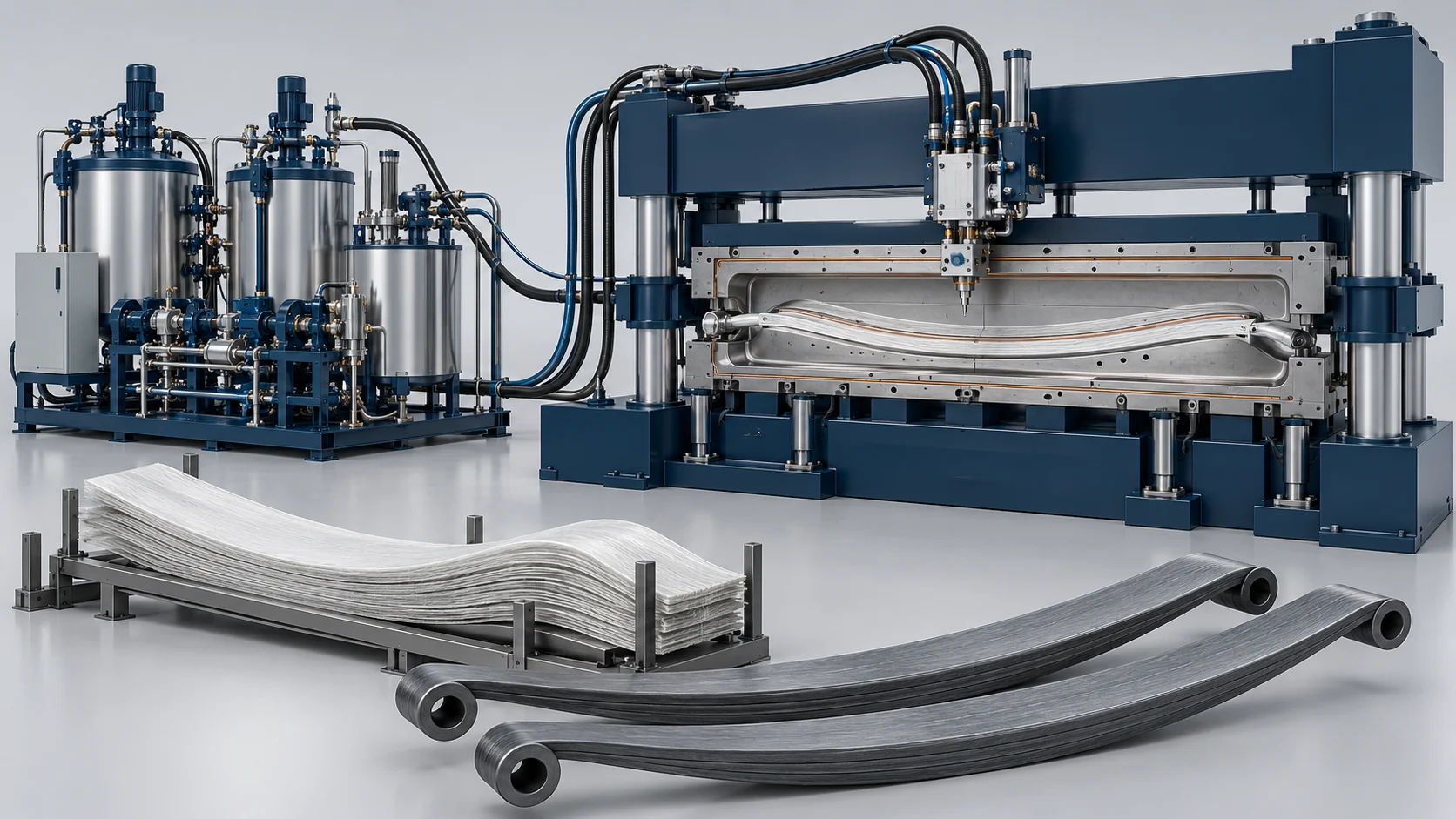
Steel leaf springs contribute massive unsprung weight to commercial vehicles and light trucks, negatively impacting ride comfort, fuel efficiency, and payload capacity. Replacing them with continuous glass-fiber reinforced composites can cut weight by up to 65% while providing a smoother, variable-rate suspension response. However, molding leaf springs requires driving resin through extremely thick, densely packed layers of unidirectional fibers. Haifeng’s heavy-duty HP-RTM system utilizes extreme injection pressures and high-capacity vacuum pumps to support controlled resin impregnation through the spring center region, with finished-spring fatigue endurance established through component qualification for the selected design and material. The stated weight reduction compares the reference spring with conventional multi-leaf steel assemblies. Fatigue endurance and internal-defect results apply to the qualified component and test conditions; they are not universal equipment ratings.
Reference Spring: 65% Lower Weight
The referenced project compares its composite suspension spring with conventional multi-leaf steel assemblies. This component result does not establish a 65% reduction in total chassis or vehicle weight.
Reference Fatigue Result: >1M Cycles
The referenced project records over one million dynamic fatigue cycles without observed inter-laminar failure under its bench-test conditions. Qualification follows the actual spring design, laminate and resin; equipment acceptance is separate.
Haifeng delivers complete processing equipment—from extreme-pressure dosing units and deep-vacuum stations to optional high-tonnage composite presses—enabling chassis suspension manufacturers to scale reliable composite spring production.Concept illustration — not a photograph of delivered equipment or a customer installation.
Composite Leaf Spring HP-RTM Workflow
A four-stage reference workflow coordinating preform preparation, resin delivery, heated cure and component inspection. Internal-defect and fatigue results are checked for the selected spring configuration.
Preform Preparation & Vacuum
Thick unidirectional glass fiber stacks are loaded into the heavy press; robust vacuum systems pull mold pressure down to <10 mbar
Extreme High-Pressure Injection
The HP-RTM unit injects low-viscosity resin at extreme pressures, driving deep matrix penetration through dense fiber cores
High-Tonnage Heated Curing
The press clamps firmly to consolidate the thick section while dynamic TCU loops manage exothermic heat dissipation evenly
Engineering Specifications & Technical Parameters
Technical parameters for this Haifeng HP-RTM production system.
| Technical Parameter | Standard Specification / Value | Engineering Context & Verification |
|---|---|---|
| Target Application | Commercial Vehicle & Passenger Car Leaf Springs | Chassis suspension dynamic shock absorbing |
| Material Matrix | Fast-Curing Epoxy/PU + Unidirectional Glass Fiber | Thick-laminate structural composite system |
| Part Thickness Capability | Up to 40 – 60 mm (Center clamping zone) | Deep-core high-pressure penetration |
| Metering Output Capacity | 20 – 60 kg/min (Customizable) | Servo axial piston pumps with Ratio Lock |
| Fatigue Life Rating | >1,000,000 Cycles | Finished-spring bench-test reference for the selected design, laminate and resin; not a machine endurance rating |
| Demolding Cycle Time | 240 – 360 seconds (Standard 5 min) | High-throughput thick-section processing |
| Weight Reduction | Up to 65% vs. Multi-Leaf Steel Springs | Reference spring component versus conventional multi-leaf steel assemblies; not total vehicle weight |
| Scope of Supply | Turnkey (HP-RTM Skid, Vacuum Skid, TCU + Press/Tooling) | Full workcell delivery or press retrofit |
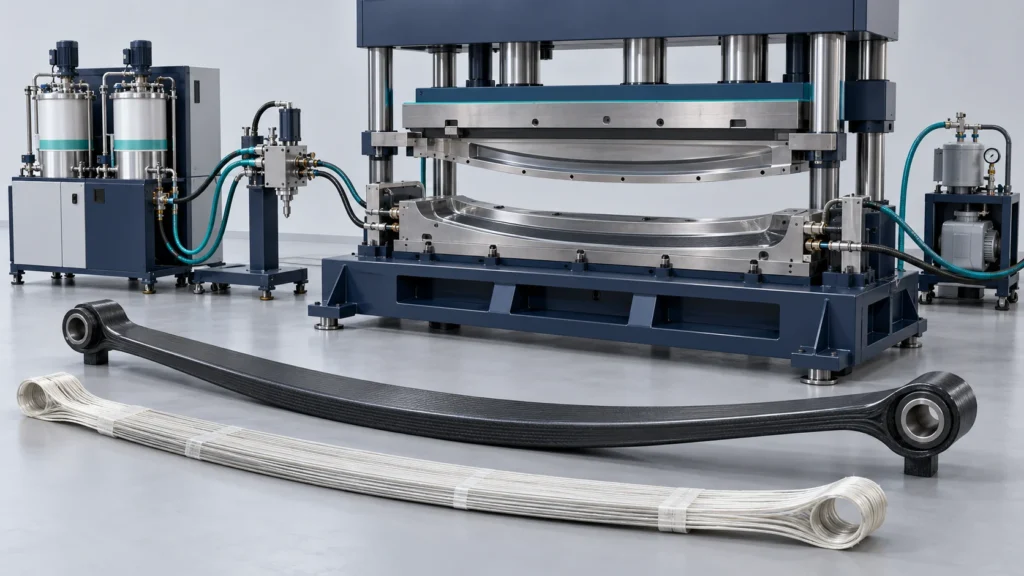
HP-RTM Equipment for This Application
Controlled impregnation and cure management for thick composite suspension laminates.
Key Engineering Advantages
For Automotive Composite Leaf Spring HP-RTM System, assess material compatibility, process control, equipment interfaces and changeover needs against your production brief.
Reference Spring Weight Reduction
The reference project records 65% lower spring component weight against its conventional multi-leaf steel baseline. Vehicle payload and fuel outcomes require their own assessment.
1,000,000+ Cycles Dynamic Fatigue Life
The project records over one million fatigue cycles under its component bench-test conditions. Laminate quality and endurance are established through inspection and qualification.
Material-Specific Corrosion Assessment
Environmental resistance depends on the laminate, resin and interfaces. It is assessed for the intended exposure conditions rather than treated as complete corrosion immunity.
Superior NVH Ride Comfort
High internal damping of composite materials filters harsh high-frequency chassis vibrations.
Proven Manufacturing Project
Discover how a commercial vehicle chassis manufacturer deployed Haifeng's HP-RTM system to produce lightweight composite leaf springs.
Frequently Asked Questions
Engineering and purchasing questions about this HP-RTM production route.
How can HP-RTM penetrate thick composite parts like leaf springs without dry spots?
Can composite leaf springs really replace heavy steel on commercial vehicles?
Can this HP-RTM line integrate with our existing composite press?
Does Haifeng provide complete turnkey lines including presses and molds?
What is the typical installation and commissioning timeline on-site?
Discuss Your HP-RTM Production Project
Share your component, material and production targets for a tailored solution.


