
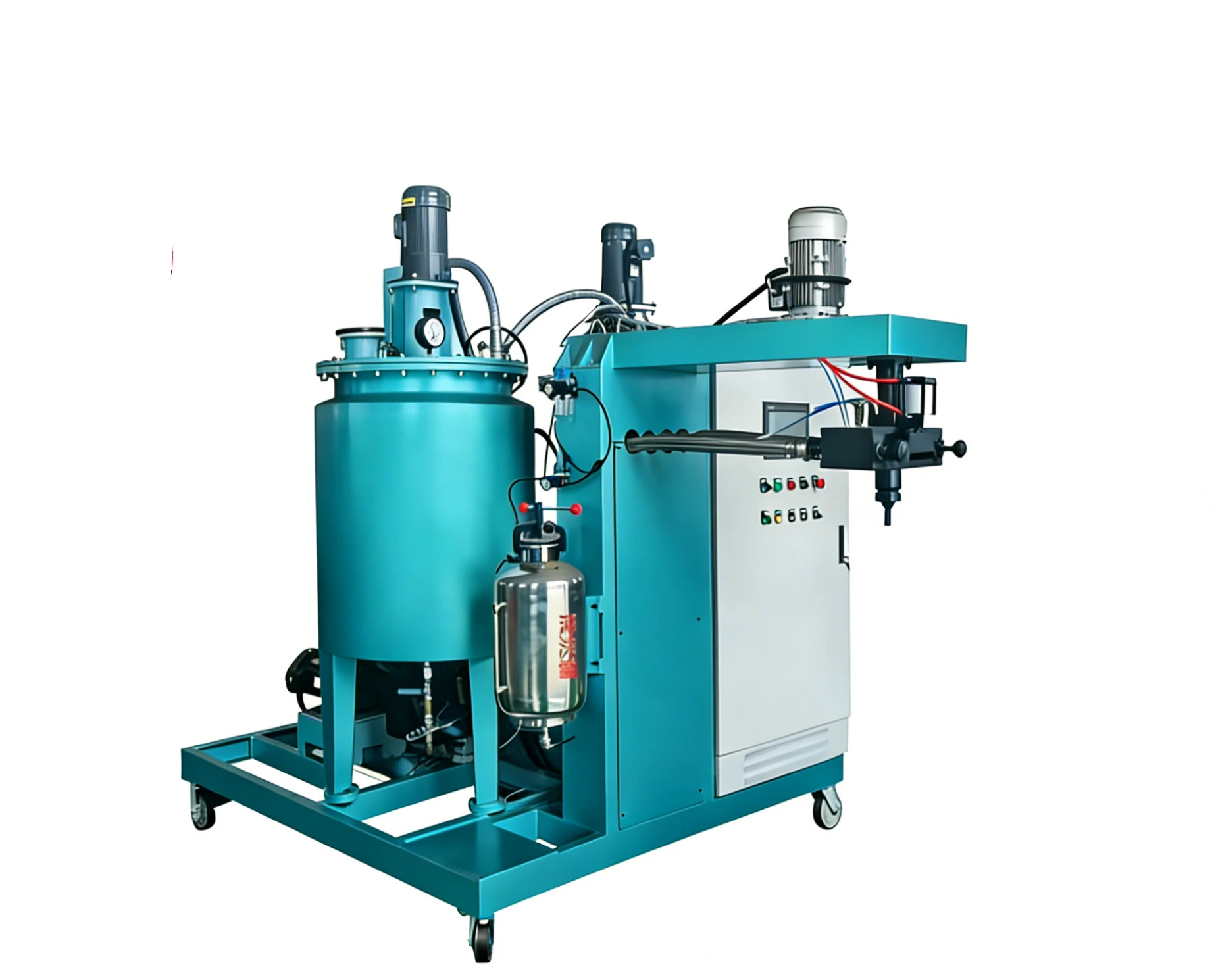
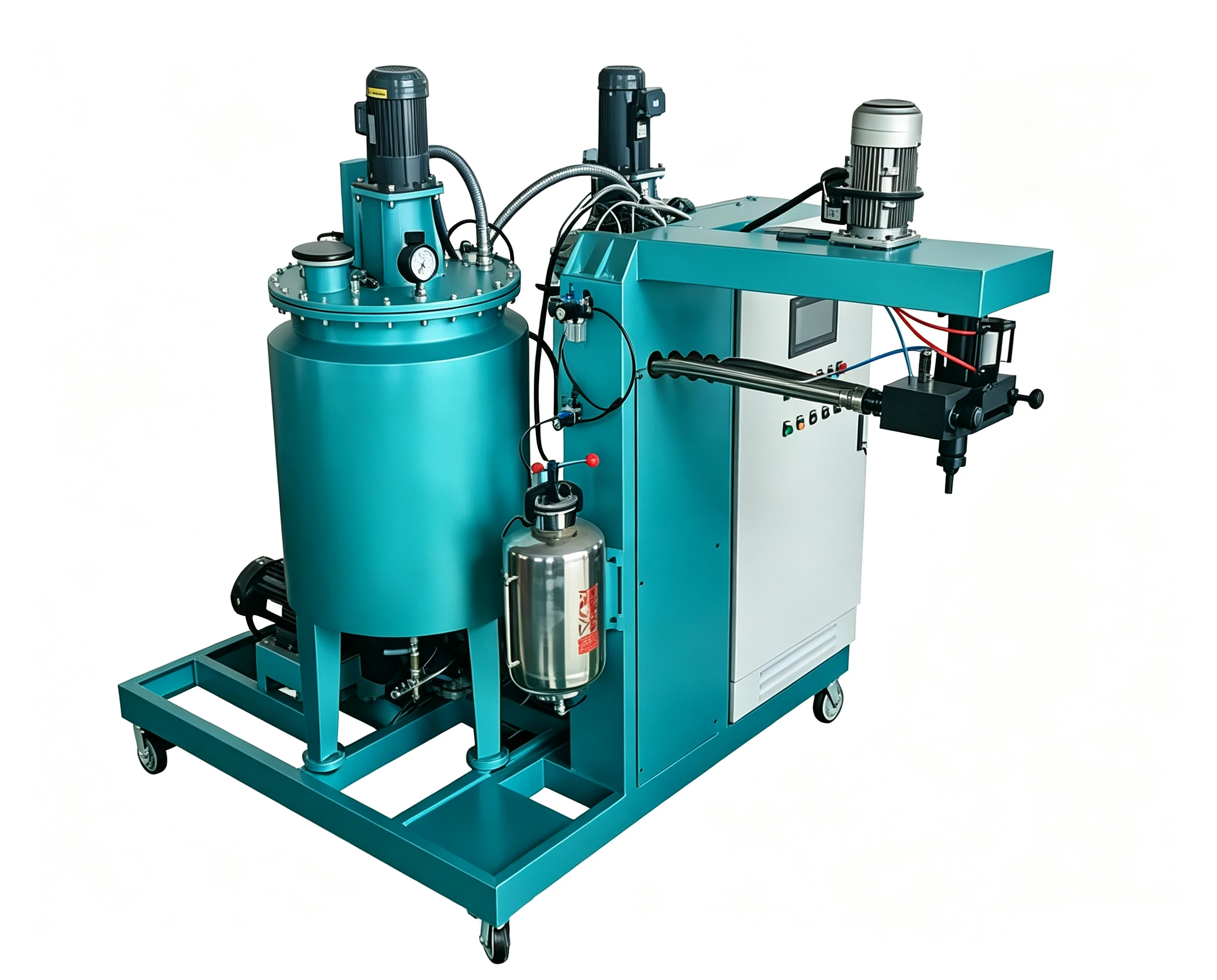
PU Elastomer Casting Machine | Ball Sockets
Precision casting system for automotive steering shaft ball sockets, featuring small-flow precise casting and dual chain extender switching
±0.3% Accuracy
Ratio precision
loT Ready
Remote monitoring
30% Energy Save
vs.conventional
2-4 Components
Flexible config
Product Overview
Specially designed for the precision production of polyurethane steering shaft ball sockets for the automotive industry, widely suitable for the casting of passenger and commercial vehicle steering system parts.
This PU casting unit is purpose-built for the precision production of polyurethane steering shaft ball sockets used in automotive steering systems, for both passenger and commercial vehicles. The 1A1B independent temperature control two-component system supports flexible switching between MOCA and BDO chain extenders, allowing adjustment of hardness to suit ball sockets for different vehicle models. Dynamic full-range high-precision metering ensures small product size error, in line with automotive parts assembly standards. The small-flow precise casting capability (30–600 g/s) delivers stable forming without burrs, effectively improving the yield of small parts. With simple and stable operation, the machine is ideally suited for mass production of multi-specification auto parts, meeting the requirements of high-precision assembly, long-term durability, and stable steering. Vacuum defoaming (≤-0.095MPa) ensures dense, pore-free products.
Operation Workflow
Raw Material Preparation
Prepare CPU prepolymer and chain extender (MOCA or BDO) at the target mix ratio (MOCA: 100:9-12; BDO: 100:3-6), selecting the formula for the required hardness and vehicle model.
Tank Loading & Independent Temperature Setting
Load prepolymer into Tank A and chain extender into Tank B; the 1A1B temperature control sets Tank A at 30-80°C and Tank B per formula (MOCA: 90-115°C; BDO: 25-50°C).
Vacuum Defoaming
Activate the vacuum defoaming system to reach a vacuum level ≤-0.095MPa, removing bubbles for dense, pore-free ball sockets with consistent mechanical properties.
Precision Metering, Mixing & Small-Flow Casting
The PLC metering system dispenses precisely; the mixing head runs at 8000-12000 r/min, with small-flow casting ensuring stable forming without burrs for small ball socket molds.
Technical Specifications
Standard configuration parameters for the automotive ball socket casting unit. Customizations are available upon request.
| Technical Parameter | HF-CPUE-1A1B-BallSocket |
|---|---|
| Pouring Rate | 30~600 g/s |
| Raw Material Ratio | MOCA: 100:9~12; BDO: 100:3~6 |
| Tank Capacity | 50 / 100 L |
| Mixing Head Speed | 8000~12000 r/min |
| Dynamic Metering Accuracy | ≤±0.3% (Full range) |
| Tank Configuration | 1A1B two-component independent temperature control |
| Material Temperature Control | Tank A: 30~80℃; Tank B: MOCA(90~115℃)/BDO(25~50℃) |
| Vacuum Defoaming | Vacuum ≤-0.095MPa |
| Cleaning System | Automatic circulation + air purge cleaning |
| Power | 5.5~7.5 kW |
| Control System | PLC + touch screen + multi-formula storage |
| Applicable System | CPU Prepolymer + MOCA/BDO Chain Extender |
| Warranty | 1 year |
| Certifications | Confirm applicable documents for the quoted configuration |
Key Features & Advantages
Engineered for precision, consistency, and high yield in automotive ball socket production.
Dynamic Full-Range High-Precision Metering
Ensures small product size error, in line with automotive parts assembly standards and OEM quality requirements.
MOCA/BDO Dual Chain Extender Switching
Flexibly adjust hardness to suit ball sockets for different vehicle models, from passenger cars to commercial vehicles.
Small-Flow Precise Casting
Pouring rate of 30–600 g/s delivers stable forming without burrs, effectively improving the yield of small automotive parts.
1A1B Independent Temperature Control
Simple and stable operation with independent temperature control for each component, suitable for mass production of multi-specification auto parts.
Vacuum Defoaming (≤-0.095MPa)
Ensures dense, pore-free ball sockets with consistent mechanical properties for long-term durability and stable steering performance.
Intelligent PLC Control with Multi-Formula Storage
PLC + touch screen interface with multiple formula memory simplifies operation, reduces errors, and enables rapid changeovers between formulations for different vehicle models.
Complete Your Production Line
Integrate the product with our full range of auxiliary equipment for a turnkey polyurethane processing system.
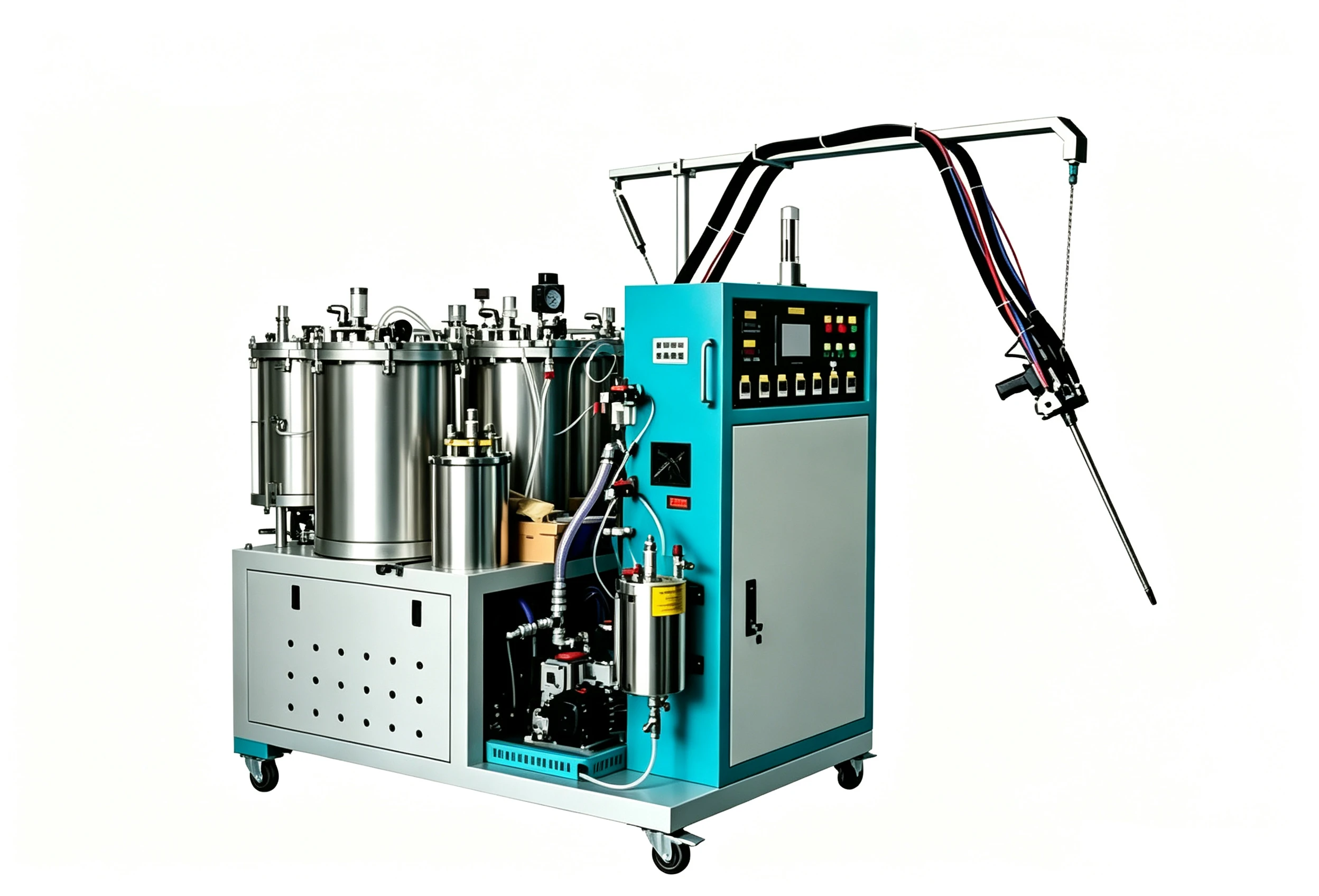
Epoxy Pouring Machine | Printing Rollers
Low Pressure Polyurethane Machine
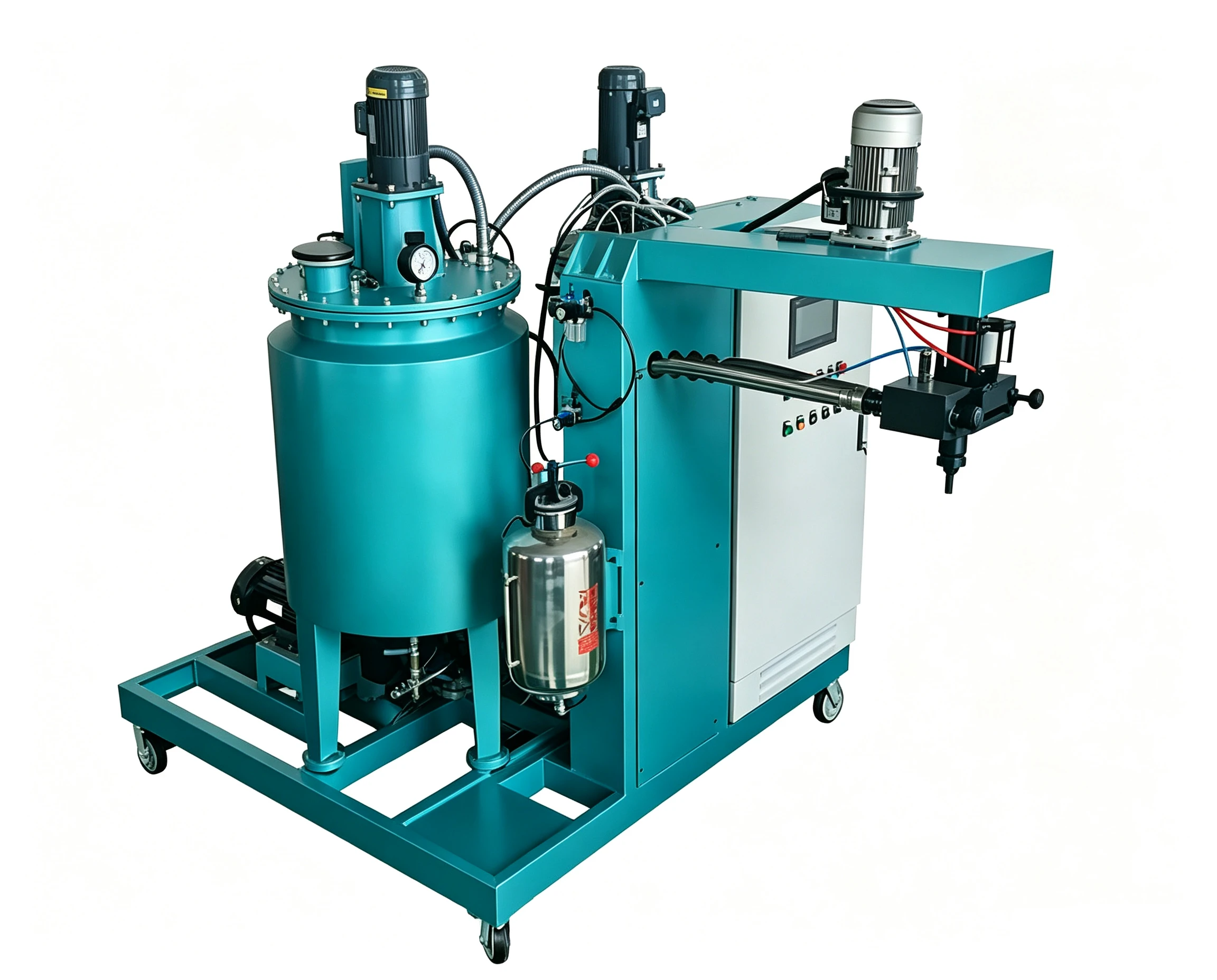
PU Elastomer Casting Machine | Hydraulic Seals
Polyurethane Machinery &Equipment
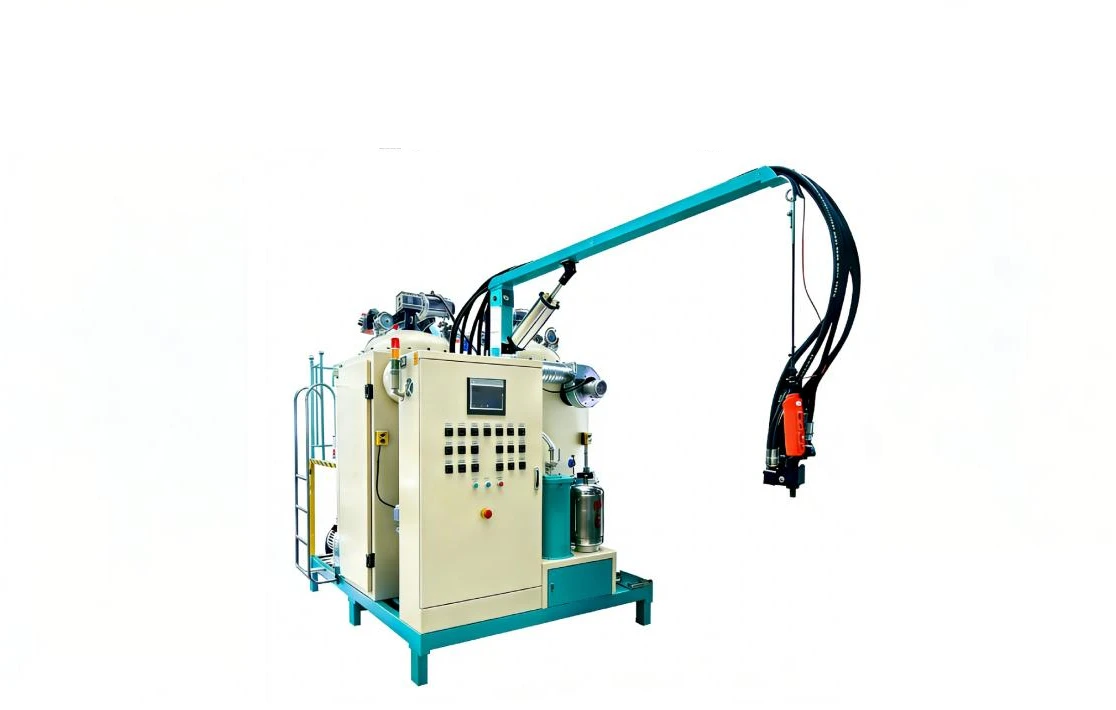
MC Nylon Casting Machine | Cast Nylon Parts
MC Nylon Casting Machines
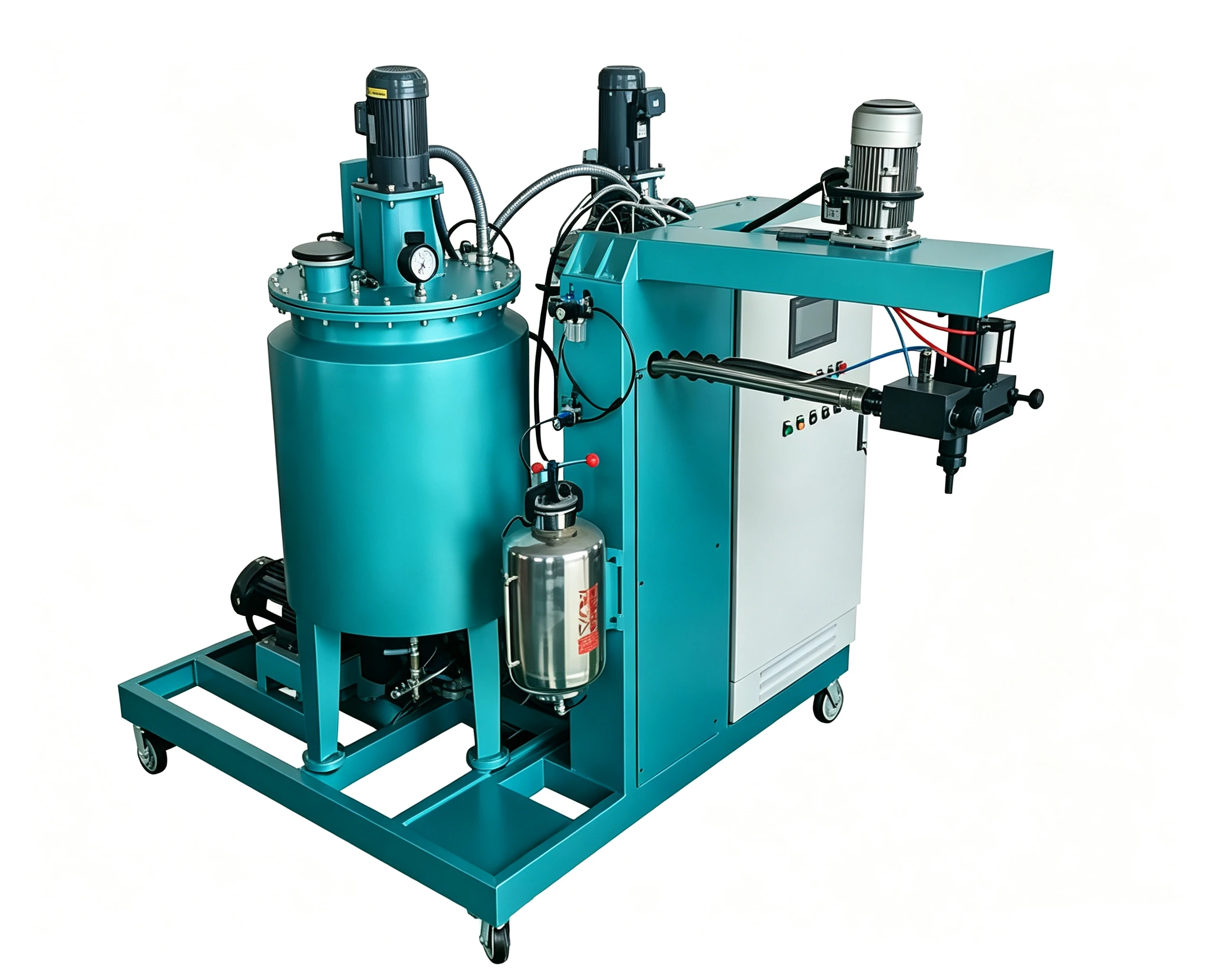
PU Elastomer Casting Machine | Cold Rolling Rollers
Polyurethane Machinery &Equipment


