

A polyurethane adhesive rarely fails because the chemistry is mysterious. It fails because one property — open time, green strength, elongation, or moisture resistance — was matched to a brochure number instead of the real joint. When a production manager compares adhesives, the useful question is not “which one is strongest” but “which property set survives this substrate, this cycle time, and this service environment.”
That distinction matters because an adhesive bond is a system: the liquid formulation, the metering and mixing equipment, the substrate surface, and the cure conditions all enter the final result. Two adhesives with identical tensile strength on a data sheet can behave completely differently once they are dispensed through a real line onto a real part. The properties below are the ones that change outcomes in production, so they are discussed as process variables, not catalog values.
What Defines a Polyurethane Adhesive?
Polyurethane adhesives are built from the same reaction that drives the rest of the polyurethane industry: an isocyanate component reacts with a polyol component to form urethane linkages, and the network can extend further through allophanate or biuret formation when free NCO groups are present [5]. What makes the adhesive family distinctive is how deliberately that chemistry is tuned. By changing polyol backbone, chain extender, NCO content, and filler package, a formulator moves the cured material from a soft, high-elongation sealant-like adhesive into a rigid structural grade without changing the base chemistry.
This gives one material family an unusual property spread. A flexible polyether-based grade may stretch several hundred percent and absorb joint movement, while a filled, heat-cured system behaves more like a structural plastic. Both are still polyurethane, and both still respond to the same production levers: ratio, temperature, moisture, and time.
The practical consequence for equipment selection is that adhesive dispensing cannot be treated as a simple pump problem. The moment a two-component adhesive is metered, its property profile is being created on the machine, not merely transferred from the barrel. A formulation that leaves the supplier within specification can arrive at the bond line out of specification if the dispense system drifts.

The Mechanical Property Set: Strength, Elongation, and Adhesion
Four mechanical properties do most of the selection work in practice: tensile strength, elongation at break, lap shear strength, and peel resistance. They answer different questions because a bonded assembly rarely loads a joint in only one direction.
Tensile strength describes how much load the cured adhesive itself can carry before the material breaks. Most commercial polyurethane adhesives fall between roughly 5 and 25 MPa in tensile strength, with rigid filled grades at the upper end and flexible grades trading strength for elongation. Elongation at break is the counterweight: rigid formulations may stay below 50%, while flexible grades commonly reach 200% to well over 600%. High elongation is not a defect. It is the property that allows a bond to follow thermal expansion differences between dissimilar substrates without peeling at the edge.
Lap shear strength is the more honest number for most engineered joints because it measures the whole bonded system, not the adhesive film alone. Standard single-lap-shear methods such as ISO 4587 and ASTM D1002 report the load carried across the bond in shear, with well-bonded metal joints typically testing from the high single digits to roughly 20 MPa depending on surface preparation, substrate, and fillers [1][2]. Peel resistance, measured by methods such as 180° peel under ISO 8510-2, predicts how the bond responds to a load concentrated at one edge — the failure mode that dominates flexible packaging, laminates, and seals [3].
One concept worth lifting from the test standards is the failure-mode designation in ISO 10365 [4]. It distinguishes cohesive failure, where the adhesive itself breaks, from adhesive failure, where the bond line releases cleanly from a substrate. Cohesive failure is usually the target because it proves the adhesive was the limiting layer, not the surface preparation. A line that keeps seeing adhesive failure is rarely dealing with a weak adhesive; it is dealing with oil, release film, or a surface energy problem.
Hardness overlaps all of these because it defines how the cured adhesive shares a joint’s load and how much surface damage it can absorb before cracking.
Read hardness as a load-sharing and deformation indicator rather than a standalone quality number. Shore A vs Shore D Hardness in Polyurethane covers how to interpret Shore values on polyurethane parts.
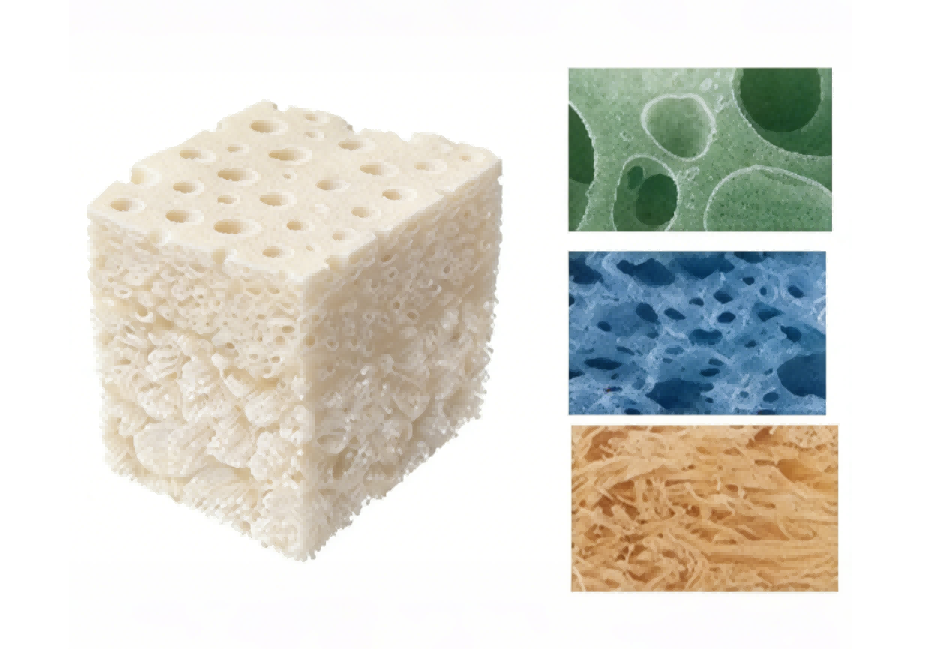
Cure Profile, Open Time, and Green Strength
Adhesive strength on day seven is only one part of the specification. The cure profile decides whether a line can run at the required speed, and it differs sharply between the two main adhesive families.
One-component moisture-cure systems are common for assembly and construction bonding. They stay workable until applied, then cure by reacting with atmospheric moisture. Their speed depends on humidity and temperature, which is why full cure at ambient conditions typically occupies 24 to 72 hours and why thin films cure faster than thick ones. A one-component grade in a dry winter plant can move surprisingly slowly, and the cure schedule should be qualified against the real shop environment, not a laboratory humidity chamber.
Two-component systems cure by chemical reaction between the resin and a hardener once mixed, so they develop strength faster and more predictably, at the cost of needing accurate metering. Pot life bounds how long the mixed material remains dispensable, and open time bounds how long the applied bead can wait before the substrates are joined. Green strength is what the joint can hold in the minutes after assembly, before full cure. On a fast line, green strength often matters more than final strength because it determines whether fixturing can release and whether parts can move to the next station.
The processing rule is straightforward: match the adhesive’s clock to the line’s clock. Slow-curing chemistry on a high-speed line creates WIP piles and rework. Fast-curing chemistry on a manual line creates scrap when operators cannot position parts before the window closes.
Cure rate and green strength are driven by mixing quality and discharge control, not just formulation.
Cure speed alone is not the point; the point is how reliably the dispensed material develops strength within the line’s window. How Polyurethane Rollers Are Made From Casting To Cure covers how pour and cure control affect final part quality in casting.
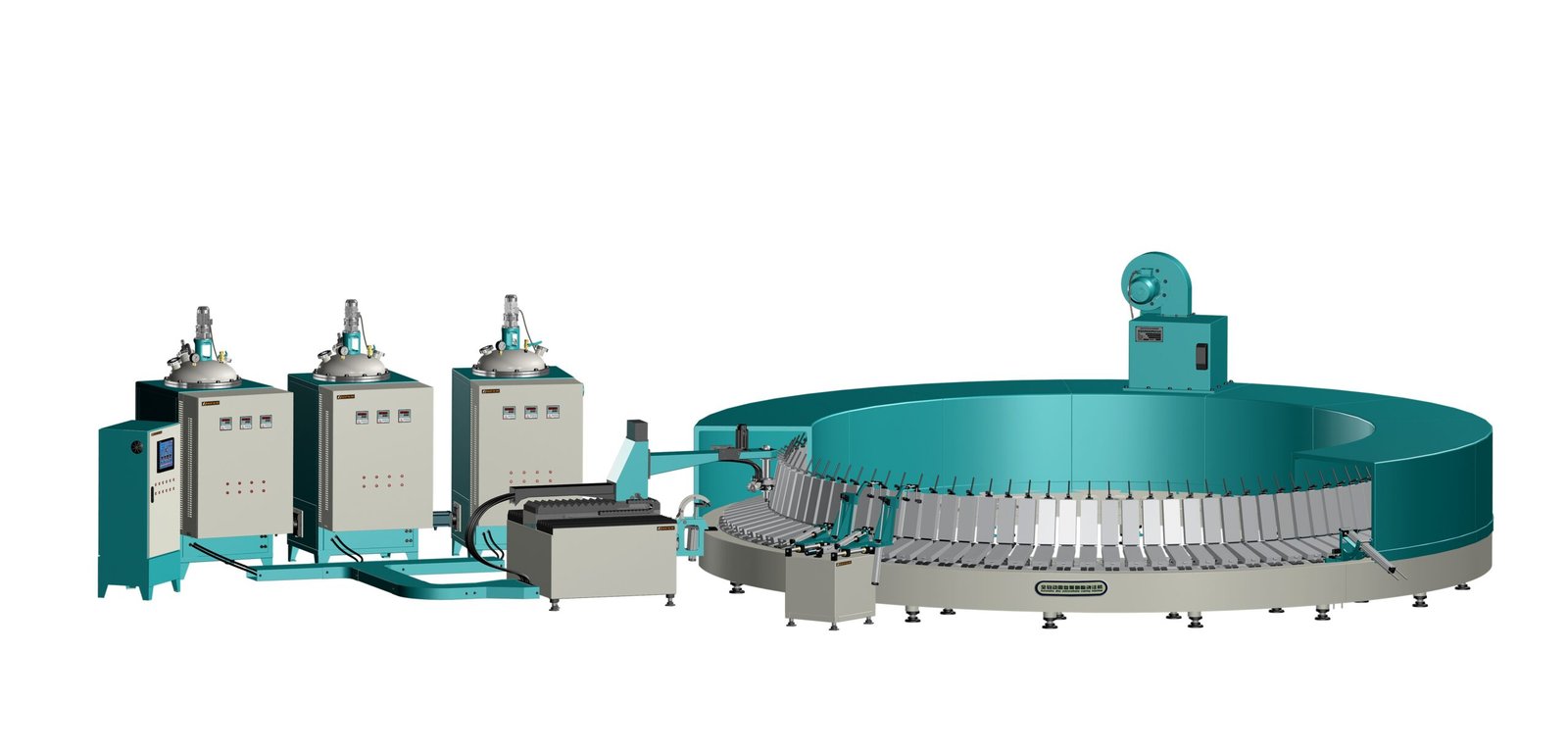
Temperature and Chemical Resistance
Resistance properties decide whether a bond that is strong on day one stays strong for years. The two that most often surprise production teams are temperature and chemical exposure.
Polyurethane adhesives are commonly specified for continuous service from about -40°C to around 80°C, with heat-cured and heavily crosslinked grades handling intermittent exposure to 150°C or higher [5]. The low-temperature behavior is usually the more attractive side of the family: unlike many rigid epoxies, polyurethane retains useful flexibility in cold environments because the polymer backbone can still deform rather than embrittle. High-temperature resistance, by contrast, drops off as thermal energy degrades the urethane linkage, so a formulation rated for 150°C intermittent exposure is not the same as one rated for 150°C continuous load-bearing service.
Chemical resistance follows a similar pattern of strengths and trade-offs. Polyurethane adhesives generally resist oils, fuels, and many solvents well, which is why they appear in gasketing, automotive, and industrial bonding. Water resistance is more selective. Polyether-based grades resist hydrolysis better than polyester-based grades, because ester linkages cleave more readily in prolonged hot, humid conditions. For an outdoor structural joint or a humid washdown environment, backbone chemistry can matter more than any single tensile strength number on the data sheet.
The temperature and chemical sections of a technical data sheet should be read as test conditions, not guarantees. A listed oil-resistance rating says nothing about resistance to a specific process fluid at a specific temperature until it is tested in that exact combination.
Pin the property before you spec the dispense. If you are validating a two-component adhesive for structural assembly or a moisture-cure grade on a fast line, start from the target property range and work backward to mix ratio, metering tolerance, and cure schedule. Our engineers map substrate, cycle time, and service conditions to a dispense configuration every week. Send your application to Info@chinahaifeng.com or WhatsApp 86 13566296633, and we will work from the property set, not from a stock machine spec.
Selecting and Controlling Adhesive Properties on the Line
The most useful way to compare adhesives is through the property that each application actually governs. The table below is a working selection map, not a complete specification, and every row points to a control lever that exists on the production floor.
| Property | What it governs | Typical production lever |
|---|---|---|
| Lap shear strength | Structural load transfer | Surface prep, bond thickness, substrate stiffness |
| Elongation at break | Joint movement and thermal mismatch | Polyol backbone, chain extender, filler level |
| Peel resistance | Edge loading and flexible laminates | Film thickness, cure profile, substrate adhesion |
| Shore hardness | Load distribution and indentation | NCO:OH ratio, crosslink density, filler |
| Open time | Assembly window on the line | Catalyst level, temperature, humidity |
| Green strength | Fixture release and part handling | Cure chemistry, accelerator package |
| Viscosity | Dispense pressure and bead control | Temperature, filler, thixotrope |
Two production variables deserve more attention than the data sheet gives them. The first is mix ratio in two-component dispensing. The same ratio-drift physics that causes a valve to deliver slightly more or less isocyanate into a foam applies unchanged to an adhesive mixing head — a fraction of a percentage point of component-ratio deviation moves the effective NCO:OH balance and shifts hardness, cure speed, and bond strength together. The second is temperature. Viscosity changes with temperature are not linear for many adhesive systems, so a cold morning can change bead width and metering behavior even when the formulation has not changed at all.
This is exactly the discipline that separates a repeatable adhesive process from one that behaves well in validation and drifts in production.
If the delivered shot weight drifts, the properties follow it — hardness, cure, and bond strength all move together. How to Calculate Shot Weight in Polyurethane covers the calculation and the tolerances that matter at the mixing head.
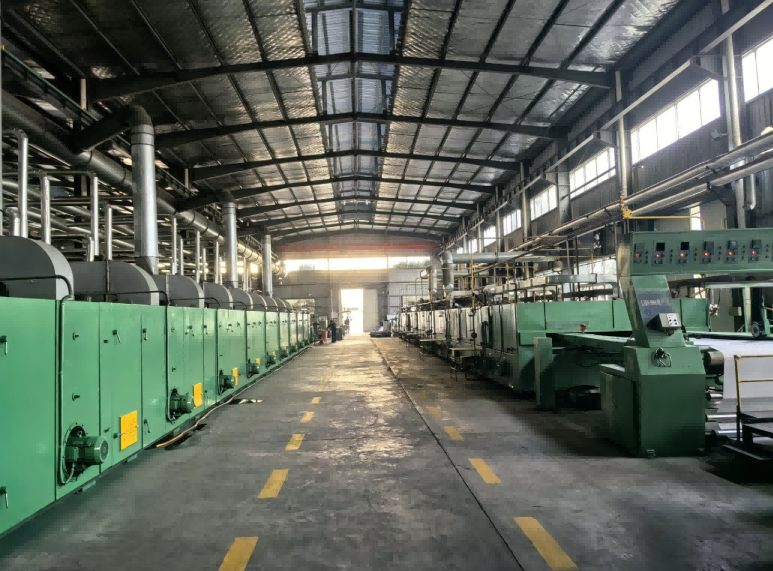
Work With Haifeng on Metering and Dispensing
Haifeng Polyurethane Machinery brings 40 years of R&D into metering, mixing, and turnkey polyurethane processing. As the sole drafter of China’s PU pouring machine industry standard, we work across footwear, automotive, and rail transit applications, delivering customized non-standard machinery and EPC+M+O turnkey lines that turn a formulation’s property set into a controlled, repeatable production process.
If adhesive dispensing, casting, or foaming is part of your next line — or if an existing line drifts out of property spec — we will review the full process: substrate, throughput, cure window, and resistance requirements. Contact us at Info@chinahaifeng.com or WhatsApp 86 13566296633 with your application and cycle time, and we will discuss which configuration fits your production reality rather than a brochure.
Frequently Asked Questions
What is the difference between one-component and two-component polyurethane adhesives?
One-component systems cure using ambient moisture and remain stable in the container until applied, which keeps line complexity low but makes cure speed dependent on humidity and temperature. Two-component systems react once resin and hardener are mixed, giving faster, more controllable strength development at the cost of requiring precise metering and mixing equipment.
How do polyurethane adhesives compare with epoxies for strength?
Epoxies often show higher lap shear on rigid metal substrates, while polyurethane adhesives typically offer more elongation, peel resistance, and low-temperature flexibility. The better choice depends on the load direction: a stiff structural joint under pure shear favors finding a suitable rigid formulation, whereas a joint with movement, thermal mismatch, or peel loading favors the polyurethane property profile.
Can polyurethane adhesives be used outdoors or in wet conditions?
Yes, with the right backbone chemistry. Polyether-based grades generally resist hydrolysis better than polyester-based grades in prolonged hot, humid service. Any outdoor or washdown application should be tested against the specific temperature, humidity, and chemical combination the bond will actually see.
What temperature range can polyurethane adhesives withstand?
Common continuous service runs from about -40°C to around 80°C, with heat-cured and highly crosslinked grades handling intermittent exposure to 150°C or higher. The cold side is usually the family’s strength, because flexibility is retained at temperatures where rigid adhesives can embrittle.
How does mixing ratio affect final adhesive properties?
In two-component systems, the NCO:OH balance set by the mixing ratio controls crosslink density, which in turn moves hardness, cure speed, tensile strength, and elongation. Even small ratio drift at the dispense point can shift the final property set, which is why metering accuracy is a specification issue rather than a maintenance afterthought.
Is a higher tensile strength always better for an adhesive?
No. Higher tensile strength usually comes with lower elongation, and a joint that must absorb movement or thermal expansion can perform worse with a stiff high-strength grade. The goal is to match the adhesive’s strength-stiffness-elongation balance to the joint’s load pattern and substrates.
References
[1] ISO 4587:2003, Adhesives — Determination of tensile lap-shear strength of rigid-to-rigid bonded assemblies. International Organization for Standardization.
[2] ASTM D1002-10(2019), Standard Test Method for Apparent Shear Strength of Single-Lap-Joint Adhesively Bonded Metal Specimens by Tension Loading (Metal-to-Metal). ASTM International.
[3] ISO 8510-2:2006, Adhesives — Peel test for a flexible-bonded-to-rigid test specimen assembly — Part 2: 180° peel. International Organization for Standardization.
[4] ISO 10365:1992, Adhesives — Designation of main failure patterns. International Organization for Standardization.
[5] Sonnenschein, M.F., Polyurethanes: Science, Technology, Markets, and Trends, 2nd ed., John Wiley & Sons, 2021.
If you’re interested, check out these related articles:
RRIM Vs RIM Which Process Suits Your Structural Part
How Polyurethane Rollers Are Made From Casting To Cure
How To Calculate Shot Weight In Polyurethane





