

Molecular weight is rarely the first number a buyer checks, but it quietly sets the viscosity the metering pump must handle, the shot weight the machine has to deliver, and the hardness range the finished part can reach. The same chemistry can produce a soft flexible foam, a rigid insulation panel, or a high-rebound roller simply because the chain length of the starting polyol changed. This guide walks through the three places the molecular weight number shows up — the polyol, the prepolymer, and the cured network — and what each one means for properties and processing.

What Molecular Weight Actually Controls in a Polyurethane Network
In a polyurethane system, one molecular weight value tells only part of the story. The starting polyol has a molecular weight; the isocyanate-terminated prepolymer formed in a prepolymer route has another; and after cure, the average chain length between crosslinks becomes the property that matters most for mechanical behavior [1], [2]. These values are connected but not interchangeable.
The core relationship is between molecular weight and crosslink density. A polyol with the same functionality but a higher molecular weight has a higher equivalent weight, meaning fewer reactive sites per gram. That produces longer flexible segments between junction points, which typically lowers modulus and hardness while increasing elongation. A lower-molecular-weight polyol does the opposite: more crosslinks per unit volume, a tighter network, higher rigidity, and often higher exotherm and shrinkage risk [1].
The hard segment adds a second control lever. Urethane or urea groups cluster into hard domains that act as physical crosslinks and fillers. Their concentration and sequence length depend on the isocyanate, chain extender, and index, not only polyol molecular weight. For that reason, molecular weight is best read together with functionality, index, and hard segment content [3].
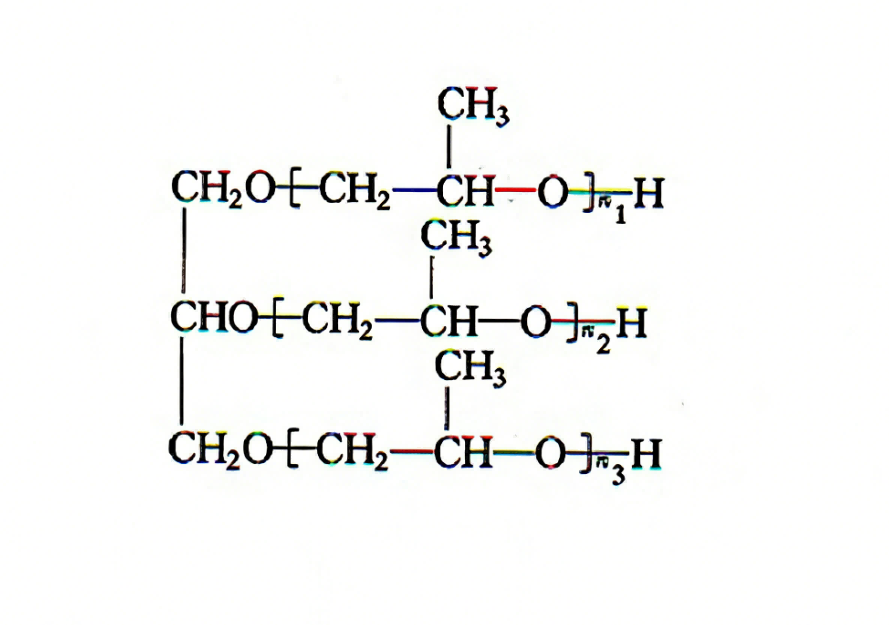
Polyol Molecular Weight and the Soft-Segment Effect
For most production decisions, the useful number is not raw molecular weight but equivalent weight. Polyol suppliers often report hydroxyl number instead, so the conversion matters.
The relationship is:
Hydroxyl number (mg KOH/g) = 56,100 × functionality / molecular weight
Equivalent weight = 56,100 / hydroxyl number
A high-molecular-weight difunctional polyol therefore has a low hydroxyl number. A short-chain triol has a higher one. These formulas explain why two polyols can look similar in viscosity but behave differently in cure: the equivalent weight pins how much isocyanate each gram of polyol will consume [4], [5].
When the soft segment gets longer, the cured polyurethane generally becomes more extensible and more flexible. In elastomers, long soft segments support better microphase separation between the soft and hard domains, which strongly influences tear behavior, rebound, and low-temperature flexibility [6]. In flexible foam, a higher-molecular-weight polyol usually moves hardness down unless the formulation compensates with higher functionality or a higher isocyanate index.
If you are looking at a Shore A change while holding the formula fixed, soft segment length is usually one of the first variables to check. Shore A Vs Shore D Hardness In Polyurethane covers how the two hardness scales differ and when hardness alone misleads you about rebound and load-bearing behavior.

Higher crosslink density also changes the cure stress profile. As the network tightens, volume shrinkage becomes more sensitive to gel time and mold temperature. A formulation change that shortens segment length can push a previously stable foam into dimensional failure if the cure profile is not adjusted.
When a lower-molecular-weight polyol raises crosslink density too quickly, the same cure schedule can produce more internal stress and visible shrinkage. Causes Of Shrinkage In Polyurethane Foam How To Control It covers the process interactions that turn a formula change into a dimensional problem and how to bring them back into balance.
From Hydroxyl Number to Viscosity: The Processing Collision
Higher molecular weight does not stay inside the formula. It shows up at the feed pump, the preheater, and the mixing head. As chain length increases, liquid viscosity rises, and a polyol that looks acceptable in a laboratory beaker can become difficult to meter under production pressure [1].
This is where hydroxyl number becomes a practical warning. A lower hydroxyl number means a higher equivalent weight and usually a longer, more viscous backbone. The machine must handle that viscosity consistently, or ratio control drifts before any chemical property becomes a problem. When the A-side is thin and the B-side is thick, high-pressure impingement mixing requires careful temperature matching; if one side cools in an unheated line, viscosity differences amplify and mixing quality drops.
Equipment specification check: if a new polyol grade has moved the hydroxyl number and viscosity into a higher window, send the material viscosity curve, target output, and current shot weight to Info@chinahaifeng.com. Include the processing temperature you can maintain. A direct inquiry with those three values usually produces a more useful machine recommendation than a catalog-only comparison.
Before you confirm a metering pump for a new molecular weight, make sure the required shot weight is calculated from part volume and density, not copied from an older formula. How To Calculate Shot Weight In Polyurethane covers the calculation path and the places where an incorrect shot weight quietly distorts the A/B ratio.
Prepolymer Molecular Weight and Elastomer Properties
In elastomer production, the molecular weight of the starting polyol is only the first step. The prepolymer route reacts a polyol with excess isocyanate to create an isocyanate-terminated prepolymer. Its molecular weight and NCO content are inversely related in a broad sense: a lower free NCO content corresponds to a longer prepolymer chain, while a higher free NCO content corresponds to a shorter prepolymer and more reactive end groups per unit weight [2], [3].
That distinction drives final properties. A lower-NCO, higher-prepolymer-molecular-weight system tends to give longer chains and more flexible hard-segment ordering after cure. A higher-NCO, shorter-prepolymer system usually gives denser crosslinking, higher hardness, and improved solvent or heat resistance, but it can also shorten working time and increase exotherm. Chain extender selection adds a second layer: a short diol like 1,4-butanediol and a larger diamine like MOCA change the hard segment length and phase structure even when the prepolymer NCO content is similar [6].

Molecular Weight Distribution and Batch-to-Batch Consistency
The average molecular weight is not enough. Two polyol batches can have the same hydroxyl number but different molecular weight distributions. The broader batch can contain more low-molecular-weight chains, more high-molecular-weight chains, or both. Those differences often show up first as viscosity variation, not as an obvious hydroxyl number change [1], [6].
From a production point of view, a broad distribution tends to make processing less predictable. Filling behavior changes, mixing resistance changes, and demold time drifts even though the nominal formulation looks unchanged. That is why batch documentation should include more than the average value. When GPC data is available, compare number-average molecular weight, weight-average molecular weight, and the shape of the distribution curve before approving a new lot for a continuous line.
Equipment-Level Checks for Different Molecular Weight Systems
A molecular weight change should not trigger an automatic machine purchase. It should trigger a short review:
- Check whether tank and line preheating can reach a stable processing temperature at the new viscosity.
- Confirm the metering pump can hold the required ratio across the full shot-size range, not only at one flow rate.
- Verify that the mixing head speed and pressure produce a uniform mix rather than just passing the material through.
- Recalculate shot weight, cycle time, and recirculation demand before locking a formula.
- Monitor demold and exotherm after the first production trials.
The goal is not to chase a single molecular weight value but to keep viscosity, ratio, and curing behavior inside the window the machine was designed to control. Higher-molecular-weight systems are manageable when the heating and metering chain is built around them; they become unstable when the material is expected to adapt to the machine instead.
Ready to Match the Machine to the Material?
Molecular weight is not a single specification; it is best handled as a chain of conversions. Polyol hydroxyl number converts to equivalent weight. Equivalent weight shapes network length. Network length changes viscosity, hardness, shrinkage tendency, and demold behavior. Those process values then define what the pump, heating, mixing head, and dosing system must do.
Haifeng Polyurethane Machinery works on exactly that chain for polyurethane foaming and elastomer casting lines — from raw material data through turnkey production integration.
If you are evaluating a new polyol grade or chasing a property drift on an existing line, send:
- The polyol or prepolymer TDS: hydroxyl number or NCO content, functionality, and viscosity at processing temperature
- Part weight, mold count, and required cycle time
- The current failure mode: hardness drift, shrinkage, ratio deviation, air entrapment, or long demold
Contact: Info@chinahaifeng.com
WhatsApp: +86 13566296633
FAQ
Does higher molecular weight always mean a better polyurethane?
No. Higher molecular weight usually means longer flexible segments, which can improve elongation and low-temperature flexibility, but it may also lower load-bearing, increase viscosity, and make metering harder. The right value depends on hardness, processing temperature, and demold requirements.
How do I find molecular weight if my polyol TDS lists hydroxyl number and functionality?
Use the conversion: molecular weight = 56,100 × functionality / hydroxyl number. Equivalent weight is 56,100 / hydroxyl number. If the nominal functionality is uncertain, confirm it with the supplier because a small error moves the whole calculation.
Does molecular weight affect pot life?
It can. In a prepolymer system, molecular weight and free NCO content help determine reactive group concentration, exotherm, and working time. In a polyol, higher molecular weight often raises viscosity, which affects mixing and temperature rise without directly controlling pot life the way catalyst level does.
Why do two polyols with the same hydroxyl number process differently?
Same hydroxyl number does not mean same backbone, functionality distribution, molecular weight distribution, water content, acid number, or viscosity. Any of those differences can change fill behavior, demold time, and surface quality on a production line.
Which molecular weight change should trigger an equipment review?
A review is worthwhile when a new grade brings a significant viscosity increase at the normal processing temperature, when shot weight or cycle time changes, or when demold and exotherm move. Check preheating, pump sizing, mixing-head pressure, and recirculation before approving the switch.
Is molecular weight the main driver of Shore hardness?
Not by itself. Hardness comes from hard segment content, crosslink density, index, and soft segment length. Molecular weight is one axis of that system, not the whole answer.
References
[1] G. Oertel, Polyurethane Handbook: Chemistry – Raw Materials – Processing – Application – Properties, 2nd ed. Munich, Germany: Hanser Publishers, 1993.
[2] M. Szycher, Szycher’s Handbook of Polyurethanes, 2nd ed. Boca Raton, FL: CRC Press, 2013.
[3] J. H. Saunders and K. C. Frisch, Polyurethanes: Chemistry and Technology, Part I: Chemistry. New York, NY: Interscience Publishers, 1962.
[4] ASTM D4274-21, Standard Test Methods for Testing Polyurethane Raw Materials: Determination of Hydroxyl Numbers of Polyols, ASTM International, West Conshohocken, PA, 2021.
[5] ISO 14900:2017, Plastics — Polyols for use in the production of polyurethanes — Determination of hydroxyl number, ISO, Geneva, Switzerland, 2017.
[6] P. Król, “Synthesis methods, chemical structures and phase structures of linear polyurethanes. Properties and applications of linear polyurethanes in polyurethane elastomers, copolymers and ionomers,” Progress in Materials Science, vol. 52, no. 6, pp. 915–1015, Aug. 2007.
If you’re interested, check out these related articles:
How To Calculate Shot Weight In Polyurethane
SRIM Explained Structural Reaction Injection Molding Basics
Shore A Vs Shore D Hardness In Polyurethane
What Is Spray Polyurethane Foam Composition And Application
Measuring Polyurethane Foam Resilience A Practical Test Guide





