

The decision to use polyester-based polyurethane is rarely made in a laboratory. It is made on the loading dock, when a roller wears flat in six weeks, or when a seal swells and seizes two shifts after installation. The polyol backbone determines most of that outcome before a single machine parameter is set. Polyester-based systems tend to win where mechanical load, oil exposure, and abrasive wear dominate. They tend to lose where hot, humid conditions sit on the part for months.
What Makes Polyester-Based Polyurethane Different
Polyester polyols introduce polar ester groups into the polymer chain. Those groups form strong hydrogen bonds, which is the main reason polyester-based polyurethane usually delivers higher tensile strength, tear resistance, abrasion resistance, and cut-growth resistance than a polyether system of similar hardness [1]. The same polarity also reduces uptake of mineral oil, diesel, hydraulic fluid, and many aliphatic solvents [3].
This does not mean polyester-based polyurethane is automatically the better material. It means the material is stronger in specific failure modes. If a part fails by abrasive wear or solvent swelling, an ester backbone is worth testing early. If it fails by hydrolysis in hot water, steam, or permanently damp conditions, the ester linkage becomes the likely problem [1].
For comparative wear, relative volume loss under ISO 4649 is more useful than a supplier’s generic “high abrasion resistance” statement [2]. Hardness should always be checked as a separate property. Two materials can read the same Shore A value under ISO 868 and still behave differently under load because hardness alone does not capture tear strength, compression set, or dynamic heat build-up [5]. In loaded, long-dwell applications, compression set measured to ISO 815-1 is often the property that separates a six-month part from a three-year part [6]. Tear strength to ISO 34-1 matters wherever a cut can start and grow, such as a wheel edge, a seal lip, or a screen aperture [4].
Best Applications for Polyester-Based Polyurethane
The best applications for polyester-based polyurethane share one pattern: the part must resist repeated mechanical stress, abrasive contact, or hydrocarbon exposure while operating mostly dry.
| Application | Why polyester-based PU fits | Main failure mode if misapplied | Equipment priority |
|---|---|---|---|
| Industrial and printing rollers | Abrasion resistance, solvent contact, stable nip pressure | Hydrolysis from wet stock or poor vacuum degassing | 2A2B casting, vacuum defoaming, tight metering |
| Wheels and casters | High load, tear/cut-growth resistance, low rolling surface wear | Chunking or flat-spotting under dynamic load | Controlled mold temperature, MOCA/BDO switching |
| Hydraulic and mechanical seals | Oil resistance, dimensional stability, extrusion resistance | Swelling or compression set from the wrong chain extender | Small-flow precision metering |
| Mining screens and pipe linings | Slurry abrasion plus impact and tear propagation resistance | Cut propagation from unfilled or poorly mixed material | Large-flow pouring with wear-resistant additive tank |
Industrial rolls are the clearest fit. A polyester-based cast roller in a nip, printing, dyeing, or cold-rolling application sees continuous surface load, repeated flex, and frequent contact with oils, inks, or process chemicals. Under those conditions, an ether-based roll of the same Shore A often loses surface profile faster and swells more. The process challenge is equally clear: the cast layer must be bubble-free, tightly bonded to the core, and uniformly mixed from flange to flange.
Polyester-based cast rollers usually start with the same processing question: how to get a bubble-free, tightly bonded layer from core to outer diameter. How Polyurethane Rollers Are Made From Casting To Cure covers the casting-to-cure sequence and the process controls that matter most.
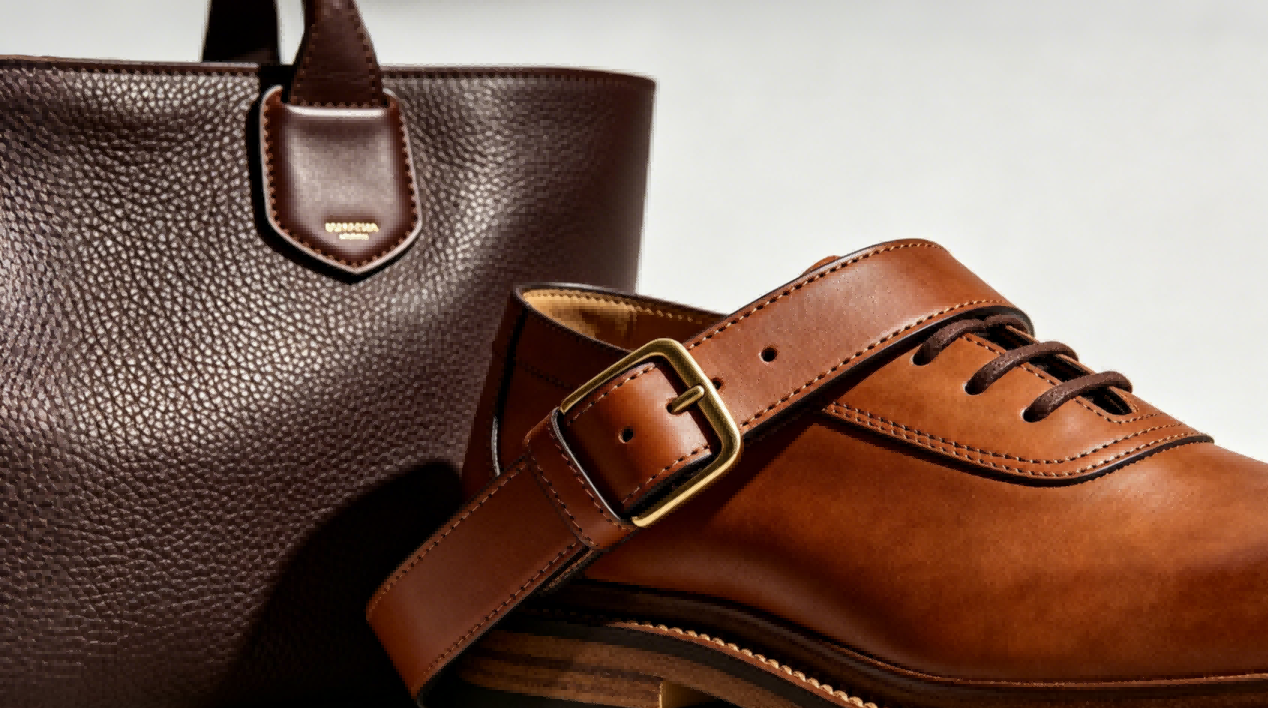
Wheels, casters, and seals follow the same logic but demand different hardness control. A heavy-duty caster benefits from load-bearing capacity and cut-growth resistance; a hydraulic seal benefits from oil resistance and low compression set after long sealing pressure. In both cases, the specified durometer often gets more attention than the properties that actually determine field life.
Polyester wheels and seals can fall into a common trap: the durometer is specified, but compression set and tear resistance are not. Shore A Vs Shore D Hardness In Polyurethane covers what the two scales actually measure and where the overlap creates selection mistakes.
Rail pads and similar outdoor elastomeric components deserve a separate check. When a rail pad must meet dimensional stability and elastic modulus requirements under EN 13146, polyester-based polyurethane may be a candidate [7]. But outdoor exposure means drainage, humidity, and freeze-thaw cycles must be part of the evaluation, not an afterthought.
Applications to Approach with Caution
Polyester-based polyurethane is not a direct substitute under every operating condition.
The ester linkage is sensitive to hydrolysis, especially when heat and moisture arrive together. A part that runs dry at 80°C may perform well; a similar part exposed to 80°C water, wet steam, or permanently saturated process cloth may soften, lose tensile strength, and eventually crack at the surface [1]. This is the reason wet-end paper rolls, food-contact washdown parts, and underwater cable blocks usually require either a hydrolysis-resistant formulation or a polyether-based alternative.
Low-temperature toughness also varies by formulation. Ester-based systems generally have useful properties at moderate temperatures, but the final low-temperature requirement must be tested with the actual prepolymer and chain extender combination. No single “polyester polyurethane” property set applies to every grade.
The practical rule is simple: if the part fails by wear, oil attack, or cut growth, polyester-based polyurethane is a strong candidate. If the part fails by water exposure, steam, or sustained high-humidity heat, start with a hydrolysis-resistance review or consider a polyether backbone.
Polyester-Based PU Machinery and Process Requirements
Processing polyester-based cast elastomers is not the same as running a general-purpose foam machine. The material choice pushes three machine decisions to the front.
First, metering precision controls part consistency. For cast rollers, wheels, and seals, a two-component 2A2B casting unit with dynamic metering accuracy of ≤±0.3% is a practical baseline because the prepolymer-to-chain-extender ratio directly affects hardness, modulus, and cured performance. A small ratio drift changes the final part more than most operators expect.
Second, vacuum degassing matters more in dense elastomer casting than in open-mold foaming. A vacuum level of ≤−0.095 MPa is used in casting machines to pull trapped air and residual moisture out of the mixed material before it reaches the mold. Without that step, surface pinholes and internal voids in the finished roll or seal become difficult to trace after cure.

Third, the chain extender choice changes the equipment configuration. MOCA systems require higher tank and line temperatures, while BDO systems operate at lower temperatures and tend to favor resilience and cleaner processing. Machines designed for MOCA/BDO switching allow the same line to shift between a wear-resistant print roll formula and a higher-resilience BDO formula without replacing the metering path.
Before specifying a casting machine, many projects settle on a nominal output without calculating the actual shot weight per mold. That leads to oversized pumping, wasted material, or a machine that cannot hold metering accuracy at the required pour rate.
Before specifying a casting machine, many projects settle on a nominal output without calculating the actual shot weight per mold. How To Calculate Shot Weight In Polyurethane covers the calculation logic and its effect on metering stability.
Mid-project specification questions are best sent as actual numbers, not descriptions. Email the part drawing, shot weight, and material TDS to Info@chinahaifeng.com with “polyester casting application” in the subject line. The inquiry is routed to the elastomer casting team for a machine-level response.
Application Selection Checklist
Use this sequence when evaluating a polyester-based polyurethane part.
- Confirm the main failure mode: abrasive wear, oil swelling, cut growth, or compression set.
- Confirm the moisture environment: intermittent dry operation is favorable; hot water, steam, or permanent saturation is not.
- Specify the test methods, not only the hardness: ISO 4649 for wear, ISO 34-1 for tear, ISO 815-1 for compression set, ISO 1817 for fluid resistance.
- Choose the chain extender deliberately: MOCA for wear and compression resistance, BDO for resilience and cleaner processing where hydrolysis resistance matters.
- Calculate shot weight per mold and required pour rate before selecting machine size.
- Run a trial with production-grade raw materials, not a simplified lab formulation.
Need a Casting Line Review?
Haifeng Polyurethane Machinery builds 2A2B polyester-based PU casting units for rollers, seals, wheels, caster components, screen plates, and high-wear industrial parts. The systems support MOCA/BDO switching, dynamic metering accuracy of ≤±0.3%, vacuum defoaming to ≤−0.095 MPa, multi-formula storage, and CE/ISO 9001 certification.
For a machine configuration instead of a brochure, send these details:
- Part drawing or mold cavity dimensions
- Shot weight per mold
- Prepolymer and chain extender type
- Target cycle time
- Required hardness range
Email: Info@chinahaifeng.com
WhatsApp: 86 13566296633
Frequently Asked Questions
Why choose polyester-based polyurethane over polyether for rollers?
Polyester-based systems generally offer higher tensile strength, tear resistance, and abrasion resistance at comparable hardness, along with better resistance to oil and solvents. That makes them a strong fit for nip rolls, printing rolls, dyeing rolls, caster wheels, and seals where mechanical load and hydrocarbon contact are the main stresses [1][3].
Can polyester-based polyurethane be used outdoors?
It depends on moisture exposure. The material can handle many outdoor conditions, but the ester linkage is sensitive to hydrolysis when heat and water are present together. For drainage-exposed rail pads or other outdoor parts, the formulation must be tested against the specific humidity, temperature, and water-contact conditions [1].
What hardness should I specify for a polyester-based PU part?
Hardness should follow the application, not a catalog recommendation. A printing roll, hydraulic seal, and caster wheel may all land in different Shore A or Shore D ranges even if they use the same polyol backbone. Always link the durometer to compression set, tear strength, and load requirement rather than selecting hardness in isolation [5].
Does a polyester-based PU casting machine need to change for MOCA versus BDO?
Yes. MOCA and BDO require different temperature bands and mixing parameters. A machine with MOCA/BDO switching and separate temperature control allows one line to run wear-resistant and higher-resilience formulas without a full hardware change.
How do I estimate the right machine pour rate?
The pour rate follows shot weight per mold and cycle time, not a catalog’s maximum output. Calculate the material mass required per mold first, then size the metering and pouring range around that requirement.
References
[1] G. Oertel, Polyurethane Handbook: Chemistry — Raw Materials — Processing — Application — Properties, 2nd ed., Hanser Publishers, Munich, 1994.
[2] ISO 4649:2017, Rubber, vulcanized or thermoplastic — Determination of abrasion resistance using a rotating cylindrical drum device, International Organization for Standardization, Geneva, Switzerland.
[3] ISO 1817:2022, Rubber, vulcanized or thermoplastic — Determination of the effect of liquids, International Organization for Standardization, Geneva, Switzerland.
[4] ISO 34-1:2022, Rubber, vulcanized or thermoplastic — Determination of tear strength — Part 1: Trouser, angle and crescent test pieces, International Organization for Standardization, Geneva, Switzerland.
[5] ISO 868:2003, Plastics and ebonite — Determination of indentation hardness by means of a durometer (Shore hardness), International Organization for Standardization, Geneva, Switzerland.
[6] ISO 815-1:2019, Rubber, vulcanized or thermoplastic — Determination of compression set — Part 1: At ambient or elevated temperatures, International Organization for Standardization, Geneva, Switzerland.
[7] EN 13146, Railway applications — Track — Test methods for fastening systems, European Committee for Standardization, Brussels, Belgium.
If you’re interested, check out these related articles:
How To Calculate Shot Weight In Polyurethane
How Polyurethane Rollers Are Made From Casting To Cure
RRIM Vs RIM Which Process Suits Your Structural Part
Shore A Vs Shore D Hardness In Polyurethane





