

Most purchasing mistakes begin before the first mold is filled: the line runs, the meter works, but the product family is outside the machine’s real process window. A polyurethane pouring machine is not a general-purpose dispenser. Its metering tolerance, mixing-head speed, vacuum level and additive-handling capability only do their job when the part asks for the right things.
What Makes a Product a Good Fit for a Pouring Machine
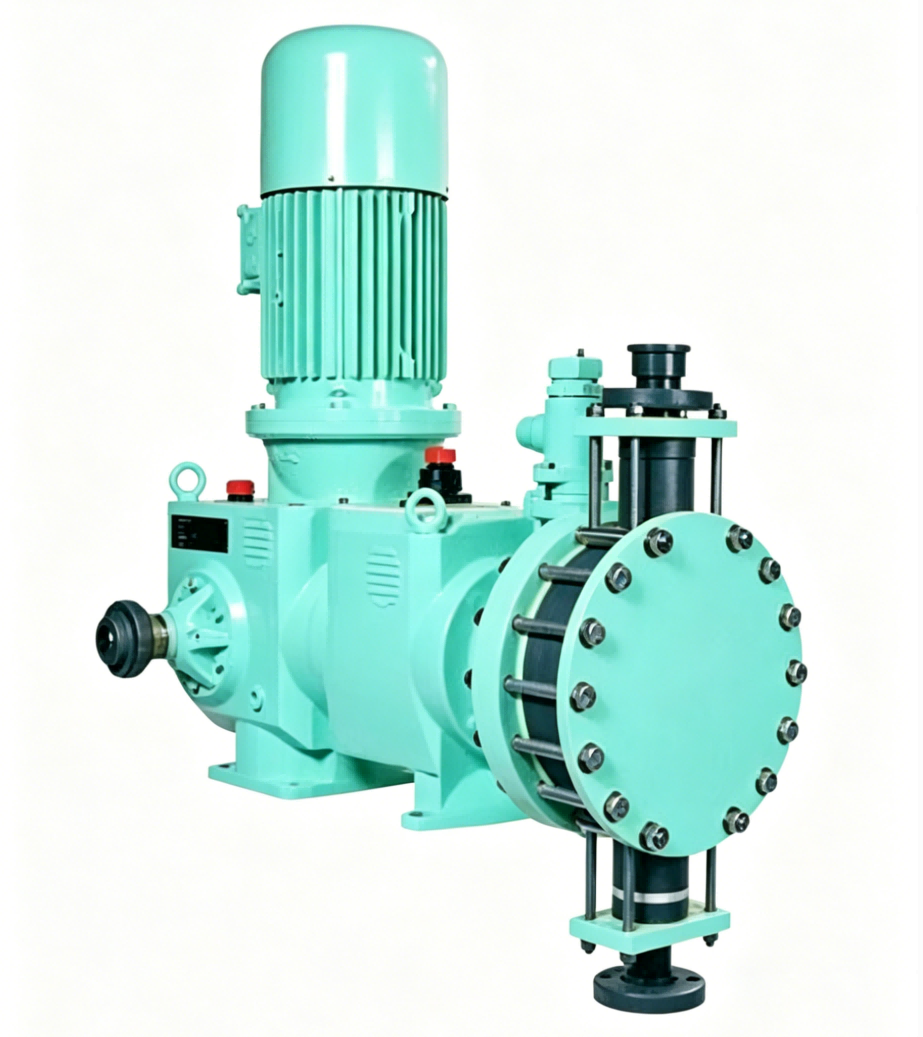
A suitable product is usually one that can be metered as a liquid or flowable prepolymer, mixed thoroughly, and placed into an open or closed mold before the material’s viscosity rises past the point of reliable flow. The machine’s value is not in moving the largest possible volume per shot; it is in keeping the ratio, temperature and fill pattern repeatable across the shift.
The dominant variables are:
- Viscosity at process temperature. This determines mixing-head speed, gear-pump capability and whether degassing can be effective.
- Component ratio tolerance. A tight final property window usually demands closed-loop, full-range metering rather than nominal output.
- Shot weight range. The machine must hit both the smallest and largest cavity without overshooting the pour or starving the mold.
- Filler and additive load. Abrasive fillers move the wetting section toward hardened pumps, wear-resistant mixing chambers and side tanks.
- Gel and rise time. A fast system needs a short flow path and quick pour; a closed mold with slow curing needs temperature control and cycle discipline.
Density is the first consequence of ratio error: a one-point shift in the component ratio shows up as a measurable change in apparent density, even when the part still looks solid. Standards such as ISO 845 for apparent density [1] and ASTM D3489 for microcellular urethane materials [2] give a structured way to separate true material performance from mold packing and metering drift.
Product families and the process variables they emphasize
| Product family | Typical machine configuration | Dominant requirement | Suitability |
|---|---|---|---|
| Industrial rollers and wheels | 1A1B/2A2B, MOCA or BDO chain extenders | Vacuum degassing, dynamic full-range metering, high shear mixing | Best fit |
| Seals, hydraulic parts and small technical pads | 1A1B precision systems | Small-shot accuracy, bubble-free surface | Best fit for small volumes |
| Screen plates, pipe linings and wear parts | 2A2B plus additive tank | Abrasion-resistant dosing, large-flow cavity fill | Conditional — needs hardened components |
| Footwear soles and insoles | Low-pressure multi-component systems | Formula storage, dual-density logic, cycle cadence | Good fit |
| Rail pads and anti-vibration parts | High-pressure microcellular systems | Pressure control, traceability, temperature stability | Good fit when process data exists |
| Automotive interior and buffer parts | Low/high-pressure lines with mold carriers | PLC control, mold timing, emissions controls | Good fit at volume |
| Reinforced structural parts | RRIM/RIM high-pressure systems | Fiber dispersion, high-pressure impingement mixing | Process-dependent |
Shot weight decides whether a machine can meter the part accurately or is being oversized for the job. How To Calculate Shot Weight In Polyurethane covers the calculation and the safety margin to build into the pour.
Product Families That Align Well with Pouring Machines
Elastomer rollers and wheels
Rollers and wheels are the clearest fit because they usually require a continuous, repeatable pour into a cylindrical or ring mold. Printing rollers, photovoltaic guide rollers, cold-rolling support rollers and industrial wheels all lean on the same machine capabilities: accurate MOCA or BDO chain-extender switching, vacuum degassing at or below about -0.095 MPa, and mixing-head speeds high enough to wet the prepolymer without pulling air back in.
A useful benchmark is a cold-rolling support roller line. The job is not just a high flow rate; it is holding metering accuracy across a wide pour range while an abrasive or high-temperature additive is metered alongside the main system. When the machine’s wetting section and dynamic metering are specified for that additive load, the roller surface quality and layer adhesion become repeatable instead of shift-dependent.
Rollers are the most common pouring-machine fit, but they only deliver when mold, cure and metering are balanced. How Polyurethane Rollers Are Made From Casting To Cure explains the full casting-to-cure path.
Seals, small pads and technical components
Hydraulic seals, steering-shaft ball sockets, weighing-wheel tires and small anti-vibration pads occupy the opposite end of the shot-size range. These parts rarely forgive bubbles, burrs or small ratio swings because the part’s function is often a sealing lip or a load-bearing edge. Compression-set performance matters, and it is typically evaluated under standards such as ISO 1856 [3] when the application calls for long-cycle resilience.
For this category, the machine’s minimum stable output often matters more than its maximum. If a machine can pour 800 g/s but cannot hold a stable 20–50 g shot, it will produce rejects on the very first small cavity.
Screen plates, pipe linings and wear parts
Mining screen plates, corrosive-pipe linings and similar mass-fill products are suitable when the machine is built for abrasive service. The added requirement is not merely higher flow; it is an auxiliary additive tank, hardened metering surfaces and a mixing chamber that can survive continuous filler loading. These products are a conditional fit: a standard elastomer machine will pour them for a while, but unreinforced components wear quickly and the ratio drifts.
Footwear components and microcellular pads
Shoe soles, insoles and dual-density footwear components are production-friendly on pouring machines because the process is cadence-driven and formula-driven. Multi-cavity sole molds, one-click formula libraries and rise-time control let a single low-pressure line move from a dense outsole to a softer midsole without re-engineering the wetting section. Flexible foam parts are evaluated under test practices such as ASTM D3574 [4] for density, compression and resilience.

Cream and rise time determine whether a low-pressure foam pour fills the mold before the skin forms. The Role Of Rise Time In Polyurethane Foaming explains how machine cadence and material timing interact.
Where the Machine Starts to Struggle
Some products look like a pouring-machine match until the fine print is checked.
- Very high-viscosity systems may exceed the mixing head’s practical shear range unless the lowest-viscosity component can carry the pour.
- Fast-gelling formulations require extremely short flow paths; a general-purpose line can become a cleaning burden.
- Fiber-reinforced structural parts are better served by high-pressure impingement mixing than by a low-pressure casting head.
- Highly filled wear compounds demand hardened wetted parts and may require a separate development batch before committing to production volumes.

A Practical Selection Sequence
- Start with the part drawing, final material system and open-mold time.
- Calculate the smallest and largest practical shot sizes, including runner and trim allowance.
- Check viscosity at the intended process temperature, not the supplier’s room-temperature value.
- Confirm mixing-head speed and degassing against the formulation’s sensitivity to air.
- Decide whether the part needs a side additive tank, color paste tank or wear-resistant wetting section.
- Verify whether the machine can store and switch formulas for multi-product changeover.
- Match the line’s cycle time with mold carriers, demold aids and cure staging.
When the Right Product Family Is Still Unclear
If the part sits between two process families, the fastest way to resolve the question is to send the application team the part drawing, planned material system, target shot-weight range and required daily output. A concrete request beats a brochure-level comparison every time.
Contact Info@chinahaifeng.com or WhatsApp +86 13566296633 with those details. The goal is not to force a product into a machine; it is to match the machine’s wetting, metering, degassing and cycle logic to how the part is actually made.
Talk to a Polyurethane Pouring Machine Engineer
Haifeng Polyurethane Machinery works on exactly this match daily. Send the following information to get a machine specification that starts from the part, not from a nominal output:
- Part drawing, material system and target daily output
- Smallest and largest shot weight
- Material viscosity at the planned processing temperature
- Filler or additive load, if any
- Cycle time, demold time and cleaning window
Email Info@chinahaifeng.com or WhatsApp +86 13566296633. The clearer the part data, the faster the machine can be specified correctly.
FAQ
Can a polyurethane pouring machine produce both solid elastomers and microcellular foam?
Some machines can, but it usually requires changing the mixing head, tank conditions and control strategy. If both product types are part of the plan, the machine should be specified with multi-head or multi-configuration capability from the start.
What shot-size range should I target before choosing a machine?
Consider both the smallest cavity and the largest cavity in the current product mix. Pay particular attention to the bottom of the range: a machine with strong full-range metering will hold ratio more reliably on small shots than one sized only for peak flow.
Are filled or highly abrasive formulations suitable?
They are suitable only when the wetting section, pumps, mixing chamber and additive tank are specified for the filler type. Trials with the production formulation are essential because filler settling and viscosity change during a shift.
Do small seals and large rollers need different machine categories?
Often yes. Small precision seals favor a compact cell with tight minimum output and clean purge behavior. Large rollers favor a larger tank set, higher mixing-head energy and vacuum degassing. Trying to cover both extremes with one generic module can leave either end unstable.
How does the material’s hydroxyl value or prepolymer viscosity affect the decision?
Both influence what the machine must do next. Higher-viscosity prepolymers and chain extenders such as MOCA may need independent tank temperatures and higher mixing-head speed. Matching the machine’s temperature control to the material’s processing window is more important than matching a printed flow rate.
References
[1] ISO 845:2006, Cellular plastics and rubbers — Determination of apparent density. International Organization for Standardization, Geneva.
[2] ASTM D3489-23, Standard Test Methods for Microcellular Urethane Materials. ASTM International, West Conshohocken, PA.
[3] ISO 1856:2018, Flexible cellular polymeric materials — Determination of compression set. International Organization for Standardization, Geneva.
[4] ASTM D3574-17, Standard Test Methods for Flexible Cellular Materials—Slab, Bonded, and Molded Urethane Foams. ASTM International, West Conshohocken, PA.
If you’re interested, check out these related articles:
How To Calculate Shot Weight In Polyurethane
Measuring Polyurethane Foam Resilience A Practical Test Guide
Shore A Vs Shore D Hardness In Polyurethane





