

Most polyurethane production problems that reach the equipment level start in the formulation: a catalyst that drives gel faster than the mold fills, a surfactant that cannot hold the cell windows, or a filler that pushes viscosity past what the metering pump can move. Understanding the types of additives used in polyurethane is less about memorizing chemical names and more about knowing what each component changes in the reaction, the liquid handling, and the finished part.
Why Additives Decide Polyurethane Performance
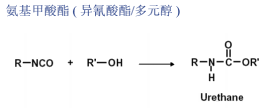
A polyurethane system is built on the reaction of an isocyanate with a polyol, but a bare A+B system rarely produces a usable part. Additives control reaction timing, cell structure, fire behavior, processing viscosity, and service life [1]. From a production standpoint, the additive package also determines how the material runs through the machine: whether the viscosity stays inside the metering pump’s working range, whether the mix head can disperse a solid filler, and whether the dosing accuracy changes as the material recirculates in the day tank.
| Additive type | Primary function | Common production concern |
|---|---|---|
| Catalysts | Adjust gel/blow balance and cure rate | Cream-to-demold time drift |
| Blowing agents | Generate or introduce gas for cell formation | Density variation; open/closed cell control |
| Silicone surfactants | Stabilize rising foam and control cell size | Collapse, shrinkage, coarse cells |
| Chain extenders/crosslinkers | Build hard segments and crosslink density | Hardness, compression set, pot life |
| Flame retardants | Reduce ignitability and heat release | Viscosity change, settling, metering wear |
| Fillers | Modify cost, stiffness, and dimensional stability | Sedimentation, abrasion, ratio shift |
| Colorants and pigments | Provide color and lot traceability | Dispersion, tank flushing, color drift |
| Antioxidants and UV stabilizers | Delay thermal and light degradation | Low-dose accuracy, migration risk |

Additive loadings are usually expressed in parts per hundred polyol, and small changes matter. A fraction of a part can shift demold behavior enough to scrap a shift because the additive does not act in isolation. It changes how the polyol flows, how the mix head shears the blend, and how the reaction profile fits the mold cycle.
Catalysts: The Reaction’s Throttle
Catalysts accelerate either the isocyanate–polyol reaction, which builds gel strength, or the isocyanate–water reaction, which generates blowing gas. Most practical systems use an amine catalyst and an organometallic catalyst together to balance those two paths [1]. A gel-dominant package builds green strength early but can close the foam before blowing finishes. A blow-dominant package opens cells but may leave the surface under-cured or sticky. The target is not speed by itself; it is a reaction profile that matches shot time, mold temperature, and demold cycle.
The same logic applies to elastomer casting. With MOCA- or BDO-cured systems, the catalyst decision is often less about rise and more about pot life, exotherm, and flow time into the mold. Catalyst activity also changes with moisture and material temperature, so a consistent formulation can still drift on the production floor when the day tank is not controlled.
When the reaction profile drifts, the symptom usually appears as cream, gel, or rise times that no longer match the mold cycle. The Role Of Rise Time In Polyurethane Foaming covers how these markers shift with formulation and machine conditions.
Blowing Agents and Surfactants: Forming and Keeping the Cell Structure
Water is the most widely used chemical blowing agent in flexible foam. It reacts with isocyanate to form carbon dioxide and a polyurea segment. Physical blowing agents, by contrast, expand through heat without changing the chemistry in the same way [1]. The choice affects density, thermal insulation value, open-cell content, and machine requirements. A low-boiling agent may demand lower tank temperatures and tighter pressure control at the mix head.
Silicone surfactants reduce surface tension, nucleate fine bubbles, and stabilize liquid cell walls until the polymer matrix can hold its own weight [1]. With too little surfactant, cell drainage happens too early and the foam collapses or develops coarse, irregular cells. With too much, the cells may stay closed when they should open, or the windows may remain elastic too long. Because the optimum is narrow for a given system, surfactant level is often the first parameter checked after a supplier substitution.
When cell windows drain before the polymer develops enough green strength, the part can begin shrinking at the end of the rise. Causes Of Shrinkage In Polyurethane Foam How To Control It covers the diagnostic sequence for this failure.
Chain Extenders, Crosslinkers, and Fillers
Short diols such as 1,4-butanediol and aromatic diamines such as MOCA extend the polymer chain and build hard-segment domains that control hardness, modulus, and tear strength. Higher-functionality additives act as crosslinkers, reducing compression set and improving chemical resistance [2]. The balance between extension and crosslinking is formulation-specific. More crosslinker tends to shorten pot life and raise exotherm, which directly affects shot size and mold cooling capacity.
Fillers such as calcium carbonate, barium sulfate, or milled glass change viscosity, density, and cost, but they are never truly inert from an equipment perspective. They settle in tanks, abrade pump components, and can shift the ratio if recirculation is inadequate [2]. A filler that passes a laboratory pour may still be unprocessable on a high-output line because the mix head cannot keep it uniformly dispersed.
I once traced a 4% density drift on a shoe-sole line to a filler that settled during a weekend shutdown. The filler was chemically suitable; the agitation and recirculation were not. That distinction matters because production often blames the raw material when the machine-side handling is the root cause.
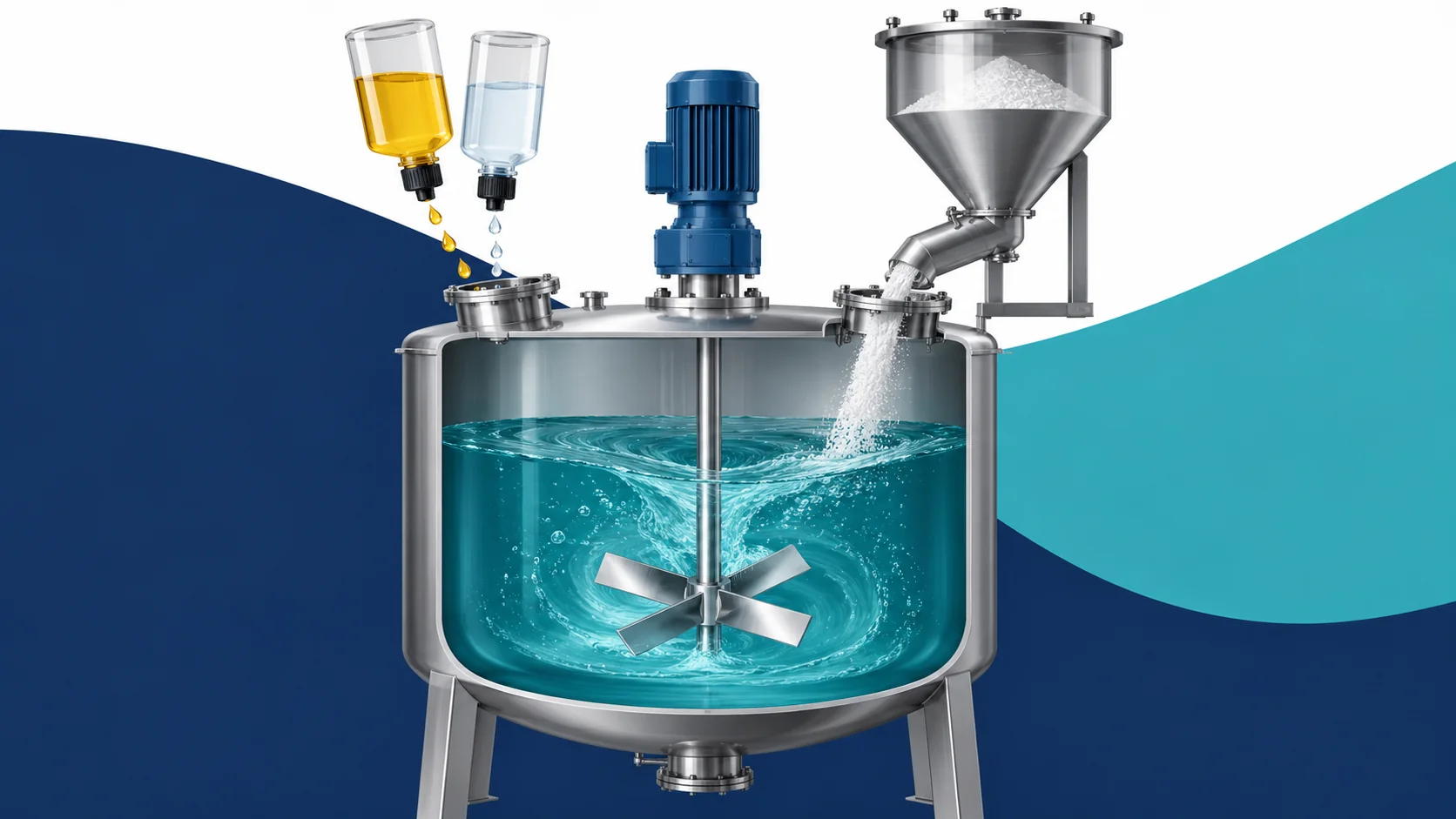
Additive evaluation is easier when the tests are tied to the machine that must run the formula. If you are checking whether an additive package will pass through a metering unit, send the formulation viscosity range, additive solids, shot size, and current equipment model to Info@chinahaifeng.com. A process review will confirm whether the additive needs a separate dosing channel or can be preblended.
Flame Retardants, Stabilizers, and the Selection Checklist
Flame retardant selection depends on the end-use test, not simply on the additive type. Foam in railway interiors may need to meet heat release and smoke density limits under a standard such as EN 45545-2, while automotive interior foam is commonly evaluated under FMVSS 302 [3][4]. Phosphorus-based and halogenated approaches both shift viscosity and cell structure, and solid flame retardants create the same settling and abrasion risks as fillers [1]. Even a liquid flame retardant can complicate ratio control because its density and viscosity usually differ from the polyol.
Antioxidants and hindered-amine light stabilizers protect against discoloration and embrittlement. They are used at low levels, so dosing accuracy usually matters more than material cost [1]. Color pastes and pigments create a similar concern: a small channel that cannot flush cleanly between batches will produce lot-to-lot color drift.
Once the additive package is fixed, the changed part still has to prove itself against the original specification. Measuring Polyurethane Foam Resilience A Practical Test Guide covers the resilience test method when foam properties are in scope.
Before locking a new additive package, work through this short list:
- Define the failure first: gel too fast, cells collapsing, density drifting, or a fire test failing. Do not add an additive just because a data sheet describes it as multifunctional.
- Confirm where the additive enters the process: A-side, B-side, a separate dosing channel, or as a preblend. That decision changes the machine configuration and changeover procedure.
- Measure viscosity at processing temperature, not room temperature.
- Check settling and recirculation behavior for any solid additive.
- Run the trial at the same mix head speed and pressure the production line will use.
- Re-validate demold time, hardness, density, and any fire or mechanical property after every formulation change.
Talk to a Polyurethane Equipment Engineer
Additive choices only matter if the machine can deliver them consistently at production speed. If you are changing a formula, adding a filler, or preparing for a new fire-test requirement, contact Haifeng Polyurethane Machinery at Info@chinahaifeng.com or WhatsApp 86 13566296633. A review can cover dosing configuration, mix head compatibility, and line layout against the additive package before trial time is lost on the floor.
Frequently Asked Questions
Which side receives most polyurethane additives?
Most catalysts, surfactants, blowing agents, and chain extenders are formulated into the polyol side because the isocyanate side is more reactive and more sensitive to contamination. Solid or abrasive additives are often handled through a separate dosing channel to protect the main metering path.
How do I know if an additive is compatible with my metering equipment?
Three failure modes matter most: viscosity outside the pump’s efficient range, settling that changes concentration during recirculation, and particle size that erodes seals or plugs the mix head. A compatibility trial should measure all three under processing temperature and line pressure.
Do water-blown and physical blowing agent systems use the same surfactant package?
Not automatically. Water-blown systems generate carbon dioxide and polyurea, which changes the cell-opening window. Physical blowing agents rely more on thermal expansion and create different nucleation behavior, so the silicone surfactant type and level are usually re-optimized.
What happens if additives are mixed in the wrong order?
The common result is a local concentration spike that over-catalyzes a small region or causes poor dispersion. This appears as inconsistent cell size, uneven hardness, or premature gel at the mix head. Addition order should be fixed and documented in the batch record.
How do flame retardants affect dosing accuracy?
Liquid flame retardants often differ enough in density and viscosity to shift calibration if the metering unit is not corrected. Solid flame retardants can settle and change concentration over time. Both conditions need recirculation and periodic ratio verification.
References
[1] Oertel, G., ed. Polyurethane Handbook: Chemistry – Raw Materials – Processing – Application – Properties, 2nd ed. Munich: Hanser Publishers, 1994.
[2] Ionescu, M. Chemistry and Technology of Polyols for Polyurethanes, 2nd ed. Shawbury: Smithers Rapra, 2016.
[3] EN 45545-2:2020, Railway applications — Fire protection on railway vehicles — Part 2: Requirements for fire behavior of materials and components. Brussels: CEN, 2020.
[4] FMVSS 302, Flammability of Interior Materials. Washington, DC: National Highway Traffic Safety Administration.
If you’re interested, check out these related articles:
How To Calculate Shot Weight In Polyurethane
Measuring Polyurethane Foam Resilience A Practical Test Guide
What Is Semi Rigid Polyurethane Foam
The Role Of Rise Time In Polyurethane Foaming
Causes Of Shrinkage In Polyurethane Foam How To Control It





