
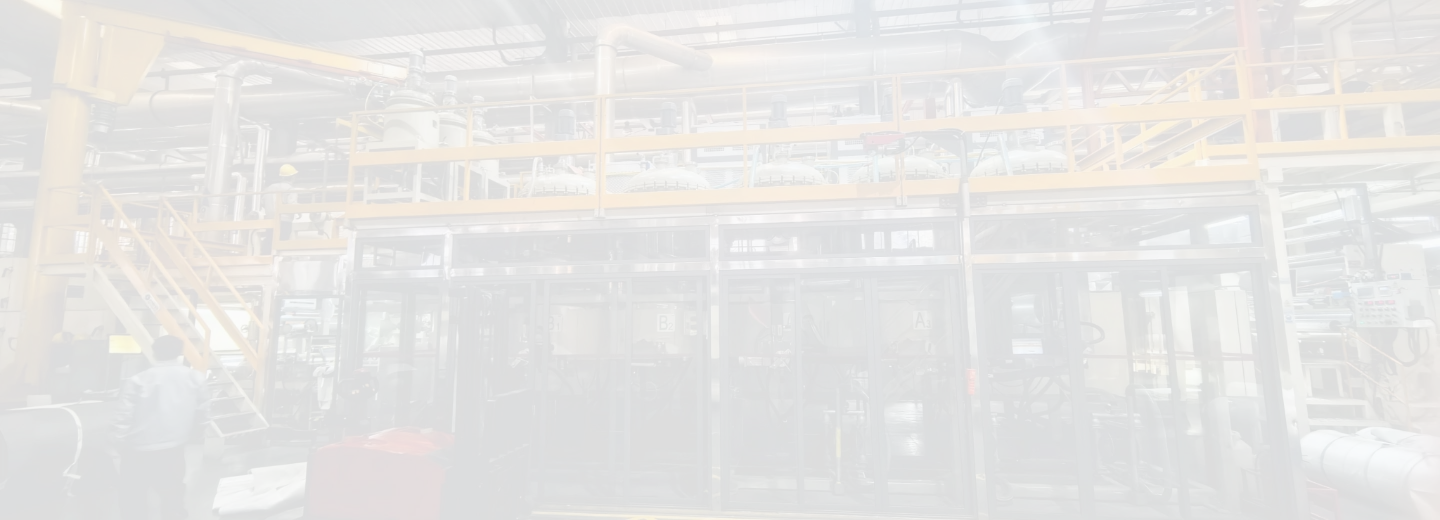
Rotary Car Seat Cushion Foaming Line Solution
Plan rotary automotive seat-cushion foaming with balanced pouring, mold residence and operator tasks.
Rotary Car Seat Cushion Foaming Line Solution
A rotary seat-foam line coordinates material delivery, molds, temperature circuits, pouring and removal. Indexing or output interval differs from a mold returning after cure. Temperature control and dosing alone do not guarantee cushion density or hardness; establish the selected material and part acceptance.
Defined supply scope
Define robot pouring, carrier opening, release preparation, demolding and downstream operations individually. Any online adjustment must follow the installed equipment procedures and safety conditions.
Inputs for process selection
Cushion designs, materials, mold count/cavities, shifts, manual tasks, target takt and existing temperature/robot interfaces.
Equipment scope, retained factory interfaces and acceptance are agreed for the selected material and part. Define robot pouring, carrier opening, release preparation, demolding and downstream operations individually. Any online adjustment must follow the installed equipment procedures and safety conditions.
Rotary Car Seat Cushion Foaming Line Workflow
Prepare molds and feed → Meter and pour → Convey and cure → Demold and inspect. Define preparation, filling, cure and output timing separately for the selected configuration.
Prepare molds and feed
Confirm release, inserts and material/tool conditions.
Meter and pour
Validate shot mass and the robot trajectory for each cushion.
Convey and cure
Balance station population and residence with the formulation.
Technical Parameters
Existing configuration and test references. Equipment settings, material results and finished-assembly results are separate; apply each value only to its documented configuration and conditions.
Line Composition
| Equipment Unit | Qty | Function |
|---|---|---|
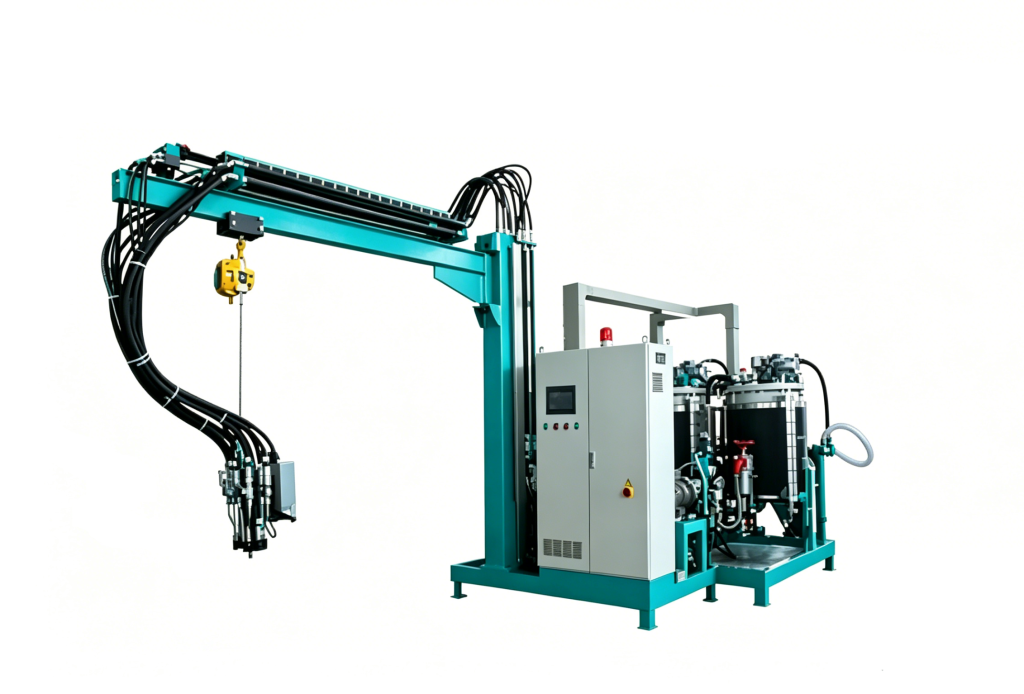
| HF-HPM High-Pressure Foaming Machine | 1 set | Two-component high-pressure impingement mixing & metered pouring, dosing accuracy ≤±0.3% |
| Rotary Table Line | 1 set | Intermittent/continuous production, VFD speed control; manual/automatic mold carrier opening & closing |
| Pouring Robot | 1 set | Automatic pouring along set trajectories, uniform spreading and accurate positioning |
| Electrical Control System | 1 set | PLC intelligent control; separable step debugging; on-line debugging without stopping production |
Cushion Rotary High-Pressure Foaming Machine
| Parameter | Value |
|---|---|
| Model | HF-HPM-1A1B-CushionRotary |
| Pouring rate | 50–1000 g/s |
| Mix ratio | Polyether : Isocyanate = 100 : 45~60 |
| Tank capacity | 100L / 150L per tank, optional |
| Dosing accuracy | ≤±0.3%, full dynamic range |
| Tank configuration | 1A1B two-component independent temp control + circulation stirring |
| Temperature control | 20–45℃ |
| Mixing pressure | 10–18 MPa |
| Cleaning system | Automatic air purge, solvent-free |
| Power | 5.5–7.5 kW |
| Control system | PLC + touch screen + multi-formula storage |
| Application system | PU high-resilience flexible foam system |
| Warranty | 1 year |
| Certification | CE, ISO9001 |
Rotary Table Line
| Item | Parameter |
|---|---|
| Production tact | 15–30 s |
| Time per circle for mold conveying | 4–8 min |
| Rotary table height | 425 mm |
| Production ways | Intermittent / continuous, speed by frequency converter |
| Main motor power | 5.5 kW |
| Heating power of mold temp controller | 2 × 15 kW |
| Supply water tank volume | 200 L |
| Compressed air | 0.8 MPa cylinder / 0.45 MPa gasbag, dry, oil-free |
| Power supply | Three phase 380V ±10% / 50Hz |
| Control voltage | AC 220V / DC 24V |
| Floor space | 12,500 × 12,500 mm |
Supporting Equipment for Your Foaming Line
Equipment references are selected by their documented process. Main metering, auxiliary supply and alternative routes are not a single standard package.
Process controls and application checks
Evaluate these functions with the selected material, tooling and production brief. Finished-part results require their own acceptance evidence.
Balanced rotary production
Relate output interval, full circuit and cure residence to the actual molds.
Defined temperature role
Control temperatures as process inputs while inspecting finished density separately.
Automotive reference scope
Use the related seat-upgrade case as a project reference, not proof that all line details are identical.
Related Projects
These are related application references. Compare the actual material, process and delivered modules; reported project figures are not acceptance results for another line.
Production Planning FAQ
Selection, supply scope and validation for this production route.
Does the takt reference determine daily output by itself?
Does mold-temperature control guarantee density variation?
What information is needed for a preliminary configuration?
Get a Free Quote
Share the following with your production brief: Cushion designs, materials, mold count/cavities, shifts, manual tasks, target takt and existing temperature/robot interfaces. Our team will reply within one business day. Once requirements are clear, we provide a preliminary proposal within two business days.


