Automotive SMC Sheet and Compression Molding Solution
Configure sheet molding compound preparation, charge handling and heated compression molding for automotive composite components.
Automotive SMC Sheet and Compression Molding Solution
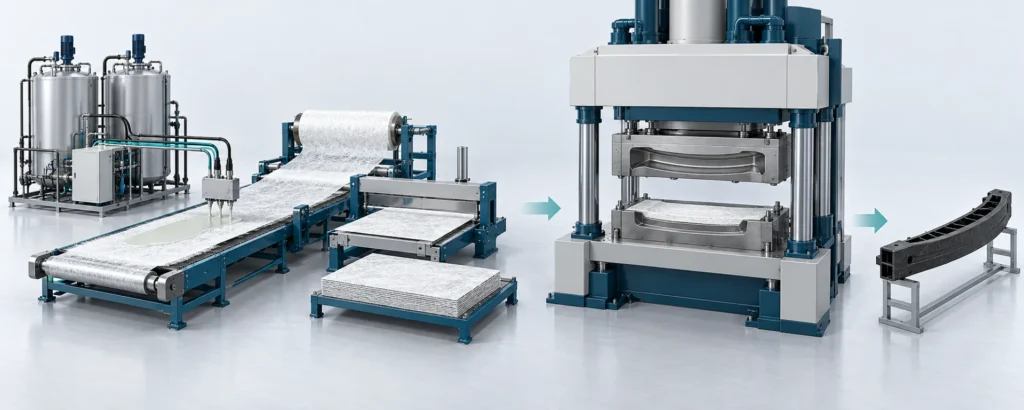
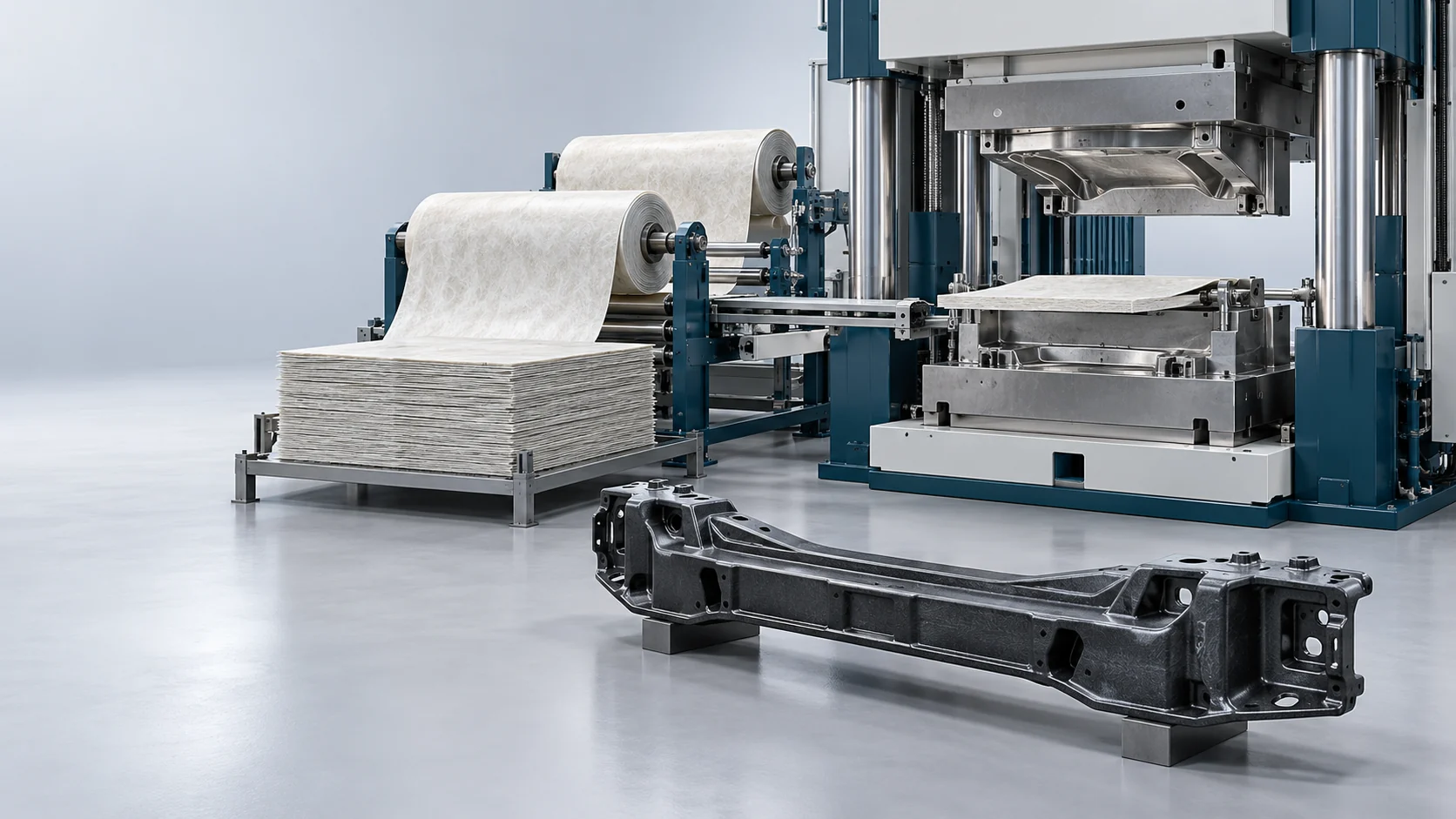
Traditional Sheet Molding Compound (SMC) is a fiber-reinforced resin sheet charge that is placed in a matched heated mold and compression molded into the final part. It is a distinct composite process, not PU foam molding or LFI. Part geometry, charge layout, resin cure, mold temperature, press force and surface requirements jointly determine flow, consolidation and final properties.
Pre-impregnated sheet charge
Plan SMC sheet specification, cut pattern and charge placement against the part geometry and fiber flow.
Matched-mold compression
Coordinate heated tooling, press force, cure, demolding and trim to meet part structure and surface requirements.
Compound supply/preparation and press/tool/handling responsibilities are listed explicitly.
From component specification to validated production
Traditional Sheet Molding Compound (SMC) is a fiber-reinforced resin sheet charge that is placed in a matched heated mold and compression molded into the final part. It is a distinct composite process, not PU foam molding or LFI. Part geometry, charge layout, resin cure, mold temperature, press force and surface requirements jointly determine flow, consolidation and final properties.
Sheet and part requirements
Define the SMC formulation, fiber type/content, part geometry, surface class, mechanical loads and output target.
Charge layout
Set sheet cutting, blank dimensions, placement pattern and mold coverage for the part.
Heat and compression mold
Place the charge in the matched heated tool, close under the validated process window, cure and demold.
Material, process and acceptance data
LFI cuts glass-fiber roving in line, wets it with PU and deposits it into an open mold. It should not be labelled conventional SMC sheet molding.
| Material definition | SMC is a pre-compounded, fiber-reinforced resin sheet; its resin chemistry is selected for the application and is not inherently polyurethane. |
|---|---|
| Process | Cut sheet charges are placed in a matched heated mold and compression molded; charge coverage and placement affect material flow and part quality. |
| Equipment planning | Press force, platen size, tool heating, sheet loading, demolding and trim interfaces are selected from the part envelope, material and production target. |
| LFI distinction | LFI cuts glass-fiber roving in line, wets it with PU and deposits it into an open mold. It should not be labelled conventional SMC sheet molding. |
| Haifeng solution scope | Engineering scope: SMC sheet and charge-layout planning, heated matched-mold press integration, part take-out, trimming and inspection; equipment scope follows the confirmed project requirements. |
Relevant Haifeng Equipment
Compound supply/preparation and press/tool/handling responsibilities are listed explicitly.
Application-specific process design
Traditional Sheet Molding Compound (SMC) is a fiber-reinforced resin sheet charge that is placed in a matched heated mold and compression molded into the final part. It is a distinct composite process, not PU foam molding or LFI. Part geometry, charge layout, resin cure, mold temperature, press force and surface requirements jointly determine flow, consolidation and final properties.
Pre-impregnated sheet charge
Plan SMC sheet specification, cut pattern and charge placement against the part geometry and fiber flow.
Matched-mold compression
Coordinate heated tooling, press force, cure, demolding and trim to meet part structure and surface requirements.
Automotive process FAQs
Process, material selection and validation for Traditional Sheet Molding Compound (SMC) compression molding for automotive structural and exterior parts.
What is traditional automotive SMC?
Is SMC a polyurethane foam process?
How does SMC differ from LFI?
What information is needed to plan an SMC press process?
Are SMC and continuous-fiber prepreg PCM identical?
What information is needed to size the production line?
What is included in the equipment package?
Are cycle time and finished-product performance fixed?
Submit Your Production Goals
Share the finished product, material, target capacity, automation requirements and factory conditions to discuss a project-specific line configuration.
Related Project Records and Industry References
Review the evidence type on each record. Haifeng project figures describe their own configuration; public industry references identify third-party sources and are not Haifeng deliveries.