
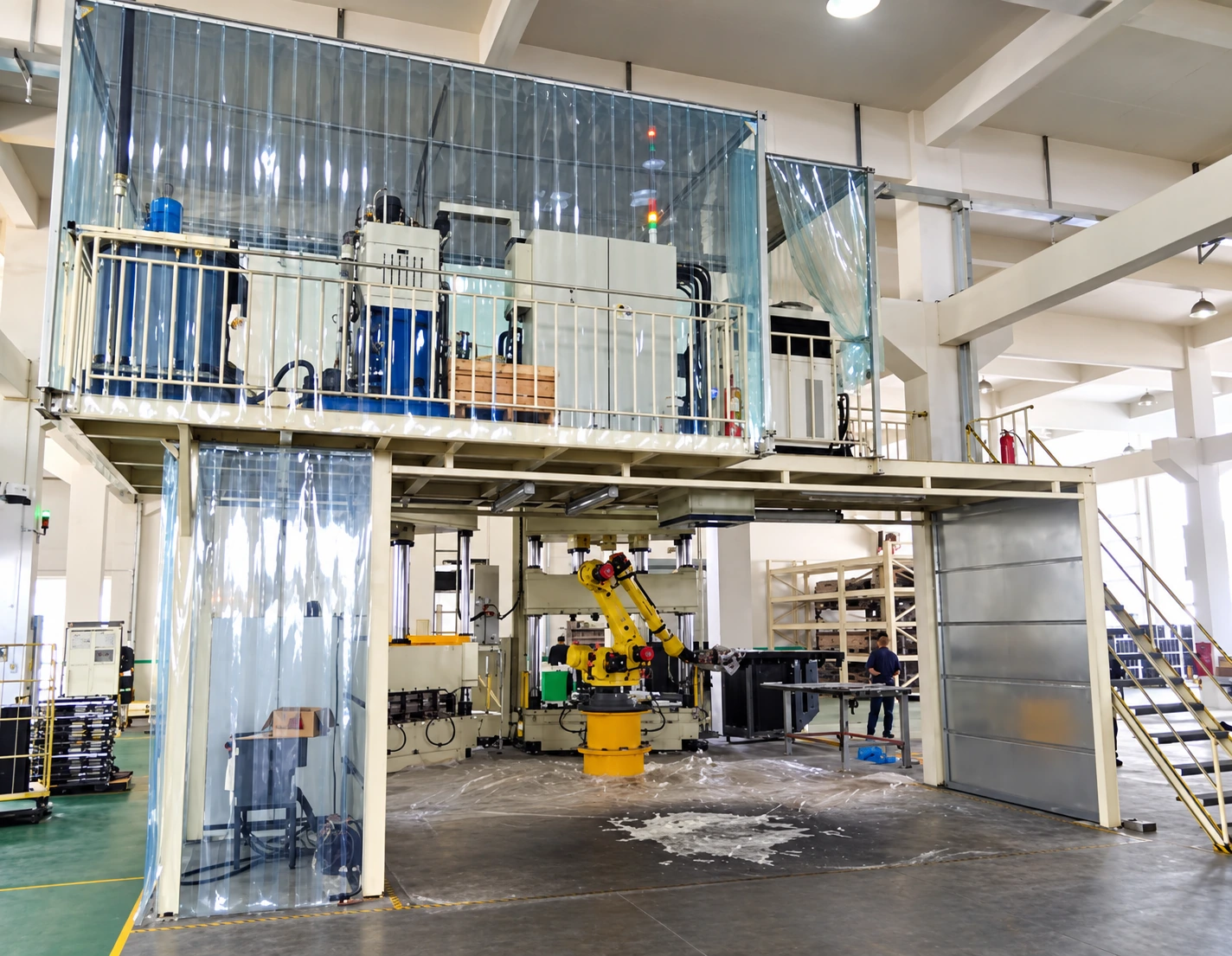
Automotive Composite PU Spray-Transfer Molding Solution
Select STM composite-cell automation by material preparation, spraying, transfer and compression-molding tasks.
PU Spray-Transfer Molding Machine
STM manufacturing can combine blank preparation, PU application, transfer, press molding and unloading. These tasks do not have to share one automation level. A reference with manual blank loading does not establish automatic unwinding, cutting and loading for another package.
Defined supply scope
List each automatic and operator-managed task in the scope. Confirm which existing press, material-handling and control interfaces are retained before defining a fully integrated cell.
Inputs for process selection
Blank format and preparation, part/tool drawings, existing press, requested automatic tasks, target output and cell layout.
Equipment scope, retained factory interfaces and acceptance are agreed for the selected material and part. List each automatic and operator-managed task in the scope. Confirm which existing press, material-handling and control interfaces are retained before defining a fully integrated cell.
Automotive Composite PU Spray-Transfer Molding Workflow
Prepare the blank → Apply the PU system → Transfer and press → Unload and inspect. Define preparation, filling, cure and output timing separately for the selected configuration.
Prepare the blank
Choose manual or configured automatic preparation and identify the accepted blank at the cell entry.
Apply the PU system
Coordinate metered application, material control and blank support.
Transfer and press
Validate transfer time and robot/press handshakes for the selected tooling.
Technical Parameters
Existing configuration and test references. Equipment settings, material results and finished-assembly results are separate; apply each value only to its documented configuration and conditions.
Equipment Configuration
| Unit | Configuration |
|---|---|
| Unwinding and cutting | Multi-layer unwinding, tension control, automatic cutting |
| Automatic loading | 6-axis robot, automatic gripping and loading |
| PU spraying | High-pressure metering pumps, mixing head, automatic spraying |
| Release agent | Automatic spraying system |
| Molding | Frame-type hydraulic press, heating and temperature control |
| Automatic unloading | Robot removal, conveying and buffer |
| Control system | International first-line PLC, industrial Ethernet, HMI |
| Informatization | Data collection, batch traceability |
Technical Parameters
| Parameter | Value |
|---|---|
| Line cycle time | 6 min/piece |
| Materials | Continuous fiber fabric, metal sheet, polyurethane |
| Automation rate | 80% to 100% |
| Press type | Frame type, tonnage and platen customized |
| Robot | 6-axis robot, high repeatability |
| Dosing accuracy | High-pressure metering and mixing of PU components |
| Control system | International first-line brand, industrial Ethernet |
| Informatization | Real-time data collection, digital production management |
Process controls and application checks
Evaluate these functions with the selected material, tooling and production brief. Finished-part results require their own acceptance evidence.
Task-based automation
Specify unwinding, cutting, loading and unloading individually instead of relying on a single automation percentage.
Press integration
Review geometry, safety and cycle handshakes with the actual press.
Reference scope clarity
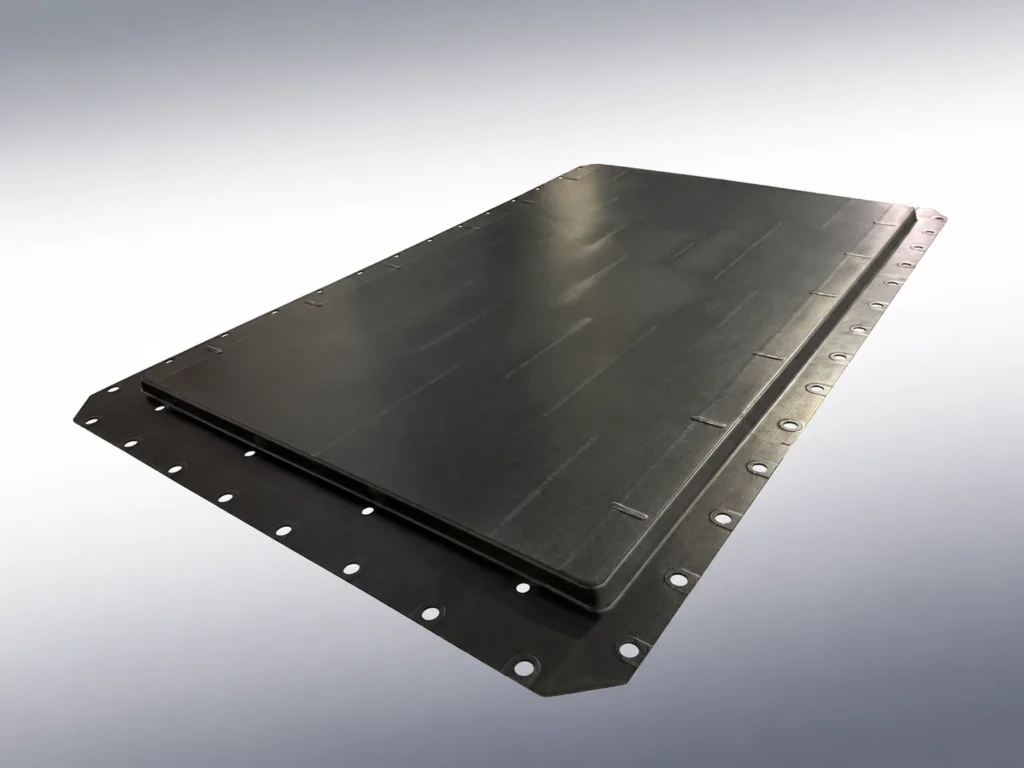
Use the related underbody-shield project only for its documented material and supplied modules.
Related Projects
These are related application references. Compare the actual material, process and delivered modules; reported project figures are not acceptance results for another line.
Production Planning FAQ
Selection, supply scope and validation for this production route.
Does a fully automatic description mean every blank is automatically cut and loaded?
What should a cycle reference include?
What information is needed for a preliminary configuration?
Get a Free Quote
Share the following with your production brief: Blank format and preparation, part/tool drawings, existing press, requested automatic tasks, target output and cell layout. Our team will reply within one business day. Once requirements are clear, we provide a preliminary proposal within two business days.


