

Operators rarely see a bad silicone surfactant first. They see stable cream, a normal-looking rise profile, and then a collapsed corner or a coarse cell pattern in the finished part. The change that caused it may have been as small as switching surfactant suppliers or adding 0.3 kg of water to a 200-kg batch. In polyurethane foaming, silicone surfactant is not a blowing agent or a catalyst, but it largely determines whether the gas bubbles created during the short reaction window survive long enough to form the right cell structure [1].

1. What Silicone Surfactant Does in Polyurethane Foaming
A silicone surfactant works mainly at the gas-liquid interface. It lowers surface tension, helps emulsify the less-compatible polyol and isocyanate components during the first milliseconds of mixing, and stabilizes the expanding cell walls until the polymer network becomes strong enough to support the foam structure [1][2]. In production terms, it has three overlapping jobs: support bubble nucleation, prevent excessive coalescence, and allow cell windows to open at the correct time.
If the dose is too low, partial coalescence creates coarse cells. If the dose is too high or the surfactant package is overly active for the system, the foam can hold closed cells too long and shrink after demold. Most flexible and rigid systems operate in the range of roughly 0.3–2.0 parts surfactant per hundred parts polyol, but the exact level moves with water content, polyol type, filler loading, and target density [1].
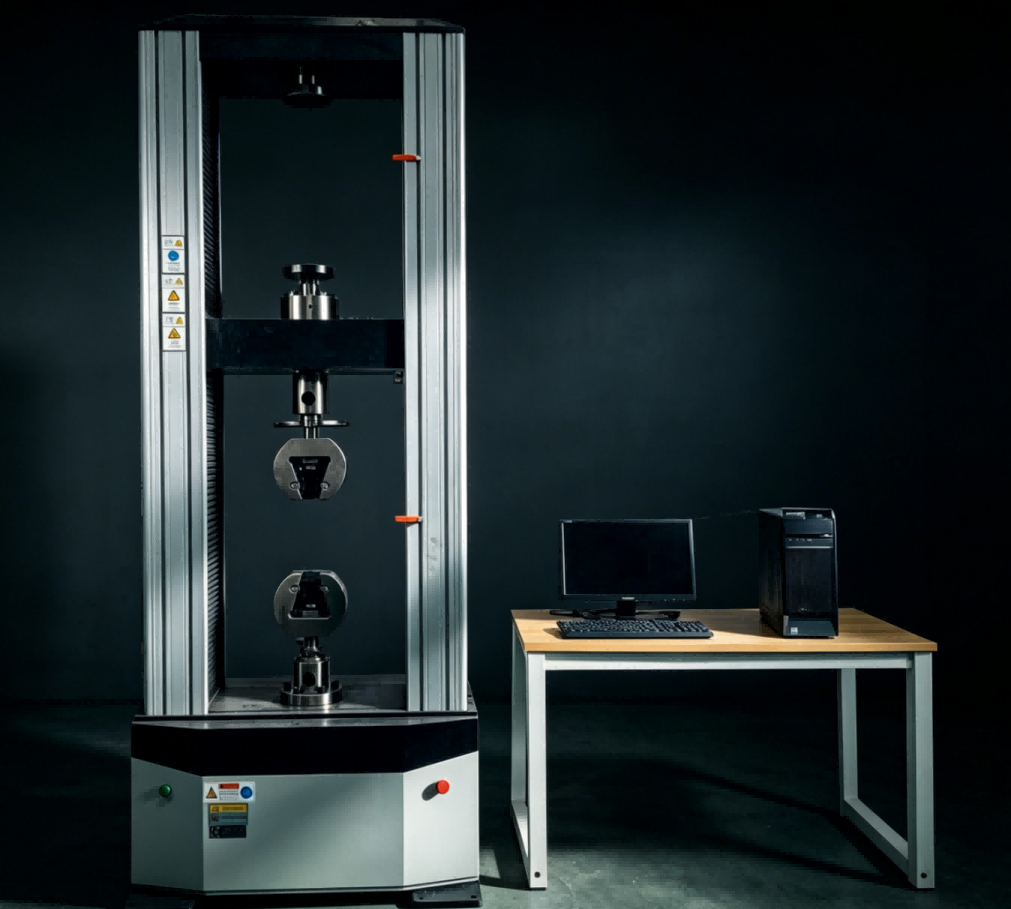
That is why two foams with the same overall density can show very different resilience, airflow, and surface quality. The difference is often not the polymer backbone; it is how well the liquid foam survived the rise. A resilience measurement gives a useful physical baseline because it reflects both cell structure and polymer network together.
Foam resilience is a practical baseline before changing surfactant level or type. Measuring Polyurethane Foam Resilience A Practical Test Guide covers the recovery-value test sequence and how to separate formulation effects from normal mixing variation.
2. Surfactant Chemistry, Nucleation and Cell Opening
The common silicone surfactant is a polydimethylsiloxane backbone carrying pendant polyether chains. The siloxane portion lowers surface energy at the bubble interface; the polyether portion controls water compatibility and surfactant mobility in the reacting mixture. The balance between ethylene oxide and propylene oxide in those chains changes how the surfactant partitions between the bulk liquid and the growing interface [2].
The surfactant does not create gas. Blowing agents, water-isocyanate reaction, and mechanical air entrainment create gas. The surfactant changes the bubble size distribution because it stabilizes newly formed interfaces before coalescence can occur [2]. In high-pressure mixing heads, this must happen extremely fast: the mixing energy creates a large amount of interface in a fraction of a second, and the surfactant has to reach and support that interface before the foam collapses.
Cell opening is a drainage and rupture process. As the foam rises, gravity and capillary pressure drain liquid from the film. If the film stays intact too long, the foam closes. If it ruptures too early, the foam collapses. Silicone surfactant shifts the timing of that transition [2][3]. The target is not maximum stability at all costs; it is enough stability early in the rise, followed by controlled film rupture as the polymer network reaches the right gel strength.
3. Formulation Variables That Shift Surfactant Performance
Surfactant demand is not a fixed recipe number. It changes when gas load, viscosity build, or component compatibility changes. A higher water level creates more carbon dioxide and more total interface to stabilize. A higher isocyanate index can change viscosity build and shift cell-opening behavior. A different polyol backbone can alter surfactant solubility and surface activity [3].
| Formulation variable | Typical effect on surfactant demand |
|---|---|
| Higher water content | Higher demand because more gas surface must be stabilized |
| Higher isocyanate index | Can change viscosity build and cell-opening timing; may require a different surfactant balance |
| Higher polyol functionality | Faster network build; late stability may become less critical |
| Added fillers or solids | May adsorb surfactant or raise apparent viscosity; dosage often needs adjustment |
| Lower target foam density | Finer cells and higher gas volume usually increase stabilization demand |
The practical rule is to change one variable at a time. Changing surfactant type and increasing water at the same time makes it impossible to know which decision fixed the defect. If the foam collapses immediately after cream, the problem is usually too little surfactant or the wrong surfactant package for the water level. If the foam rises well but later sinks or shrinks, over-stabilization or delayed cell opening is more likely.
4. Equipment Interactions: Metering, Mixing and Deaeration
A silicone surfactant is usually a low-volume liquid additive. That makes accurate metering more important than nominal pump size. If silicone surfactant is added as a third stream, it should be introduced upstream of the final mix point so the high-shear mixing head can disperse it into the polyol and isocyanate stream. If it is premixed into the polyol tank, agitation and recirculation should avoid drawing air into the liquid, because surfactant-stabilized bubbles in the feed tank can become unwanted nucleation sites later.
Poor mixing cannot be cured by adding more surfactant. A badly mixed stream can still produce coarse cells or density gradients even when the surfactant dosage is chemically correct. Surfactant works at the interface, but the interface must first be created by the mixing head. That is why the same formulation can look acceptable on one machine and defective on another if the mixing pressure, nozzle condition, or component temperature differs.
Mid-Trial Checkpoint: Formulation vs. Equipment
If the next trial involves a new silicone surfactant or a changed water level, send the current formula, target free-rise density, and mixing head settings before committing a full batch.
Email: Info@chinahaifeng.com
WhatsApp: 86 13566296633
5. Troubleshooting Surfactant-Related Defects and Validating Selection
The table below separates defects that are often surfactant-related from defects that usually come from mixing or temperature.
| Observed defect | Surfactant-related possibility | What else to check |
|---|---|---|
| Coarse cells or surface pinholes | Low surfactant dose, poor nucleation, or air entrainment | Mixing pressure, nozzle wear, tank vortexing |
| Collapsed foam or sink marks | Insufficient stability at gel time or wrong surfactant balance | Water level, catalyst balance, mold temperature |
| Dense or closed skin | Over-stabilization or late cell opening | Demold time, isocyanate index, mold venting |
| Shrinkage after demold | Closed cells retained too long; internal gas pressure changes | Cell-opening timing, mold cooling, part thickness |
| Internal splits or voids | Can be surfactant imbalance or viscosity mismatch | Mix ratio accuracy, cream time, material temperature |
| Uneven density | Less commonly surfactant alone | Mixing quality, pour pattern, raw material temperature |
When coarse cells appear together with surface sink marks, the failure is often a single stabilization problem rather than two unrelated defects. Surfactant level and water content should be checked together before changing machinery settings.
When surface sink marks follow coarse cell structure, post-demold shrinkage is often part of the same stabilization failure. Causes Of Shrinkage In Polyurethane Foam How To Control It covers the mechanisms behind shrinkage and where surfactant level fits into the correction sequence.
A validation trial should avoid large jumps. One practical sequence is: freeze machine parameters, run a control batch, then change silicone surfactant dosage in small increments while measuring the same output variables. Useful outputs include free-rise density, apparent density, cell count from a cut surface, airflow, compression set, and resilience. ASTM D3574 provides standard test methods for many of these flexible foam properties [4]. Apparent density comparisons should follow a consistent method such as ISO 845 [5].
Rise time alone gives only part of the reaction picture. Cream time, gel time, and free-rise height need to be read together before changing the stabilizer package. The Role Of Rise Time In Polyurethane Foaming covers what rise time does and does not tell you about foam stability.
6. Production-Balanced Formulation and Equipment Support
If a silicone surfactant change is part of a larger formulation or line upgrade, it helps to start from process numbers rather than a defect description alone. Send the following when requesting a review:
- Target foam density and hardness range
- Current surfactant type and use level
- Water content and isocyanate index
- Mixing head type, mixing pressure, and pour rate
- Observed defect and where it appears in the mold or bun
- A 15–30 second video showing foam behavior during rise
Email: Info@chinahaifeng.com
WhatsApp: 86 13566296633
7. Frequently Asked Questions
How much silicone surfactant should be used in polyurethane foam?
A common working range is about 0.3–2.0 parts per hundred parts polyol, but the correct level depends on water content, polyol type, filler loading, and target cell size. Start low, keep the rest of the formulation fixed, and adjust in small increments while measuring density, airflow, and cell structure.
What happens if you use too much silicone surfactant?
The foam may become over-stabilized. It can hold closed cells too long and shrink after demold, or develop a dense skin at the mold surface. In some systems, excess surfactant also reduces cell openness and changes the feel of flexible foam.
Can silicone surfactant fix coarse cells caused by poor mixing?
Not reliably. Surfactant stabilizes bubbles after they are created, but the mixing head must first create the interface. If mixing pressure is low, the nozzle is worn, or the material temperature is wrong, adding more surfactant usually masks the problem instead of correcting it.
Does changing silicone surfactant require machine setting changes?
Sometimes. A different surfactant can shift apparent viscosity, nucleation behavior, and cell-opening timing. When changing surfactant type, keep the machine settings constant at first, record the reaction profile, and then make one controlled change at a time if needed.
What is the difference between silicone surfactant and silicone oil in polyurethane?
Silicone surfactant is chemically designed to stabilize foam and control cell structure. Silicone oil is not a direct substitute. It has different surface activity and compatibility behavior and will not give the same controlled cell-opening performance in a foaming system.
References
[1] Oertel, G., ed., Polyurethane Handbook, 2nd ed., Hanser Publishers, 1994.
[2] Zhang, X.D., Davis, H.T., Macosko, C.W., “Role of Silicone Surfactant in Flexible Polyurethane Foam,” Journal of Colloid and Interface Science, 1999.
[3] Ionescu, M., Chemistry and Technology of Polyols for Polyurethanes, 2nd ed., Smithers Rapra, 2016.
[4] ASTM D3574-17, Standard Test Methods for Flexible Cellular Materials—Slab, Bonded, and Molded Urethane Foams, ASTM International.
[5] ISO 845:2006, Cellular Plastics and Rubbers—Determination of Apparent Density, ISO.
If you’re interested, check out these related articles:
SRIM Explained Structural Reaction Injection Molding Basics
What Is Semi Rigid Polyurethane Foam
Measuring Polyurethane Foam Resilience A Practical Test Guide
The Role Of Rise Time In Polyurethane Foaming





