
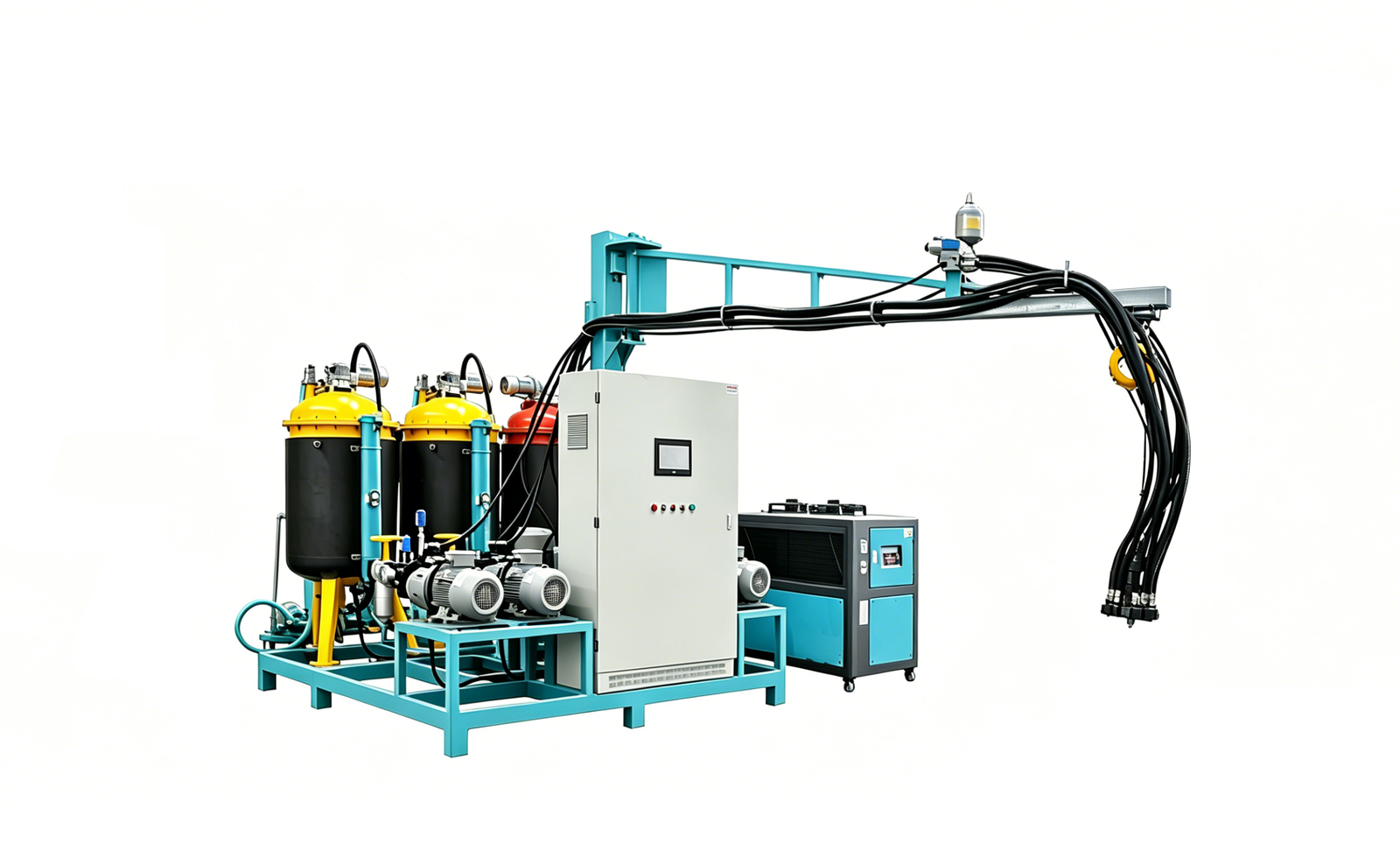
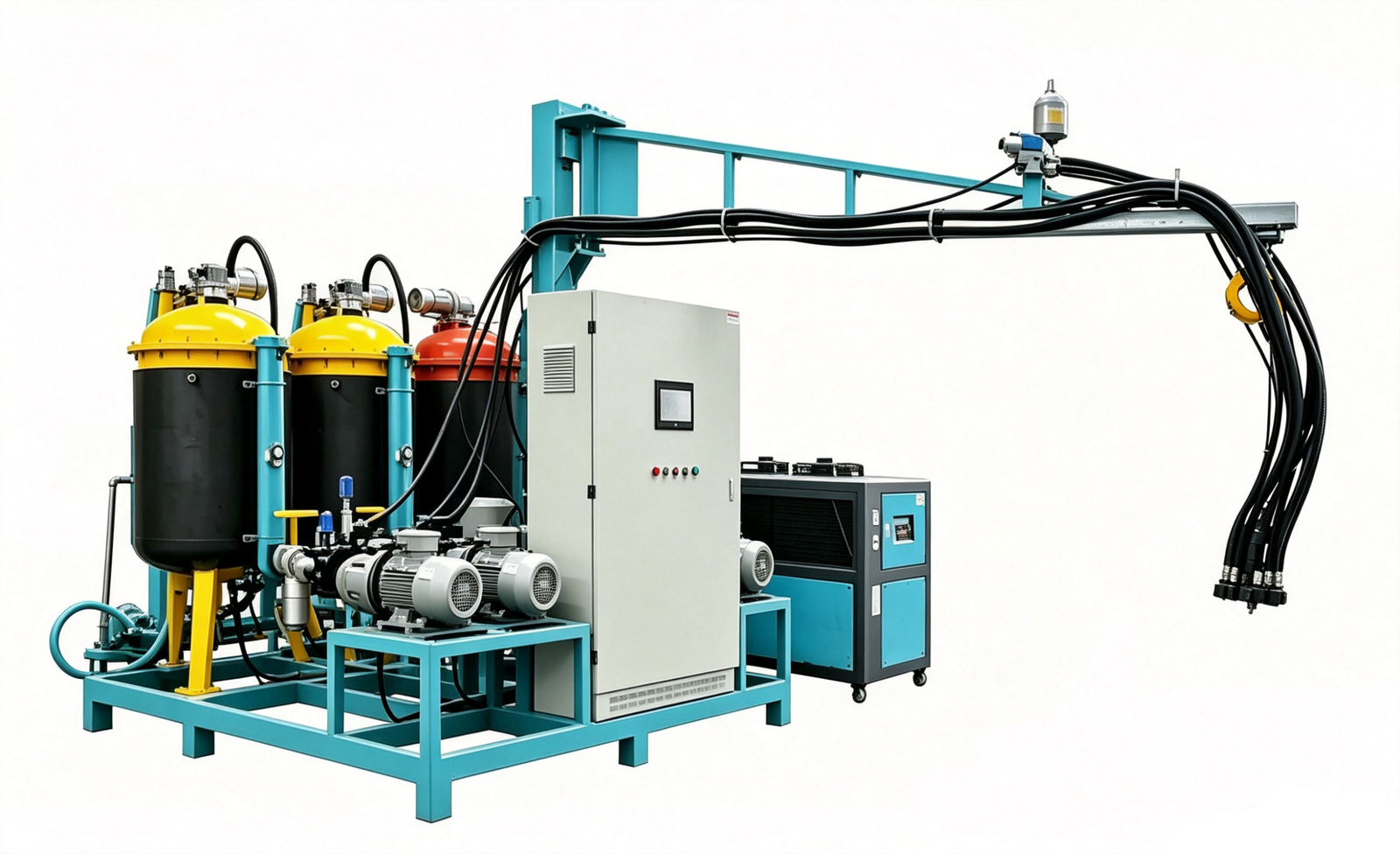
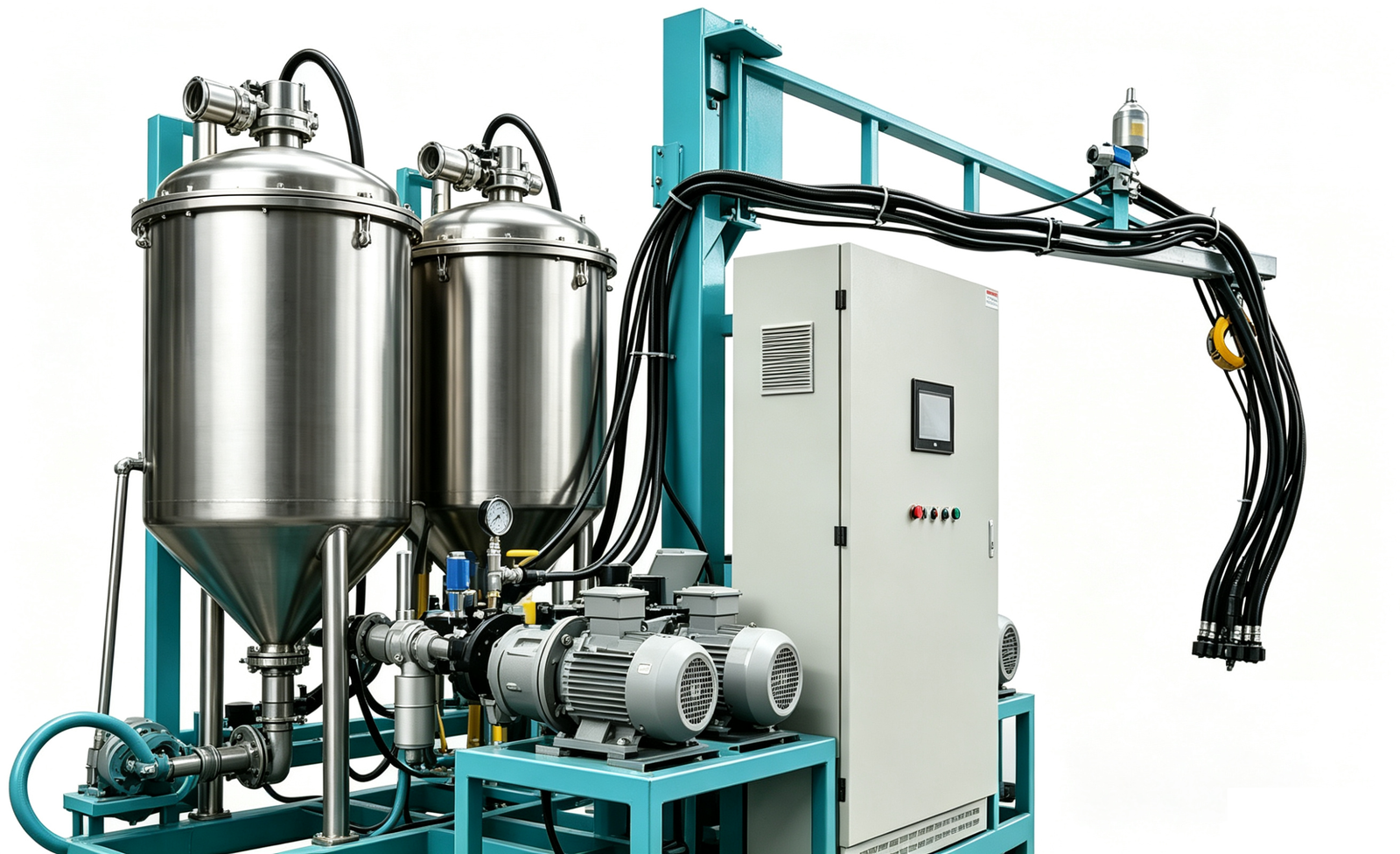
RIM Composite PU Foaming Machine | Auto Parts
RIM composite foaming system for automotive interior/exterior parts with carbon/fiberglass reinforcement
Pouring Rate
50–400 g/s
Mix Ratio (Polyether:Isocyanate)
100:90–110
Temperature Control Range
25–45℃
Mixing Pressure
150–200 bar
Product Overview
Widely used in the production of automotive interior and exterior parts. Interior parts include roof, door panel, pillar guard and instrument panel skeleton; exterior parts include bumper, wheel eyebrow, exterior guard plate, spoiler and other components.
The RIM composite PU foaming machine is purpose-built for automotive interior and exterior parts—roof, door panel, pillar guard, instrument panel skeleton, bumper, wheel eyebrow, exterior guard plate, and spoiler. It supports carbon fiber and glass fiber modified materials, meeting standards for lightweight, fine surface, low odor, and high strength. High-pressure impact mixing at 150–200 bar ensures uniform fiber dispersion, compact structure, and stable strength for both interior and exterior requirements. Precise temperature control and ratio adjustment with ≤±0.3% dosing accuracy deliver high molding yield, meeting interior appearance and exterior weathering standards. The wide adjustable flow rate (50–400 g/s) suits both precision interior parts and large exterior parts. The eco-friendly cleaning mode complies with dust-free, low-odor auto parts workshop standards, with applicable conformity documents reviewed for the quoted configuration.
Operation Workflow
Carbon/Fiberglass Reinforced Material Preparation
Prepare polyol and isocyanate at the target ratio (100:90-110); select carbon fiber or glass fiber materials per interior/exterior part requirements.
Tank Loading & Temperature Setting
Load polyol into Tank A and isocyanate into Tank B; the 1A1B system maintains 25-45°C with circulation stirring for consistent material quality.
High‑Pressure Impact Mixing & Precise Dispensing
The PLC-controlled dosing system dispenses precisely; high-pressure mixing at 150-200 bar ensures uniform fiber dispersion and compact structure.
Mold Filling, Venting & Curing
Inject composite into the mold; negative pressure venting removes trapped air, while precise temperature and ratio control ensure high molding yield.
Technical Specifications
Standard configuration parameters for the automotive parts RIM composite PU foaming machine. Customizations including tank capacity are available upon request.
| Technical Parameter | HF-RIM-1A1B-AutoParts |
|---|---|
| Pouring Rate | 50~400 g/s |
| Mix Ratio (Polyether : Isocyanate) | 100:90~110 |
| Tank Capacity (Optional, Per Tank) | 150L / 200L |
| Dosing Accuracy | ≤±0.3% (Full Dynamic Range) |
| Tank Configuration | 1A1B Two‑Component Independent Temp Control + Circulation Stirring |
| Temperature Control | 25~45℃ |
| Mixing Pressure | 150~200 bar |
| Venting System | Mold Negative Pressure Venting + High‑Pressure Homogenization |
| Cleaning System | High‑Pressure Circulation Cleaning + Air Purging |
| Power | 11~18 kW |
| Control System | PLC + Touch Screen + Multi‑Formula Storage |
| Application System | Carbon Fiber / Fiberglass Reinforced PU RIM Composites |
| Warranty | 1 Year |
| Certification | Confirm applicable documents for the quoted configuration |
Key Features & Advantages
Engineered for precision, surface quality, and production efficiency in automotive composite molding.
High‑Pressure Impact Mixing for Uniform Fiber Dispersion
Mixing at 150–200 bar ensures compact structure and stable strength, meeting the mechanical requirements of both interior and exterior decorations.
Precise Temperature Control & Ratio Adjustment
Dosing accuracy ≤±0.3% delivers high molding yield, meeting the appearance standards for interior and weathering strength standards for exterior parts.
Wide Adjustable Flow Rate
Pouring rate of 50–400 g/s suits both precision interior parts (e.g., instrument panel skeleton) and large‑size exterior parts (e.g., bumper, spoiler).
Environmentally Friendly Cleaning Mode
High‑pressure circulation cleaning + air purging complies with dust‑free and low‑odor standards in auto parts workshops.
Carbon Fiber / Glass Fiber Compatibility
Supports modified materials for lightweight, fine surface, low odor, and high strength, meeting modern automotive production standards.
PLC Intelligent Control with Multi‑Formula Storage
PLC + touch screen interface with multi‑formula storage enables rapid changeovers between different interior/exterior part specifications for assembly line batch operations.
Complete Your Production Line
Integrate the product with our full range of auxiliary equipment for a turnkey polyurethane processing system.
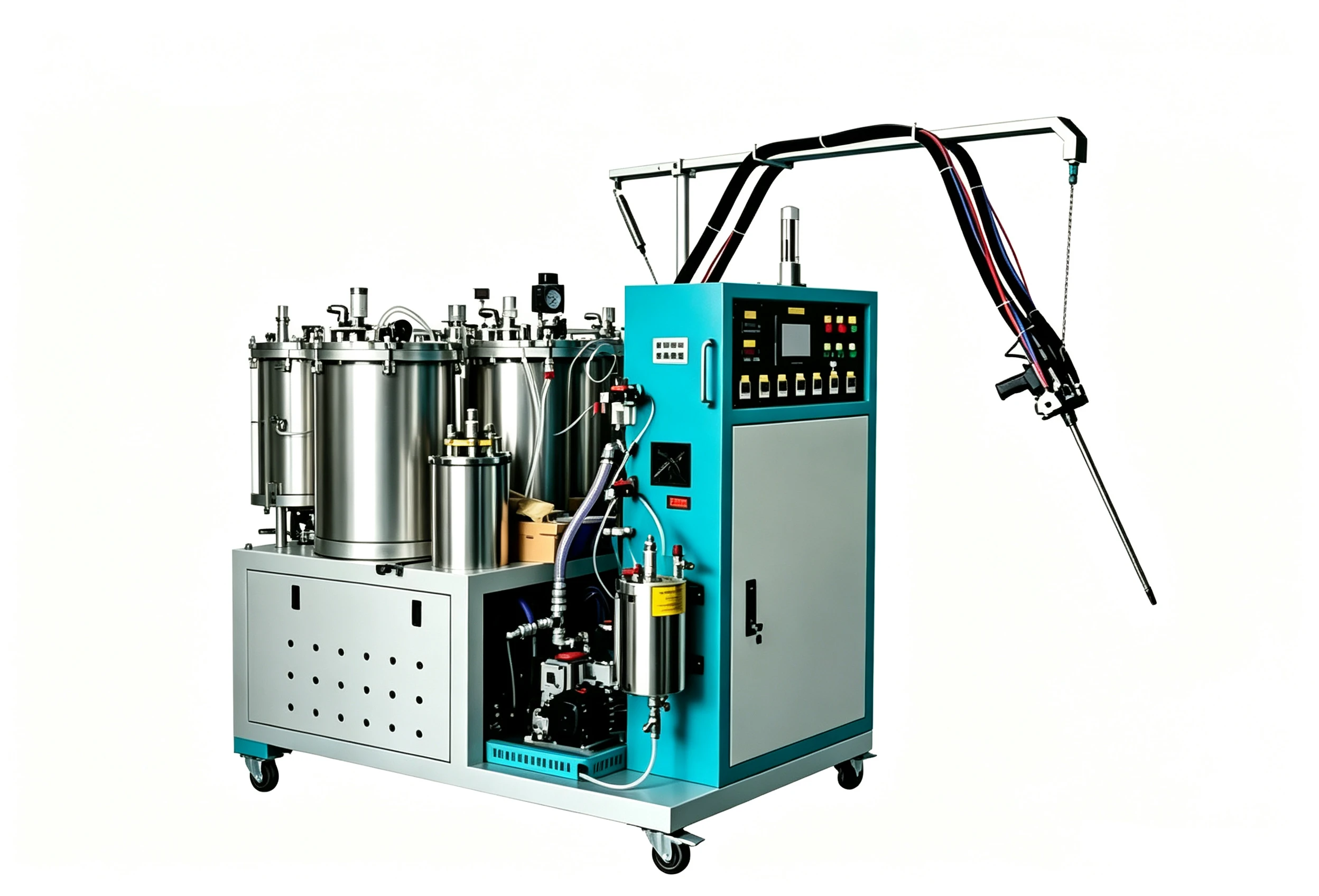
Epoxy Pouring Machine | Printing Rollers
Low Pressure Polyurethane Machine
PU Elastomer Casting Machine | Hydraulic Seals
Polyurethane Machinery &Equipment
MC Nylon Casting Machine | Cast Nylon Parts
MC Nylon Casting Machines
PU Elastomer Casting Machine | Cold Rolling Rollers
Polyurethane Machinery &Equipment


