
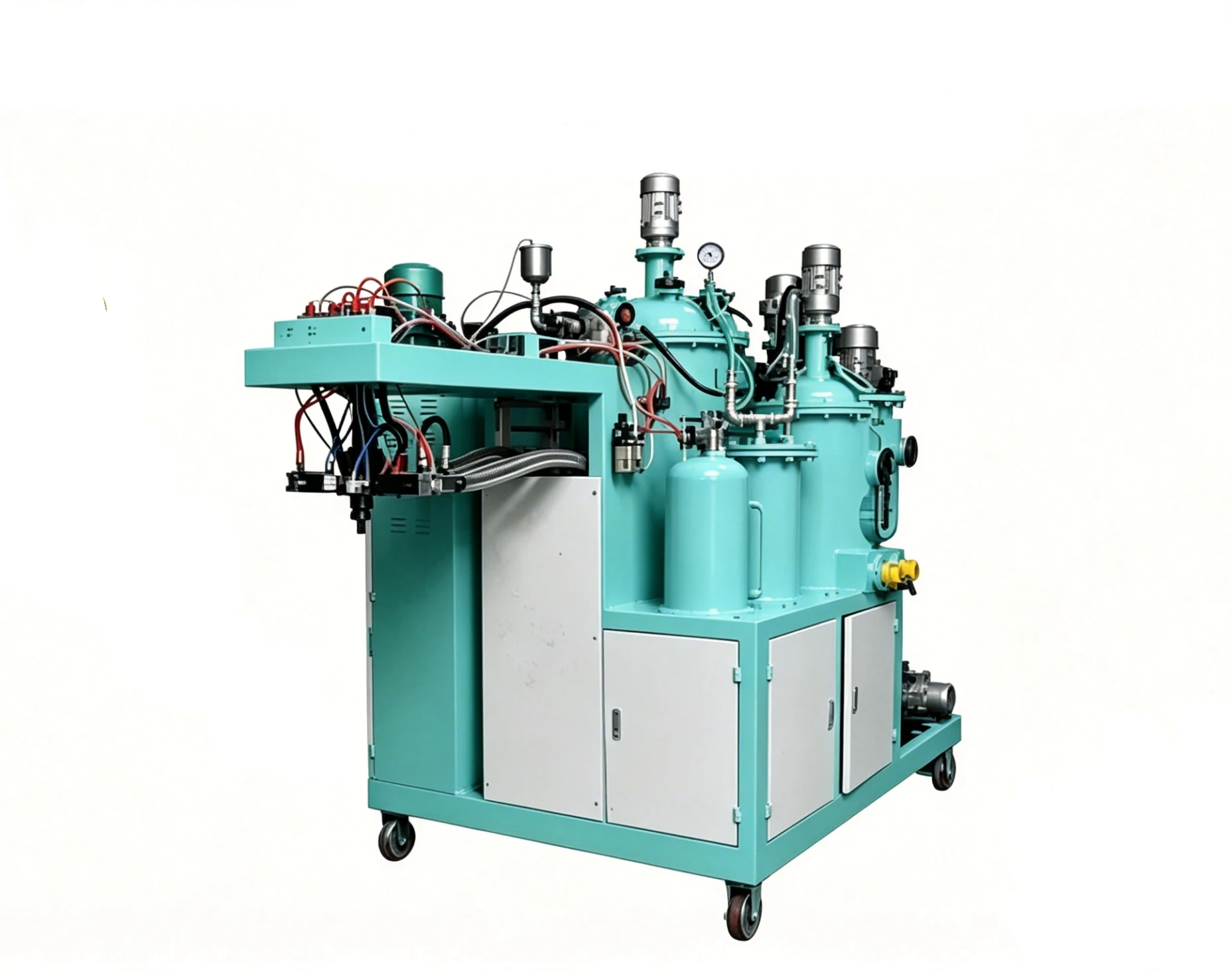
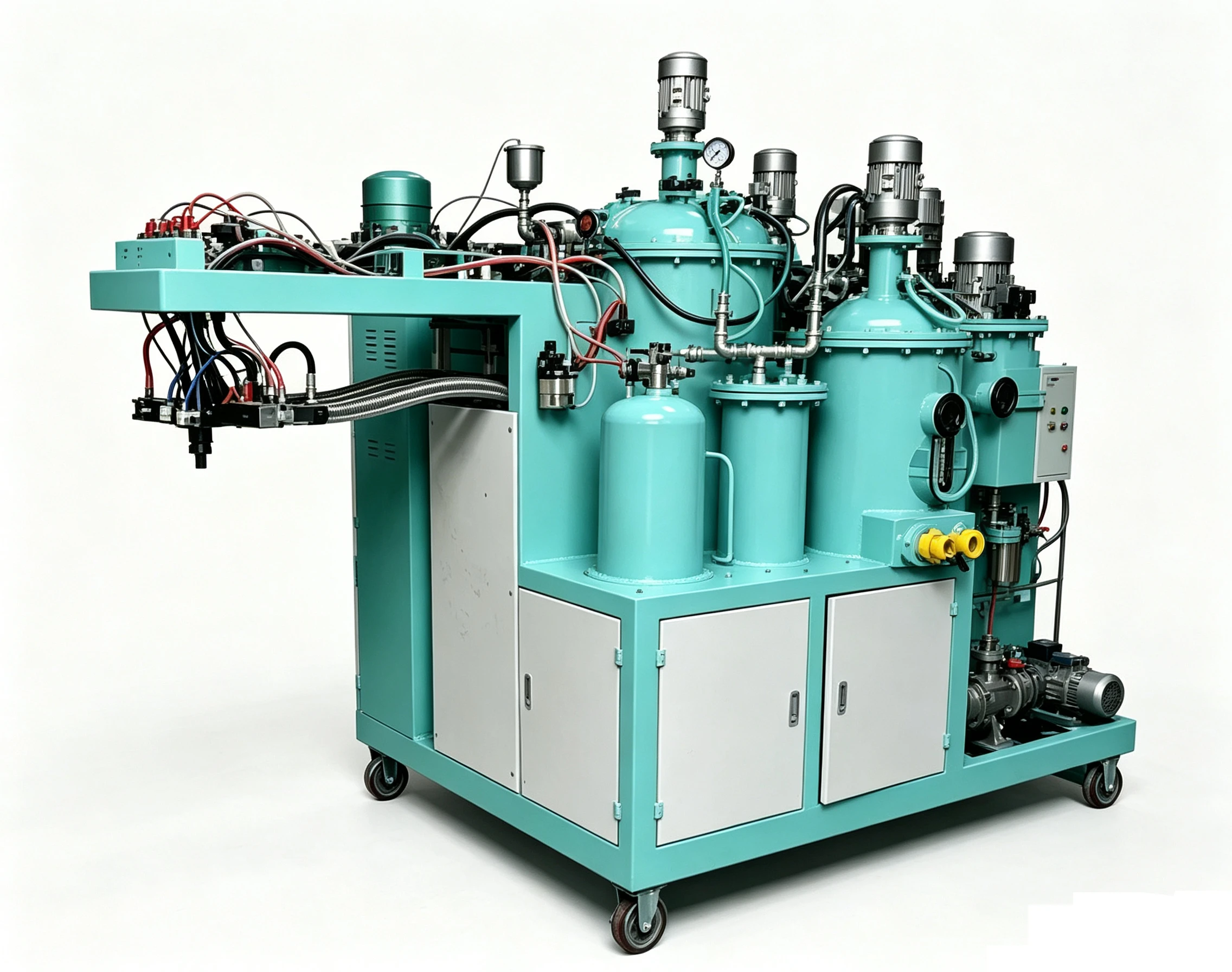
PU Elastomer Casting Machine | Auto Buffers
Low-pressure elastomer casting system for automotive buffer blocks, featuring independent modifier tank for resilience and hardness adjustability
Dosing Rate
50~1200 g/s
Dosing Accuracy
≤±0.3%
Tank Capacity
200L / 250L (optional, per tank)
Product Overview
Suitable for mass production of polyurethane buffer blocks for passenger vehicles and commercial vehicles, including suspension buffer pads, limit buffers, chassis anti-collision cushions, and rebound components.
This low-pressure PU elastomer casting machine is purpose-built for the mass production of automotive buffer blocks, including suspension buffer pads, limit buffers, chassis anti-collision cushions, and rebound components for passenger and commercial vehicles. The 2A2B two-component system includes an independent modifier tank for resilience adjustment, supporting flexible hardness control (35–65 Shore A) compatible with various vehicle types. Using solid/microcellular elastomer technology, the finished parts feature dense structure, shock absorption, compression resistance, wide temperature tolerance, and low compression set. The dedicated low-pressure elastomer process with gentle mixing prevents overheating, producing parts with the specified solid or microcellular structure; rebound is verified on the selected material and stable performance without cracking or deformation in long-term use. Precise temperature and dosing control ensure minimal hardness and density deviation between batches, meeting high-precision automotive requirements.
Operation Workflow
Raw Material & Modifier Preparation
Prepare polyether polyol (Tank A) and isocyanate (Tank B) at the target mix ratio (100:40-90); select the resilience modifier and load it into the independent tank based on target hardness (35-65 Shore A).
Tank Loading & Temperature Setting
Load polyol into Tank A and isocyanate into Tank B; set Tank A to 25-55°C and Tank B to 20-45°C, and preheat the mold with the external mold heater to 40-80°C.
Metering, Mixing & Low-Pressure Casting
The PLC dosing system dispenses precisely; the mixing head runs at 1500-3500 r/min for gentle low-pressure mixing, with dosing rate 50-1200 g/s, shot weight 50-500 g/mold, at 0.3-1.5 MPa.
Curing & Demolding
Allow the buffer block to cure in the mold at controlled temperature, with a typical cycle time of 90-150 seconds per mold; after curing, demold the finished buffer block.
Technical Specifications
The listed 50–1,200 g/s is a configuration-family dispensing reference. Pump selection, individual component output, minimum stable shot and combined delivery are specified for the quoted configuration. Solid and microcellular elastomer results require separate material and finished-part tests.
| Technical Parameter | HF-LPUE-2A2B-Auto-Buffer |
|---|---|
| Dosing Rate | 50~1200 g/s |
| Shot Weight Per Mold | 50~500 g/mold |
| Mix Ratio | Polyether Polyol : Isocyanate = 100:40~90 |
| Tank Capacity | 200L / 250L (optional, per tank) |
| Mixing Head Speed | 1500~3500 r/min |
| Dosing Accuracy | ≤±0.3% |
| Tank System | 2A2B two-component system + independent modifier tank for resilience |
| Temperature Control | Tank A: 25~55℃; Tank B: 20~45℃ |
| Mold Temperature Control | 40~80℃ (external mold heater) |
| Casting Pressure | 0.3~1.5 MPa |
| Cycle Time | 90~150 sec/mold |
| Cleaning System | Pneumatic liquid cleaning + automatic air purge |
| Power | 5.5~12 kW |
| Control System | PLC touch control + formula storage |
| Application System | Two-component polyurethane elastomer (CPU) / microcellular elastomer system |
| Warranty | 1 Year |
| Certification | Confirm applicable documents for the quoted configuration |
Key Features & Advantages
Engineered for precision, consistency, and efficiency in automotive buffer block mass production.
Dedicated Low-Pressure Elastomer Process
Gentle mixing prevents overheating, producing parts with the specified solid or microcellular structure; rebound is verified on the selected material. Performance remains stable without cracking or deformation in long-term use.
Independent Modifier Tank for Hardness Adjustment
Supports adjustable hardness from 35~65 Shore A, compatible with buffer blocks for various vehicle types from passenger cars to commercial vehicles.
Precise Temperature & Dosing Control
Ensures minimal deviation in hardness and density between batches, meeting the high-precision requirements of automotive OEM production.
Solid/Microcellular Elastomer Technology
Finished parts feature dense structure, shock absorption, compression resistance, wide temperature tolerance, and low compression set for reliable automotive applications.
Low Power Consumption & Easy Maintenance
Designed for energy efficiency and simple maintenance, supporting 24-hour continuous operation for standardized automotive production lines.
Intelligent PLC Touch Control with Formula Storage
PLC touch control interface with formula storage simplifies operation, reduces manual errors, and enables rapid changeovers between different buffer block specifications.
See It in Action
Explore Other Equipment
Browse other equipment in our catalog. These listings are for product discovery; compatibility and production-line scope are confirmed separately for your material, process and output requirements.
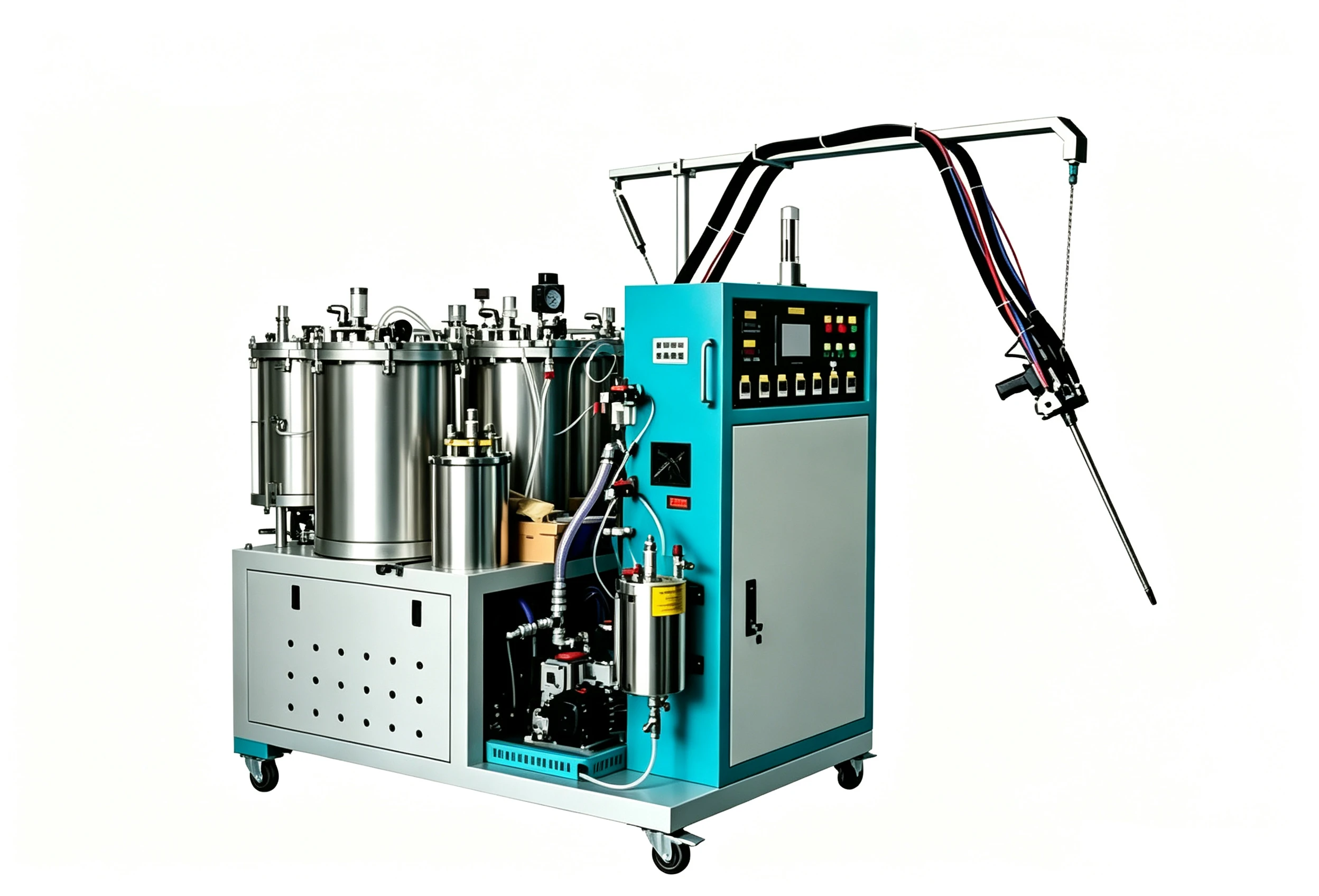
Epoxy Pouring Machine | Printing Rollers
Low Pressure Polyurethane Machine
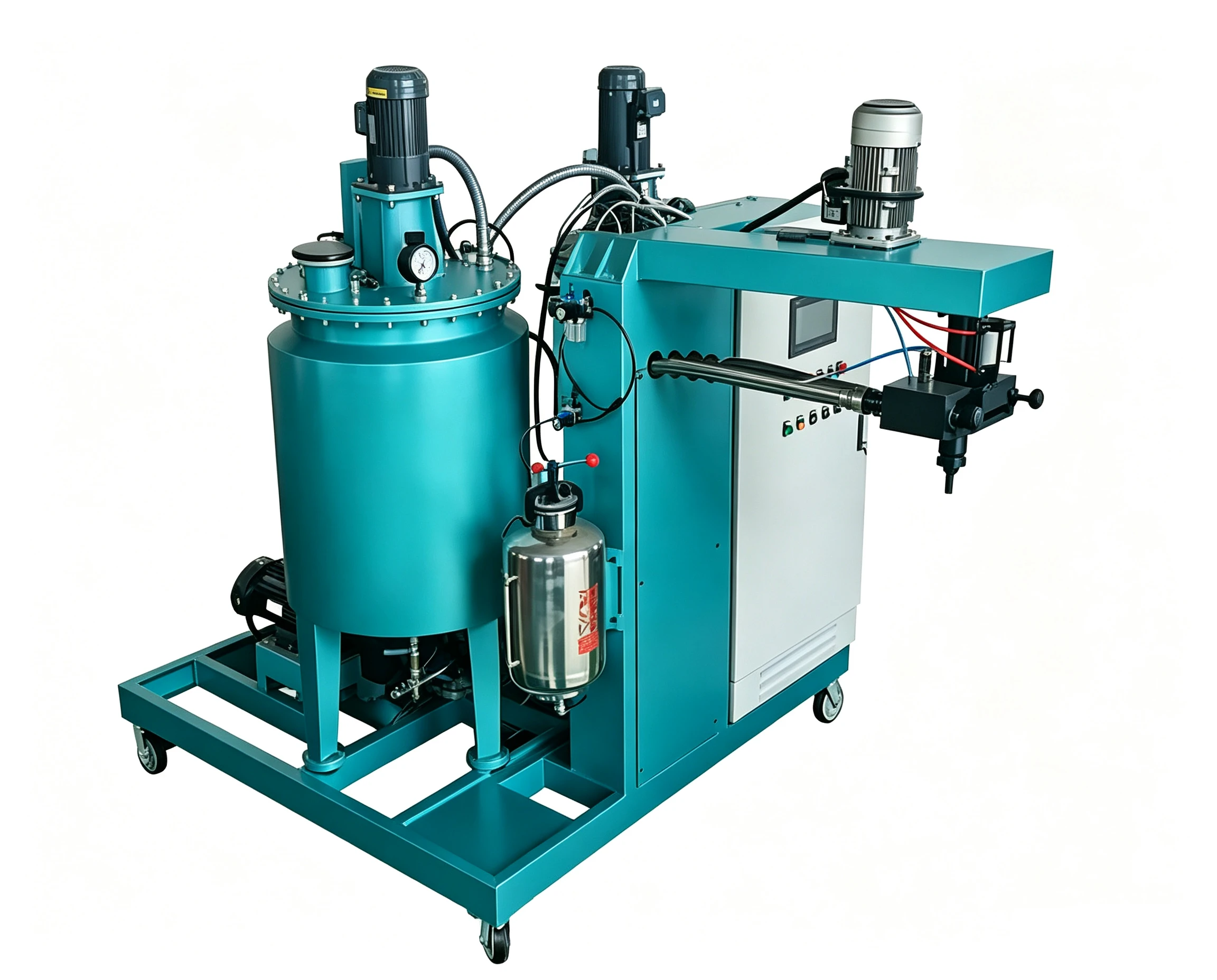
PU Elastomer Casting Machine | Hydraulic Seals
Polyurethane Machinery &Equipment
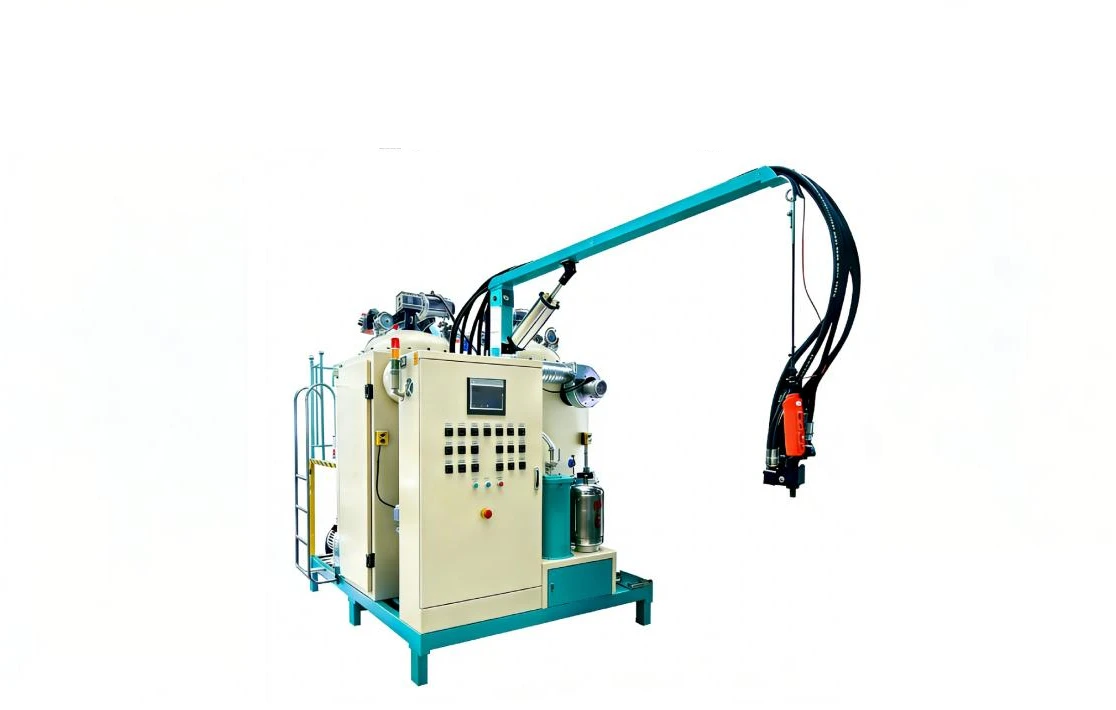
MC Nylon Casting Machine | Cast Nylon Parts
MC Nylon Casting Machines
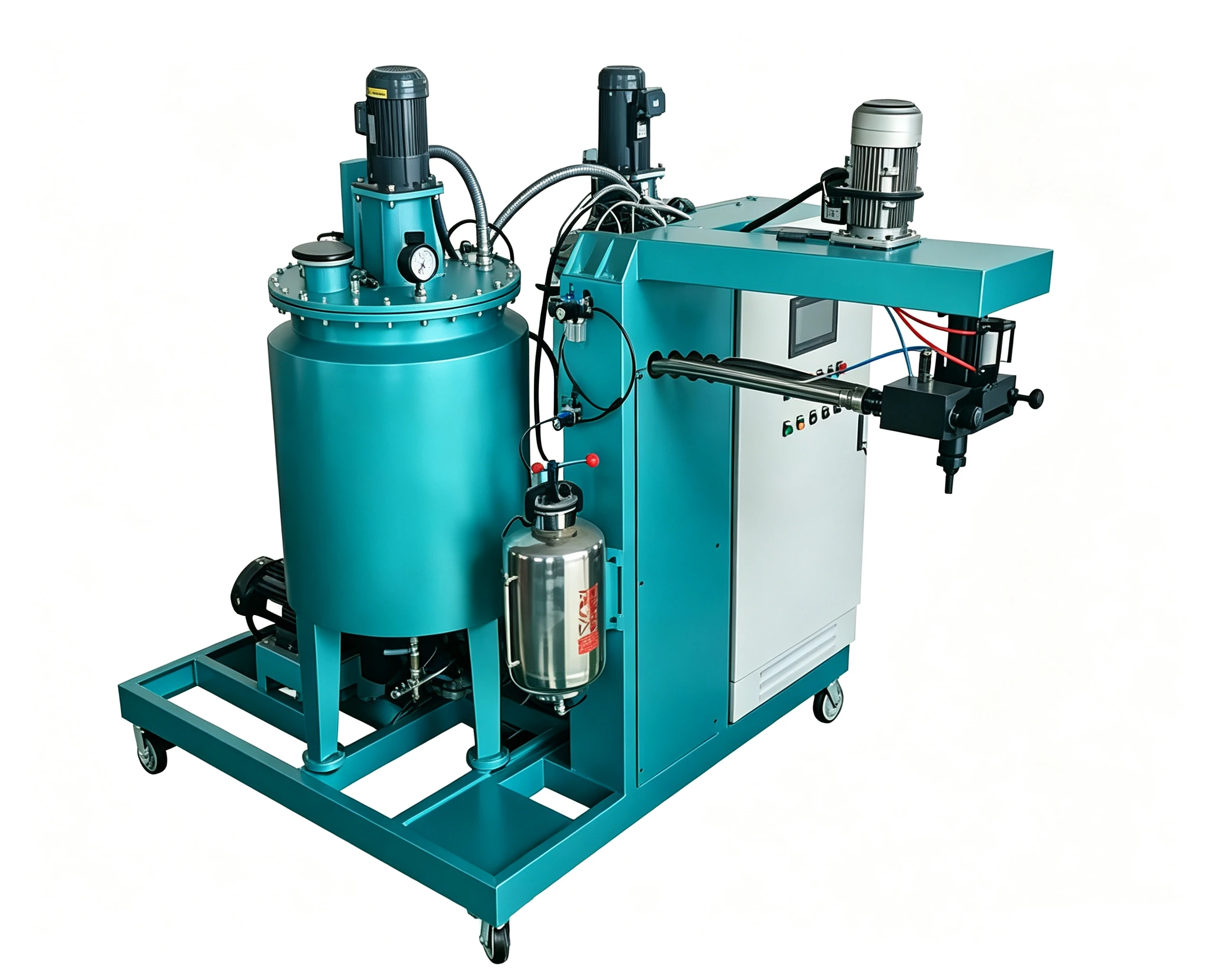
PU Elastomer Casting Machine | Cold Rolling Rollers
Polyurethane Machinery &Equipment


