
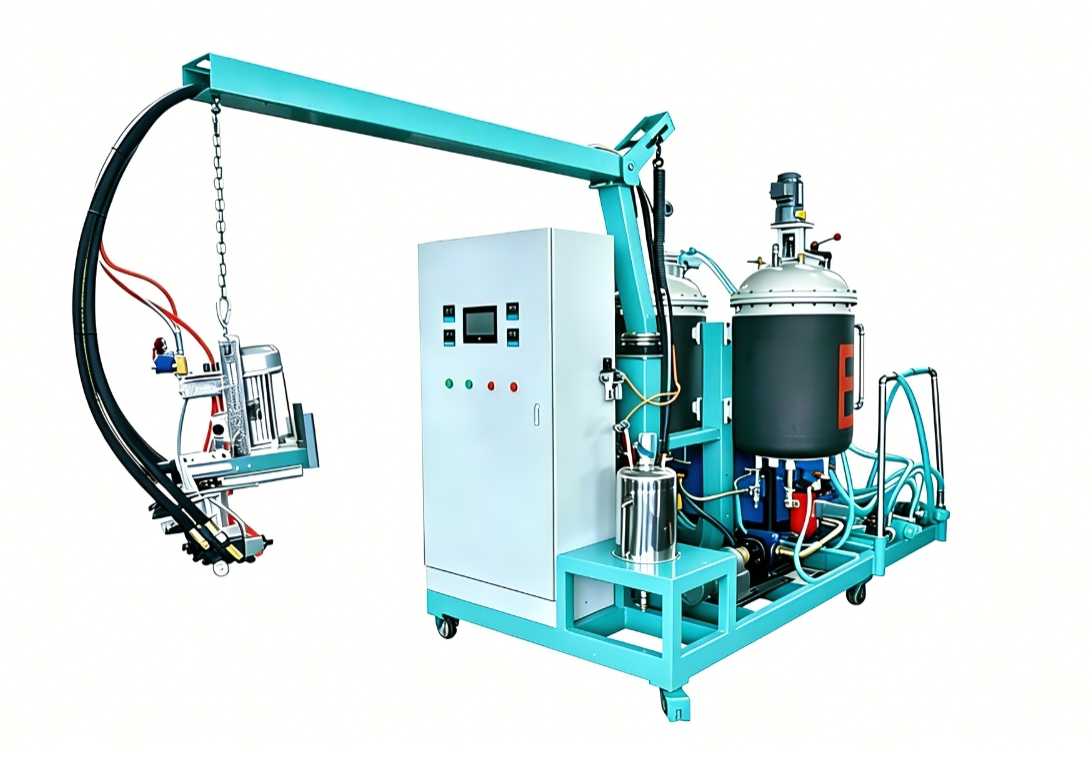
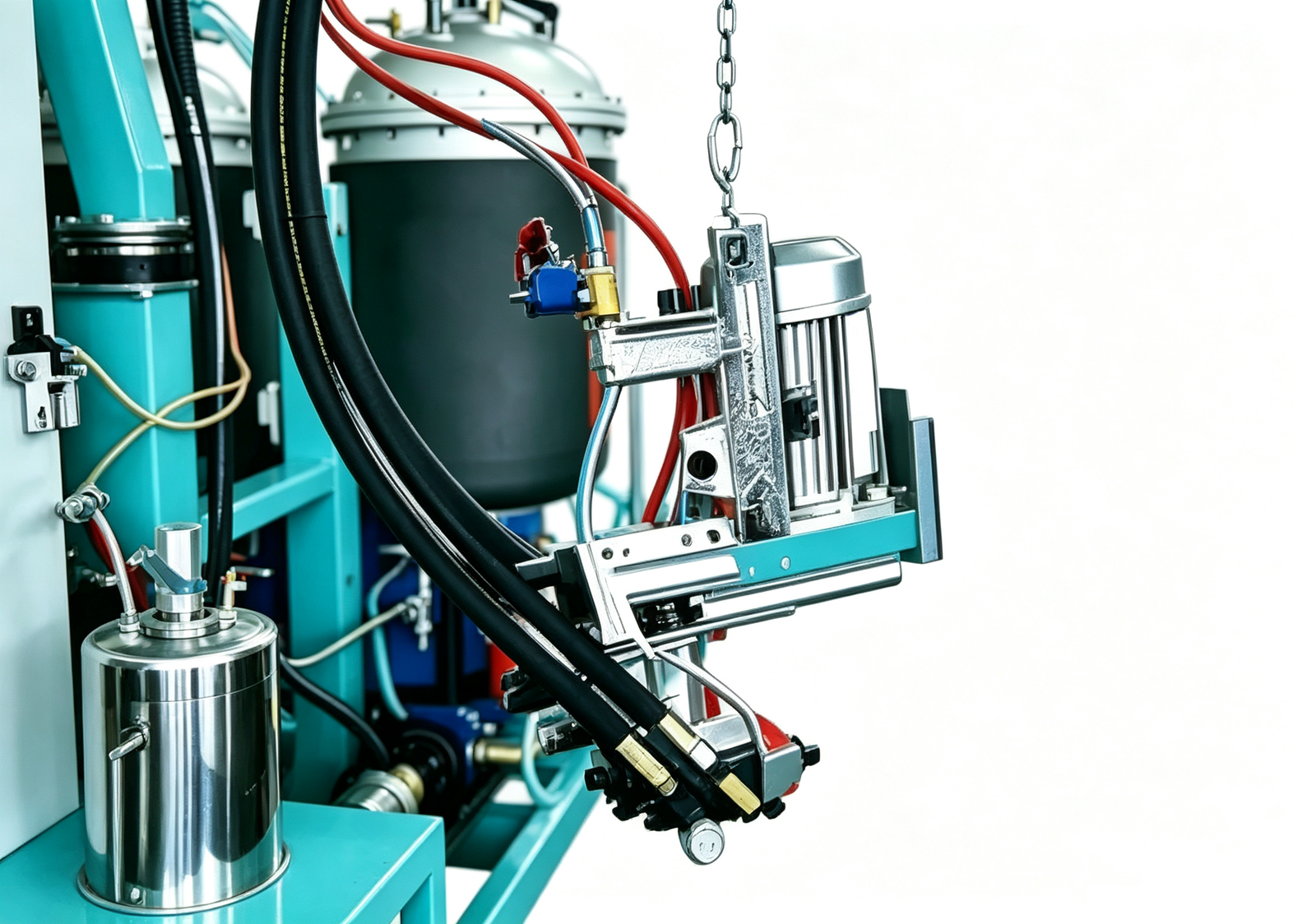
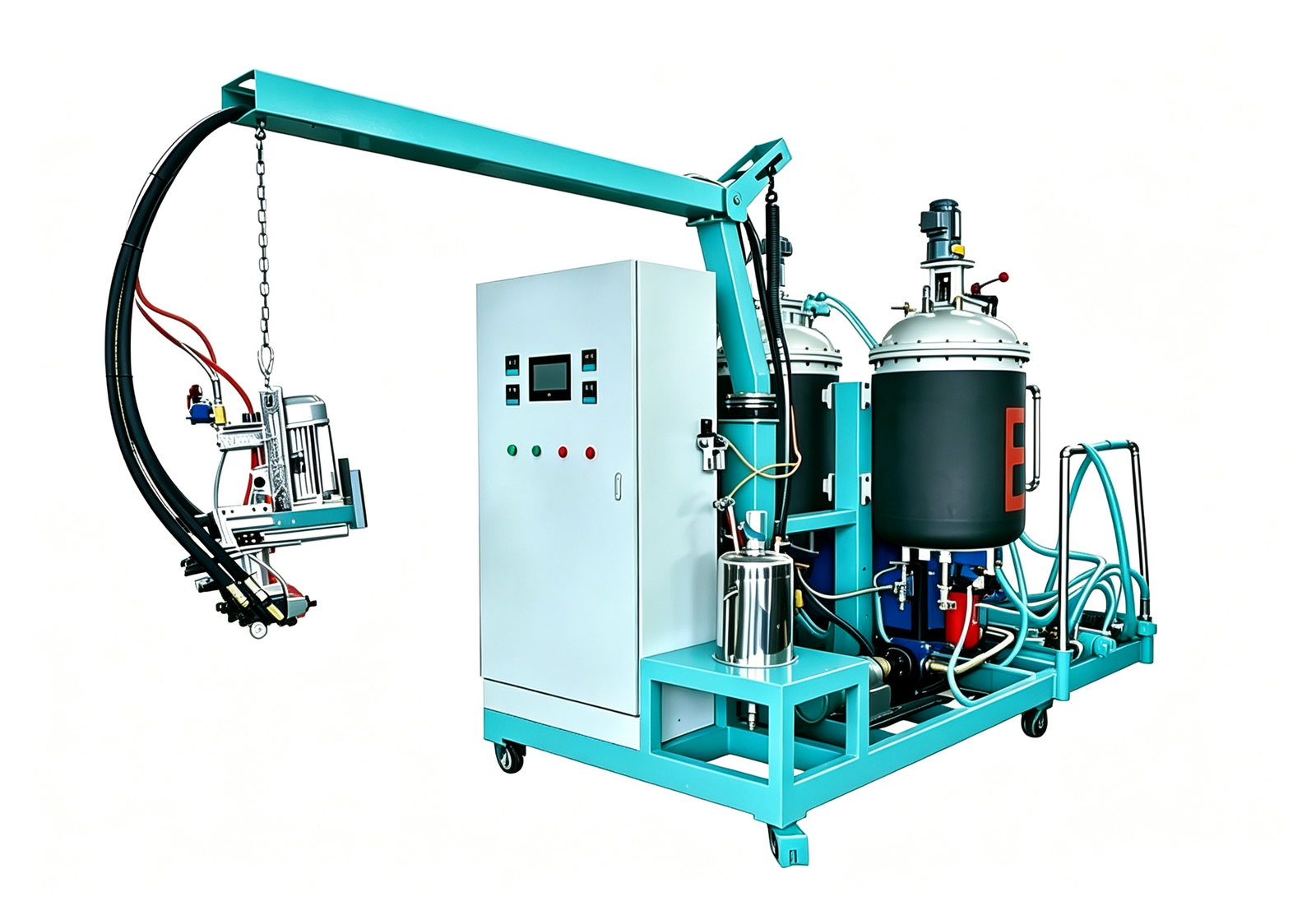
Low-Pressure PU Foaming Machine | Solid Tires
Low-pressure PU foaming system for manufacturing polyurethane solid tires for electric scooters, golf carts, shared commuter vehicles, and automobile spare tires, with vacuum degassing, ±0.3% metering, and full-loop temperature control.
Discharge Flow Rate
100–500 g/s
Mix Ratio (A:B)
100 : 90–120
Mixing Head Speed
4,000–5,000 r/min
Metering Accuracy
±0.3%
Product Overview
The HF-LPM-1A1B-T is a low-pressure PU foaming system for solid tires, with vacuum degassing, full-loop temperature control (±1°C), ±0.3% accuracy, and PLC automation.
This low-pressure polyurethane foaming machine is specially designed for manufacturing polyurethane solid tires for electric scooters, golf carts, shared commuter vehicles and automobile spare tires. It features a 200L tank system, 100–500 g/s discharge flow, 100:90–120 A:B ratio and 4,000–5,000 r/min mixing head speed. High-precision metering pumps achieve ±0.3% accuracy, eliminating uneven hardness and material shortage. Optional vacuum degassing removes micro-air bubbles, producing pore-free tire sections for higher yield. A full closed-loop temperature system from tanks to mixing head limits deviation within ±1°C, ensuring consistent batch quality. PLC control with optional remote access enables fast fault diagnosis and automatic alarms.
Production Workflow
Raw Material Preparation & Vacuum Degassing
Load polyol and isocyanate into 200L tanks; activate optional vacuum degassing modules to remove micro-air bubbles from raw materials.
Recipe Selection & Flow Rate Setting
Select stored formula on PLC touch screen; set A:B ratio (100:90–120) and target flow rate (100–500 g/s) per tire specification.
Precision Pouring & Filling
Mixed PU material is poured into tire molds with vacuum-assisted defoaming; material fills the cavity under controlled temperature (±1°C) to eliminate internal pores.
Curing, Demolding & System Cleaning
Allow tire to cure in mold; demold finished solid tire; automatic cleaning cycle prepares the system for the next production run.
Technical Specifications
Specifications are based on standard configurations. Custom flow rates, vacuum degassing modules, and remote network access available upon request.
| Technical Parameter | HF-LPM-1A1B-T |
|---|---|
| Discharge Flow Rate | 100–500 g/s |
| Raw Material Mix Ratio | 100:90–120 |
| Tank Volume | 200 L |
| Total Motor Power | 15 kW |
| Mixing Head Rotational Speed | 4,000–5,000 r/min |
| Metering Accuracy | ±0.3% |
| Core Features | Low reject rate, vacuum degassing, zero pores, ±0.3% precision, stable temperature control, high automation |
| Warranty Period | 1 year |
| Net Weight | 1,000 kg |
| Certifications | Confirm applicable documents for the quoted configuration |
| Brand Name | Haifeng |
Key Advantages
Six engineering benefits that deliver puncture‑resistant, pore‑free solid tires with extended service life, flexible production, and consistent batch quality.
Superior Product Performance & Low Reject Rate
Optimized for high-hardness, high-filling solid tire formulations. Finished tires deliver outstanding puncture and cut resistance, with service life extended by over 20% compared to ordinary tires.
Vacuum Auxiliary Defoaming for Zero Internal Pores
Optional tank vacuum degassing + mixing head negative‑pressure defoaming drastically reduce air content. Tire cross‑sections show no visible pores, eliminating a primary cause of wear and tear failure.
High‑Precision Metering for Consistent Quality
High-temperature resistant, low-speed, high-precision metering pumps achieve ±0.3% accuracy, ensuring stable A:B ratio and eliminating uneven hardness and material shortage defects.
Full Closed‑Loop Temperature Control (±1°C)
Independent tank circulation, pipeline water jackets, and mixing head temperature channels maintain full-process temperature stability within ±1°C—eliminating pores, hardness fluctuation, and color difference caused by seasonal or workshop temperature changes.
Powerful Flexible Production Capacity
Discharge flow widely adjustable (100–500 g/s); different tire sizes produced by changing metering pumps. Covers automobile spare tires to medium-load vehicle tires without additional equipment investment.
High Automation with Remote Diagnostic Support
PLC controller governs pouring, cleaning, and air purging. Optional remote network access enables fast fault diagnosis, reducing downtime and on-site service costs.
Complete Your Production Line
Integrate the product with our full range of auxiliary equipment for a turnkey polyurethane processing system.
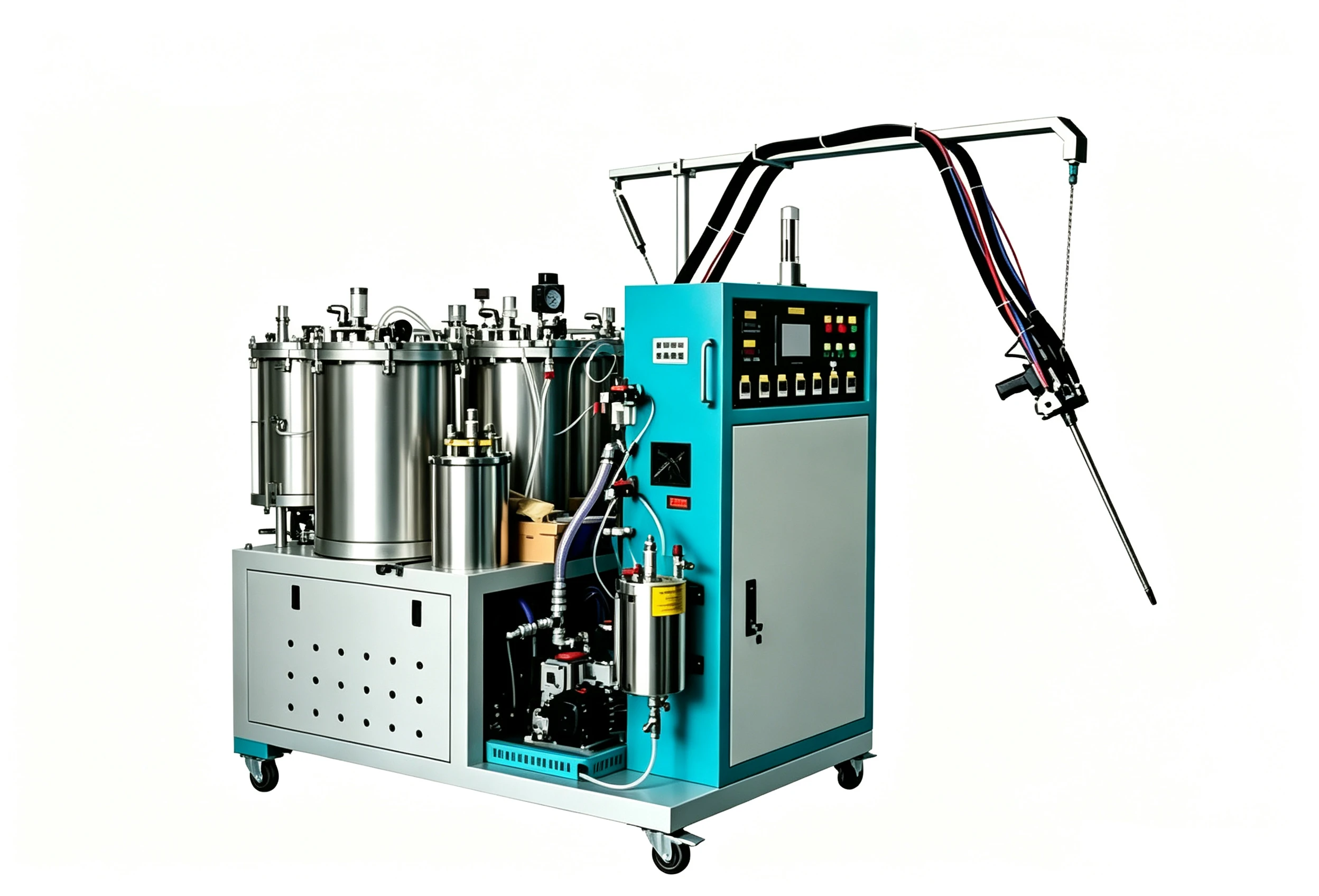
Epoxy Pouring Machine | Printing Rollers
Low Pressure Polyurethane Machine
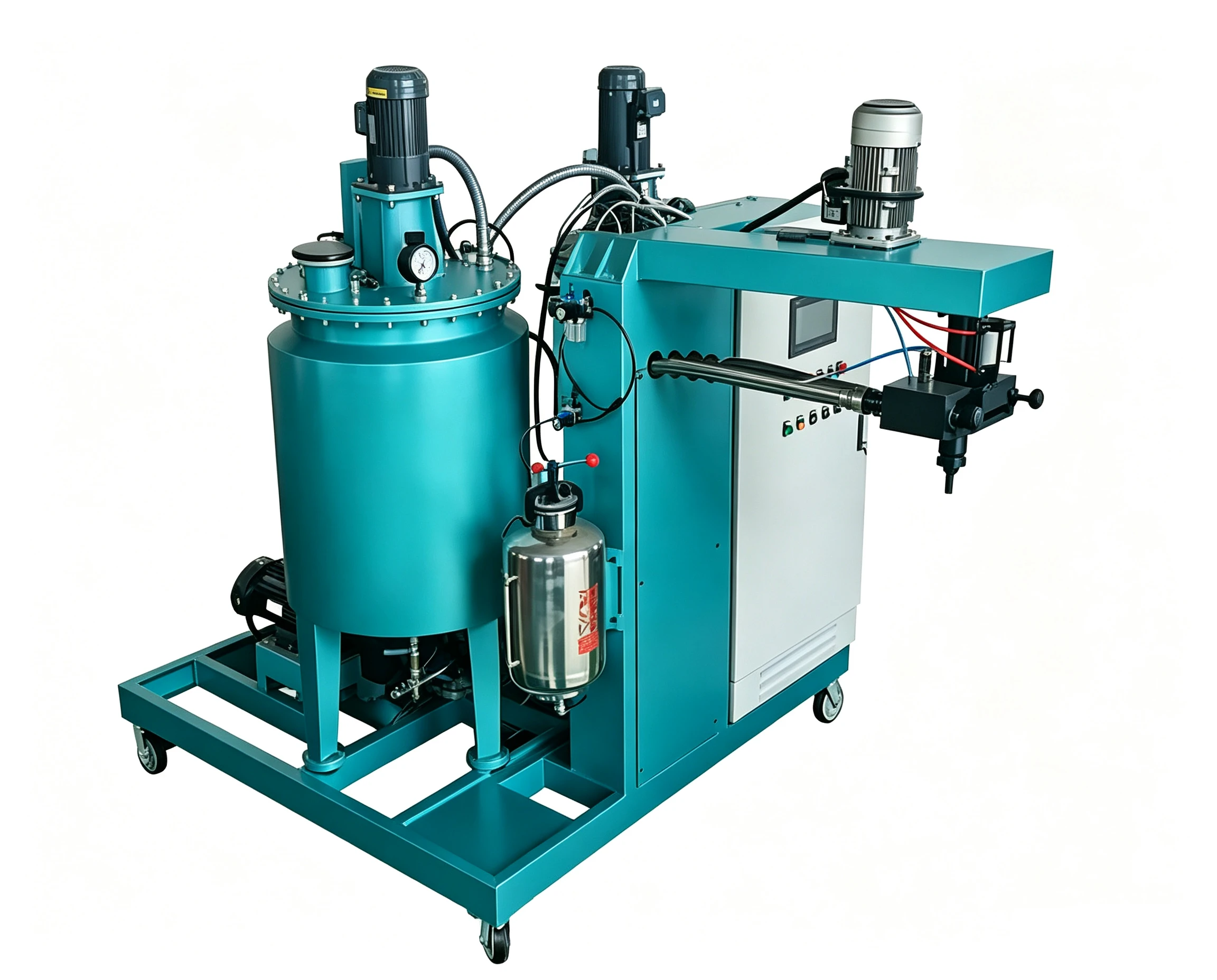
PU Elastomer Casting Machine | Hydraulic Seals
Polyurethane Machinery &Equipment
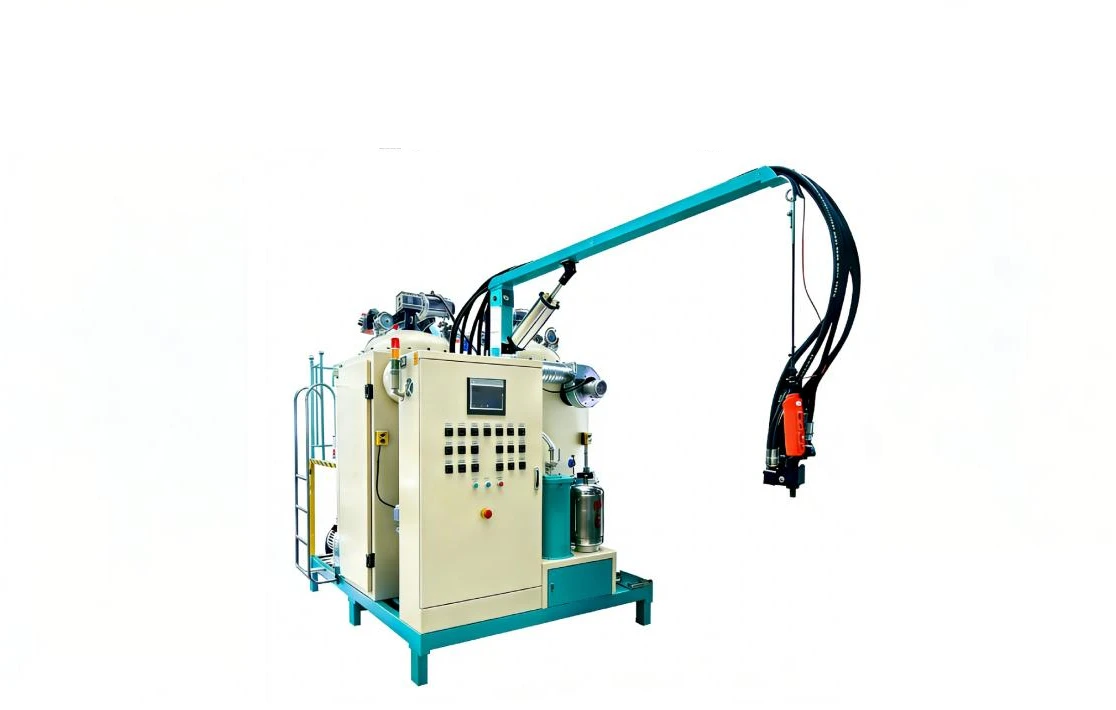
MC Nylon Casting Machine | Cast Nylon Parts
MC Nylon Casting Machines
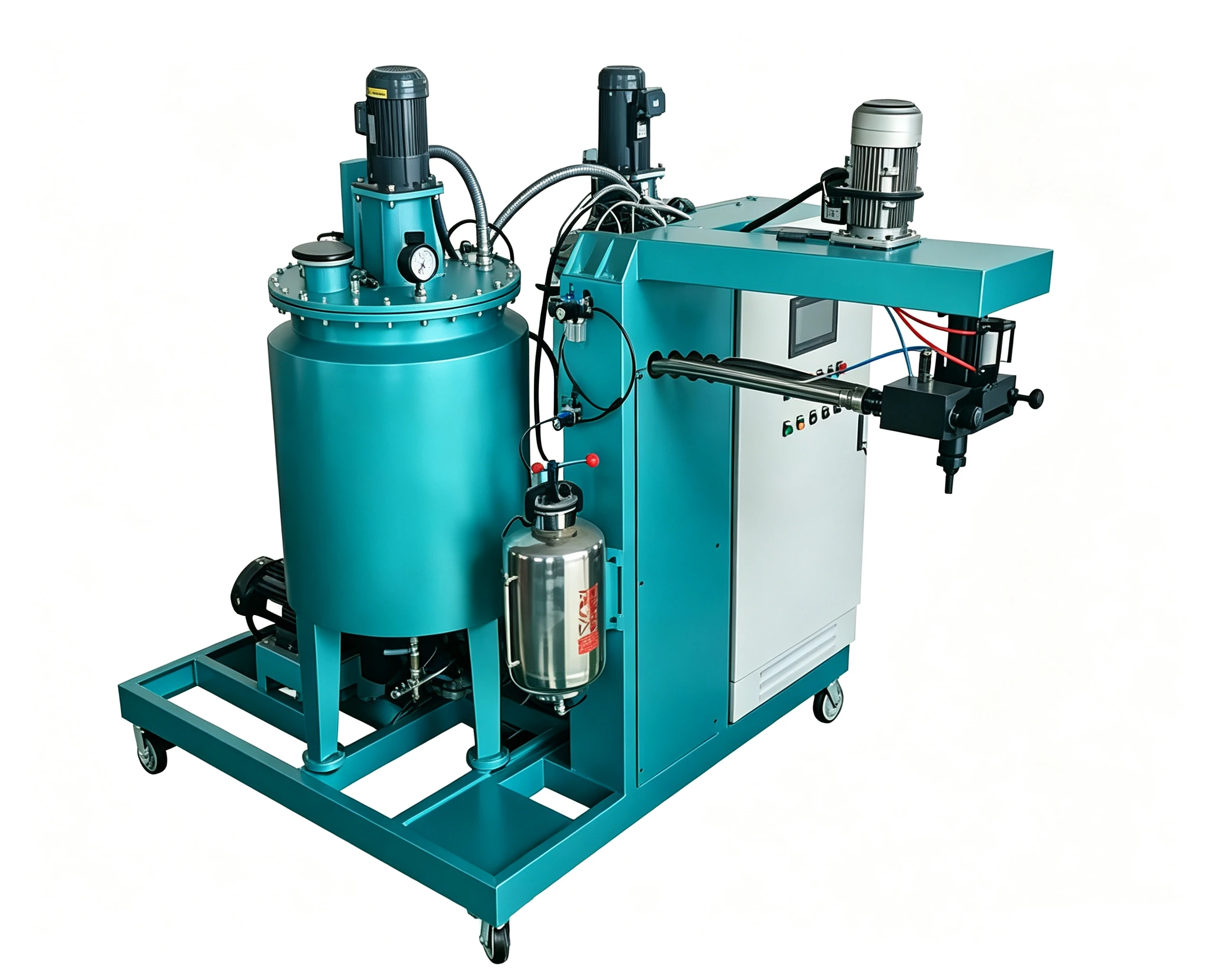
PU Elastomer Casting Machine | Cold Rolling Rollers
Polyurethane Machinery &Equipment


