
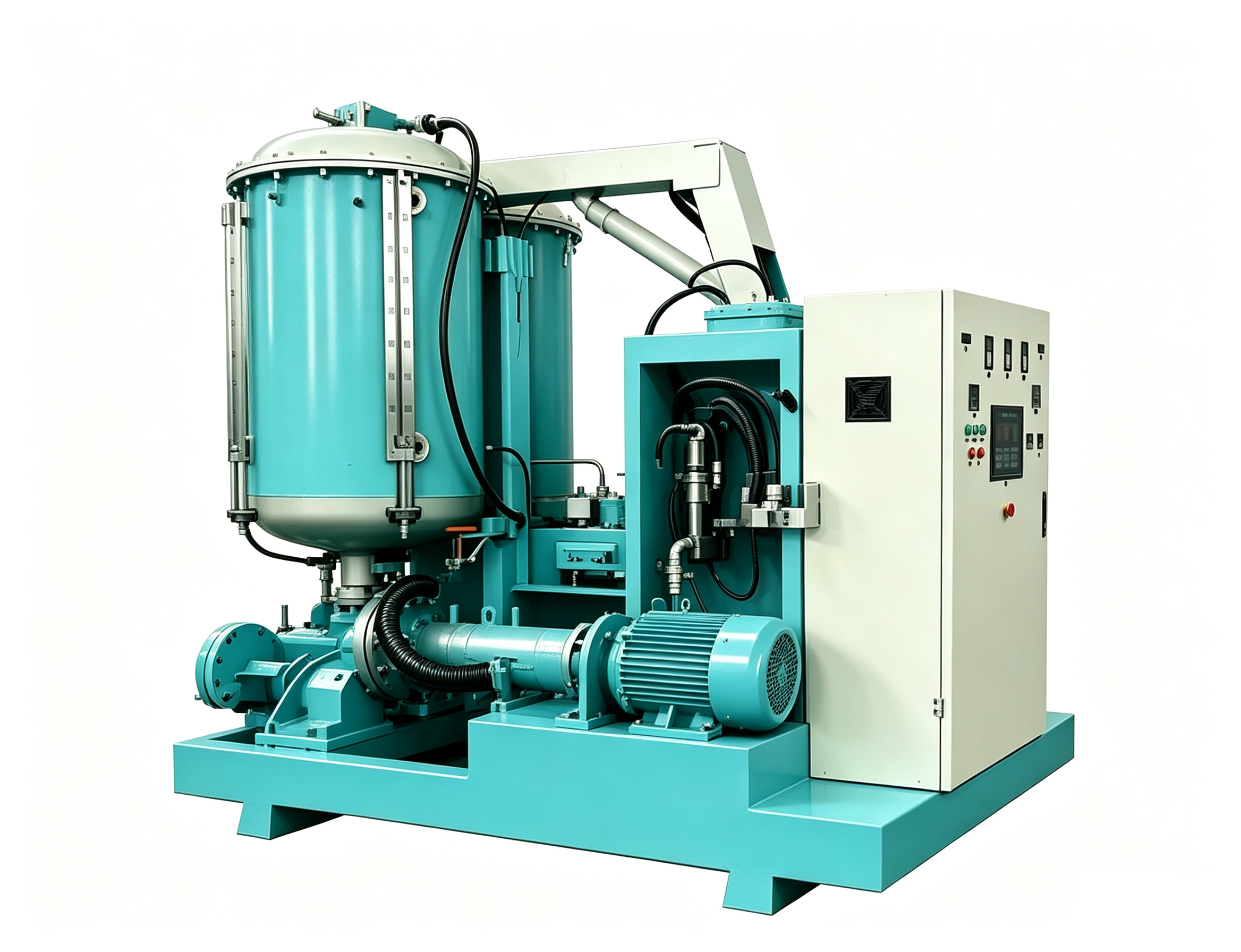
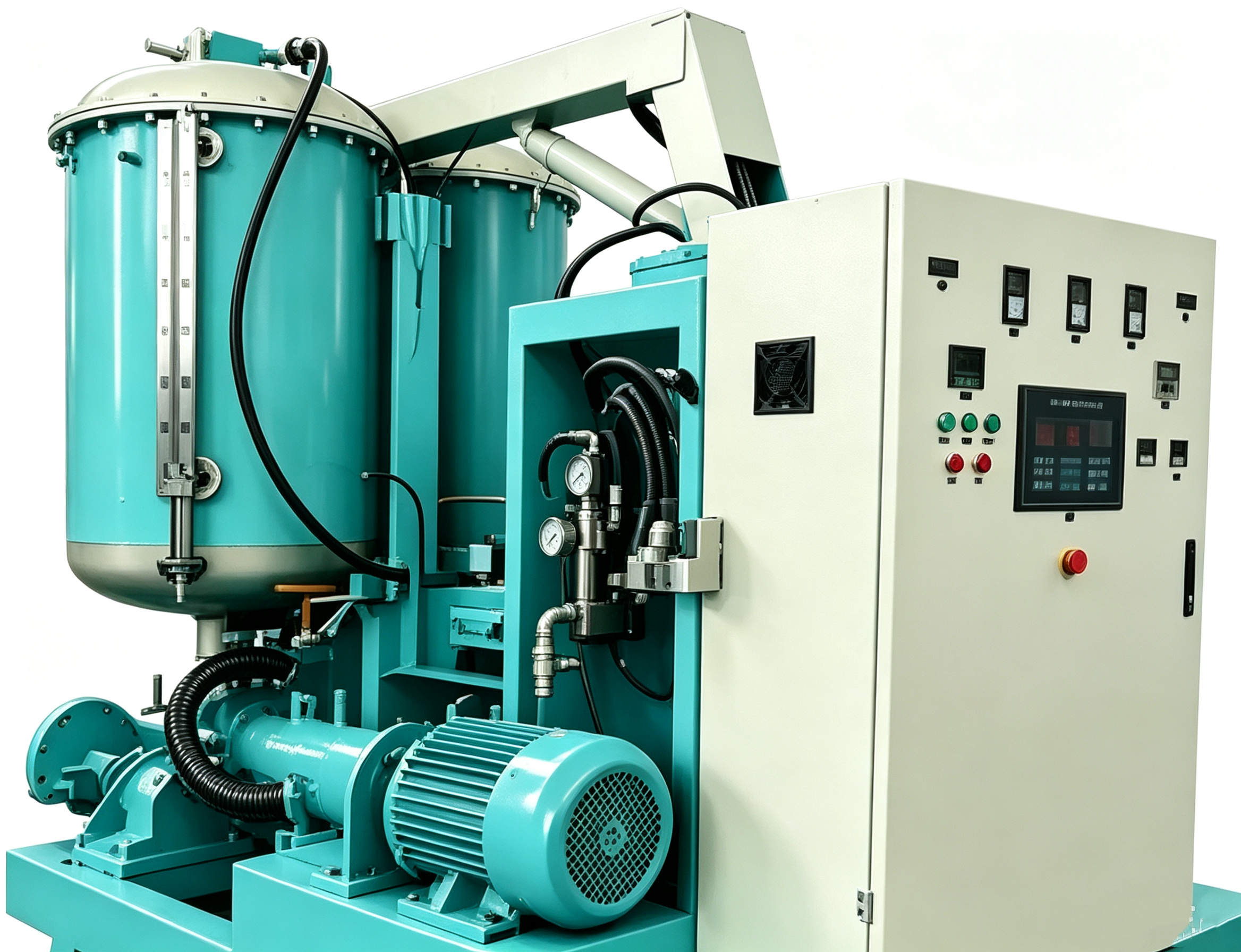
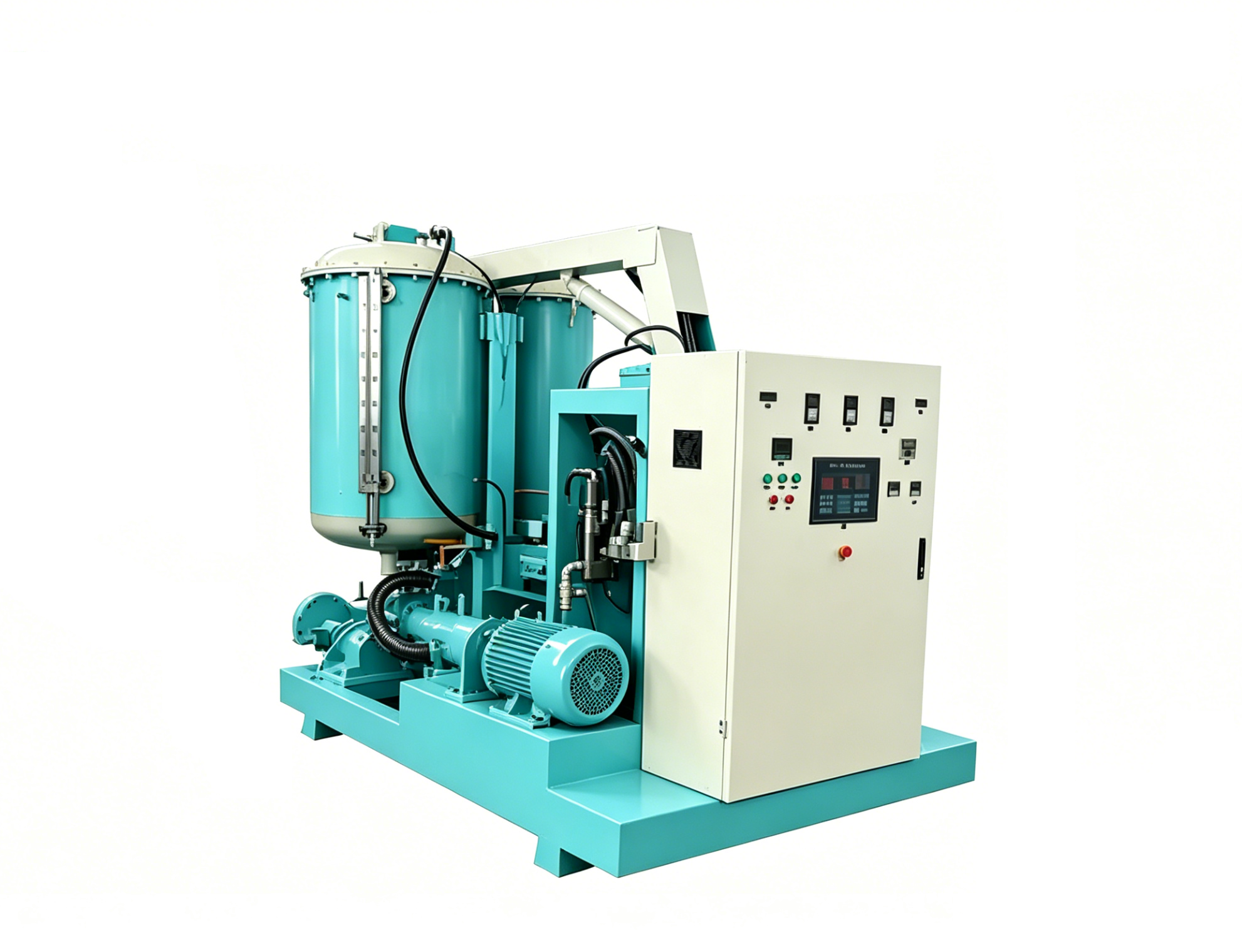
General RIM PU Molding Machine | Composite Parts
High‑pressure RIM system for carbon fiber, fiberglass & fiber‑reinforced composites, with wide flow range (100‑2000 g/s) for automotive, agricultural, marine & building parts.
Discharge Flow Rate
100–2000 g/s
Mix Ratio
Polyether: Isocyanate = 100:90~110
Metering Accuracy Reference
≤ ±0.3% (full dynamic range)
Temperature Control
25–45°C
Product Overview
RIM material preparation, metering and mixing for PU parts, with filler, reinforcement and tooling interfaces defined for the formulation.
This RIM equipment supplies configured PU material preparation, metering, high-pressure mixing and molding interfaces for selected component applications. Filler and reinforcement compatibility must be checked for the formulation and material-contact hardware.
The listed arrangement includes independently conditioned 200 L or 300 L tanks, circulation, PLC recipes and 100–2,000 g/s delivery. Tool venting, injection and cleaning interfaces follow the supplied mold and process configuration.
Continuous reinforcement belongs in the tool or preform unless a separate validated delivery process is specified. Strength, void content, part weight and dimensional performance depend on the resin, reinforcement, tooling, filling and cure conditions, with finished-component tests agreed separately.
Production Workflow
Material Preparation
Load polyether and isocyanate into separate tanks (200L/300L), set temperature (25‑45℃) and start circulation stirring.
Recipe Selection & Ratio Setting
Choose stored recipe on touch screen; adjust mix ratio (100:90‑110) and flow rate (100‑2000 g/s) per part requirement.
High‑Pressure Mixing & Injection
Deliver the components to the impingement mixing head using the listed 150–200 bar pressure reference, then inject into the mold with the specified venting arrangement. Validate mixing, fill and residual voids for the selected resin, tooling and cure.
Demolding & Cleaning
After curing, demold part; run high‑pressure circulation cleaning and air purge to prepare head for next batch.
Need a quote for this equipment?
Request a QuoteTechnical Specifications
Specifications are measured under standard ambient conditions (25°C). Actual values may depend on material formulation and mold design.
| Technical Parameter | HF‑RIM‑PU‑1A1B |
|---|---|
| Pouring Rate | 100~2000 g/s |
| Mix Ratio | Polyether: Isocyanate = 100:90~110 |
| Tank Capacity | 200L / 300L (Optional, Per Tank) |
| Dosing Accuracy | ≤ ±0.3% (full dynamic range) |
| Temperature Control Range | 25~45℃ |
| Mixing Pressure | 150~200 bar |
| Venting System | Mold negative pressure venting + high‑pressure homogenization |
| Cleaning System | High‑pressure circulation cleaning + air purging |
| Power Consumption | 15~22 kW |
| Control System | PLC + touch screen + multi‑formula storage |
| Applicable Materials | Carbon fiber / fiberglass / fiber‑reinforced PU composites |
| Warranty | 1 year |
| Certification | Confirm applicable documents for the quoted configuration |
Key Advantages
Six core benefits that make this machine ideal for flexible, high‑quality production of fiber‑reinforced polyurethane components across multiple industries.
High‑Pressure Homogeneous Mixing
Ensures compact and stable composite structure, delivering consistent mechanical properties for both thin‑walled trims and thick‑section structural parts.
Extremely Wide Adjustable Output
Flow rate from 100 to 2000 g/s covers small precision components (e.g., automotive interior details) and large‑scale integral moldings (e.g., building panels, boat hulls).
Accurate Metering & Proportioning
Closed‑loop ratio control keeps deviation ≤±0.3%, ensuring high finished‑product yield even with varying fiber‑reinforced formulations.
Multi‑Formula Storage & Quick Changeover
PLC stores multiple recipes; fast switching enables flexible production of different parts without lengthy setup, maximizing equipment utilization.
Robust Tank & Temperature Management
Optional 200L/300L tanks with independent temperature control and circulation stirring maintain stable material viscosity for consistent dosing.
Efficient Cleaning & Low Maintenance
High‑pressure circulation cleaning combined with air purging reduces downtime and extends service life of the mixing head and seals.
Discuss Your Equipment Configuration
Share your product, materials, tooling and production requirements so we can review the equipment and interfaces for your project.
Explore Other Equipment
Browse other equipment in our catalog. These listings are for product discovery; compatibility and production-line scope are confirmed separately for your material, process and output requirements.
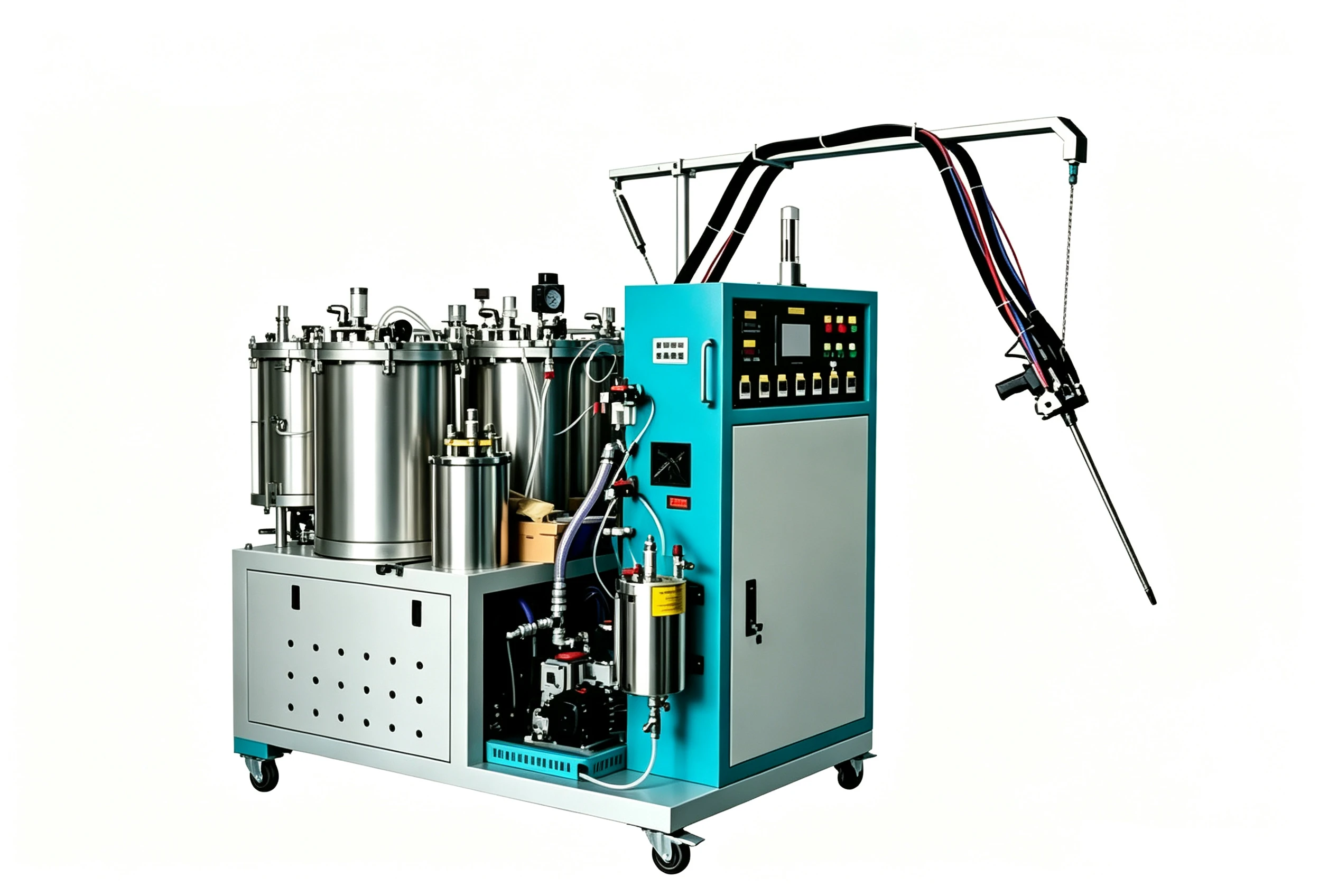
Epoxy Pouring Machine | Printing Rollers
Metering, Mixing & Resin Casting Equipment
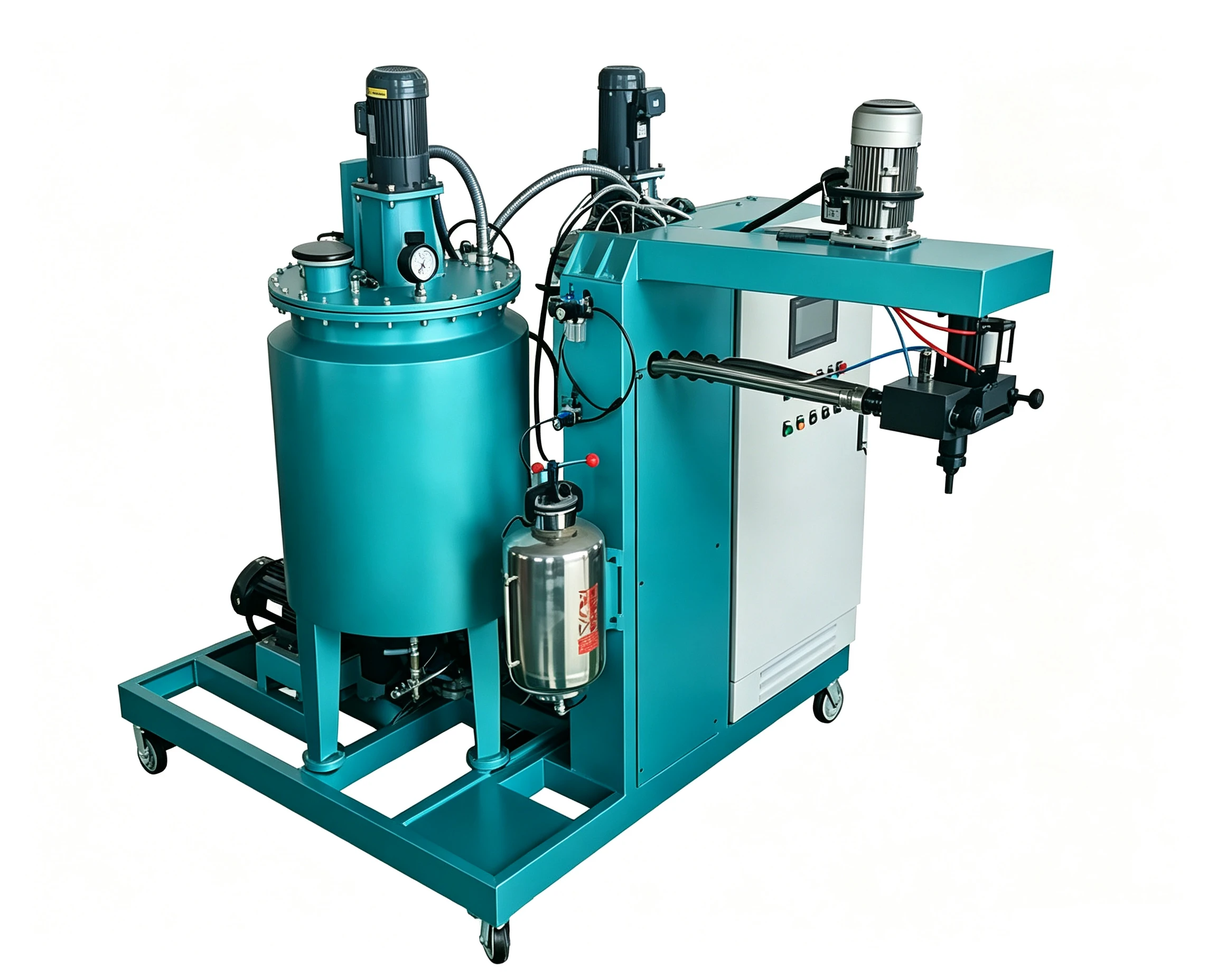
PU Elastomer Casting Machine | Hydraulic Seals
Polyurethane Machinery & Equipment
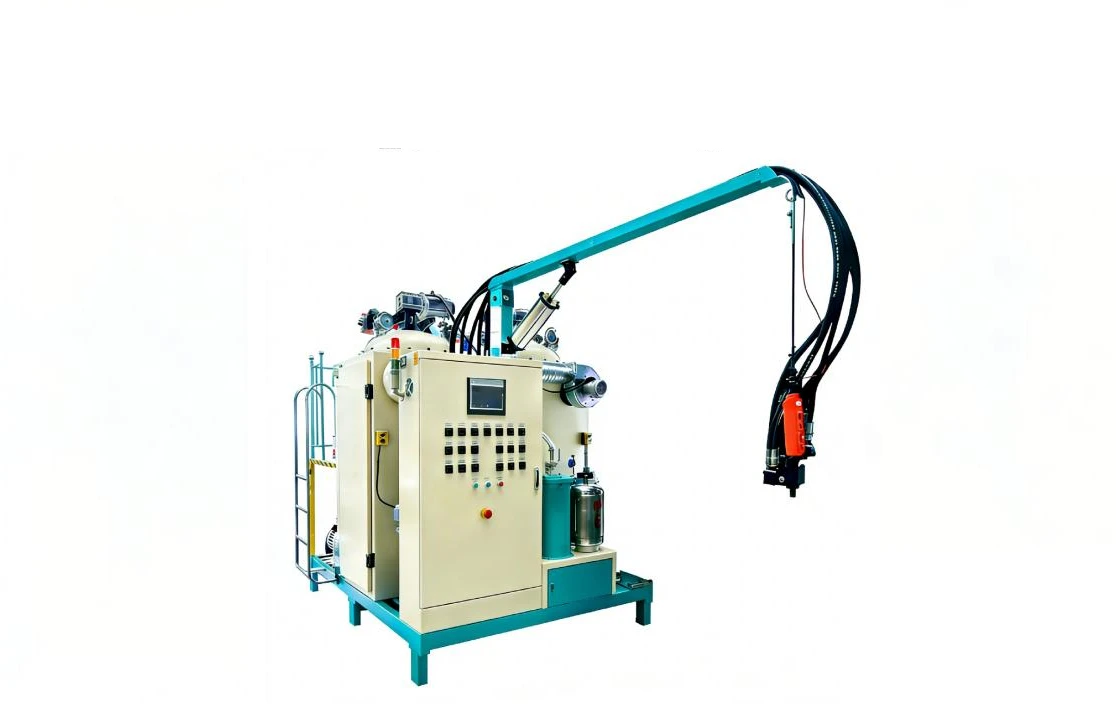
MC Nylon Casting Machine | Cast Nylon Parts
MC Nylon Casting Machines
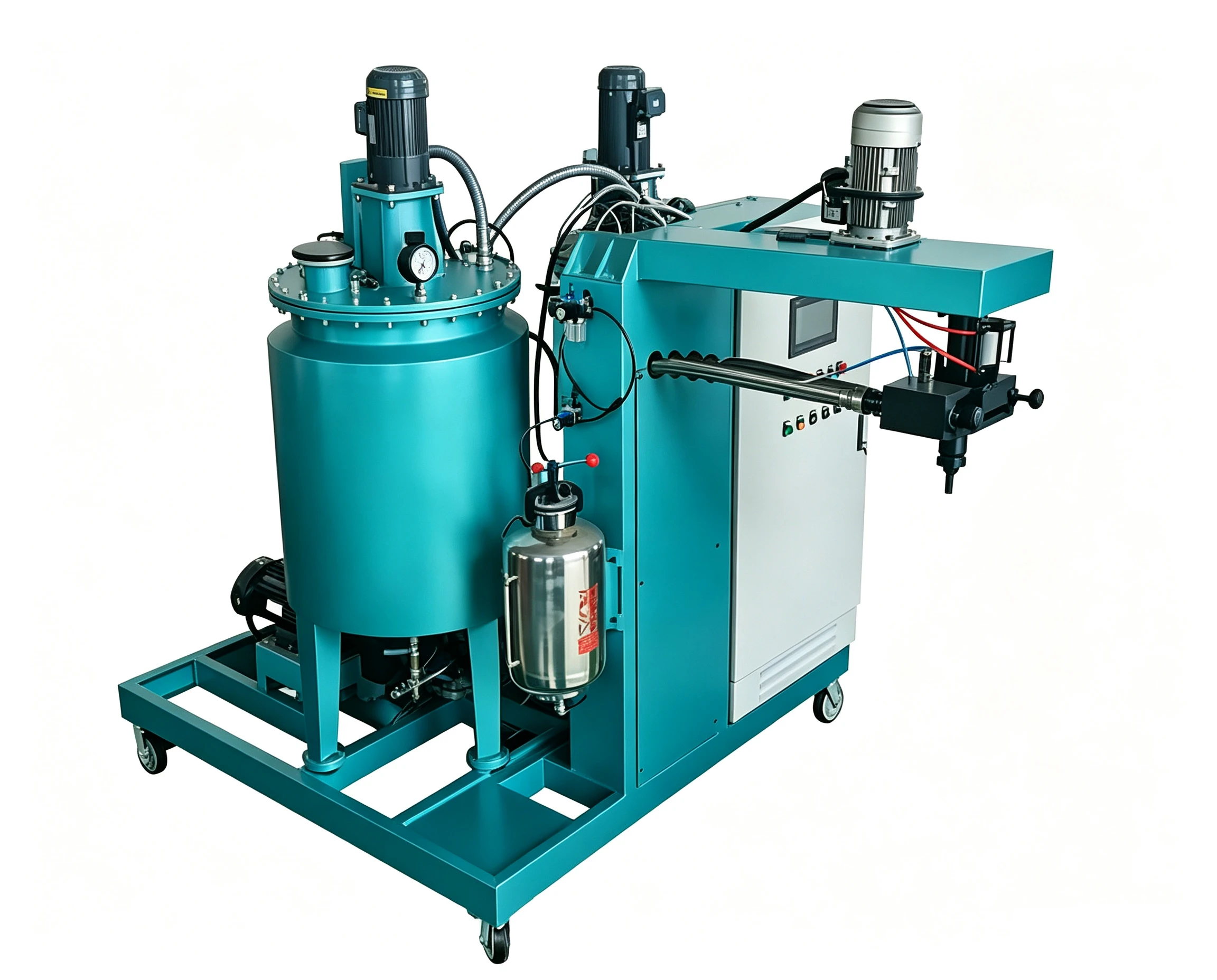
PU Elastomer Casting Machine | Cold Rolling Rollers
Polyurethane Machinery & Equipment
Frequently Asked Questions
What types of parts can this machine produce?
How do I choose between 200L and 300L tanks?
What is the lead time for delivery and installation?
How are reinforcement and resin-delivery interfaces selected?
What maintenance is required to maintain dosing accuracy?
Ready to discuss your project?
Contact Our Team


