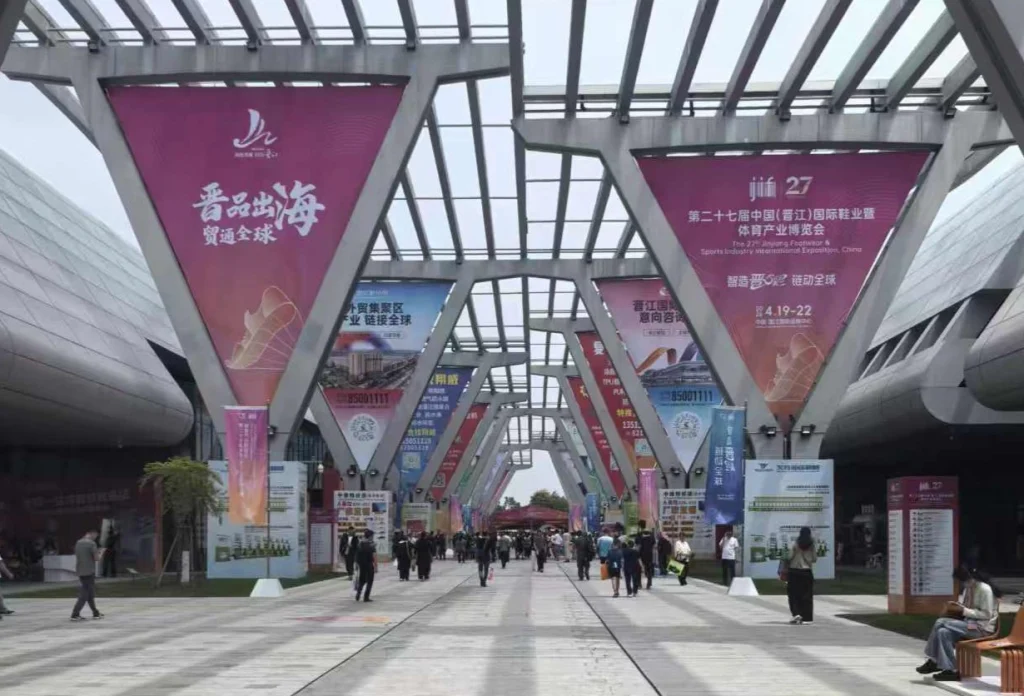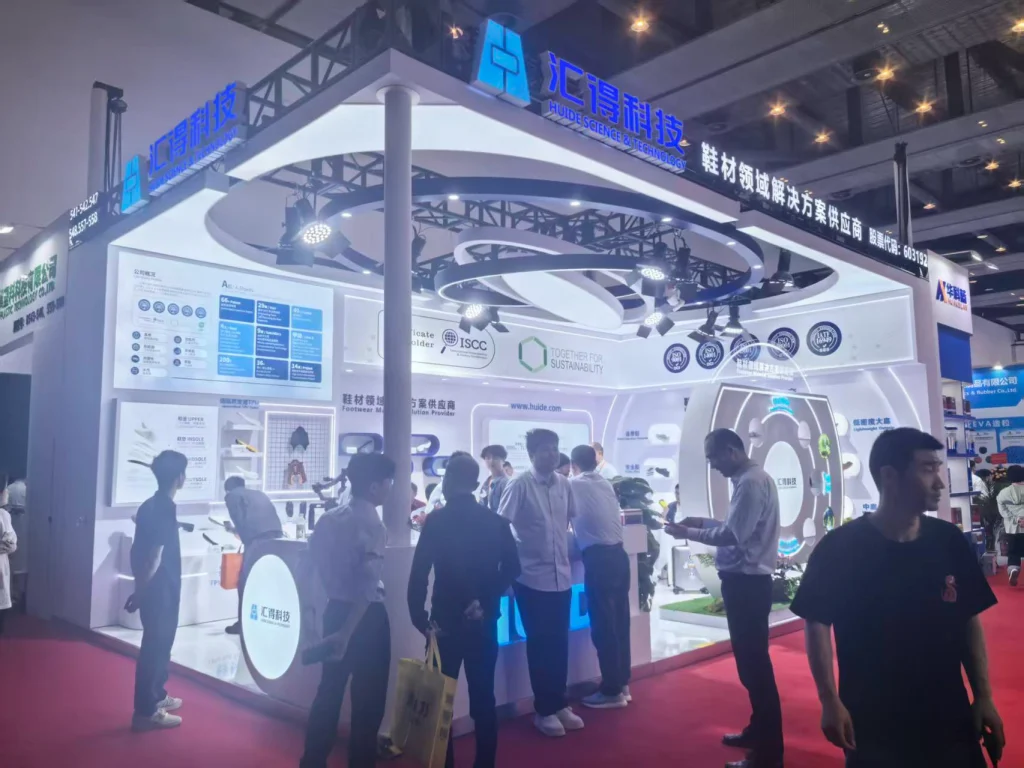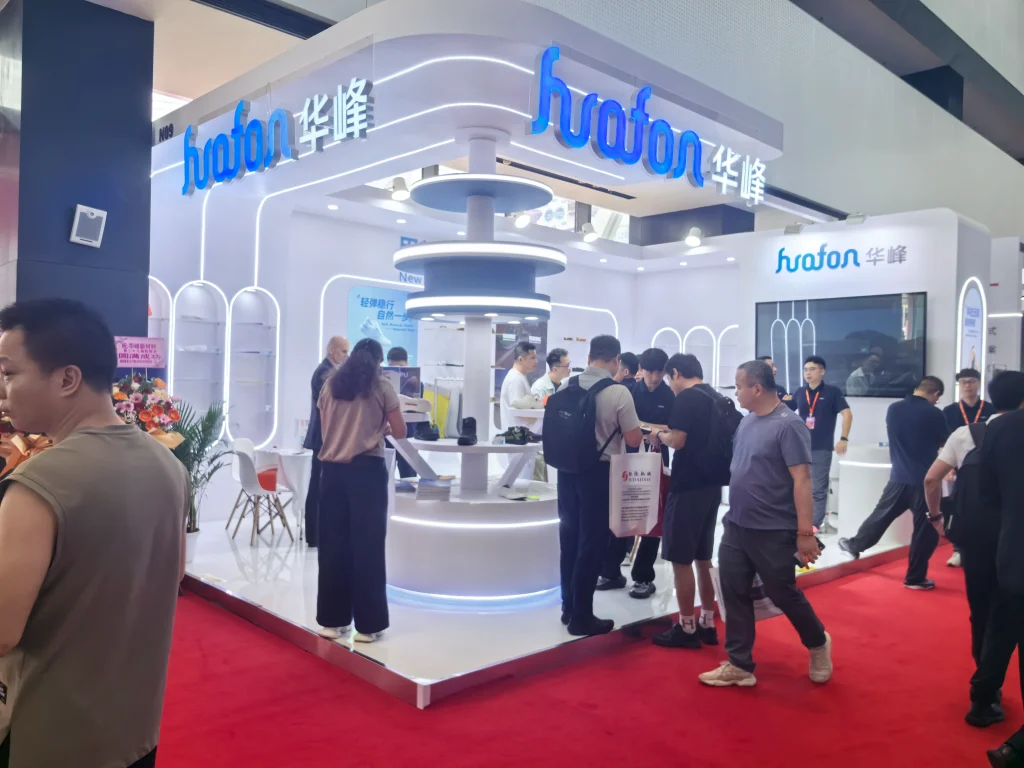
The 27th China (Jinjiang) International Footwear and Sports Industry Expo is taking place from April 19 to 22. As an annual meeting point for footwear materials and shoemaking processes, this year’s exhibition highlights trends ranging from material innovation to intelligent manufacturing.
Haifeng follows the latest industry technologies and is taking this opportunity to share our core technical achievements and proven applications in polyurethane spraying for footwear.
Innovating through the “Jinjiang Experience”
01. Polyurethane spraying: From process innovation to greater value
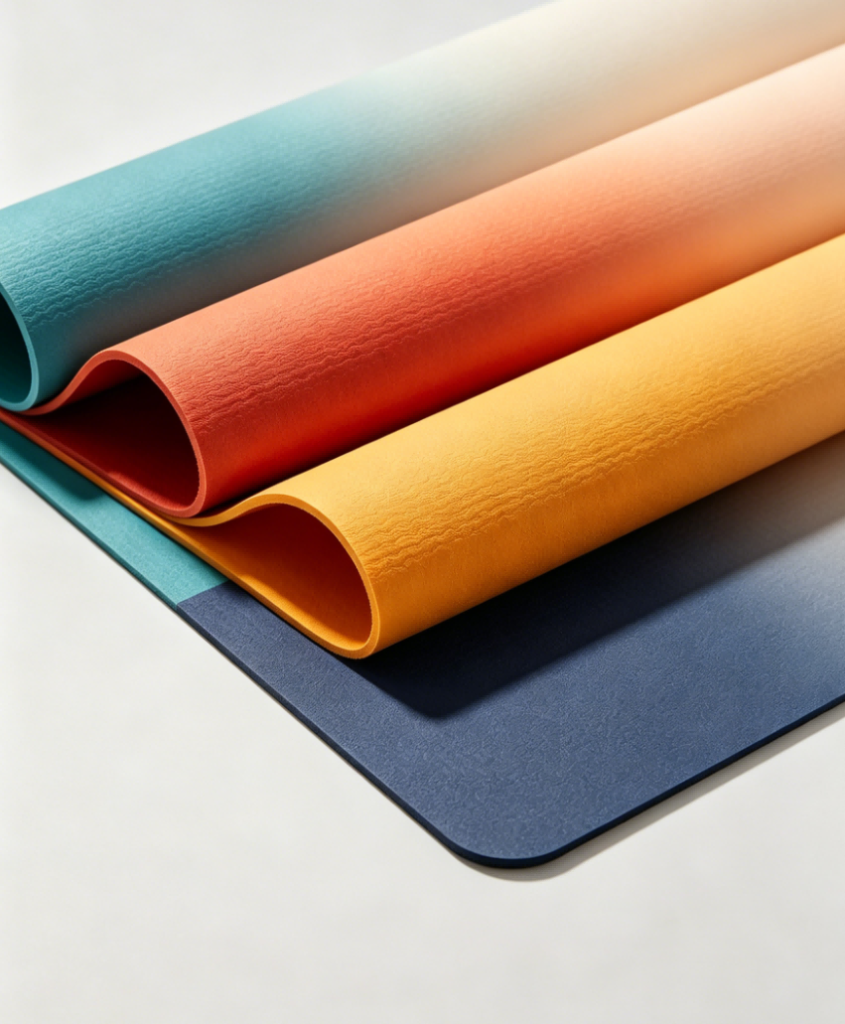
Polyurethane spraying forms color as part of the material, with pigment evenly dispersed throughout, so the color does not peel or fade. Its abrasion resistance is three to five times that of ordinary rubber, and its scratch resistance is far better than traditional paint. For environmental performance, water-based systems have VOCs ≤50 g/L, while solvent-free systems produce almost no volatile emissions. The process supports various finishes, including gloss or matte and smooth or textured surfaces, giving designers more freedom. To achieve these material properties consistently on every sole, they must be implemented through precise processing. Spraying offers clear advantages in coating-thickness uniformity, curved-surface coverage and production efficiency.
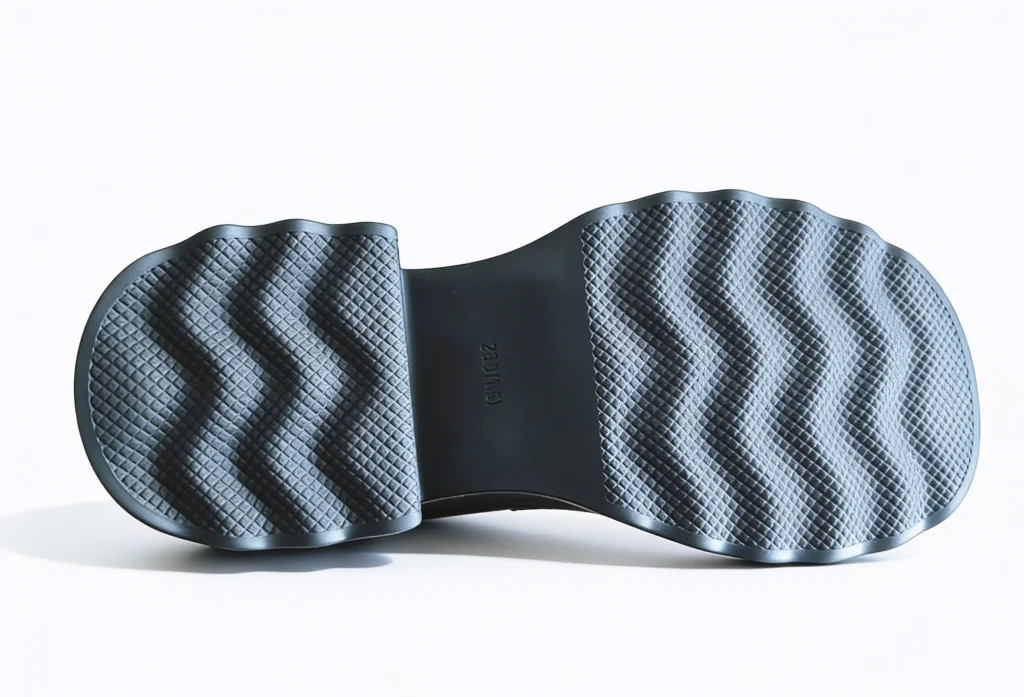
Spraying capabilities
· Pinhole-free surfaces
High-pressure atomization and three-dimensional robotic paths distribute the liquid evenly. As it is sprayed, gas is released; layer by layer, the material forms a dense surface with a near-zero pinhole rate. This is important for improving water resistance, stain resistance and feel in mid- and high-end footwear materials.
· High density and performance
Spraying can create a high-density hardened layer in selected areas of a sole, with a crosslink density substantially higher than that of the base material. For example, the edges or tread lugs can be locally reinforced while the rest of the sole remains flexible.
This supports an overall footwear-material lightweighting strategy: use low-density spraying or foaming in non-load-bearing areas to reduce weight, while locally applying a high-density spray to maintain abrasion resistance and support.
· Integration with supercritical foaming and injection processes
Supercritical foaming is commonly used for midsoles in mid- and high-end footwear, but its surface can be relatively porous and prone to wear. Spraying can apply a dense, abrasion-resistant coating to the supercritical foam without compromising the resilience of its core.
For injected footwear components with complex skeletons or structures, spraying can cover curved details that are difficult to reach by injection or create a gradual coating transition between hardness zones.
· Automation lowers costs
Robotic arms spray continuously. A sole can be made from raw material to finished form in just three minutes, without an adhesive-brushing step. Rotary-table or conveyor-line solutions can be selected to fit different production capacities.
02. From an individual machine to a production line: A complete, practical solution
We provide more than an individual machine: our complete solution covers raw-material proportioning, mixing, spray-path planning, curing monitoring and quality traceability. For the footwear industry’s high-mix, low-volume production, the system includes an intelligent parameter library. Operators can call up the spraying strategy for a specific shoe style with one selection, reducing changeover time to under five minutes. We also support quick integration with existing conveyors and robotic arms to protect customers’ current production-line investments as much as possible.
Footwear solutions
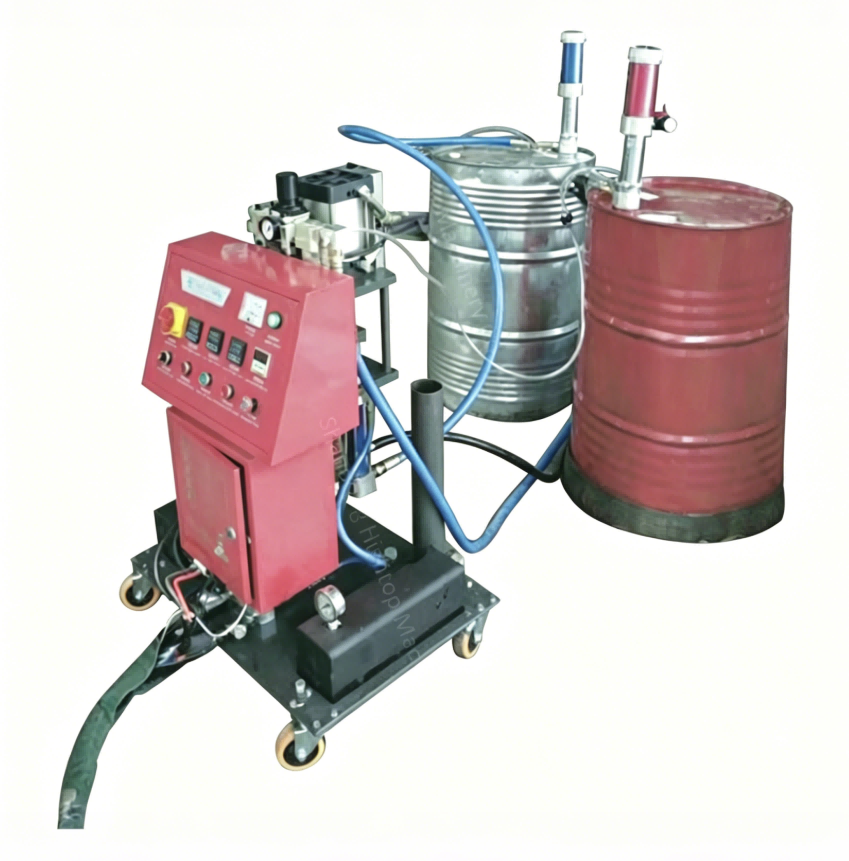
Material proportioning and mixing unit: A high-precision two-component metering system compatible with polyurethane systems of different viscosities and reaction speeds.
Spray-path planning: Automatically generates robotic paths from 3D shoe models to cover complex surfaces, edges and hard-to-reach areas.
Quick-change system: A parameterized recipe library keeps changeover under five minutes to support high-mix, low-volume production.
Online quality monitoring: Integrates film-thickness measurement and visual feedback to adjust spray parameters in real time and reduce defect rates.
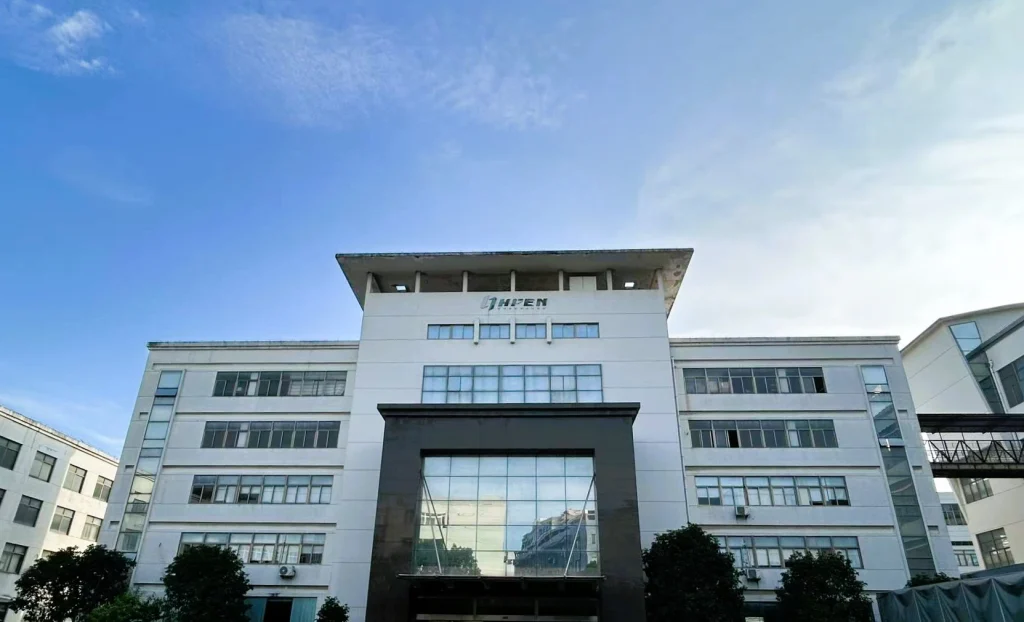
Get in touch to explore the technical details
Our technical team is available throughout the Jinjiang Shoe Expo. If you are interested in precision polyurethane spraying for footwear or would like a process assessment for a specific shoe component, contact us to discuss how polyurethane can support new applications, lower costs and improve efficiency.
The exhibition will end, but the search for better process performance continues. We look forward to demonstrating the technology’s real value with footwear partners who share a commitment to excellence.
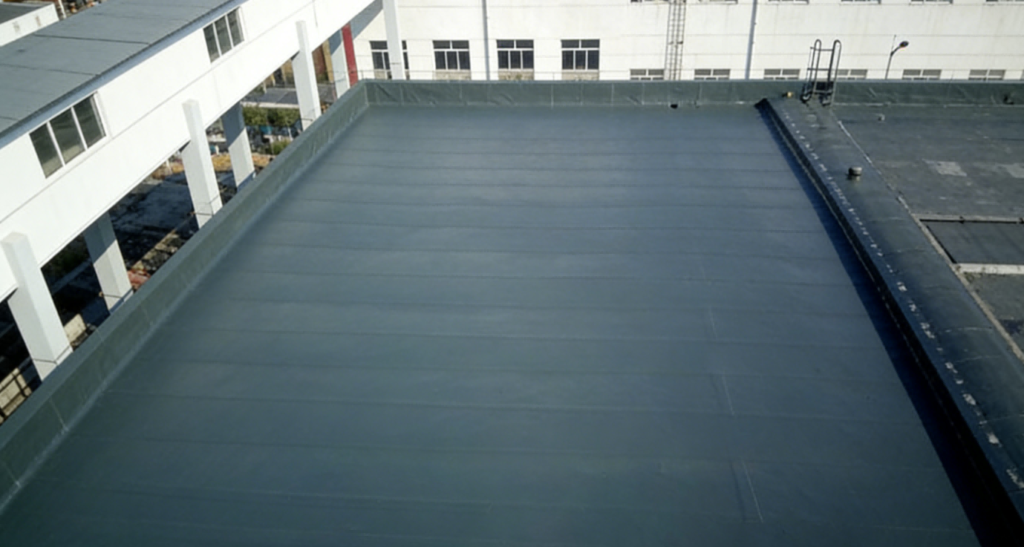
03. Customer installations and on-site examples