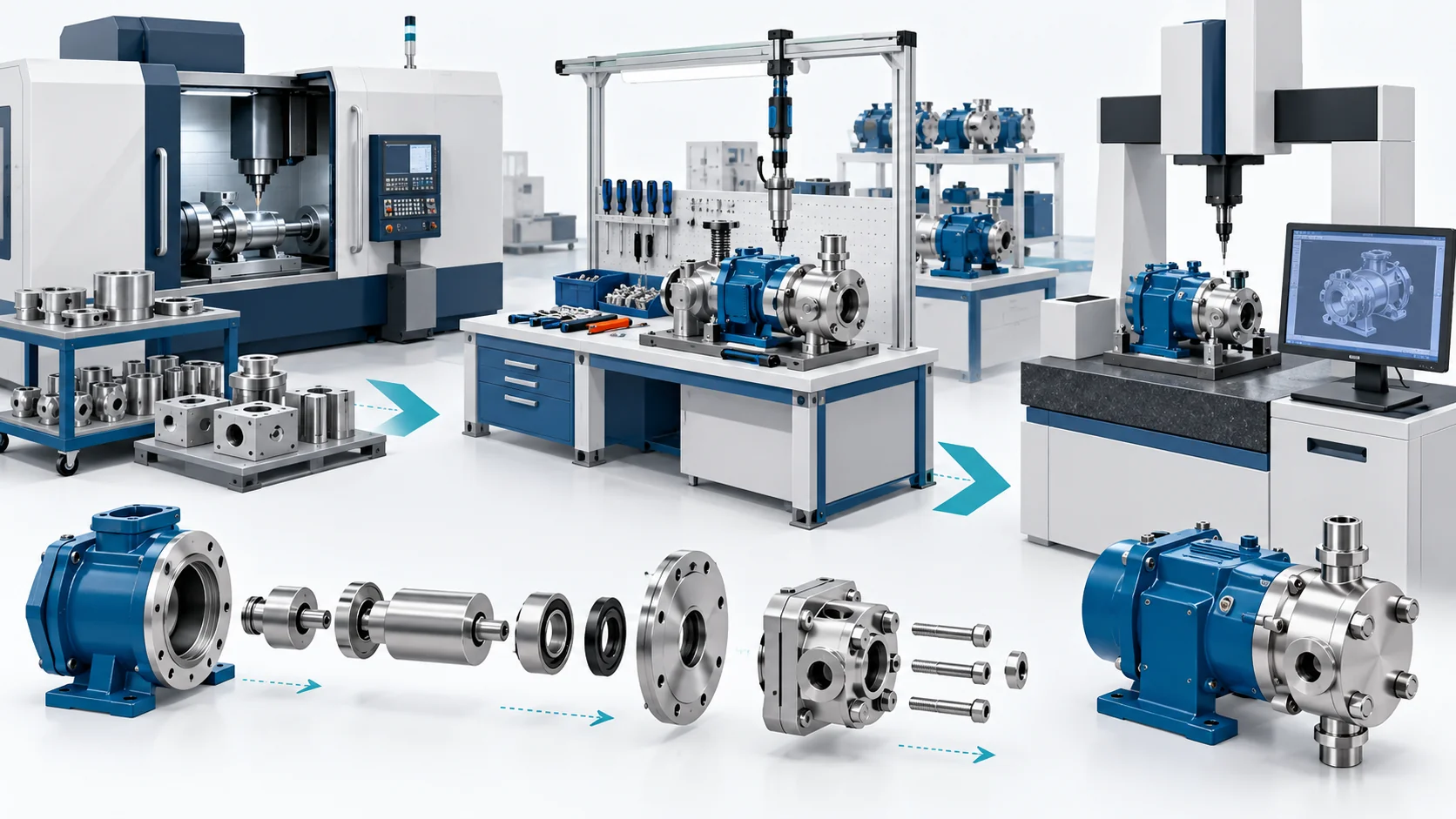
After engineering design is complete, the project enters equipment manufacturing and integration. To control quality and delivery schedules at the source, we have established a complete manufacturing system that covers in-house production, supply-chain management and factory inspection. Our dedicated 15,076 m² production facility manufactures core mechanical components in-house, while specialized auxiliary equipment is sourced from rigorously qualified partners. Every component must pass a strict quality-inspection process before release.
Our equipment manufacturing work covers four core stages:
1. In-house production: Controlling core components directly
At our ISO-certified facility, our own teams manufacture key mechanical components. This includes polyurethane casting machines, CNC molds and conveyor systems. In-house production allows us to control core process-quality standards, ensure compatibility among systems and avoid specification mismatches or delivery delays caused by external supply.
2. Third-party procurement: Carefully selecting auxiliary equipment and ensuring traceability
For specialized auxiliary equipment such as chillers, compressors and robotic systems, we procure externally to integrate established technologies and resources from across the industry. This is more than simple purchasing: we work only with rigorously audited suppliers and ensure end-to-end traceability. Every batch, from raw materials through finished goods, is included in our supply-chain quality-management system so that auxiliary equipment works efficiently with the core production line.
3. Quality inspection: Rigorous factory-validation standards
Before shipment, the equipment undergoes multidimensional quality validation. We conduct a continuous 48-hour stress test to assess stability and reliability during extended operation. We also verify dimensions precisely to ensure components meet drawing tolerances and complete applicable safety and compliance certifications. These rigorous tests are intended to identify potential failures before equipment delivery.
4. Packaging and transportation: Protecting assets during international delivery
Because equipment delivery often involves long-distance transportation, we use export-grade packaging and strict humidity controls to address the environmental challenges of ocean freight. We also provide comprehensive insurance coverage for all shipments to protect equipment in transit and reduce concerns about unexpected logistics risks.
Deliverables
After manufacturing and factory inspection, we deliver the following core documents for equipment acceptance and subsequent customs clearance:
· Quality-control certificate: Official documentation confirming that the equipment has passed applicable quality and safety tests.
· Packing list: Detailed contents of each package for on-site counting and verification.
· Shipping documents: The documents required for pickup, customs declaration and logistics tracking to keep delivery moving smoothly.
Manufacturing is a critical stage in determining the quality of the delivered project. By controlling core processes in-house, carefully qualifying suppliers and conducting high-standard factory inspections, we aim to provide stable, reliable equipment assets. Contact us to learn more about our manufacturing capabilities or discuss your project requirements.