
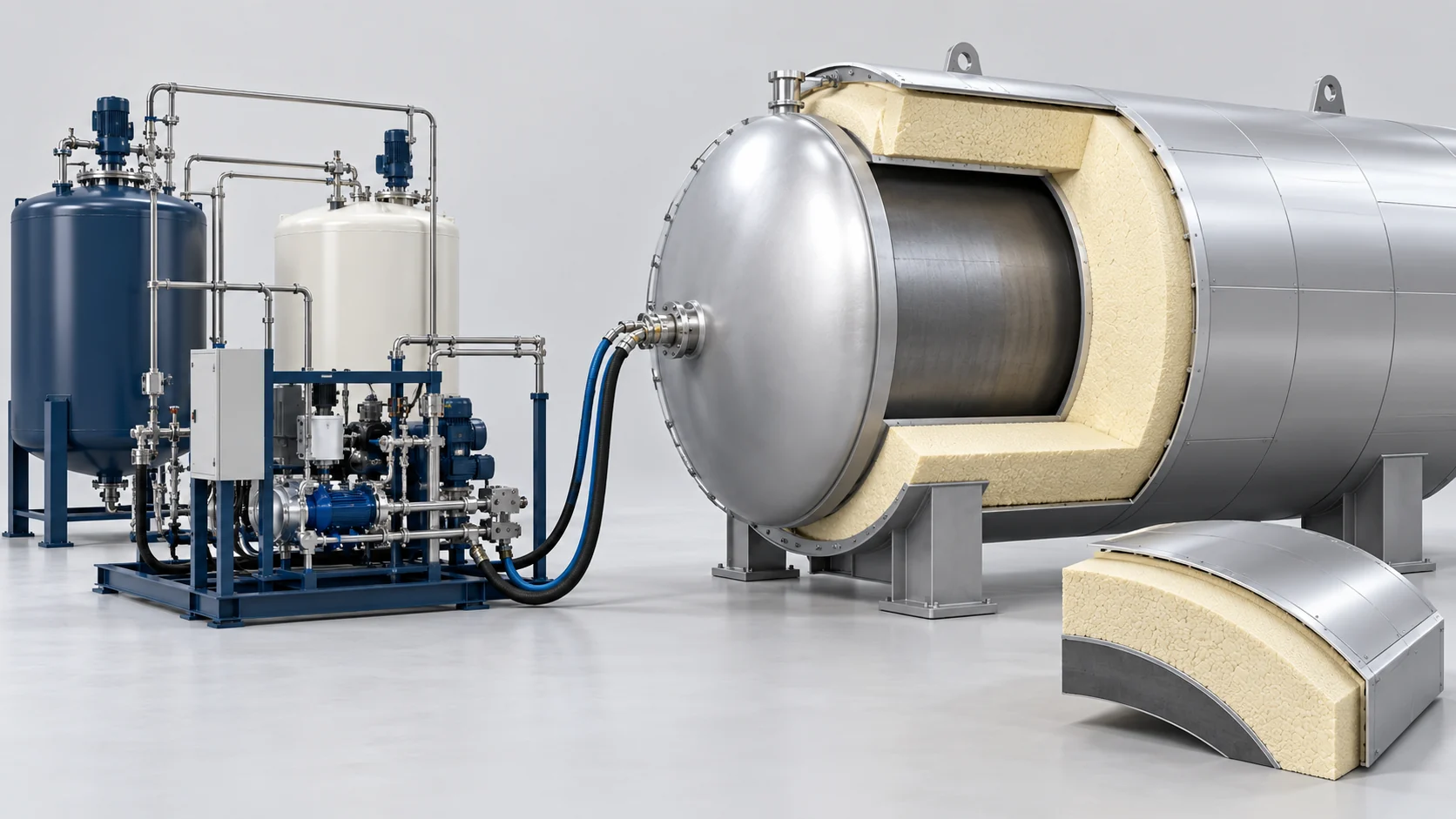
Storage Tank and Vessel PU Insulation Solution
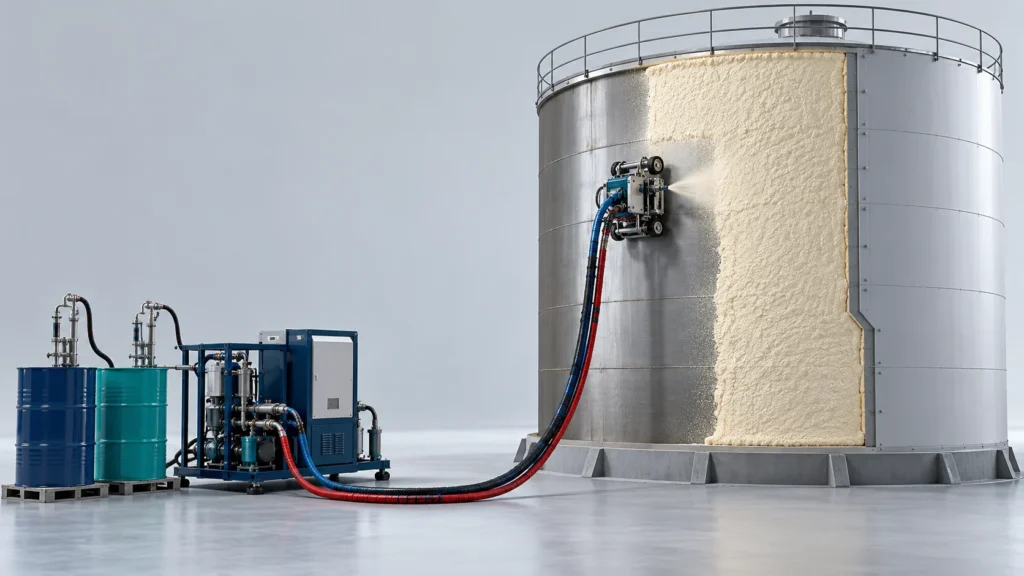
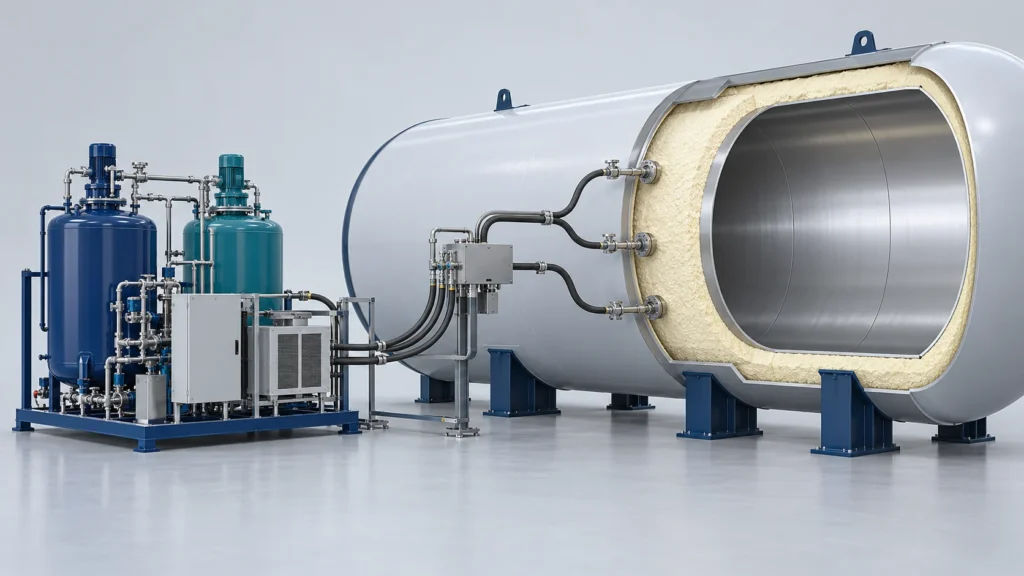
Configure PU spray or annular-fill equipment for tanks and vessels, with material conditioning and application interfaces selected for tank geometry and insulation requirements.
High-Performance Polyurethane Solutions for Storage Tanks & Refrigerated Vessels
Configure spray or annular-fill equipment for the selected tank geometry and insulation formulation. CUI risk is managed through substrate protection, moisture control, jacketing, inspection and maintenance. Cryogenic applications require a separately qualified material and insulation design.
CUI Risk Management
Coordinate substrate coating, moisture protection, jacketing, inspection and maintenance. Foam adhesion alone does not establish corrosion immunity.
Material-Specific Temperature Range
Cryogenic and heated-service insulation use separately selected formulations and system designs. Confirm dimensional stability, thermal cycling and applicable material qualification for the intended service. Identify whether the work is external surface spraying or annular filling. Specify the material grade, free-rise and intended in-place density, reaction window and processing viscosity for that route. A blend listed for a beer tank or general vessel does not establish cryogenic qualification.
Compare Related Production Routes
Separate ambient/heated tanks, cryogenic insulation and annular filling at the proposal stage. Each needs its own material system, temperature duty, moisture barrier and access plan. Spray-line pressure is not the allowable pressure inside a tank or jacket cavity.
Production Workflow for Storage Tank & Vessel PU Insulation Machine System
The sequence is configured for the selected application and material. Temperatures, pressures, reaction timing and pass thickness are reference conditions reviewed through project trials.
Tank Shell Grit-Blasting & Thermal Priming
The cylindrical tank exterior is grit-blasted to Sa 2.5 cleanliness; anti-corrosive epoxy primers are applied to activate surface chemical bonding.
Precursor Heating & High-Volume Recirculation
Prepare polyol A and isocyanate B separately. Match working viscosity, material temperature, component delivery and ratio to the selected spray or annular-fill package. Heating duty and the full hose route are defined for that package rather than transferred from another machine.
Dual-Mode High-Pressure Spray or Annular Pouring
Configure spraying or annular filling with the appropriate head, shot control and dosing package. Pass thickness, pressure, flow and reaction timing follow the selected material and equipment configuration.
Technical Specifications
Supplied application and equipment references for configuration review. Material properties, operating conditions and acceptance tests are agreed for the selected project.
| Technical Parameter | Supplied Reference / Configuration | Engineering Context & Verification |
|---|---|---|
| Target Application | Petrochemical Storage Tanks, LNG/LPG Vessels, Beer Fermenters | Industrial tank thermal envelope & CUI protection |
| Material Matrix | Rigid Polyurethane (PUR) / Polyisocyanurate (PIR) | Cryogenic and high-temperature formulations |
| Service-Temperature Application References | -160°C to +120°C | Separate cryogenic and heated-service material systems; not one universal formulation |
| Core Foam Density | 40 – 60 kg/m³ | Optimized for thermal insulation & compression |
| Thermal Conductivity (λ) | 0.020–0.022 (supplied reference) W/(m·K) | Thermal test method, mean temperature, conditioning and aging to be agreed |
| Closed-Cell Content | ≥96% | Supplied cell-content reference; water absorption and vapor permeance assessed separately |
| Proportioner Fluid Output | 12 – 50 kg/min | Reference annular-fill range; dosing package selected separately from the linked spray product |
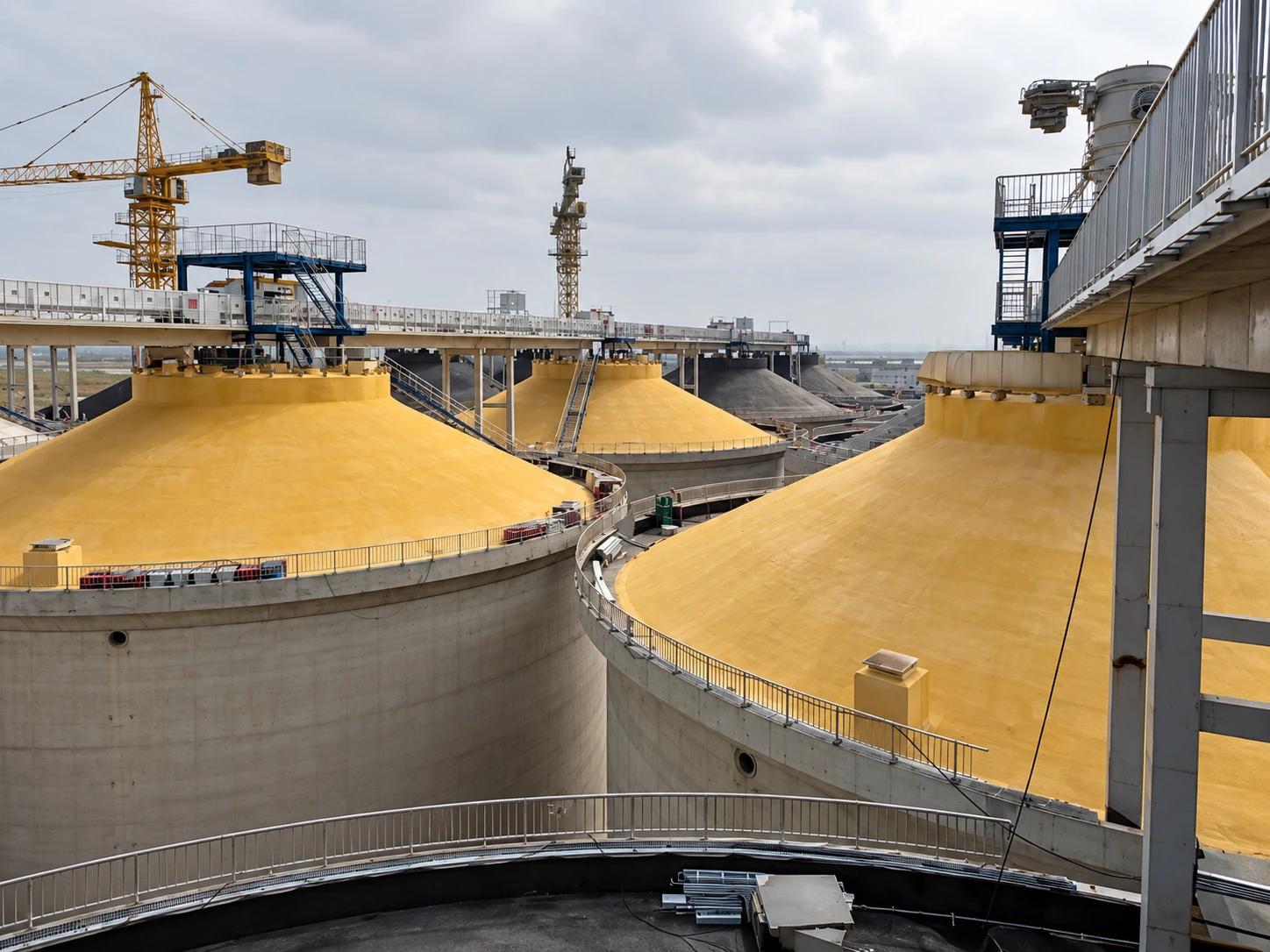
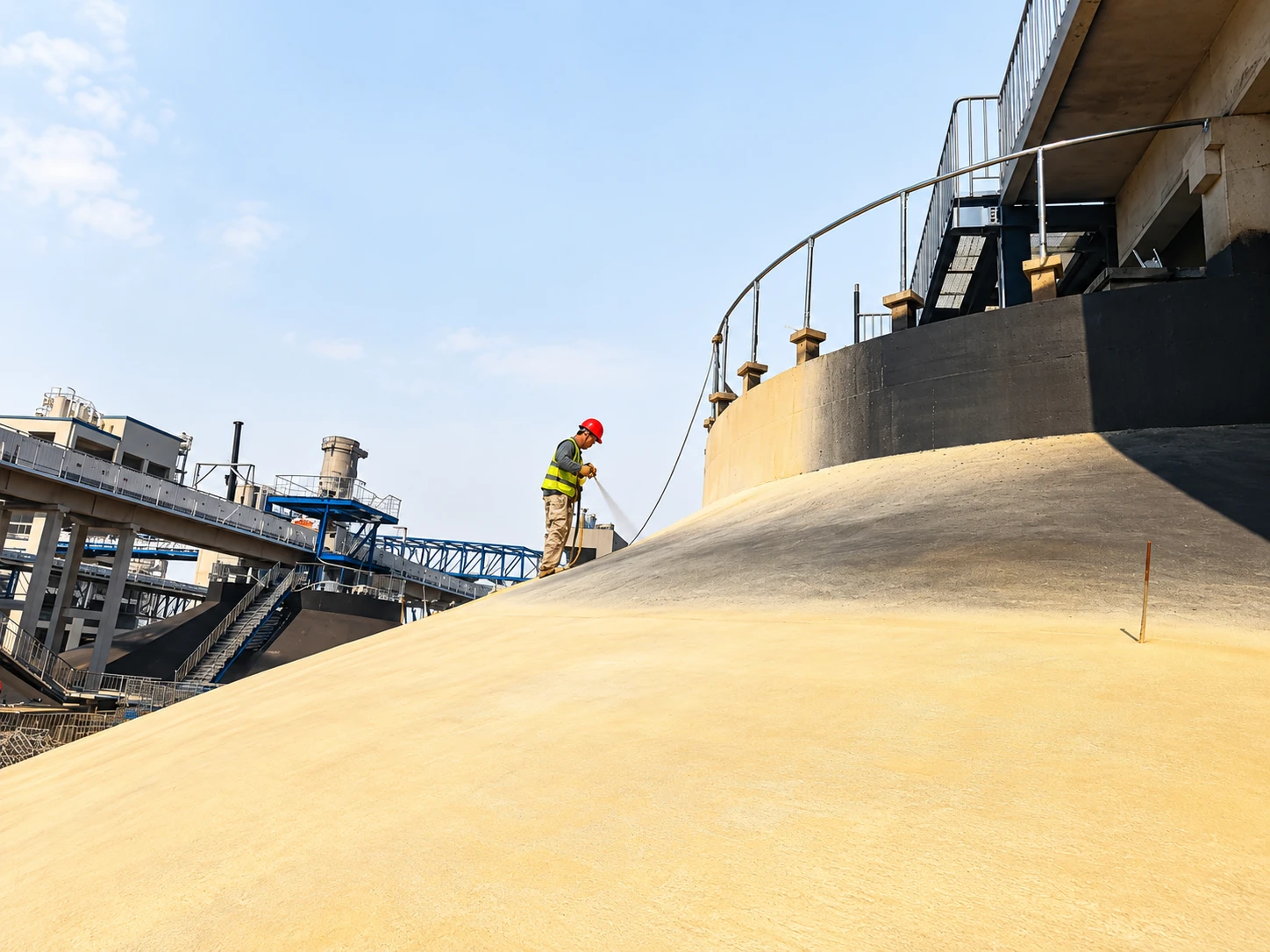
Storage Tank Insulation Application Gallery
These illustrations show exterior storage-tank insulation surfaces relevant to tank insulation planning. They do not establish the applied material, application method, insulation performance or a named customer project.
Storage Tank Exterior Insulation Illustrations
Reference Haifeng Insulation Equipment
The linked HF-SP03 is a spray-equipment reference. Its rated pressure, flow and hose configuration apply to that product; an annular-fill package is separately sized for the required shot and material. The linked spray reference does not by itself establish annular filling or cryogenic suitability. Specify the selected delivery and receiving interfaces.
Key Engineering Advantages
Application-specific process controls, tooling and equipment integration.
CUI Risk Management
Coordinate surface protection, moisture exclusion, jacketing and maintenance.
Thermal-System Planning
Select insulation materials and thickness for the service temperature and thermal duty.
Application-Route Selection
Configure spraying or annular filling with compatible dosing, hose and application interfaces.
Access and Output Planning
Review reach, tank access, application conditions and equipment duty against the project plan.
Related Projects
The petrochemical and cryogenic tank projects concern different services. Compare their actual insulation construction and supplied scope separately.
Frequently Asked Questions
Compare production routes, material requirements, equipment configurations and project inputs.
Does spray foam eliminate corrosion under insulation?
Can a tank be insulated for service near −160°C?
Can a crawler be included?
Are spraying and annular filling the same configuration?
How is commissioning scheduled?
Which material data are needed for a tank insulation proposal?
How are batch or shot preparation and spray settings separated?
What inputs are needed for this configuration?
What distinguishes spraying from annular filling on a vessel?
Discuss Your Insulation Equipment and Application
Share the following for this application: Tank geometry, service temperatures, annular gap, substrate protection, material system, jacketing, access and outage window. Our team will reply within one business day. Once requirements are clear, we provide a preliminary proposal within two business days.


