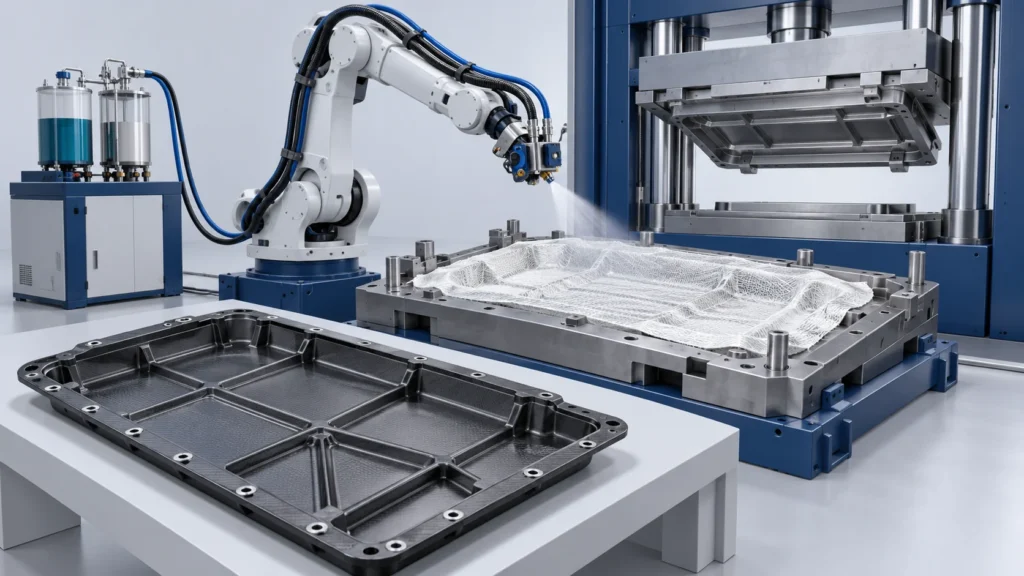
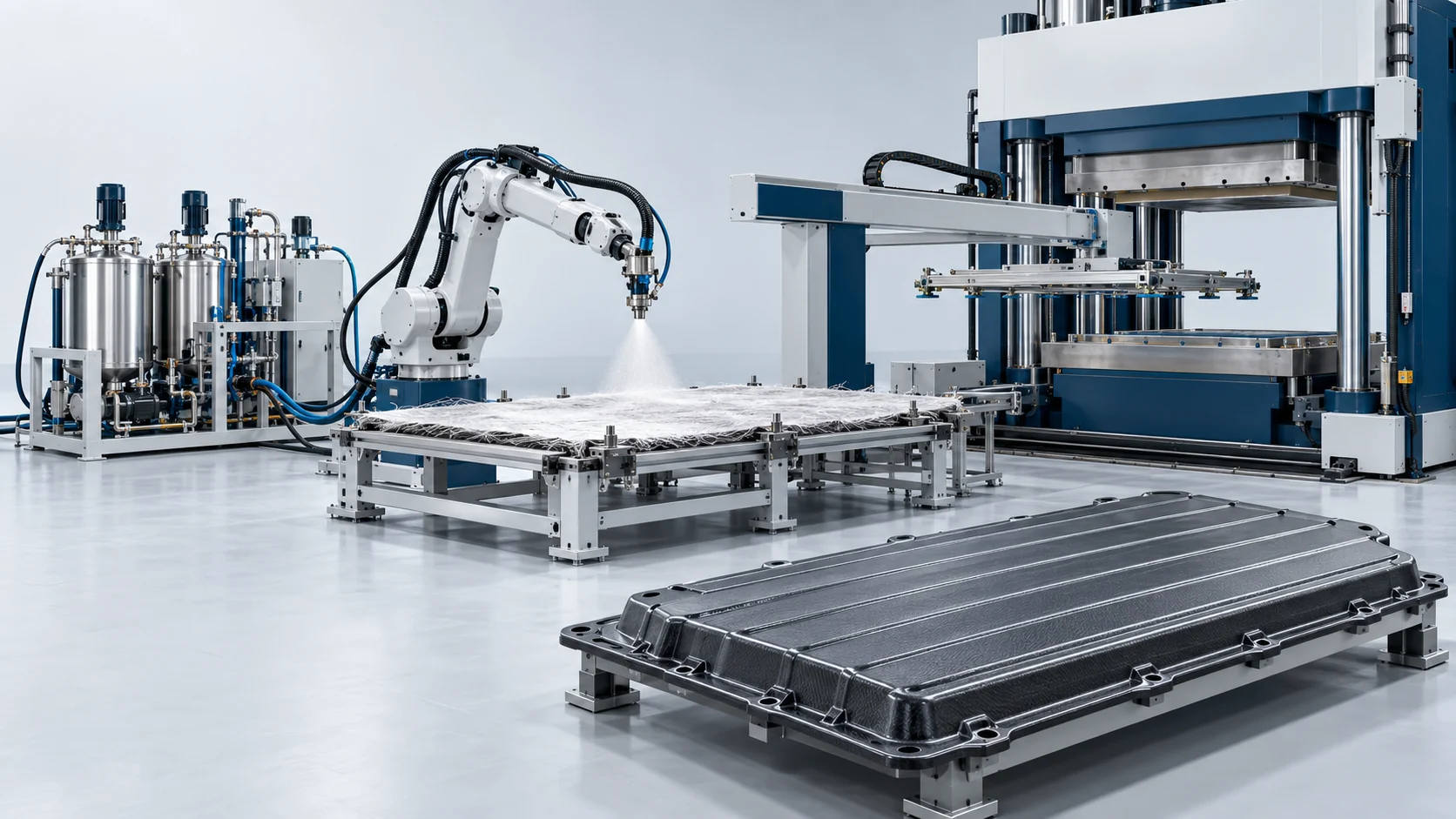
Spraying Transforming Molding (STM) Battery Cover Solution
Coordinate glass-fiber preform preparation, polyurethane spraying, transfer and compression molding for composite battery covers.
Spraying Transforming Molding (STM) Battery Cover Solution
Spraying Transforming Molding (STM) applies reactive polyurethane to a glass-fiber reinforcement before the layup is transferred to a compression mold. The molded composite can integrate mounting features and local thickness changes for a battery cover or underbody shield. Haifeng's stated turnkey scope includes a high-pressure PU spray machine, six-axis robot, 500-ton press and battery-cover mold.
Integrated spray-to-press route
Coordinate PU spray coverage, reinforcement placement, transfer, compression molding and cure as one controlled process.
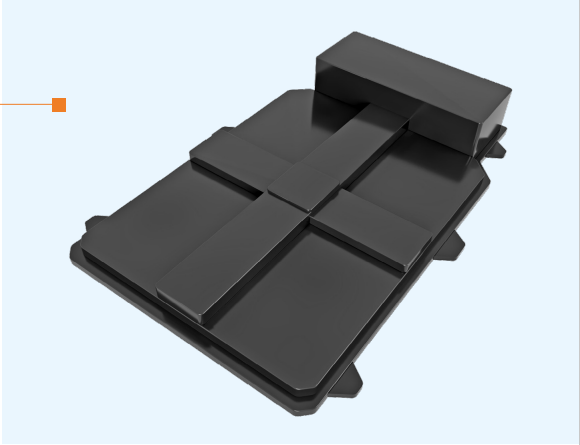
Battery-cover design inputs
Balance mass, stiffness, insulation, flame performance, sealing and impact protection at the battery-pack level.
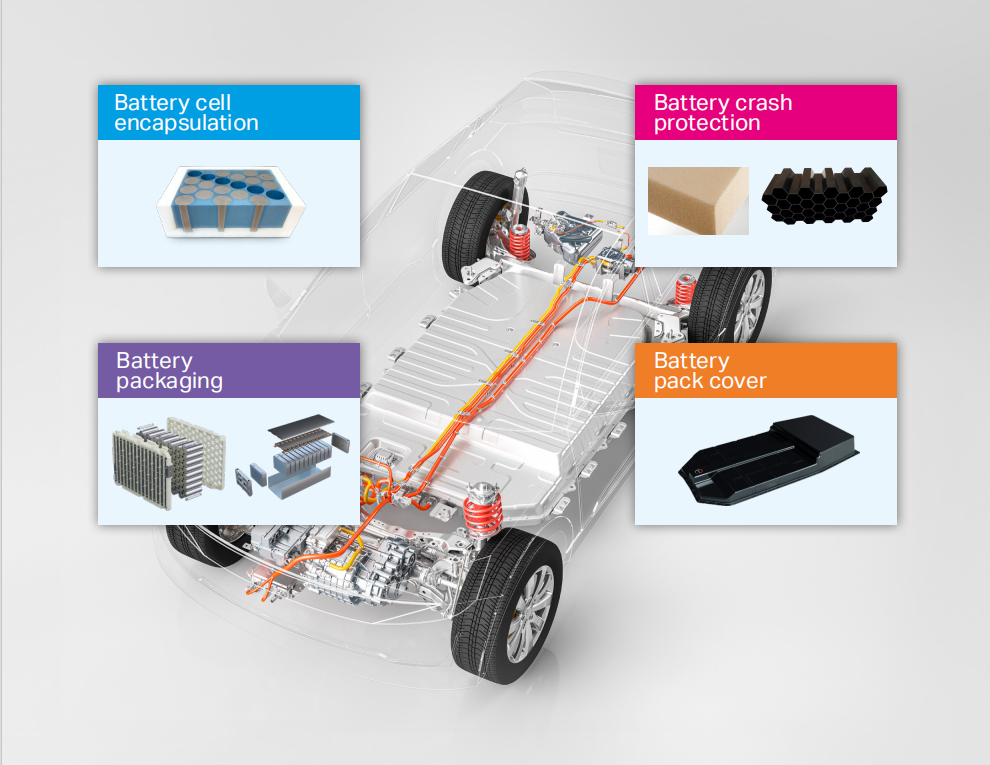
Track spray mass and uniformity, fiber layup, transfer timing, mold temperature, press force, cure and cover dimensions.
From component specification to validated production
Spraying Transforming Molding (STM) applies reactive polyurethane to a glass-fiber reinforcement before the layup is transferred to a compression mold. The molded composite can integrate mounting features and local thickness changes for a battery cover or underbody shield. Haifeng's stated turnkey scope includes a high-pressure PU spray machine, six-axis robot, 500-ton press and battery-cover mold.
Cover and pack requirements
Define the cover envelope, attachment points, layup, mass target, sealing interfaces and vehicle-level validation plan.
Reinforcement and mold
Position glass-fiber reinforcement in the open tool and prepare the press mold, inserts and transfer path.
PU deposition and forming
Robotically spray PU at the specified mass and path, transfer the reinforcement and compression mold under controlled temperature and pressure.
Material, process and acceptance data
Track spray mass and uniformity, fiber layup, transfer timing, mold temperature, press force, cure and cover dimensions.
| Haifeng turnkey scope | High-pressure PU spraying machine, six-axis robot, 500-ton press and battery-cover mold, as specified for the proposed solution. |
|---|---|
| Material example | Baypreg STM battery-cover material data describes up to 60% weight reduction compared with conventional steel covers, with material-specific flame-retardant, electrical-insulation and corrosion-resistance properties. |
| Current battery standard | GB 38031-2025, Electric vehicles traction battery safety requirements, is effective from 1 July 2026. Cover qualification is part of the battery-pack and vehicle validation process; a material statement alone does not establish pack compliance. |
| Process controls | Track spray mass and uniformity, fiber layup, transfer timing, mold temperature, press force, cure and cover dimensions. |
| Haifeng solution scope | Haifeng turnkey scope: high-pressure PU spray machine, six-axis robot, 500-ton press and battery-cover mold. |
Application-specific process design
Spraying Transforming Molding (STM) applies reactive polyurethane to a glass-fiber reinforcement before the layup is transferred to a compression mold. The molded composite can integrate mounting features and local thickness changes for a battery cover or underbody shield. Haifeng's stated turnkey scope includes a high-pressure PU spray machine, six-axis robot, 500-ton press and battery-cover mold.
Integrated spray-to-press route
Coordinate PU spray coverage, reinforcement placement, transfer, compression molding and cure as one controlled process.
Battery-cover design inputs
Balance mass, stiffness, insulation, flame performance, sealing and impact protection at the battery-pack level.
Automotive process FAQs
Process, material selection and validation for Spraying Transforming Molding (STM) for fiber-reinforced EV battery covers and underbody shields.
What does the STM process do?
Which equipment is included in Haifeng's stated solution scope?
Can STM make a battery cover lighter than steel?
Does a battery-cover material claim establish compliance with GB 38031-2025?
Discuss a STM Battery Cover Spray Transfer Molding line
Share part drawings, materials, target output and acceptance tests for a project-specific proposal.
Related Application References
Review the material, product geometry, equipment scope and reference conditions within each record when assessing a comparable application.