
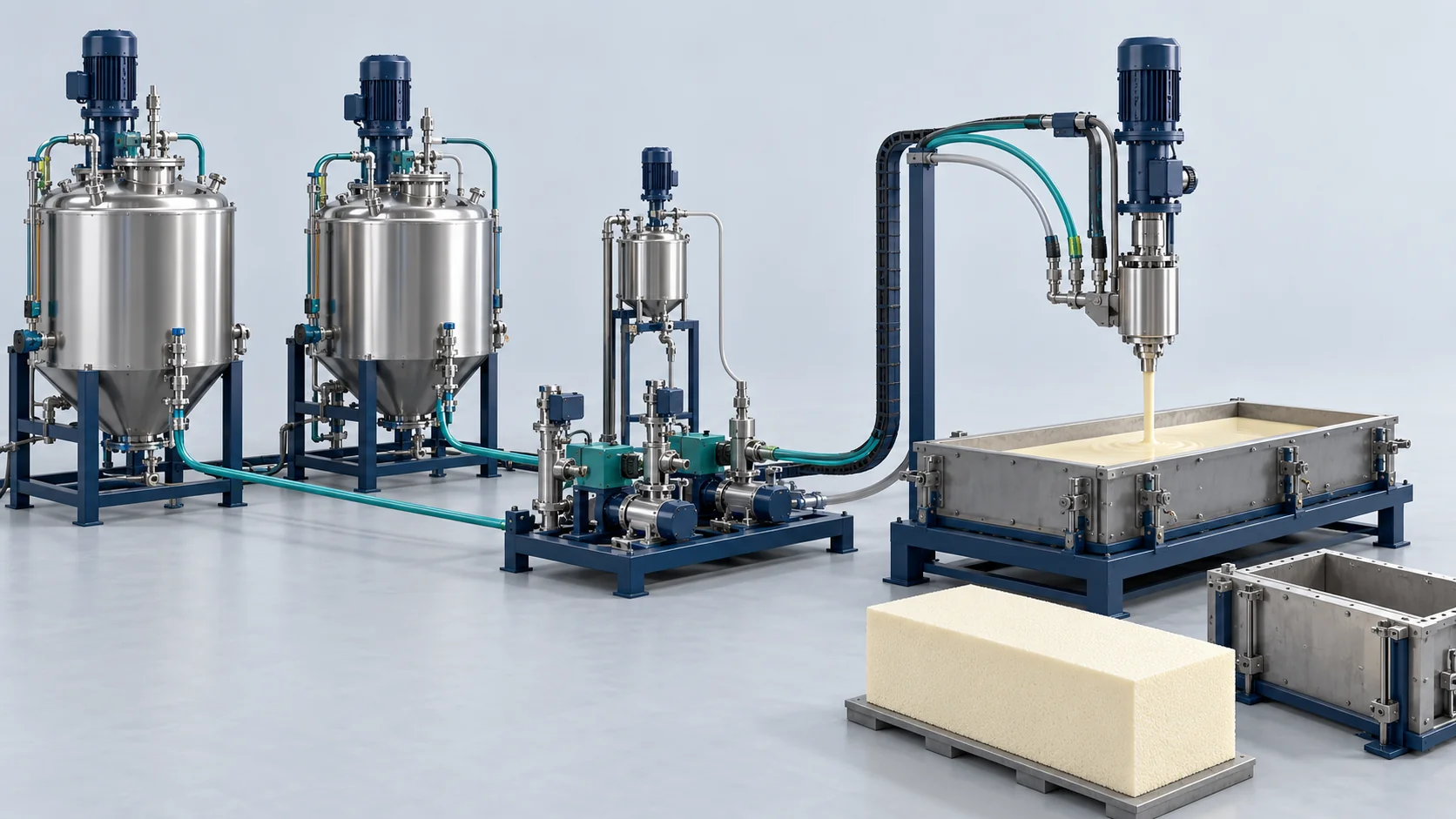
Cryogenic LNG Insulation Solution
Three-stream PU metering and dynamic mixing for cryogenic insulation development, with separate additive control and material qualification.
Extreme Thermal Reliability for -163°C Marine LNG Cargo Containment
Three-stream PU metering and dynamic mixing for cryogenic insulation development, with separate additive control and material qualification.
Equipment and process scope
Conditioned primary streams, an independent additive feed, dynamic head and controls; molds, curing equipment, approved chemical formulation and final insulation qualification are separate interfaces.
Validation and production planning
Cryogenic crack resistance, exotherm and thermal conductivity are formulation/specimen results. A liquid-nitrogen thermal-shock test does not independently establish long-term LNG service, GTT approval or class-society certification. Primary stream ratio and the third additive stream require distinct calibration.
Conditioned primary streams, an independent additive feed, dynamic head and controls; molds, curing equipment, approved chemical formulation and final insulation qualification are separate interfaces. Cryogenic crack resistance, exotherm and thermal conductivity are formulation/specimen results. A liquid-nitrogen thermal-shock test does not independently establish long-term LNG service, GTT approval or class-society certification. Primary stream ratio and the third additive stream require distinct calibration.Generated concept illustration for process discussion; not a photograph of the specified machine, a customer facility or a delivered project.
Turnkey Cryogenic LNG Insulation Workflow
Configuration sequence from the supplied brief. Material, tool, pressure/temperature basis and complete line balance require verification. Cryogenic crack resistance, exotherm and thermal conductivity are formulation/specimen results. A liquid-nitrogen thermal-shock test does not independently establish long-term LNG service, GTT approval or class-society certification. Primary stream ratio and the third additive stream require distinct calibration.
Three-Stream Degassing & Chemical Conditioning
Supplied process reference: Base polyol, MDI, and cryogenic tougheners are conditioned in 150 L stainless tanks at 25°C under dry nitrogen blankets and 0.05 kPa vacuum.
Closed-Loop Three-Stream Servo Metering
Supplied process reference: Tungsten-carbide lined gear pumps meter the three components into heated lines under Coriolis mass tracking, holding ratios within ±0.2%.
Low-Exotherm Water-Jacketed Dynamic Mixing
Supplied process reference: Materials blend within a water-cooled dynamic chamber running at 3,000 RPM, achieving thorough homogenization without frictional exotherm.
Reference Solution Engineering Envelope
Supplied configuration and validation references; material/component results are separate from equipment ratings.
| Parameter | Value / Unit | Applicable Configuration / Conditions |
|---|---|---|
| Continuous Casting Flow Rate | 5.0 to 45.0 kg/min | Variable-displacement three-stream servo pump skid; supplied configuration or material target, pending the applicable original records |
| Cryogenic Operational Range | -163°C down to -196°C | Liquid methane to liquid nitrogen thermal service; supplied configuration or material target, pending the applicable original records |
| Core Reaction Peak Exotherm | Strictly below 95°C | Multi-stage low-shear water-jacketed mixing head; supplied configuration or material target, pending the applicable original records |
| Cryogenic Compressive Modulus | 120 to 150 MPa | Tested at -163°C under ISO 844 / ASTM D1621; supplied configuration or material target, pending the applicable original records |
| Cryogenic Linear Contraction | Less than 0.2% | Linear shrinkage from 20°C down to -163°C; supplied configuration or material target, pending the applicable original records |
| Marine Classification Compliance | reported for DNV, ABS, CCS, BV | Thin-membrane containment secondary barrier rules; supplied configuration or material target, pending the applicable original records |
Core Equipment for This Solution
Conditioned primary streams, an independent additive feed, dynamic head and controls; molds, curing equipment, approved chemical formulation and final insulation qualification are separate interfaces.
Core Advantages of Haifeng Cryogenic Systems
Configured equipment functions and interfaces for the selected material and tooling.
-196°C Thermal Shock Survival
Supplied configuration function: Micro-dosed elastomeric tougheners absorb cryogenic contraction, eliminating fissures under liquid nitrogen. Project-dependent performance requires validation.
Capped Exotherms Under 95°C
Supplied configuration function: Low-shear water-cooled mixing limits core curing temperatures to 95°C, eliminating residual thermal stresses. Project-dependent performance requires validation.
High-Load Marine Structural Strength
Supplied configuration function: Delivers 120–150 MPa compressive modulus at -163°C to withstand violent open-sea cargo sloshing. Project-dependent performance requires validation.
3-Stream Formulation Flexibility
Supplied configuration function: Dedicated third channel allows continuous micro-metering of nano-fillers and tougheners without manual premixes. Project-dependent performance requires validation.
Related Project Draft
An anonymous project brief from the supplied document. Original attribution, dates, acceptance and outcome records require verification before public use.
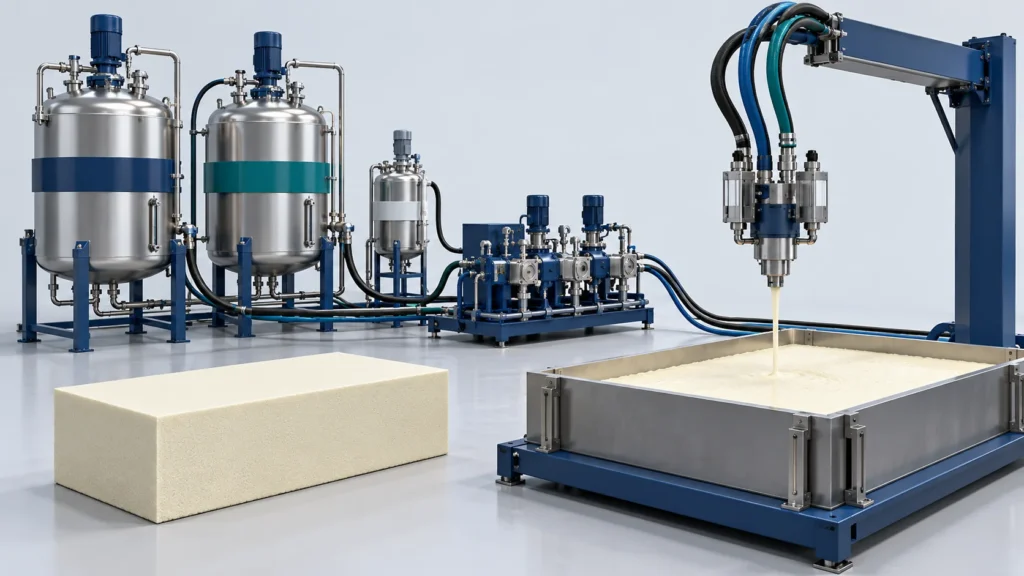
Frequently Asked Questions
How does the system prevent chemical cracking upon liquid methane cooldown?
Why is a dedicated third chemical stream required for cryogenic foam?
What certifications must marine LNG insulation boxes pass before installation?
Can this machine also cast land-based cryogenic storage tank bottom pads?
Discuss Your Production Goals
Share your product or drawing, material system, target output, automation needs and factory utilities so the equipment and interfaces can be configured.


