
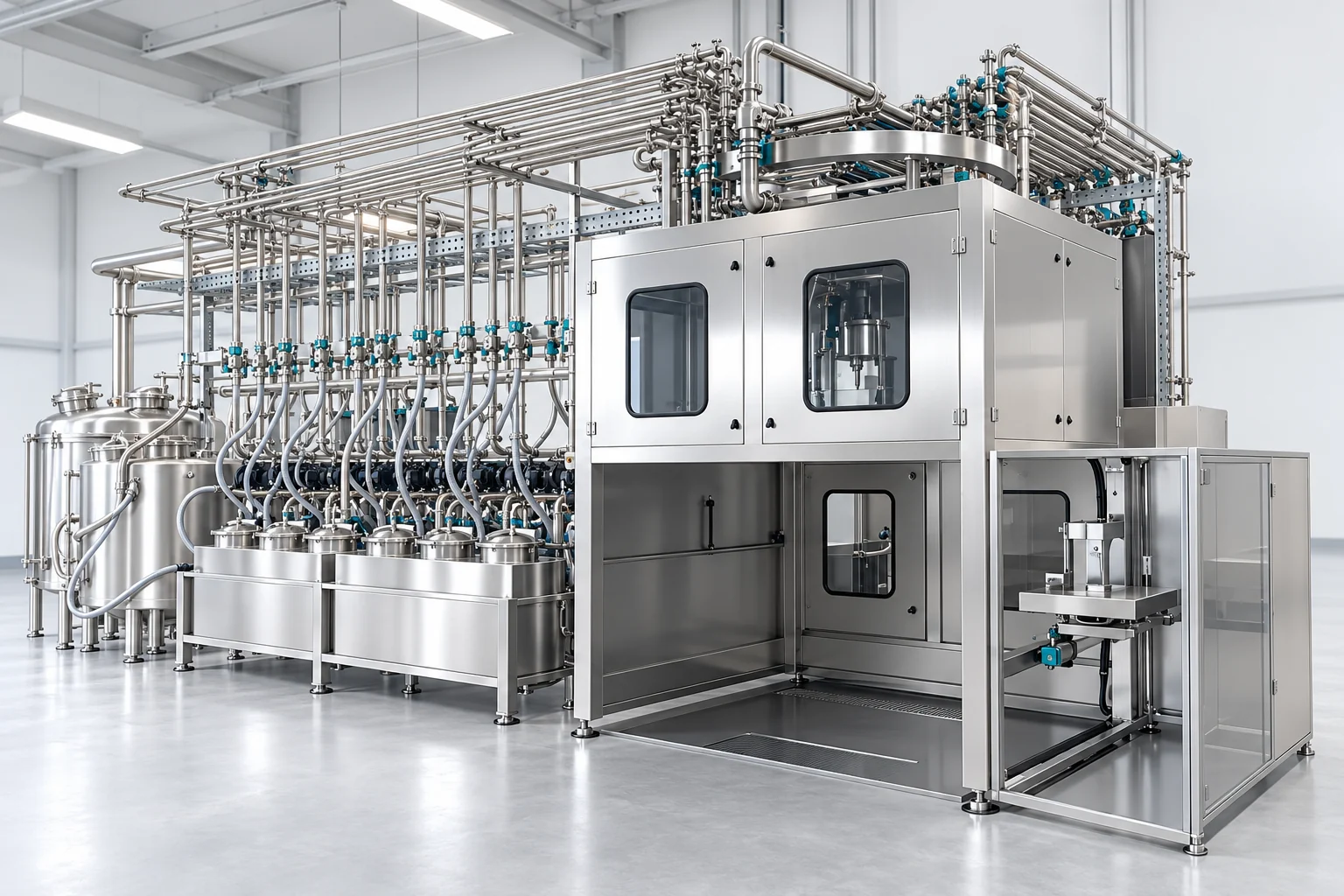
Automated Dry-Process Synthetic Leather Batching Solution
Concept illustration · Configuration varies
Coordinate resin and color-paste preparation for dry-process synthetic leather. Configured ingredient circuits, weighing, circulation and recipe management support basecoat, intermediate-coat and topcoat preparation before the coating line.
Scope and Material Requirements
Coordinate resin and color-paste preparation for dry-process synthetic leather. Configured ingredient circuits, weighing, circulation and recipe management support basecoat, intermediate-coat and topcoat preparation before the coating line.
Application Boundary
This route prepares coating mixtures; it does not replace the coating, drying or lamination process. Ingredient selection follows the resin chemistry, pigment dispersion, viscosity and receiving-line requirements. Basecoat, intermediate coat and topcoat describe three coating stages, not three reactive chemical components.
Configuration Inputs
Share ingredient identities and material data, minimum additions, batch sizes, container details, output goals and site interfaces. Equipment selection and acceptance are agreed for the actual application.
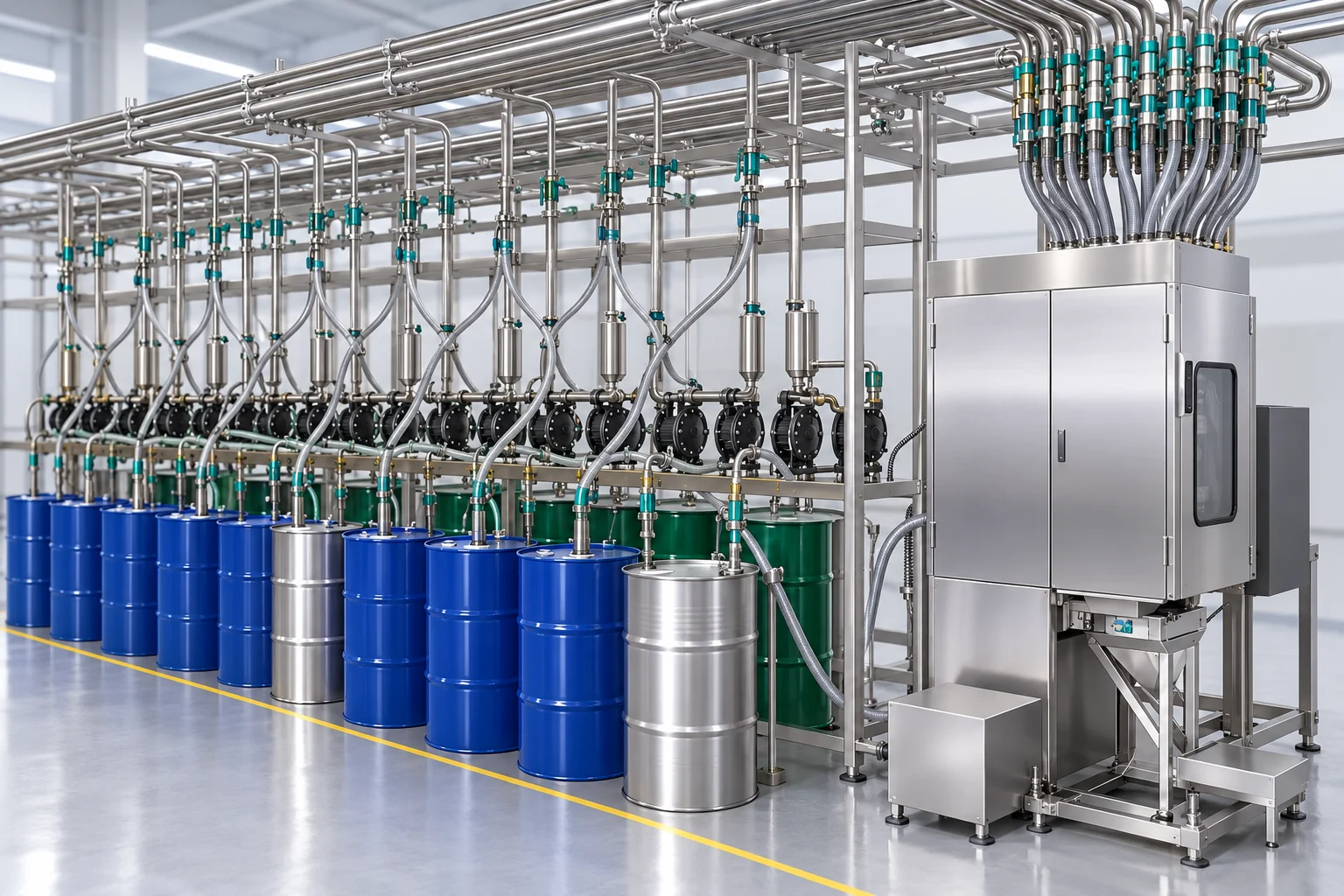
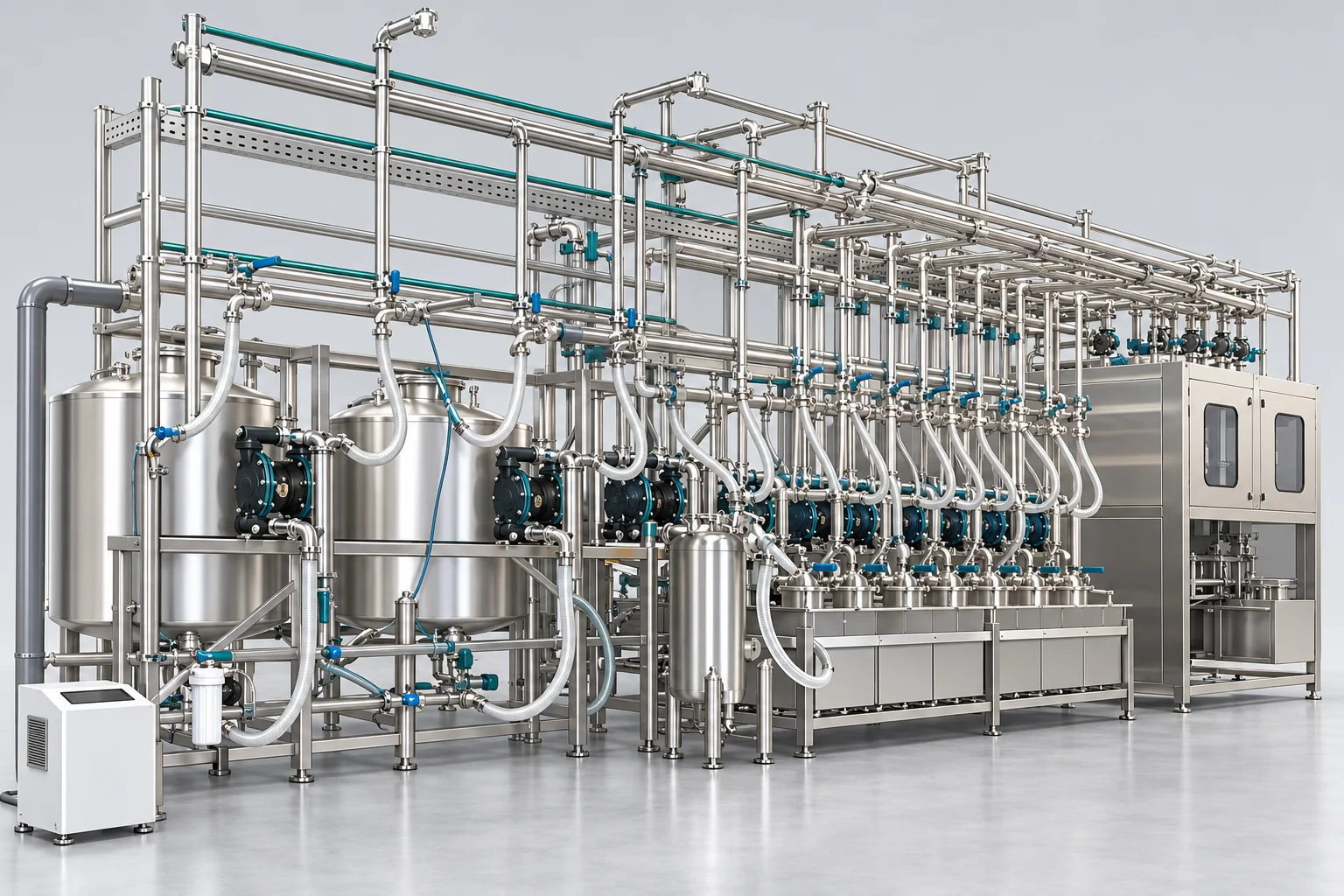
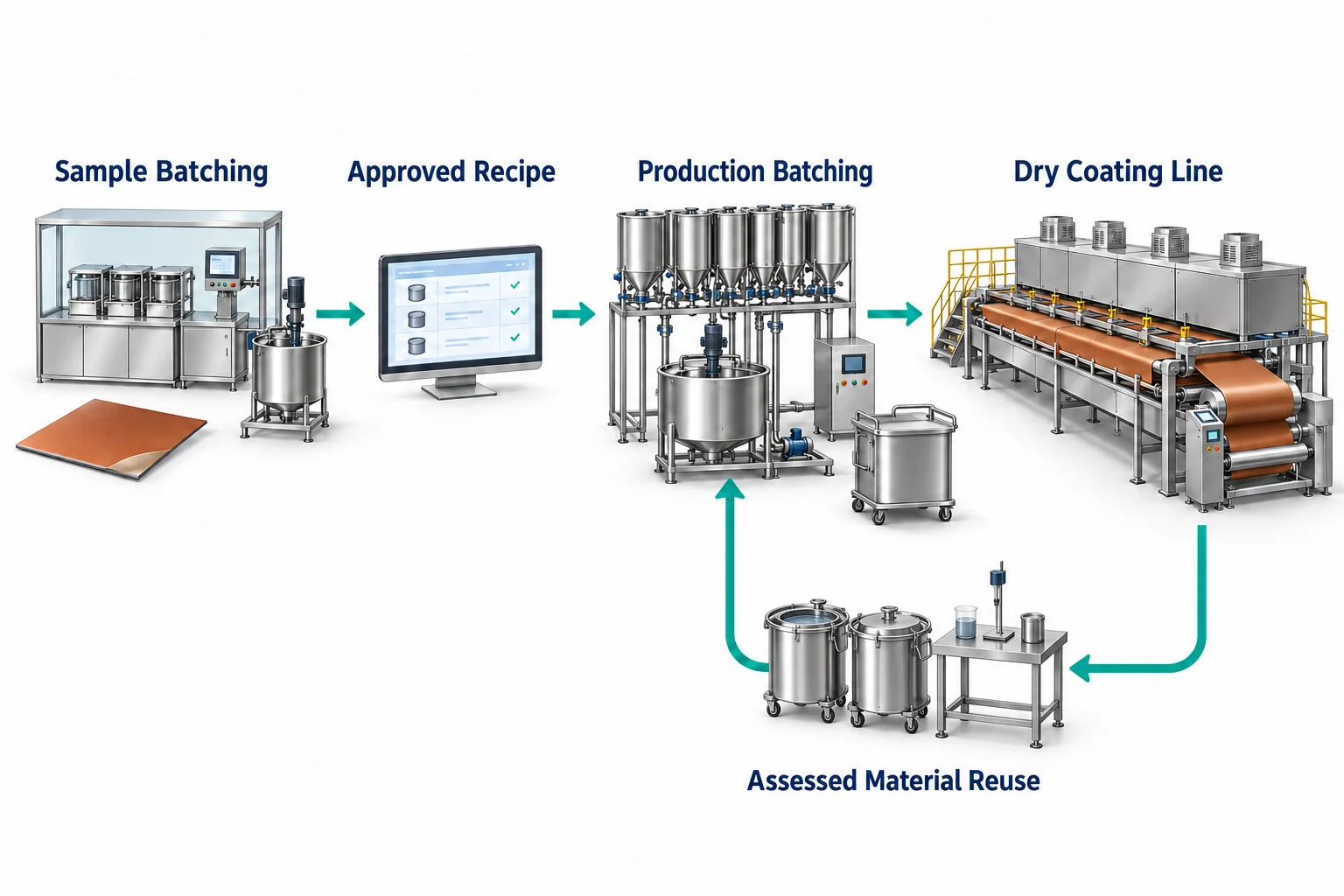
Concept illustration: the equipment views on this page are generated engineering visualizations, not photographs of delivered installations.
Material Preparation and Batching Process
Coordinate the selected equipment, recipe, material conditions and receiving-process interfaces. The workflow below describes the planning scope rather than a fixed configuration for every installation.
Define the coating recipes
Separate basecoat, intermediate-coat and topcoat requirements; identify each resin, pigment paste and auxiliary ingredient.
Condition the supply circuits
Review storage, filtration, material compatibility and circulation for the actual resin and pigment systems.
Identify and weigh the receiving container
Select the recipe and batch size, confirm container identity and tare, and verify the chosen weighing range.
Parameters and Operating Conditions
All numerical values describe selected reference configurations. Confirm the material properties, minimum dose, batch size, weighing conditions and acceptance method before equipment selection. Scale readability, ingredient dosing error and total batch tolerance are separate quantities.
All numerical values describe selected reference configurations. Confirm the material properties, minimum dose, batch size, weighing conditions and acceptance method before equipment selection. Scale readability, ingredient dosing error and total batch tolerance are separate quantities.
Production Batching Reference
| Parameter | Reference configuration | Scope and conditions |
|---|---|---|
| Color-paste circuits | 12–60 dispensing valves | Selected system range; final channel count follows the ingredient list. |
| Resin circuits | 1–12 dispensing valves | Separate from color-paste circuits. |
| Color-paste dosing reference | ±1 g | Stated configuration value; minimum dose and test conditions must be defined. |
| Resin dosing reference | ±10 g | Stated configuration value; not the total batch tolerance. |
| Batch-time reference | 5–10 min per container | Container mass, recipe and ancillary operations are not specified in this reference. |
| Circulation connections | DN25 pigment inlet / DN25 resin return; DN50 resin pipe | Individual connection references; finalize the pipe schedule. |
| Circulation modes | Timed, hourly, startup and manual circulation | Choose modes for the material and operating schedule. |
| Filter and pipework | Cartridge filter; internally polished inlet/discharge pipework and quick-connect discharge | Confirm cleanability and compatibility; no food-contact certification is implied. |
Basecoat, Intermediate-Coat and Topcoat Configuration
| Parameter | Reference configuration | Scope and conditions |
|---|---|---|
| Dispensing valves | Up to 24 | Separate configuration from the 12–60-channel production system. |
| Valve arrangement | Circular valve array; coarse, medium, fine and final additions | Confirm valve sequencing and shutoff with the selected materials. |
| Valve sealing reference | O-ring-free sealing | Final valve construction follows the quoted assembly. |
| Valve / pump connection references | DN20–DN40 / DN15–DN40 | Connection sizes, not pump output ratings. |
| Scale references | 30 kg / 0.1 g; 60 kg / 0.1 g | Source scale notation; rated capacity, readability and calibrated accuracy require separate confirmation. |
| Best-case dispensing reference | 0.1 g stated | No universal accuracy across all doses, materials or batch sizes is established. |
| Minimum container diameter | 250 mm | Check nozzle access, weighing support and container geometry. |
| Batch-time examples | 20 kg: 3–4 min; 200 kg: 6–8 min; 1,500 kg: 20–30 min | Separate sizing examples. Large batches do not use the listed 30/60 kg scale unchanged. |
| Hazardous-area arrangement | Specified for the actual material and site | Any proposed pressurization/isolation arrangement, zone suitability and conformity documents require project-specific review. |
Equipment and Process Concept Views
Related Production Routes
Dry-process synthetic leather production · PU synthetic leather solutions
Batch Release and Coating-Line Handover
Agree how a prepared container is identified, mixed, checked and released to the coating line. Batch completion at the scale is separate from approval of coating viscosity, color and usable holding time.
Related Preparation Systems
Chemical Processing Turnkey Plant · Batching-room integration
Equipment and Integration Scope
The batching scope comprises ingredient supply and circulation circuits, compatible pumps and valves, receiving-container weighing, a dosing enclosure and recipe controls. Downstream coating-line interfaces are defined separately. The catalog item below is a related dry-process coating line; it does not establish the batching machine model or performance.
Configuration Benefits
Benefits depend on the agreed material, equipment and operating workflow. Validate dosing, handling and product acceptance separately.
Stage-specific preparation
Keep basecoat, intermediate-coat and topcoat recipes distinct while coordinating material supply and batch records.
Configured circulation
Select return paths and circulation modes to address the actual sedimentation and viscosity behavior; verify them through trials.
Recipe-to-line traceability
Optional barcode and production-data interfaces connect approved recipes, receiving containers, transfer and consumption records.
Production Planning FAQ
Clarify the configuration, measurement conditions and delivery scope before requesting a proposal.
Does three-stage batching mean three-component PU mixing?
Do all channels and batch sizes achieve 0.1 g?
Does dry-process mean solvent-free?
Can remaining coating mixture be reused automatically?
What should be checked before releasing a batch?
Discuss Your Dry-Process Batching Requirements
Share your material data, batch or sample requirements, receiving-process details and factory conditions. Our team will reply within one business day. Once requirements are clear, we provide a preliminary proposal within two business days.


