
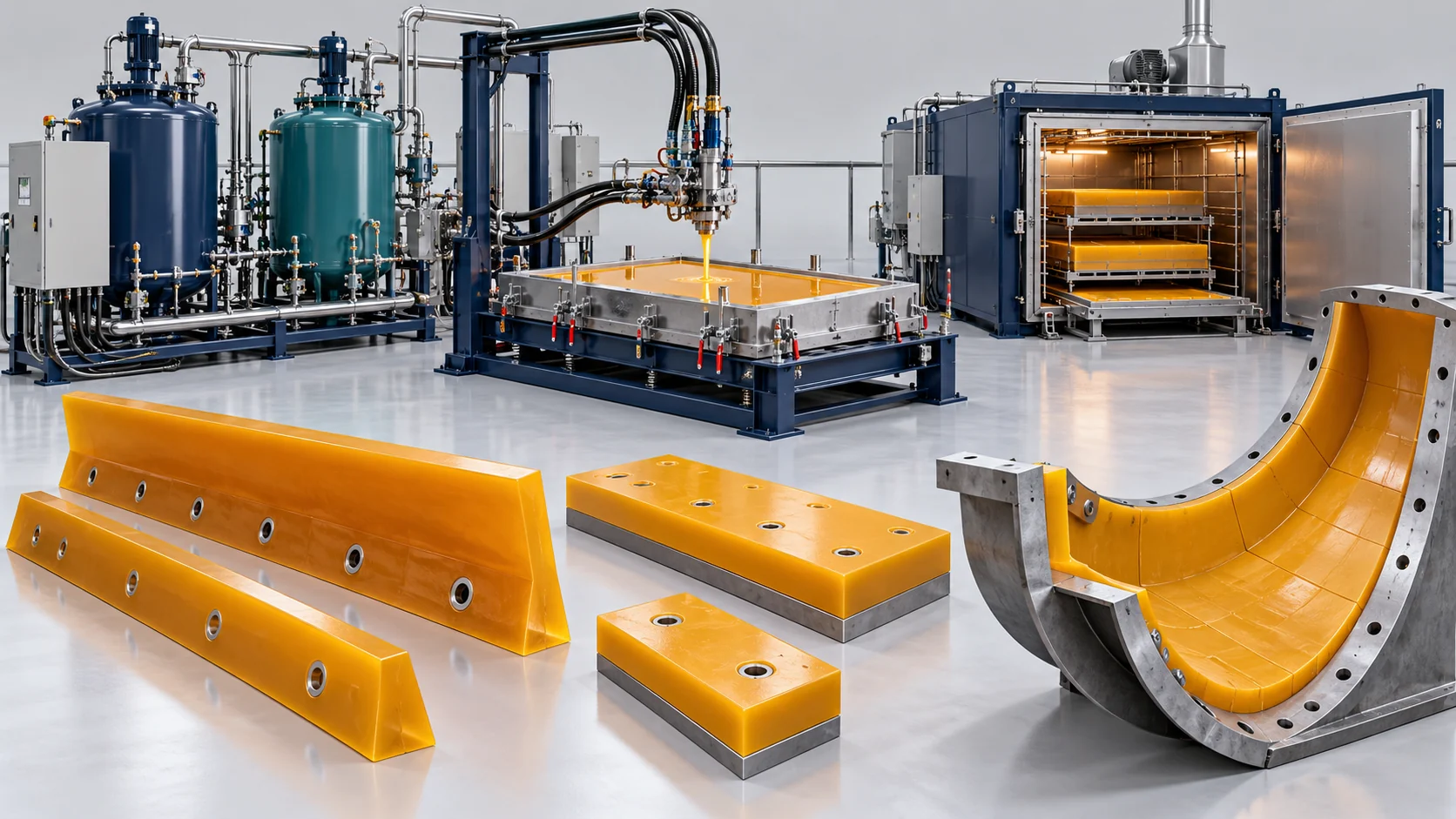
PU Wear-Part and Cast Lining Production Solution
Produce molded wear components or cast polyurethane linings around a documented substrate, geometry and service condition.
Build the Process Around Your Product
Produce molded wear components or cast polyurethane linings around a documented substrate, geometry and service condition.
Product and material first
Start with the finished-product drawing, material system and acceptance requirements. The process route and equipment configuration are assessed together.
Capacity across the whole process
Define output with preparation, forming/reaction, curing, handling and inspection included. The slowest stage and product changes determine practical line capacity.
Select a removable molded wear part, substrate-backed covering or cast pipe lining as the actual product. Filling access, support, bonding and cure differ between them. Spray-applied protective coatings use a separate application route.
From Preparation to Qualified Product
A planning sequence for the specified route. Final settings and acceptance conditions are established through material and part review.
Define wear service
Identify abrasion, impact, chemical exposure and whether a free-standing part or bonded lining is required.
Prepare substrate or mold
Plan surface preparation, bond system, gaps, inserts and release conditions.
Prepare components
Check elastomer viscosity, pot life and thermal handling requirements.
Information Needed to Configure the Line
Provide these inputs so the equipment range, interfaces and validation plan can be defined.
| Design input | Information required |
|---|---|
| Part or lining drawing | Substrate, dimensions, thickness, filling access and inserts |
| Exposure profile | Abrasion mechanism, impact load, chemicals and temperature |
| Material window | Viscosity, ratio, pot life and cure requirements |
| Inspection basis | Dimensions, bond checks and agreed wear test |
Core Equipment and Integrated Interfaces
The linked pipe-lining casting reference supports that selected route; specify substrate preparation, tooling and finishing separately.
Coordinate the Equipment With the Process
Evaluate repeatability, handling and acceptance across the full workflow.
Defined wear mechanism
Specify sliding abrasion, impact and chemical exposure for material selection.
Substrate and fill access
Review preparation, runners and support for the actual lining geometry.
Bond and wear evidence
Agree representative bond checks and the relevant service/test comparison.
Related CPU process reference
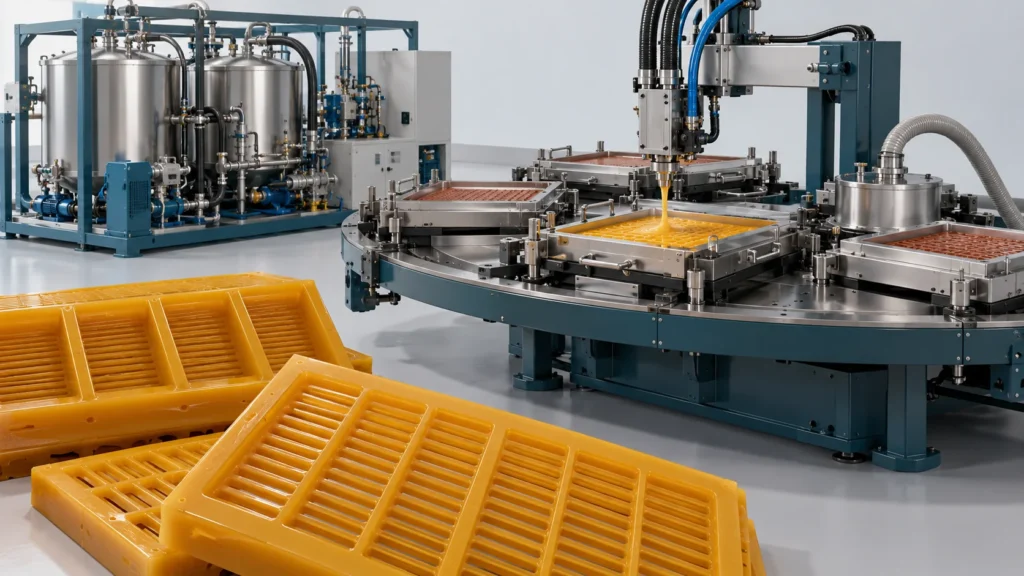
The linked mining-screen upgrade is CPU-processing experience, not a delivered pipe-lining reference or proof of the same service life.
Frequently Asked Questions
Clarify the production route before selecting a machine.
Is cast pipe lining the same process as spray coating?
What information is needed to size the production line?
What is included in the equipment package?
Are cycle time and finished-product performance fixed?
What should distinguish a cast lining from a sprayed coating?
Submit Your Production Goals
Share the following for this application: Part/substrate drawing, lining thickness, filling access, abrasion/impact/chemical duty, material and bond inspection. Our team will reply within one business day. Once requirements are clear, we provide a preliminary proposal within two business days.


