
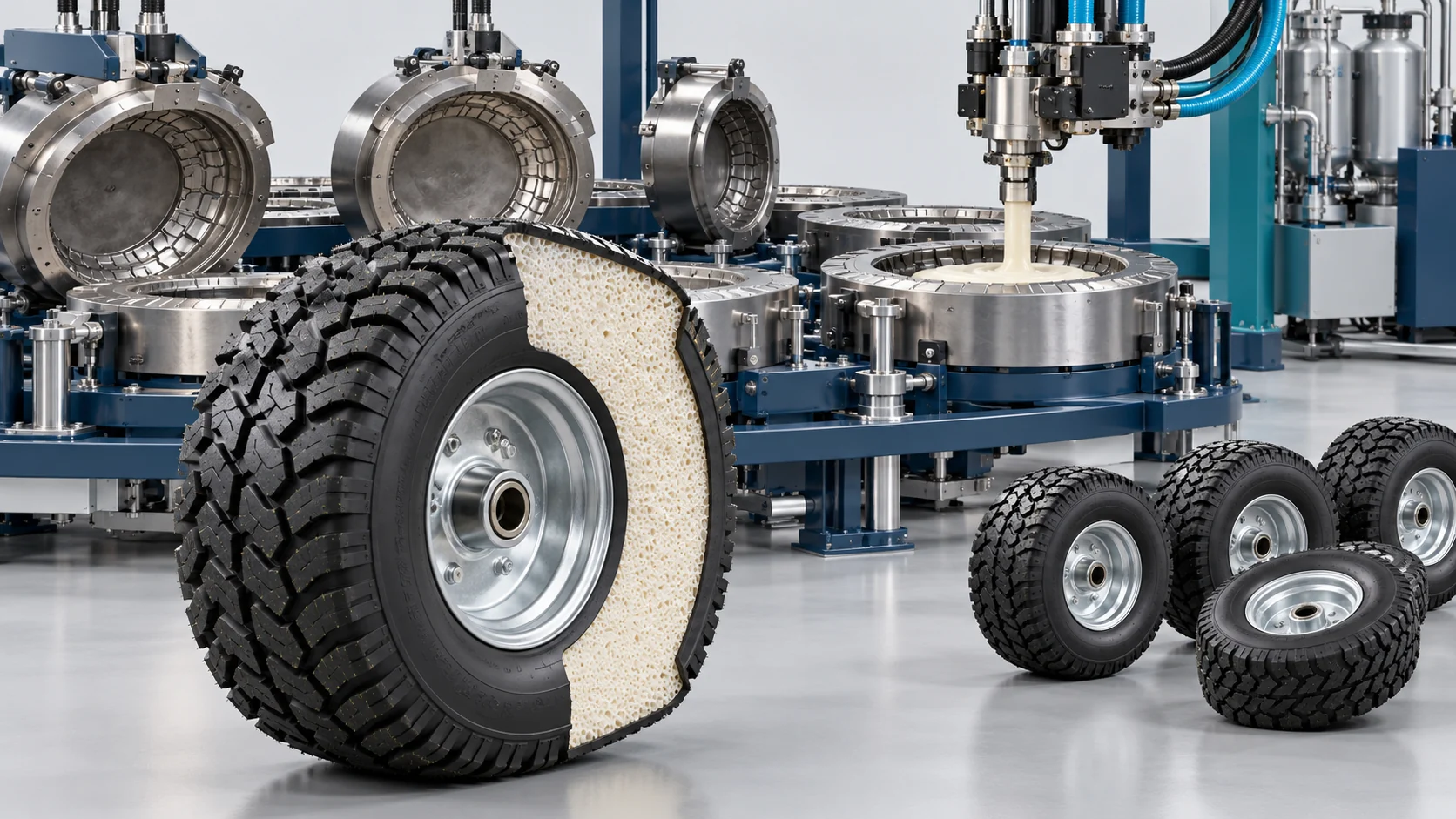
Lawn and Garden Solid PU Tire Molding Solution
Plan molded PU wheel production for lawn tractors and garden equipment around wheel geometry, hub interfaces, formulation and operating duty.
Lawn and Garden Equipment PU Wheel Manufacturing Configuration
Plan molded PU wheel production for lawn tractors and garden equipment around wheel geometry, hub interfaces, formulation and operating duty.
Wheel Assembly Requirements
Define geometry, hub fit, load, speed, terrain and chemical exposure for the actual component. Equipment selection is based on these inputs.
Process and Equipment Scope
Identify metering, mixing, tooling, handling and post-treatment in the agreed equipment schedule. Listed case or brief values describe their own configurations.
Use the selected garden-wheel geometry and hub to define preparation, fill and cure. Record each stage input and output, then balance mold population and handling against the working schedule; machine flow is not finished wheels per hour.
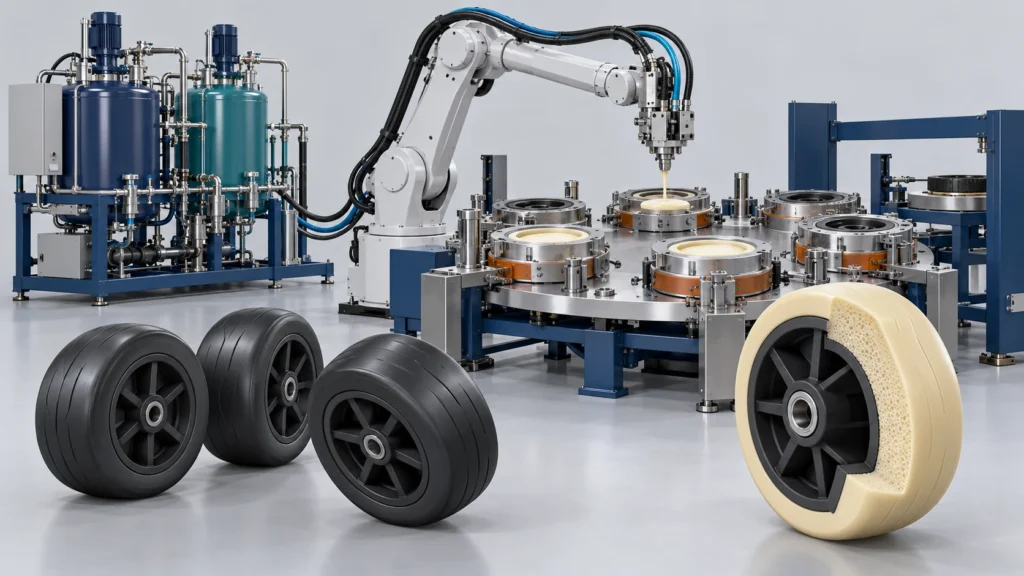
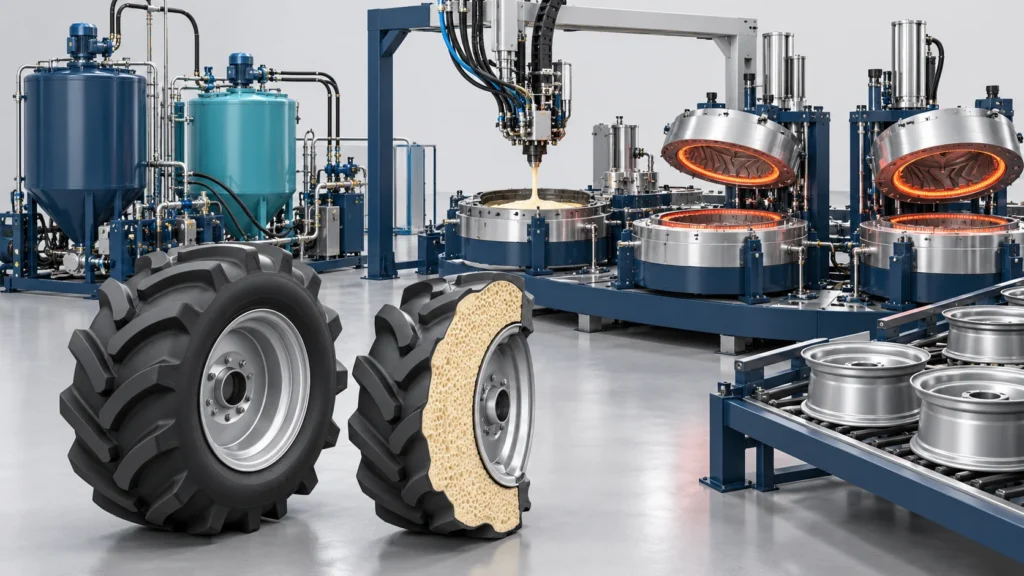
Microcellular PU Tire Manufacturing Workflow
Coordinate the wheel assembly and material requirements through the selected production sequence.
Prepare the Hub and Mold
Select cleaning, primer, preheating and mold preparation for the hub, formulation and wheel geometry.
Meter, Mix and Fill
Choose compatible metering and mixing, set the shot from the wheel cavity and validate the filling sequence.
Cure in the Selected Tooling
Coordinate the mold arrangement and thermal conditions with the formulation and required demolding readiness.
Configuration References and Selection Conditions
Equipment ranges are supplied-brief references. Wheel load, wear and environmental performance require component-specific evaluation.
| Item | Reference / Selection Input | Conditions |
|---|---|---|
| Application | Lawn mowers, garden tractors and specified utility wheels | Define the actual wheel and operating duty. |
| Material | Microcellular PU formulation selected for the wheel | Final material processing and properties follow the selected formulation. |
| Density reference | 450–650 kg/m³ | Any numerical range is from the supplied configuration brief, subject to formulation trials. |
| Diameter reference | 8–24 inches | Brief configuration range; tooling and hub geometry are selected separately. |
| Metering output reference | 15–60 kg/min | Brief equipment reference, not finished wheels per hour. |
| Submitted time reference | 3–6 min | Original timing endpoints require confirmation. Record entry-to-demold cycle separately from output interval. |
| Load, wear and chemical resistance | Specified for the actual wheel assembly | No universal load rating, comparative wear-life multiplier or chemical-resistance outcome is asserted. |
Production Planning Considerations
Match process functions to the specified wheel and factory requirements.
Hub and Tooling Interfaces
Coordinate part drawings, hub preparation, molds and demolding.
Material Processing
Select metering, mixing and thermal settings for the formulation.
Production Organization
Plan station count, mold cavities, working hours and downstream stages.
Component Evaluation
Define the load, wear, bonding and exposure tests relevant to the actual wheel.
Related Projects
The lawn/garden projects support their own wheel and production arrangements. Keep their duty and material conditions with any comparison.
Frequently Asked Questions
Process selection, tooling, commissioning and line integration.
Does this page establish a wheel load or wear-life rating?
Can one equipment configuration cover every wheel size?
How is production output calculated?
What information is needed for process selection?
What should be checked at the hub-to-PU interface?
Discuss Your Tire and Wheel Production Project
Share the following for this application: Wheel/hub drawings, shot mass, formulation, load and speed, ground conditions, mold count and work schedule. Our team will reply within one business day. Once requirements are clear, we provide a preliminary proposal within two business days.


