
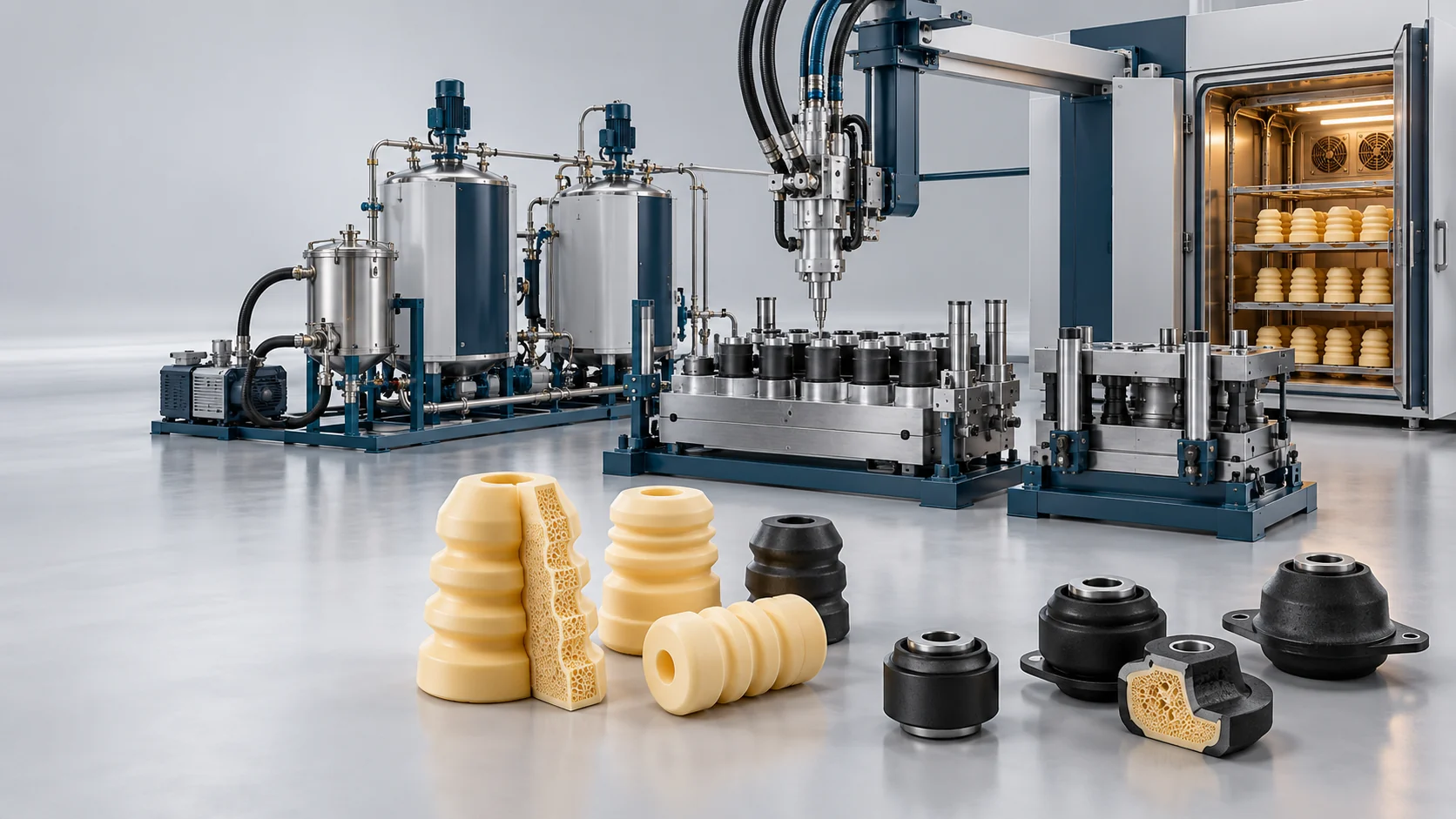
Chassis NVH Microcellular PU Elastomer Molding Solution
Turnkey polyurethane casting systems engineered for chassis jounce bumpers and suspension mounts, delivering progressive non-linear damping and extreme fatigue endurance.
Precision Microcellular Polyurethane Solutions for Chassis NVH
Modern vehicle dynamics require suspension components that isolate high-frequency road vibrations while preventing suspension bottoming-out over severe road obstacles. Conventional rubber isolators expand laterally under load and possess linear stiffness, requiring large installation envelopes and suffering from heat build-up. Haifeng’s microcellular elastomer casting solution processes advanced polyurethane matrices into compact, cellular springs. These microcellular components compress down to 20% of their original height without lateral bulging, providing amplitude-selective damping, low dynamic stiffening, and outstanding cyclic durability.
Extreme Volumetric Compressibility
Microcellular cell collapse allows up to 80% axial compression with minimal Poisson lateral expansion, fitting compact suspension strut architectures without rubbing interference.
Severe Cyclic Durability (>3M Cycles)
Advanced stoichiometric ratio locking prevents microscopic phase separation, ensuring shock absorption buffers endure over 3 million dynamic load cycles without mechanical fatigue failure.
Haifeng delivers the complete elastomer processing architecture—from high-temperature vacuum degassing tanks and high-pressure metering to automated multi-cavity vertical presses and secondary curing ovens—tailored for global chassis component manufacturers.
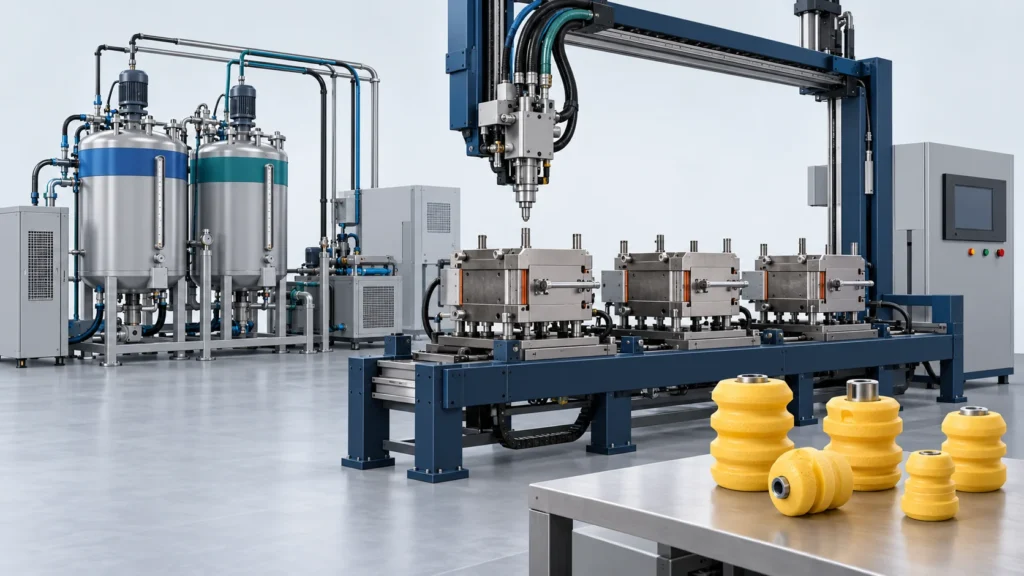
Microcellular Elastomer Casting Sequence
A synchronized four-stage workflow delivering high-performance NVH components with precise cell morphology and zero voids.
Precursor Degassing & Thermal Control
Raw materials are preheated up to 120°C in stainless steel tanks under deep vacuum to remove micro-bubbles and moisture
Dynamic Stoichiometric Metering
Precision gear/piston pumps meter prepolymer and chain extenders at ±0.5% stoichiometric precision into a high-speed dynamic mixing head
Heated Mold Casting & Clamping
The liquid mixture is poured into preheated molds at 90–110°C; vertical clamping presses close to form cellular structures
Engineering Specifications & Technical Parameters
Technical parameters for this Haifeng automotive production system.
| Technical Parameter | Standard Specification / Value | Engineering Context & Verification |
|---|---|---|
| Target Application | Suspension Jounce Bumpers, Top Mounts, Spring Isolators | Chassis dynamic NVH shock absorption |
| Material Matrix | Microcellular Polyurethane Elastomer (NDI/MDI) | High-durability cellular elastomer |
| Finished Part Density | 350 – 650 kg/m³ | Engineered per suspension spring rate |
| Temperature Range | -40°C to +90°C continuous operation | Extreme chassis road durability |
| Volumetric Compression | Up to 80% of original height | Minimal lateral bulging (Poisson's ratio ~0) |
| Fatigue Endurance | >3,000,000 Cycles | Multi-axis suspension durability testing |
| Scope of Supply | Turnkey (Casting Unit, Vacuum System, TCU + Press/Oven) | Full line integration or casting skid |
Key Engineering Advantages
For Chassis NVH Microcellular Elastomer Line, assess material compatibility, process control, equipment interfaces and changeover needs against your production brief.
3,000,000+ Cycles Dynamic Durability
Endures extreme dynamic suspension deflection without cracking or permanent loss of height.
High Volumetric Compactness
Compresses axially without bulging outwards, enabling compact suspension damper designs.
Amplitude-Selective Progressive Damping
Soft ride comfort during micro-vibrations with solid, progressive stiffness during large impacts.
Continuous Vacuum Degassing
Eliminates micro-voids in liquid prepolymers, securing uniform cell walls.
Related Automotive Project
See the production line delivery and measured project outcomes.
Frequently Asked Questions
Engineering and purchasing questions about this polyurethane production route.
How does microcellular PU differ from conventional chassis rubber?
Can this system process NDI and TODI prepolymers?
What is the typical lead time and installation?
Discuss Your Automotive Production Project
Share the part, material and target capacity for a tailored solution.
Relevant Haifeng Equipment
Equipment is shortlisted by the part, material system and process trials.
Low-Pressure PU Foaming Machine | Bump Stops
Low-pressure PU foaming machine for automotive bump stop production, delivering high cushioning performance and long-term durability. Ideal for suspension system shock-absorbing components.
Auto Buffer Block Trimming Machine | Auto Parts
Automatic trimming machine designed for auto buffer block flash removal, delivering high-precision cutting for smooth edges. Ideal for shock absorber blocks and polyurethane elastomer parts finishing.


