
Most polyurethane quality problems begin with a number on a technical data sheet that is easy to misread: NCO content. When the reactive group count drifts a little from the grade a line was built around, the index changes, and gel time, rise time, density, hardness, and mold surface do not move independently. They move together.
That is because the NCO group is the reactive center of almost every important polyurethane step. It decides how fast the mass builds molecular weight, where water reacts to form carbon dioxide, where urea hard segments appear, and how much crosslinking can develop during late cure. This article explains the NCO group the way production engineers need to understand it: what reacts first, which reactions are wanted, which ones must be controlled, and how to keep the group count consistent across batches and equipment.
What Makes the NCO Group Reactive
An isocyanate contains the functional group −N=C=O [4]. The central carbon is electron-poor because the adjacent nitrogen and oxygen pull electron density away. That makes the carbon an electrophile, open to attack by an active-hydrogen compound: an alcohol, an amine, water, or a carboxylic acid. The addition across the carbon–nitrogen double bond builds the molecular backbone that eventually becomes a foam, an elastomer, a coating, or an adhesive.

The Reactions That Drive Gelling, Blowing, and Crosslinking
A practical way to read the chemistry is to separate the reactions by what they do on the line:
| Reaction partner | Product | Catalyst tendency | Process meaning |
|---|---|---|---|
| Alcohol (polyol, glycol, BDO) | Urethane linkage | Organotin catalysts tend to accelerate this path | Chain extension and gelling; the main route to molecular weight |
| Water | Urea plus carbon dioxide after an unstable carbamic acid intermediate | Tertiary amine catalysts often favor the water route in foam systems | Blowing; controls foam density, cell formation, and skin quality |
| Amine (aromatic amine, MOCA, polyamine) | Urea linkage | Usually fast; catalyst or heat demand depends on the system | Rapid hard-segment formation in elastomers |
| Urethane plus excess NCO | Allophanate | Accelerated by heat and excess isocyanate | Adds branching and crosslink density |
| Urea plus excess NCO | Biuret | Accelerated by heat and excess isocyanate | Increases network density and chemical/thermal resistance |
| Isocyanate trimerization | Isocyanurate ring | Strong trimerization catalysts and heat | Creates rigid, heat-stable cyclic crosslinks |
The first two rows dominate most production decisions. The alcohol reaction builds the backbone, while the water reaction competes for the same NCO groups and creates carbon dioxide. A formulation is not simply a ratio of A-side to B-side; it is a designed contest between gelling and blowing [3]. Too much water relative to available NCO can create early pressure in the mold before the part has developed enough green strength. Too little water leaves a dense, over-packed part.
Because water competes with polyol for the same NCO group, foam density and skin quality are not separate recipes. <What Is Spray Polyurethane Foam Composition And Application> covers how the A-side isocyanate, B-side polyol, and water or physical blowing-agent balance changes the sprayed part.
Urea formation is particularly important in cast elastomers where aromatic amine chain extenders such as MOCA create the hard domains that give tear, tensile, and abrasion resistance. The same reaction can become a problem if amine contamination enters a polyol stream, because it accelerates uncontrolled molecular-weight build and can affect pot life.
NCO Content, Equivalent Weight, Index, and Measurement
NCO content is normally reported as mass percent NCO [1]. It is not a single quality rating; it is the reactive group concentration that the rest of the formulation must match. The isocyanate equivalent weight follows directly from the NCO content:
Equivalent weight = 4,202 / (% NCO)
A prepolymer with 10% NCO therefore has an isocyanate equivalent weight of about 420 g/eq.
The isocyanate index puts this into formulation context:
Index = (actual NCO equivalents / reactive-hydrogen equivalents) × 100
An index of 100 matches the available NCO groups to the calculated active hydrogens. Above 100 leaves excess NCO available for allophanate, biuret, or cyclotrimerization; below 100 leaves some alcohol or amine groups unreacted and usually depresses ultimate cure and network integrity. In rigid foam and many molded parts, the target index is deliberately set above or below 100, so the key is not to treat 100 as a universal target but to fix the target for the specific grade and tooling.
Production labs determine NCO content by reacting a known sample weight with an excess of di-n-butylamine and back-titrating the unreacted amine with acid [1], [2]. The important production point is not the titration chemistry itself but what can make a measured value wrong: sampling from a poorly mixed drum, residual moisture in the flask or solvent, incorrect temperature, or material that has already begun to react with ambient humidity.
NCO content also drifts in storage when humidity enters the container. Moisture reacts with NCO groups, lowering the available isocyanate and slowly building viscosity. Tank blanketing with dry air or nitrogen, controlled preheating, and consistent raw-material recirculation are therefore not handling details; they are part of maintaining the chemical number that the dosing equipment was calibrated against.
Because the NCO content determines how much isocyanate is required to react with a given polyol charge, any error in this number propagates to the shot weight and the final index. <How To Calculate Shot Weight In Polyurethane> covers how the translation from formulation percentages to machine dose is made.
From NCO Control to Line Control
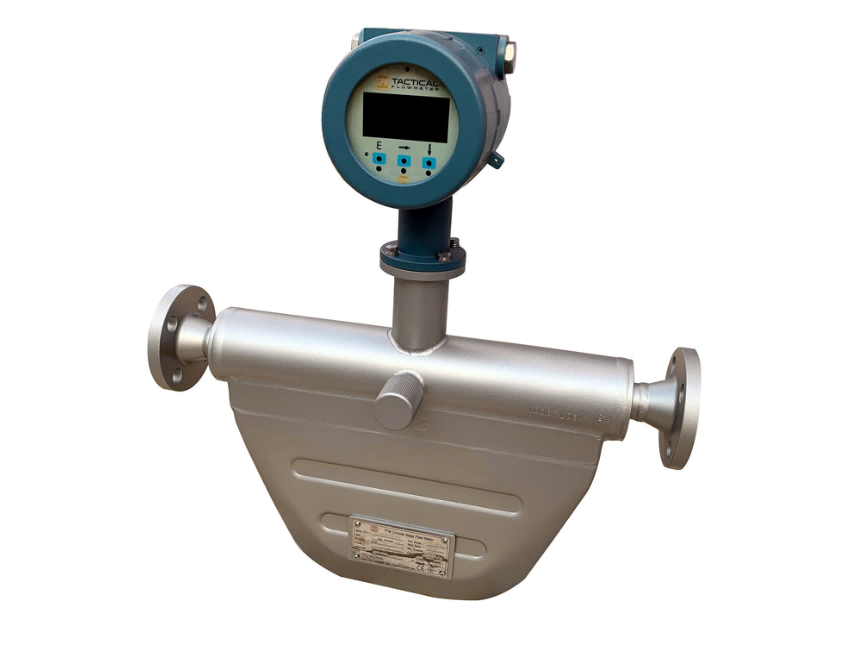
At the mixing head, the NCO group is not visible, but its effects are. A shift in A-side flow changes the ratio before any chemical test is available. That is why closed-loop servo metering, temperature control, and real-time flow monitoring are direct controls on index stability rather than auxiliary features. When the metering path drifts, the apparent index moves without the machine necessarily showing a hard alarm.
A production line making molded parts may hold dimensional tolerance well for hours and then begin to see longer demold time, higher apparent hardness, or small surface defects. The first measurement that usually moves is the reaction profile, because both gelling and blowing draw from the same NCO supply. On a high-output line with closed-loop servo dosing, the goal is to keep the A-side and B-side flow within a narrow band so that the formulation behaves like the grade used for the stored shot weight. Even a small ratio deviation can shift final part density, hardness, and release behavior together.

Since the NCO group is involved in gelling and blowing at the same time, the first measurable warning on a production line is usually a change in rise or gel profile. <The Role Of Rise Time In Polyurethane Foaming> covers what production teams should read from rise-time changes before entire molds are scrapped.
Validate the current NCO calculation before the next batch. Send the NCO value from your TDS, target index, and present shot weight to Info@chinahaifeng.com for a direct metering-path review. Include the pump type, current flow calibration, and material temperature setpoint if available.
Aromatic vs. Aliphatic Isocyanates and Catalyst Selection
The common isocyanates split into two groups. Aromatic products — MDI, polymeric MDI, TDI — are used for rigid foam, molded foam, elastomers, and many cast parts. The electron-poor aromatic ring makes the NCO group more electrophilic, so these systems tend to react faster and often require less aggressive catalysis. Aliphatic isocyanates — HDI, IPDI — are used where light stability and optical clarity matter, such as coatings and transparent castings; they generally react more slowly and need stronger or more selective catalyst packages.
Catalyst choice is therefore not a simple additive decision. Organotin compounds tend to accelerate the alcohol-urethane path, while tertiary amines often accelerate the water reaction relative to the alcohol reaction in many foam systems [3]. A change in catalyst ratio can be as powerful as a change in NCO content, because it changes which reaction consumes the available NCO most quickly.

For the reader, the formula to remember is short: define the NCO content, fix the index, protect the material from moisture, and watch the reaction profile before trusting the part.
Engineering Support for NCO-Related Formulation and Metering
If your team is seeing index drift, unexplained hardness change, or moisture-related NCO loss on existing lines, Haifeng Polyurethane Machinery can support the equipment-side check: metering calibration, temperature control, closed-loop dosing, and formulation storage on new or existing systems.
- Email: Info@chinahaifeng.com
- WhatsApp: +86 13566296633
Send the target NCO content, current pump calibration data, and shot weight. The more process data you include, the faster the check can move from symptom to cause.
FAQ
What is the difference between free NCO and prepolymer NCO content?
Free NCO refers to unreacted isocyanate groups in a prepolymer or a formulated system; prepolymer NCO content is the total mass percent of NCO groups in the prepolymer, including terminal groups on the prepolymer chains. That value is used as the reactive group concentration for calculating how much chain extender or polyol the system requires. Some data sheets also report free monomer content separately because monomeric diisocyanate has different handling and exposure implications.
How does NCO content relate to isocyanate index?
NCO content is the measured group concentration of the isocyanate component. Index compares the actual NCO equivalents to the active-hydrogen equivalents in the total blend. Two systems with different NCO content can still be run at the same index if the shot weights and equivalent weights are recalculated.
Why do aromatic and aliphatic isocyanates differ in reactivity?
The aromatic ring pulls electron density away from the NCO carbon, making the group more electrophilic. Aliphatic groups do not provide the same electronic effect, so HDI and IPDI typically react more slowly and depend more on catalyst selection and temperature control.
How is NCO content measured in a production lab?
A known sample weight is reacted with an excess of di-n-butylamine, and the unreacted amine is back-titrated with standard acid [1], [2]. The result is reported as mass percent NCO. Good sampling and moisture exclusion are the main practical requirements for a repeatable result.
References
[1] ISO 14896:2009, Plastics — Polyurethane raw materials — Determination of isocyanate content, International Organization for Standardization, Geneva, 2009.
[2] ASTM D2572-19, Standard Test Method for Isocyanate Groups in Urethane Materials or Prepolymers, ASTM International, West Conshohocken, PA, 2019.
[3] D. Randall and S. Lee, The Polyurethanes Book, ICI Polyurethanes, 2002.
[4] IUPAC, Compendium of Chemical Terminology, Version 2.3.3, 2014, entry “isocyanate.”
If you’re interested, check out these related articles:
RRIM Vs RIM Which Process Suits Your Structural Part
What Is Spray Polyurethane Foam Composition And Application
How Polyurethane Rollers Are Made From Casting To Cure
What Is Semi Rigid Polyurethane Foam
The Role Of Rise Time In Polyurethane Foaming