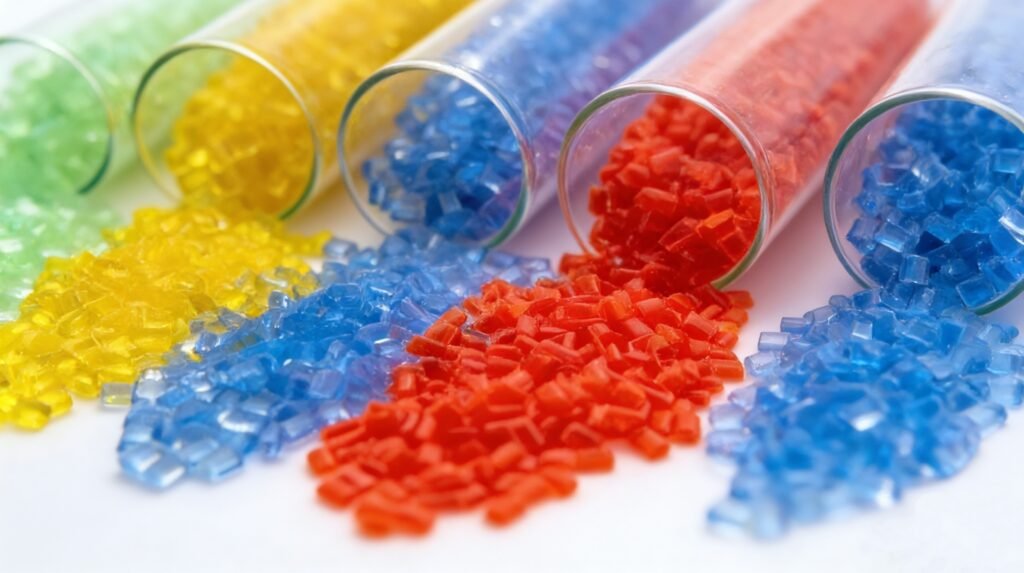
Batch-to-batch NCO variation moves faster than most production teams expect. When a prepolymer arrives with a lower isocyanate content than the formulation assumes, the same mix ratio now delivers less isocyanate to the reaction. The result is not always a visible air bubble. It can be a softer part, a longer demold time, or an elastomer that never builds the expected crosslink density.
This article works through what NCO content actually measures, how it enters formulation calculations, and why the right control point is not just in the lab but in metering and temperature control on the machine.
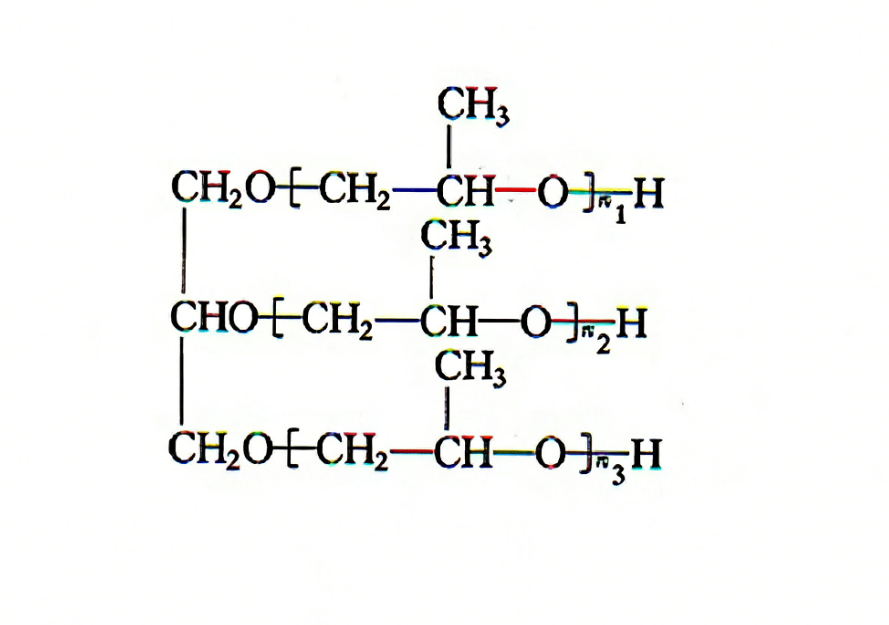
What NCO Content Actually Measures
NCO content is the mass percentage of reactive isocyanate groups in an isocyanate, prepolymer, or quasi-prepolymer. It is measured by titration, with the standard methods in ASTM D2572 and ISO 14896 [1][2]. A higher number means more active NCO groups per 100 g of material.
The practical meaning is simple: NCO content is a proxy for equivalent weight. The two are linked by the equation:
Equivalent weight (g/eq) = 4200 / NCO percentage
This comes from the molecular mass of the NCO group, approximately 42 g per equivalent, expressed per 100 g of sample [3]. So a prepolymer with 6.0% NCO has an equivalent weight of 700 g/eq. The same prepolymer at 5.5% NCO has an equivalent weight of about 764 g/eq. That one-half-percentage-point shift changes the amount of corrective polyol or curative needed.
The Formulation Math: From NCO Percentage to Equivalent Weight
The formulation calculation is compensation, not guesswork. Suppose a polyol has a hydroxyl value of 56.1 mg KOH/g. Its equivalent weight is 56,100 divided by the OHV, or 1,000 g/eq. At an isocyanate index of 100, every 1,000 g of that polyol requires 700 g of a 6.0% NCO prepolymer [3][4].
If the NCO content is measured at 5.5% instead, the required mass rises to 764 g for the same 1,000 g of polyol. A fixed-ratio machine that continues to dose by the old 0.70:1 ratio will now run slightly under-indexed. In a microcellular shoe sole, that may show up as lower hardness or higher compression set. In a cast roller, it may show up as longer cure and a tackier surface.
The equation is linear, but the process response is not. Hardness, modulus, and heat resistance all shift with the resulting isocyanate index. This is why a formulation should be recalculated when the COA shows a change, not when scrap appears.

NCO content is the starting point for every downstream property. <How to Calculate Shot Weight in Polyurethane> covers how this stoichiometry translates into the actual mass a machine must deliver per mold or part.
How NCO Content Changes Processing Behavior
The same percentage that changes the formulation also changes how the material moves through the machine. The relationship is usually as follows:
| NCO content direction | Typical process effect | What must be managed |
|---|---|---|
| Higher free NCO | Lower viscosity, easier low-temperature metering, faster initial reactivity | Moisture pickup, exotherm, shorter usable pot life |
| Lower free NCO | Higher viscosity, more shear heating, may need higher tank temperature | Temperature control, metering stability, longer cure |
No single table applies to every system. Viscosity depends on prepolymer molecular weight, polyol type, and the amount of free monomer, not only on NCO content [4]. For TDI-prepolymers, free TDI is a major concern for workplace exposure; for MDI-prepolymers, viscosity control and storage temperature matter more. The processing response also depends on catalysts, mold temperature, and shot size [5].
Moisture is the hidden variable. Isocyanates react with water to form an amine and carbon dioxide. In a closed system, that consumes NCO groups and creates pressure or bubble defects. In a bulk prepolymer, moisture ingress during storage will gradually reduce the measured NCO content and change the effective stoichiometry [5].
Reaction-profile issues are the second symptom of an NCO mismatch. <The Role of Rise Time in Polyurethane Foaming> covers how the gelling and blowing balance moves when reactivity changes.
If you suspect an NCO drift, do not start by increasing catalyst. Recalculate the curative demand, then verify that the metering unit is holding the corrected ratio. If you need a specific review of ratio and tank-temperature settings, reach us at Info@chinahaifeng.com or WhatsApp 86 13566296633.
Cast Elastomers and the NCO–Curative Relationship
In cast polyurethane systems, NCO content works directly with curative stoichiometry. The equipment-level relationship is direct: MOCA ratios around 100:9–12 and BDO ratios around 100:3–6 are typical for a range of prepolymers and part profiles. These numbers are not universal; they are starting windows that change with the NCO content of the batch.
A prepolymer at the higher end of an NCO range generally needs more curative to reach the same index. A prepolymer at the lower end needs less. If that relationship is ignored, the result is either an under-cured part with a wet surface or an over-crosslinked part with reduced elongation.
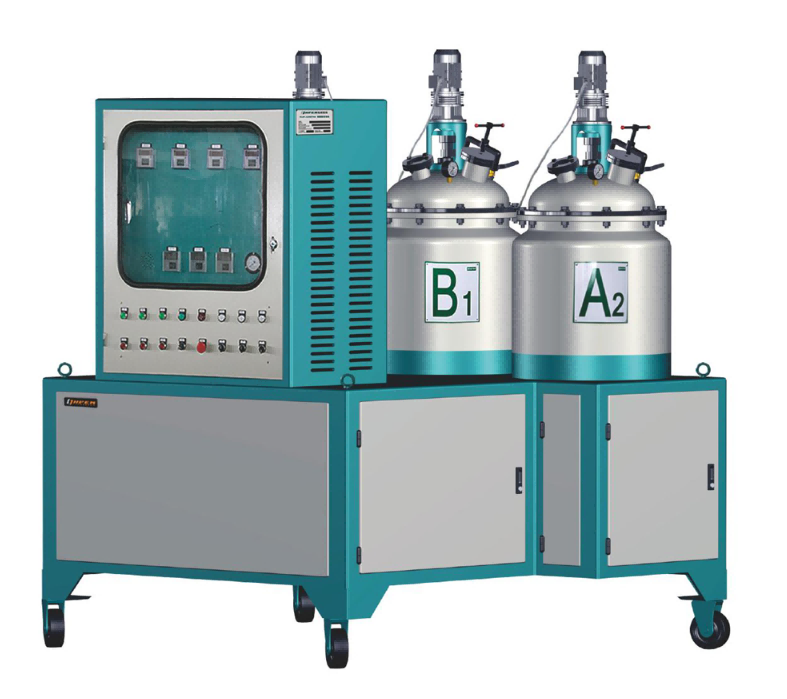
The control point is not only the formula. In a 2A2B elastomer casting machine, the B-side tank may need MOCA at 90–115°C or BDO at 25–50°C, depending on the curative. The A-side prepolymer tank is usually held lower, often 30–80°C. These temperature bands matter because NCO chemistry is both stoichiometric and kinetic: an index that is theoretically correct will not help if the components are delivered at the wrong viscosity or temperature [3][5].
The same NCO-controlled cure logic applies to cylindrical parts. <How Polyurethane Rollers Are Made From Casting to Cure> covers how casting, gelation, and post-cure are matched to avoid soft centers and excessive exotherm.
A Practical Control Routine for Production
A useful control routine treats NCO content as a receiving and in-process variable, not a certificate to file.
- Record the COA NCO content and retest material that has been stored more than the supplier’s recommended period.
- Convert NCO content to equivalent weight before calculating any batch charge.
- Recalculate the curative and polyol amounts whenever NCO content moves outside the internal tolerance.
- Use temperature control rather than catalyst loading to handle normal viscosity differences.
- Check moisture ingress points: drum sealing, day-tank venting, and vacuum degassing.
On the equipment side, the same principle applies. A prepolymer synthesis reactor that uses high-vacuum dehydration, staged temperature control, and sampling during the cook holds NCO content within a repeatable band. That reduces the amount of compensation the metering unit must absorb downstream.
Need a Formulation-Linked Equipment Review?
NCO content controls the chemistry, but the machine has to deliver the compensated ratio accurately. A formulation correction is only as good as the metering accuracy, temperature control, and mixing quality behind it.
For a technical review, contact:
- Email: Info@chinahaifeng.com
- WhatsApp: 86 13566296633
Include your prepolymer NCO content, polyol OHV or TDS, target hardness, and current gel time or scrap issue. We will use that to evaluate whether the metering and temperature architecture matches your NCO window.
Frequently Asked Questions
Is higher NCO content always harder or more brittle?
Not by itself. Higher NCO content changes the amount of isocyanate available for reaction, but the final hardness and brittleness depend on the isocyanate index, polyol functionality, and chain extender. A higher-index formulation often increases hardness, but a high-NCO prepolymer can also be formulated to a lower index and yield a softer part. The number must be converted into equivalent weight before drawing conclusions.
How do I calculate the required isocyanate amount from NCO content?
Divide 4200 by the NCO percentage to get the equivalent weight. Then multiply the polyol equivalent weight by the number of polyol equivalents and the desired isocyanate index. For example, a 6.0% NCO prepolymer has an equivalent weight of 700 g/eq. The required mass for one equivalent of a polyol with equivalent weight 1,000 g/eq is 700 g at index 100.
What happens if the prepolymer NCO content is lower than specified?
The same mix ratio will deliver less isocyanate than the formulation intends. This typically shifts the reaction toward a lower effective index, which can produce a softer part, higher compression set, incomplete cure, or a tacky surface in elastomer systems. It may also leave excess hydroxyl or curative functionality.
Can moisture affect the NCO content I measure?
It can. Water reacts with isocyanate groups, reducing available NCO content and evolving carbon dioxide. Stored material with damaged seals or open drums can drift from the original COA. This is why bulk prepolymer should be sampled and tested after long storage, and why vacuum degassing is part of reliable prepolymer processing.
How much NCO variation should I allow in production?
There is no universal tolerance. The acceptable drift depends on the part, the index sensitivity of the formulation, and machine metering accuracy. In critical cast elastomer or foam work, the practical error budget should include both supplier NCO variation and machine ratio deviation. If the dosing system holds ±0.3% and the material moves several tenths of a percentage point, the material side often dominates.
References
[1] ASTM D2572, Standard Test Method for Isocyanate Groups in Urethane Materials or Prepolymers, ASTM International.
[2] ISO 14896, Plastics — Polyurethane Raw Materials — Determination of Isocyanate Content, International Organization for Standardization.
[3] G. Oertel, Polyurethane Handbook, 2nd ed., Hanser Publishers, 1993.
[4] M. Ionescu, Chemistry and Technology of Polyols for Polyurethanes, 2nd ed., Smithers Rapra, 2016.
[5] J. H. Saunders and K. C. Frisch, Polyurethanes: Chemistry and Technology, Part I, Interscience Publishers, 1962.
If you’re interested, check out these related articles:
How To Calculate Shot Weight In Polyurethane
Measuring Polyurethane Foam Resilience A Practical Test Guide
The Role Of Rise Time In Polyurethane Foaming
Causes Of Shrinkage In Polyurethane Foam How To Control It