Foaming looks straightforward from the outside: two liquid streams meet, the mixture turns creamy, rises, and solidifies. The failures that stop production usually appear later—collapsed buns, split parts, density drift, or surface pinholes. In most cases, the cause is not a single defective raw material. It is that the gelling reaction and the blowing reaction are running at different speeds.

The Two Reactions That Must Stay in Step
Two competing reaction paths control the result. The gelling reaction builds molecular weight, increases viscosity, and forms the load-bearing polymer network:
- Gelling (urethane formation): R–NCO + R′–OH → R–NH–COO–R′
- Blowing (water–isocyanate): R–NCO + H₂O → R–NH₂ + CO₂↑
- Urea formation: R–NH₂ + R–NCO → R–NH–CO–NH–R
This is the fundamental chemistry behind nearly every water-blown polyurethane foam [1]. Both paths consume isocyanate. That is why the isocyanate index, water content, and catalyst selectivity jointly determine where the balance sits [2].
A fast blow reaction raises internal pressure before the polymer network has enough melt strength; thin cell walls then tear or coalesce. A fast gel reaction locks the polymer before enough gas has formed, producing a dense, hard mass or a part that pulls away from the mold.
Reading the Reaction Profile
Cream time, gel time, rise time, and tack-free time are points on one reaction curve, not isolated measurements.
- Cream time is the first visible opacity change as gas begins to nucleate.
- Gel time is the point where the reacting liquid begins to form continuous polymer strands when probed.
- Rise time is the interval to maximum height in a free-rise cup or an open mold.
- Tack-free time is the point at which the surface no longer sticks to a clean tool.
Of these, gel time and rise time are the key relative measures. A short gap between gel and rise usually means the network is solidifying while gas is still expanding. A long gap means gas generation is running ahead of the network strength.
A foam that reaches full rise but shows weak cell walls usually has a gel network lagging behind gas generation. <The Role Of Rise Time In Polyurethane Foaming> covers how rise time is measured and what it tells you about reaction balance.
Symptoms of an Imbalance
| Observation | Likely imbalance | First variable to check |
|---|---|---|
| Foam rises then collapses | Blow reaction far ahead of gel; cell walls too weak | Catalyst balance, water content, material temperature |
| Dense outer skin, soft core | Gel reaction too fast at the mold surface | Mold temperature, cream time, mixing pressure |
| Split or internal cracks | Rapid gel solidifies before gas fully expands | Catalyst ratio, isocyanate index, mold clamping |
| Long tack-free time with coarse cells | Both reactions slow and unbalanced | Raw material temperature, catalyst level |
| Fine cells but high density | Blow reaction limited; network densifies before expansion | Water or blowing-agent content, mix-head speed |
| Surface pinholes on molded parts | Gas nucleation and gel skin formation out of step | Mixing head, mold release, degassing |

The same imbalance can look different in a small cup test and a large production mold. That is why the cup profile should be used as a relative reference, not as a guarantee of final part quality [3].
Formulation Variables That Shift the Balance
Before changing equipment, the formulation variables that control relative reaction rates should be checked.
- Catalyst package. Amine catalysts generally accelerate both the urethane and water–isocyanate reactions, but their selectivity changes with structure. Organotin catalysts such as dibutyltin dilaurate strongly accelerate gelling [6].
- Water content. Water controls gas volume and contributes exotherm. A small change can push the blowing reaction ahead of the gel reaction.
- Isocyanate index. A higher index changes crosslink density and exotherm. It is not a direct replacement for a catalyst adjustment, but it shifts the end point of the reaction.
- Polyol functionality. Higher-functionality polyols build network strength earlier. This can reduce collapse in open-celled systems but may increase internal stress if overdone.
- Material temperature. Both feed streams have separate temperature setpoints. Isocyanate and polyol temperatures must be evaluated together because reaction rates increase with temperature.
- Mold temperature. Mold temperature mainly changes the skin and core balance, not the entire reaction path.
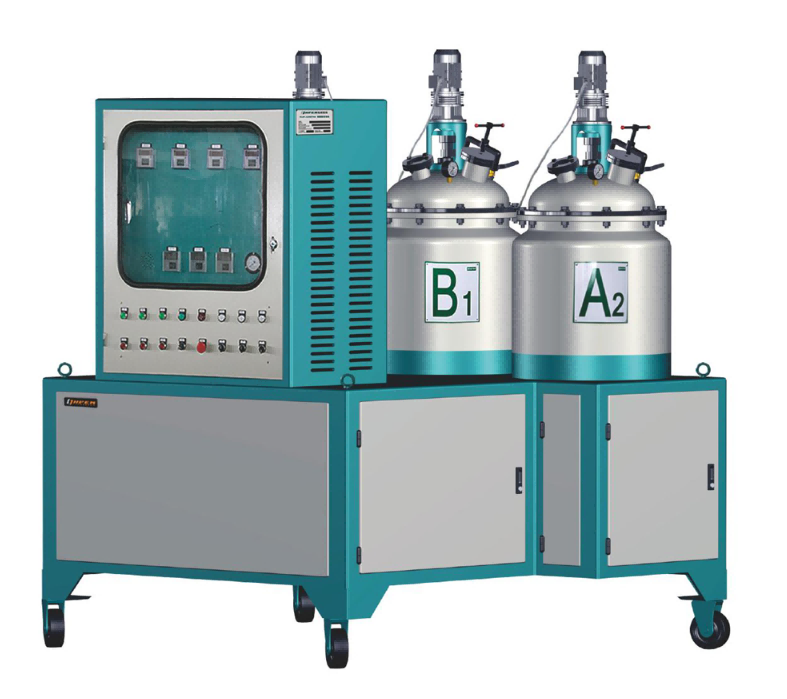
Even the correct formulation fails if metering drift changes the actual ratio at the mix head. At production speed, the mass-flow balance between polyol and isocyanate matters more than the ratio written on the batch sheet.
The gel/blow balance assumes the polyol and isocyanate actually reach the mix head at the intended ratio. <How To Calculate Shot Weight In Polyurethane> covers shot-weight calculation and why metered output must match mold fill volume.
Equipment Variables That Change the Balance
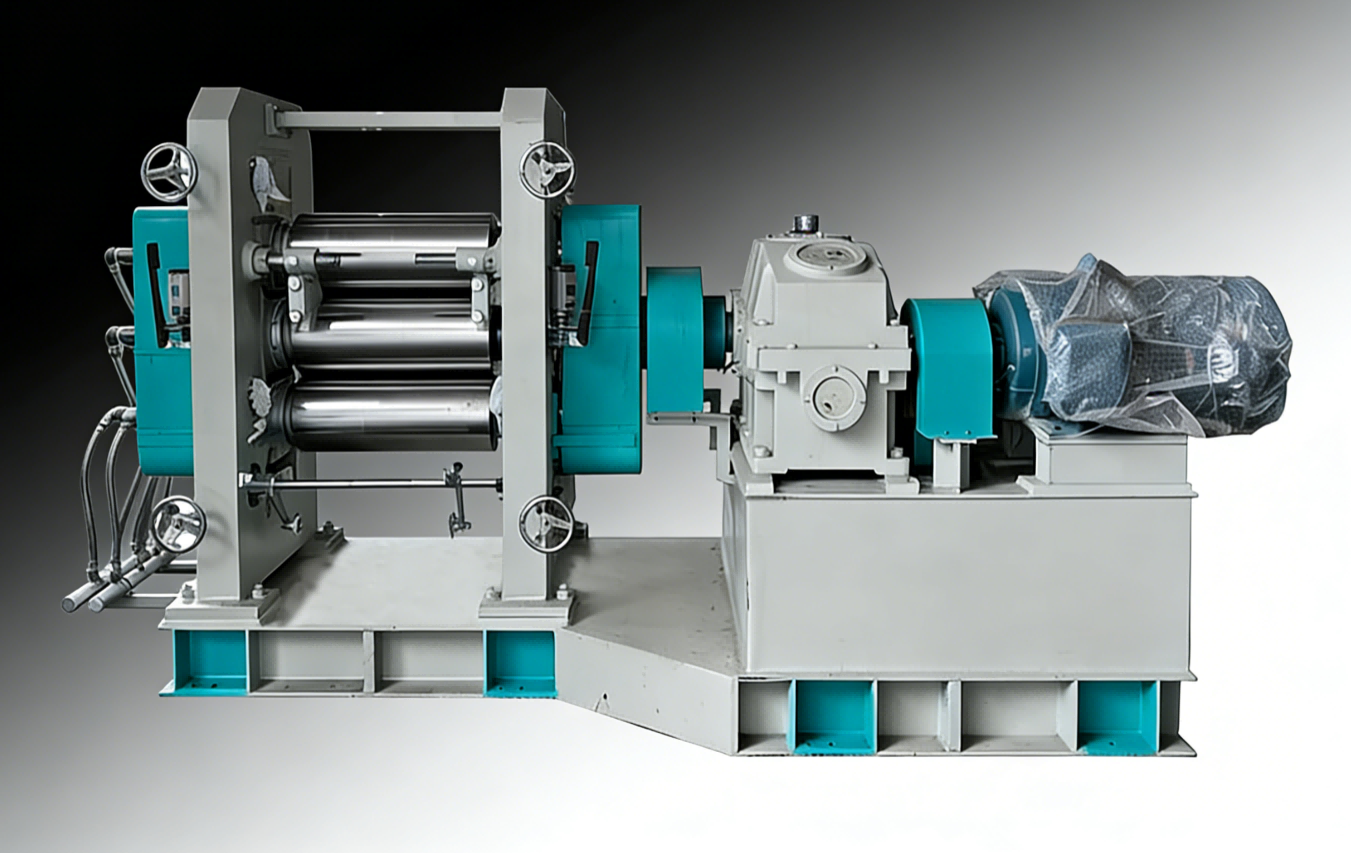
Mix-head quality, recirculation, and temperature control determine whether the formulation you designed is delivered to the mold. Poor mixing creates localized zones where gel and blow begin at different times. Metering instability creates a moving target for both reactions.
One automotive damping-parts producer running semi-automatic lines at ±1.2 mm tolerance and a 5.2% defect rate had unstable cell structure that catalyst adjustments could not fix. After upgrading to high-pressure metering with closed-loop temperature control, tolerance tightened to ±0.3 mm and the defect rate fell to 2%. The problem was not the chemistry alone; it was the equipment’s ability to deliver the chemistry consistently.
When the Same Recipe Behaves Differently Across Lines
Record shot weight, A/B temperature, mix-head pressure, and demold time before changing the formulation. If the deviation is metering or mixing, a recipe change will only hide it. Send these readings with one clear symptom description to Info@chinahaifeng.com or WhatsApp +86 13566296633 for an equipment-level check.
A Practical Rebalancing Sequence
- Record cream time, gel time, rise time, tack-free time, and free-rise density from three consecutive shots.
- Check both material temperatures at the mix head, not just the tank setpoints.
- Measure water content before adding more catalyst.
- Verify the metered shot weight against the mold fill target.
- Change only one variable at a time—catalyst level, water content, index, or temperature—and run at least three cycles before the next change.
- Confirm the result with height, density, cell appearance, and ball rebound as a proxy for network strength [5].
If the foam reaches the expected height but feels weak or shows low ball rebound, the gel network may be forming too slowly for the gas produced. <Measuring Polyurethane Foam Resilience A Practical Test Guide> covers the ball-rebound method and how to interpret recovery data.
Start with a Reaction-Balance Audit
Before changing catalysts, capture the following in one batch record: cream time, gel time, rise time, tack-free time, shot weight, material temperatures, molded density, and any surface or internal defects. If the imbalance returns after recipe changes, contact the engineering team at Info@chinahaifeng.com or WhatsApp +86 13566296633. Include the batch record and the machine model; the goal is to identify whether the gap is formulation, metering, or mixing.
FAQ
What is the difference between gelling and blowing in polyurethane?
Gelling is the reaction between isocyanate and polyol that builds polymer molecular weight and viscosity. Blowing is the reaction between isocyanate and water that generates carbon dioxide gas. Both compete for the same isocyanate, so their relative rates determine final foam structure.
How do I know whether the blowing reaction is too fast for the gel reaction?
The typical signs are rapid rise followed by collapse, open surface cells, or coarse internal cells with weak struts. A short gel-to-rise interval can also indicate that gas generation is running ahead of network strength.
Can mold temperature correct a gel-and-blow imbalance?
Mold temperature can shift the skin and core balance, but it is usually a secondary control. If the imbalance appears in the free-rise cup as well as the molded part, the primary variables are more likely catalyst balance, water content, or material temperatures.
Does raising the isocyanate index make the foam gel faster?
A higher index can increase crosslink density and exotherm, which changes the feel and hardness of the foam. It is not the same as adjusting the gel catalyst. Over-indexing may also create brittleness or excessive internal heat.
When should I change catalysts instead of water level?
Water level should be changed mainly to adjust target density and gas volume. Catalyst adjustments become the right lever when the foam reaches an acceptable height but the timing, cell quality, or surface is wrong. If density is already on target, changing water level is usually the wrong correction.
If you’re interested, check out these related articles:
What Is Spray Polyurethane Foam Composition And Application
RRIM Vs RIM Which Process Suits Your Structural Part
The Role Of Rise Time In Polyurethane Foaming
What Is Semi Rigid Polyurethane Foam