Пустота — не случайный дефект, а небольшая запись о том, что пошло не так до или во время гелеобразования. В литом эластомерном валике она может проявиться только после разрезки детали, когда вблизи сердцевины обнаруживается полость с гладкими стенками. В формованной подошве она может стать причиной провала испытания на срезе, хотя снаружи деталь выглядела нормально. Общее здесь то, что газ, воздух или усадка возникли в известный момент процесса, а значит, первопричину обычно можно проследить, а не угадывать.
На какую пустоту вы смотрите?
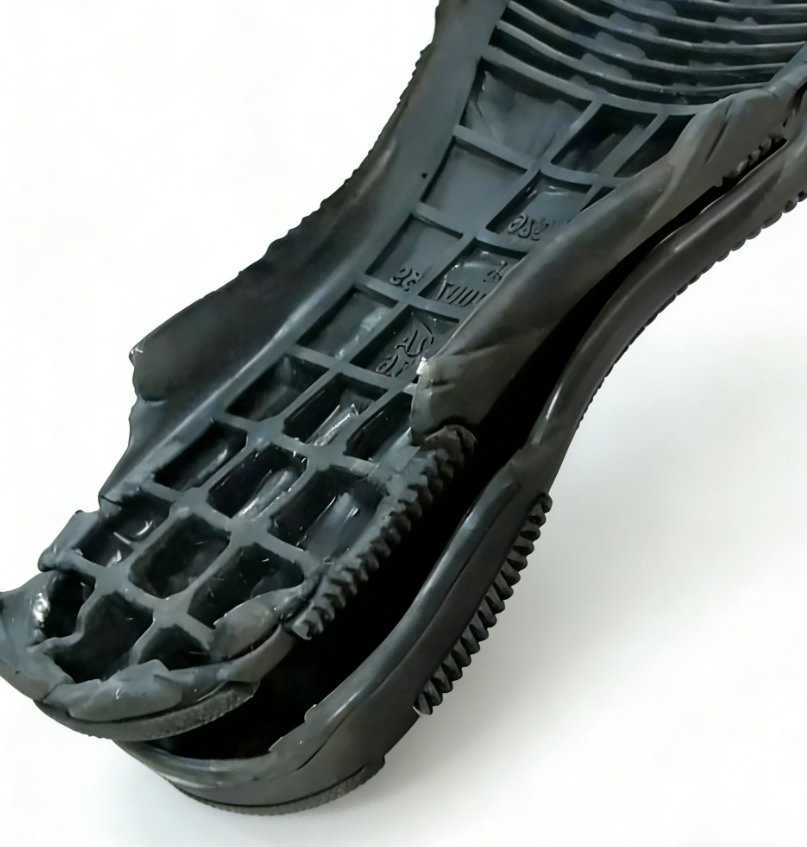
Прежде чем менять какие-либо настройки, определите характер полости. Настоящая газовая пустота обычно имеет гладкие вогнутые стенки и не имеет вокруг разорванного, волокнистого материала; материал просто не заполнил этот объём. Точечная пора на поверхности — тот же механизм, прорывающийся на поверхность. След от смыкания потоков или линия спая — это не тот же дефект, поскольку материал встречается, но не сплавляется. Усадочная раковина образуется после гелеобразования и имеет другой набор причин. [1]
Правильное название важно, потому что ответные меры различаются. Пустота от захваченного воздуха часто устраняется изменением вентиляции и схемы заполнения. Пустота, вызванная влагой, устраняется сушкой или вакуумной дегазацией. Усадка в переходе от толстой части к тонкой может устраняться изменением температуры формы, давления подпитки или времени гелеобразования формулы. Если пустоту от схемы заполнения принимать за проблему влаги, число дефектов не снизится, а будет изменяться не тот параметр.
Влага и растворённый газ — первые проверки по умолчанию
Влага — наиболее распространённый скрытый источник газа в переработке полиуретана. Изоцианат реагирует с водой с образованием аминового промежуточного соединения и диоксида углерода, который проявляется в виде пористости или внутренних пустот в системах, не рассчитанных на вспенивание. [2] Литой эластомер или компактная микросотов��я деталь имеют гораздо меньшую допустимую концентрацию этого CO₂, чем водо-вспененный эластичный пенополиуретан, в котором газ образуется намеренно.
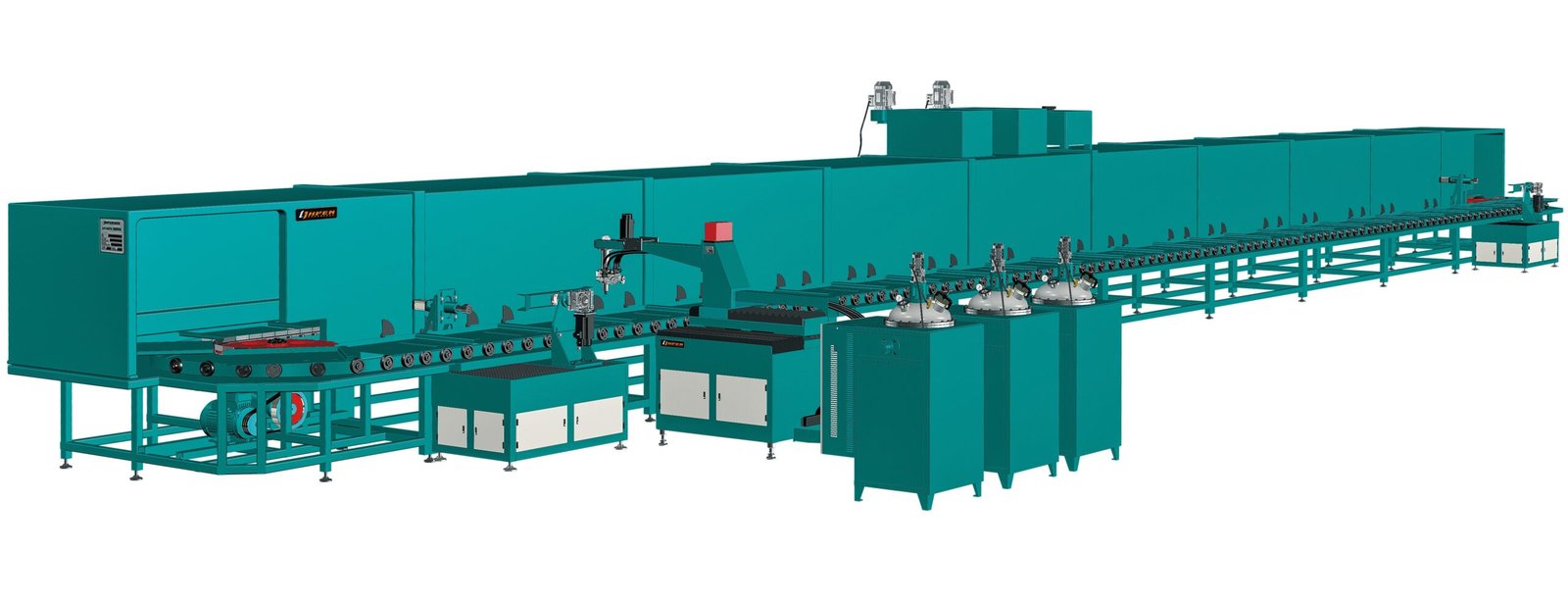
Treat raw-material water content as a process variable, not a storage footnote. Examine polyol, prepolymer, and any slow-moving inventory in day tanks. Supply-side vacuum degassing targets both dissolved air and residual moisture, which is why casting equipment for rollers, seals, and wheels commonly includes a vacuum step before metering and mixing. [3]
Dissolved gas can remain invisible until pressure and temperature change at the mix head or in the mold, so degassing is not a formality.
Degassing is especially important in thick-section cast parts where trapped gas has no short path to the surface. Как изготавливают полиуретановые валки: от литья до отверждения covers the degassing and pour sequence in roller casting, where sectioning after cure is often the first place internal voids are found.
Дозирование и смешивание: где захватывается воздух
Mixing creates shear. Too little shear leaves component zones unmixed; too much shear or an unsealed chamber folds air into the stream. The target is a repeatable mixing condition that does not add a bubble population. [1]
Ratio errors create similar-looking voids through a different route. If the isocyanate index moves far from the designed range, gel and viscosity outpace gas escape. [4] A component-ratio excursion shifts the reaction profile, so material can gel before bubbles migrate or collapse. The correction may therefore be eliminating the ratio excursion, not adding more vacuum.
Equipment-level data matter here. A machine that holds metering accuracy in the ±0.3% class across its full dynamic range is less likely to be the primary void source than a machine that only holds that accuracy at one flow rate. A large or small shot can otherwise leave the calibrated window. This is why a single data-sheet figure is not enough: you need to know the range over which accuracy holds. In one automotive buffer-block retrofit, closed-loop servo metering removed intermittent cavities that appeared only at the first shots of a shift.
Заполнение формы, вес отливки и вентиляция
The mold decides where air can go. If the fill front races down one side and folds back, air is trapped on the return. If vents sit at the end of the expected flow path, gas has an exit. If vents are blocked, undersized, or positioned before the last area to fill, a void is likely.
Shot weight is part of the same equation. An underweight shot may leave the front short of the vent, or fill so slowly that gel begins before packing. Shot weight is calculated from part volume, cavity count, overflow, runner or sprue losses, and an actual mixed-material density correction. [5],[6]
A short shot is one of the easiest void sources to misread as a mixing problem. Как рассчитать массу впрыска в полиуретане covers the calculation sequence that sets part fill weight before the first pour, so the mold has enough material to complete the fill without trapping gas.
At this stage, you have enough to run a two-minute line audit. If you want a second set of eyes, send a sectioned part photo, shot weight, and mold temperature to info@chinahaifeng.com or WhatsApp: 86 13566296633 with “void diagnosis” in the subject line. That is usually the fastest way to separate a venting problem from a metering problem before buying drying or mixing equipment.
Усадка, газ и последовательность диагностики
Усадка или газ
Some cavities reported as voids are actually shrinkage. A true gas void is filled with gas from air, moisture, dissolved gas, or a blowing reaction. A shrinkage cavity results from the part contracting after gel no longer supplies material. [2]
Thick-to-thin transitions, ribs, bosses, and gate areas are common shrinkage sites. Gas voids more often follow the fill front, a weld line, or a low-vent corner. If a cavity recurs in the same location and opens toward the surface after demolding, the mechanism may be contraction rather than trapped gas.
If a cavity recurs in the same part location and opens toward the surface after demolding, it may be shrinkage rather than gas. Причины усадки пенополиуретана и способы её контроля covers the formulation and tooling factors that make shrinkage cavities repeatable, so you can decide which mechanism applies before changing the line.
Практическая последовательность диагностики
Record four things before changing anything: location, shape, frequency, and whether the void appears before or after demolding. Then work in this order:
- Section the part. Confirm whether the walls are smooth gas-void surfaces or rough flow/shrinkage surfaces.
- Check material moisture and temperature. Confirm day tanks and drums match the material TDS for the part being run, and confirm degassing is reaching the target vacuum.
- Check metering calibration. Verify the ratio at the actual shot size, not only at the calibration point.
- Review shot weight and fill pattern. Confirm shot weight, mold temperature, and vent condition against the last known-good run.
- Change one variable at a time. Track the result by part location.
This order avoids the most common plant mistake: adding drying capacity or vacuum while the real defect is a short shot or a blocked vent.
Получите диагностику пустот, учитывающую особенности вашей детали
If you have already adjusted material and mold variables and the void remains, collect the information that separates a formulation problem from a molding problem:
- Part drawing or photo with void locations marked
- Material system, reported water content, and current shot weight
- Mold temperature, mix head speed, and fill time
- Photos of the void after sectioning
Send these with the subject line “PU void diagnosis” to info@chinahaifeng.com or WhatsApp: 86 13566296633. You will get a process-level read, not a brochure answer.
Часто задаваемые вопросы
В чём разница между пустотой и точечной порой?
A pinhole is a small gas cavity that opens to the part surface. A void is internal and may or may not open to the surface. The formation mechanism can be similar; the difference is whether the gas had a path out.
Какова наиболее распространённая причина пустот в литом полиуретане?
Moisture in polyol or prepolymer is usually the first cause to rule out. After that, trapped air from mixing or mold fill and short shots are the most common mechanical causes.
Может ли чрезмерное смешивание вызывать пустоты?
Yes. Mixing must create enough shear for homogeneity without folding air into the stream. A high mix-head speed that draws air into an unsealed or poorly flooded chamber can create bubbles that become internal voids.
Как вес отливки связан с пустотами?
An undersized shot can leave the mold underfilled or slow the fill front so much that gel begins before gas escapes. Shot weight must include part volume, runner and overflow losses, and actual mixed-material density.
Всегда ли вакуумная дегазация устраняет пустоты?
No. Vacuum degassing helps with dissolved gas and moisture, but it cannot fully compensate for a blocked vent, a wrong fill pattern, a metering-ratio excursion, or a short shot. Location and shape must guide the fix.
Источники
[1] G. Oertel, ред., Polyurethane Handbook, 2-е изд. Munich, Germany: Hanser Publishers, 1994.
[2] M. Szycher, Szycher’s Handbook of Polyurethanes, 2nd ed. Boca Raton, FL, USA: CRC Press, 2012.
[3] D. Randall and S. Lee, eds., The Polyurethanes Book. New York, NY, USA: Wiley, 2002.
[4] J. H. Saunders and K. C. Frisch, Polyurethanes: Chemistry and Technology, Part II. New York, NY, USA: Interscience, 1964.
[5] ASTM D792-20, Standard Test Methods for Density and Specific Gravity (Relative Density) of Plastics by Displacement, ASTM International, West Conshohocken, PA, USA, 2020.
[6] ISO 845, Пластмассы и резины ячеистые. Определение кажущейся плотности, Международная организация по стандартизации, Женева, Швейцария, 2006.
Если вам интересно, ознакомьтесь с этими статьями по теме:
Как рассчитать массу впрыска в полиуретане
Как изготавливают полиуретановые валки: от литья до отверждения
Причины усадки пенополиуретана и способы её контроля
Роль времени подъёма в пенообразовании полиуретана