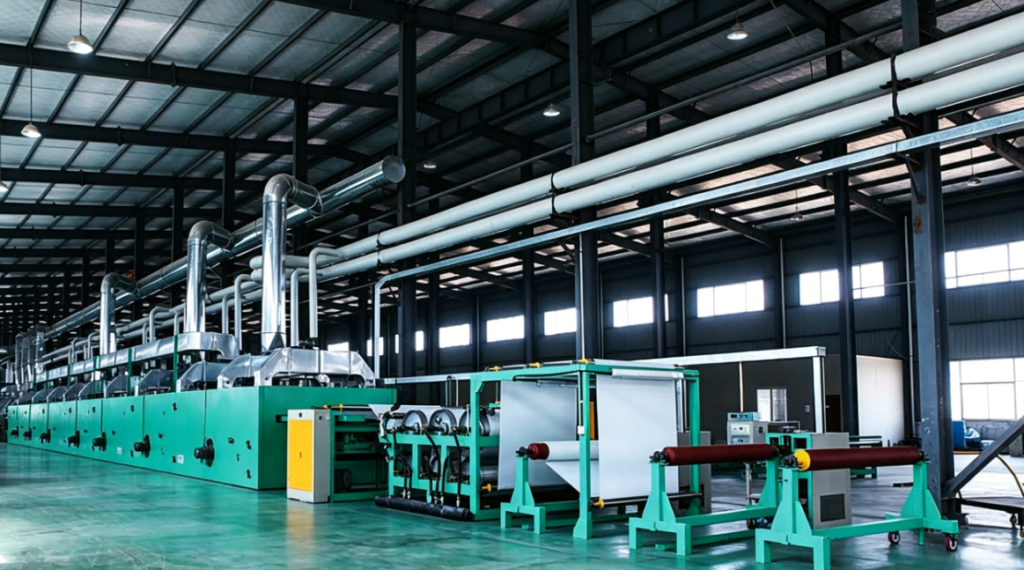
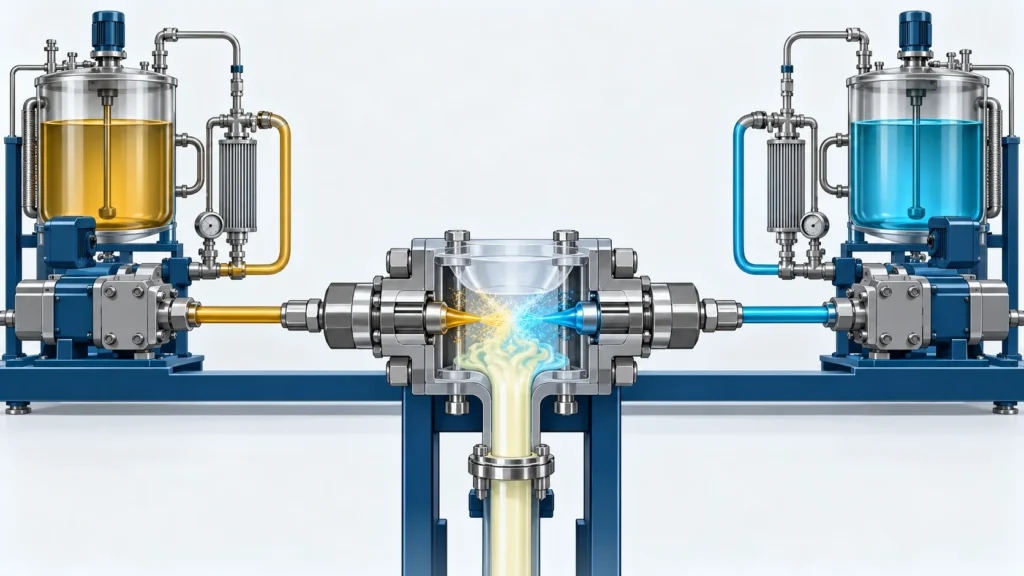
La hidrólisis no se anuncia. Un rodillo de papelera se agrieta en la superficie tras dos años de servicio en ambiente húmedo, un sello hidráulico se vuelve yesoso tras una temporada de lavados con agua caliente y un lote de suelas de poliuretano pierde resistencia al desgarro mucho antes de que la dureza cambie lo suficiente como para activar una alarma de durómetro. Cuando el fallo ya es visible, los enlaces éster o uretano ya se han roto a nivel molecular. La cuestión práctica no es si la hidrólisis puede ocurrir, sino qué palancas de formulación y procesamiento la alejan lo suficiente como para igualar la vida útil prevista.
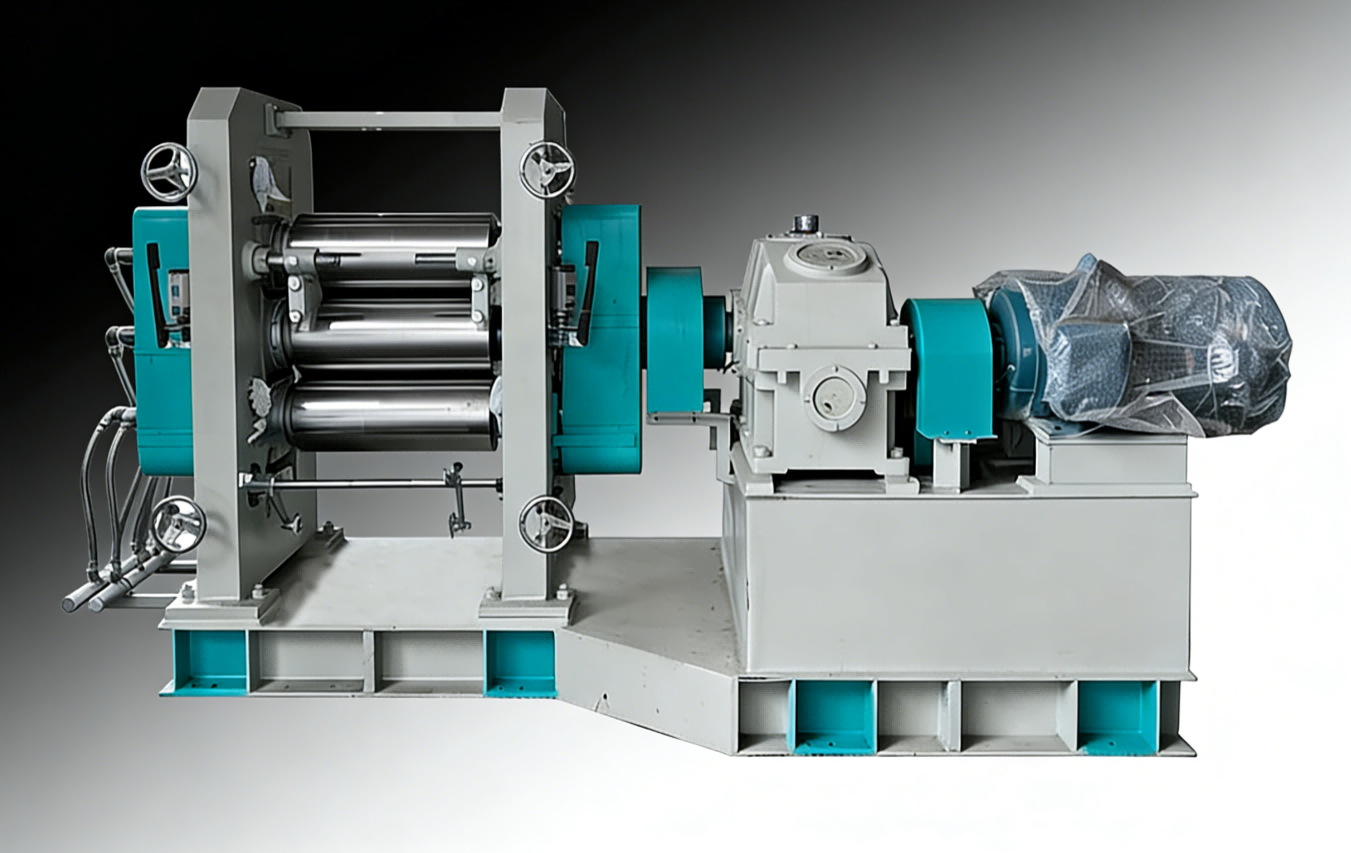
Dónde comienza la hidrólisis
La primera pregunta es qué enlace ataca el agua. Los grupos éster suelen ser el eslabón más vulnerable. Cuando un enlace éster de un segmento blando de poliéster se hidroliza, se rompe en un ácido carboxílico y un alcohol; el subproducto ácido puede autocatalizar la hidrólisis adicional de los ésteres, por lo que un sistema basado en poliéster puede entrar en un bucle de autoaceleración [1]. Los enlaces uretano y urea son comparativamente más resistentes, y por eso la química de la cadena principal —y no solo la completitud del curado— domina la vida útil en servicio húmedo.
La dureza es la señal de alerta temprana equivocada. El daño hidrolítico comienza como escisión de cadenas y una lenta caída de la retención de la resistencia a la tracción, no como un gran cambio de dureza. Una pieza puede seguir leyendo dentro de especificación en un durómetro mientras ya se ha perdido una cantidad sustancial de peso molecular.
Elección del segmento blando: poliéter frente a poliéster
La mayor decisión de formulación es la cadena principal de poliol. Los segmentos blandos de poliéter (PTMEG y PPG) son mucho menos susceptibles a la hidrólisis que los segmentos blandos de poliéster, porque el enlace éter es intrínsecamente más estable frente al agua que el éster [2]. El compromiso es mecánico y químico: los sistemas de poliéster suelen ofrecer mejor resistencia al aceite, resistencia a la abrasión y capacidad de carga, y por eso siguen siendo habituales en sellos hidráulicos y rodillos de desgaste en seco.
Para aplicaciones que combinan contacto con agua y alta exposición al aceite, los dioles de policarbonato ocupan el extremo premium: ofrecen una de las mayores resistencias a la hidrólisis y a la oxidación entre las cadenas principales comunes, con un coste de materiales significativamente mayor [2].
| Cadena principal | Resistencia a la hidrólisis | Resistencia al aceite | Compromiso típico en servicio húmedo |
|---|---|---|---|
| Poliéter (PTMEG/PPG) | Buena | Moderada | Marino, inmersión en agua, contacto alimentario |
| Poliéster (adipato) | Baja–moderada | Alta | Sellos hidráulicos, rodillos de desgaste en seco |
| Policarbonato | Muy buena | Alta | Piezas de sellado y de desgaste en húmedo de alto coste |
La selección no es un ejercicio de clasificación; es una decisión de coste-rendimiento. Una pieza de poliéster que cuesta la mitad que una alternativa de poliéter puede seguir siendo la elección correcta si la exposición al agua es intermitente y la especificación permite una vida útil más corta.
Química de los segmentos duros en servicio en húmedo
En servicio con alta humedad, la elección del segmento duro es tan importante como la del poliol. Los segmentos duros de MDI–BDO suelen conservar sus propiedades durante más tiempo en agua caliente que los sistemas de TDI–MOCA con un contenido de segmento duro comparable, porque los dominios de MDI–BDO regulares y muy empaquetados presentan una barrera más ordenada a la penetración del agua [2]. Para las aplicaciones húmedas más exigentes, los elastómeros basados en PPDI combinan una alta retención de dureza con una captación de agua notablemente menor, a un coste correspondientemente mayor de materia prima.
Hydrolysis failures are most visible in cast elastomers such as rollers and seals that run continuously in wet contact. Cómo se fabrican los rodillos de poliuretano, desde la colada hasta el curado covers the casting-to-cure sequence where BDO-cured systems are chosen for exactly this kind of damp service.

Aditivos antihidrólisis
For an existing polyester-based formula that already passes oil-resistance and abrasion tests, changing the backbone can be a project. The most common retrofit is the addition of a carbodiimide-class stabilizer at roughly 1–3 wt%. Carbodiimides react with the carboxylic acid groups generated during ester hydrolysis, quenching the autocatalytic loop before it accelerates further chain scission [1].
The dosage is not a fixed number. It depends on the polyester acid value, service temperature, and how much tensile retention the specification demands after aging. Start from the stabilizer supplier’s guidance, then confirm with the same hot-water aging test used for the finished part.
Palancas de procesamiento que protegen la pieza
Formulation matters, but processing determines whether the chosen chemistry reaches the mold intact. Three levers have an outsized effect on wet-service life.
First, dry the polyol side. Residual moisture in polyols reacts with isocyanate during casting, consuming stoichiometry and generating carbon dioxide. Unreacted water-reactive sites left in a poorly controlled mix can become ingress points later. Vacuum degassing below about −0.095 MPa, combined with consistent tank temperature control, keeps the polyol side within a repeatable moisture window.
Second, hold the index. A one-percentage-point deviation in the component ratio can shift the concentration of unreacted isocyanate or unreacted hydroxyl groups; both can leave softer, more water-accessible regions in the finished elastomer. In one elastomer casting line, dynamic metering within ±0.3% kept the index window narrow enough to avoid under-cured, water-accessible soft segments.
Third, complete the cure. A short post-cure cycle after demold builds the final hard segment order and reduces residual stress. An under-cured part may pass an initial hardness check and still lose tensile retention faster in wet service.
If you are trying to hold a hydrolysis-prone formula inside a tight index window on an existing casting line, the fastest first step is a metering audit. Contact our application engineers at info@chinahaifeng.com or on WhatsApp at 86 13566296633 with your current ratio deviation, material temperature, and wet-aging results; we can help you decide whether the fix belongs to the formula, the drying system, or the machine.
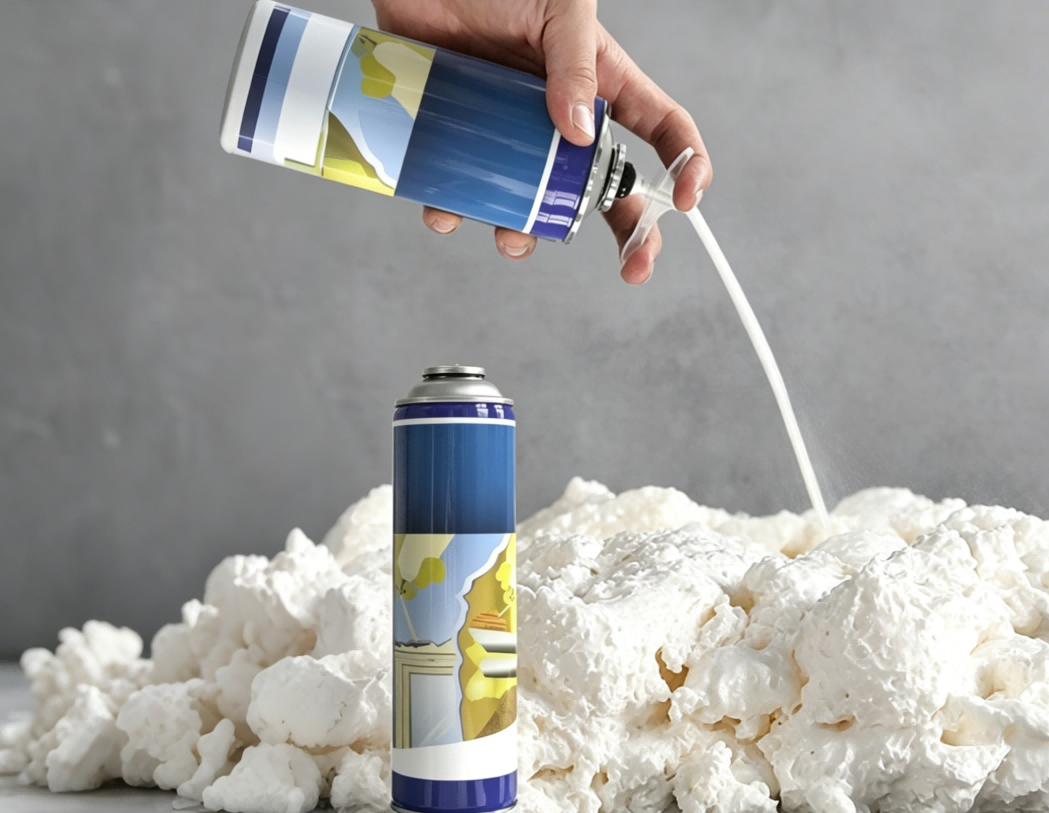
Ensayar la resistencia a la hidrólisis antes de comprometerse
Run the wet-aging test on the same geometry and hardness as the production part. The standard approach is hot-water immersion, commonly 70–80 °C for 7–14 days, followed by tensile strength and elongation measurement [4]. A frequently used acceptance threshold is at least 70% tensile retention after the aging period, but the exact value must come from the application specification. Water absorption can be measured separately per ISO 62 to compare how much water a given backbone takes up before mechanical testing [3].
Durometer is usually the first check a QC lab runs after aging, but it can mask hydrolysis damage: the surface often reads close to the original value while tensile retention has already dropped. Dureza Shore A frente a Shore D en poliuretano covers what the two scales tell you when comparing aged and unaged parts.
Lista de verificación para fórmulas de servicio en húmedo
- Confirm the failure mode before changing chemistry: run a hot-water tensile-retention test, not just a hardness check.
- Match the backbone to the full service environment, including oil, temperature, and cost constraints.
- For polyester systems, evaluate a 1–3 wt% carbodiimide stabilizer first.
- Specify the hard segment (MDI–BDO, PPDI, or TDI–MOCA) for wet contact, not only for hardness.
- Verify polyol dryness, index control, and post-cure completeness on the existing line before blaming the formula.
Hable con un ingeniero de procesos antes del próximo fallo en servicio en húmedo
Haifeng Polyurethane Machinery has spent 40 years on R&D for metering precision and turnkey polyurethane production — from low-pressure casting units to high-pressure foaming lines across footwear, automotive, and rail transit. As the sole drafter of China’s PU pouring machine industry standard, we treat hydrolysis failures as a process problem, not a brochure problem.
If you are specifying a new wet-service part or chasing a field failure, send us:
- the current backbone and index,
- service temperature and immersion time,
- current tensile retention versus the specification,
- and your existing machine’s metering accuracy and degassing setup.
Reach us at info@chinahaifeng.com or on WhatsApp at 86 13566296633, and we will help you separate the formulation issue from the machine issue before you commit to a costly material change.
Preguntas frecuentes sobre la resistencia a la hidrólisis
¿El poliuretano de poliéter siempre supera al de poliéster en servicio en húmedo?
Not in every case. Polyether backbones are generally more hydrolysis-resistant, but polyester systems often provide better oil resistance, abrasion, and load-bearing. Polycarbonate offers the strongest wet-service performance of the common backbones but at a higher cost. The right choice depends on the full service environment, not on hydrolysis alone.
¿Cuánto estabilizador de carbodiimida debe usar una formulación?
A common starting range is 1–3 wt%, but the optimum depends on the polyester acid value, service temperature, and the tensile-retention target. Confirm the dose with a hot-water aging test on the production part rather than accepting a fixed recipe.
¿Qué ensayo detecta la hidrólisis a tiempo?
Tensile retention after hot-water immersion is the most revealing early indicator. Hardness checks can miss early chain scission because the surface may remain within specification while tensile strength has already fallen. Water absorption per ISO 62 is useful for comparing backbones before mechanical aging.
¿El poscurado puede mejorar la resistencia a la hidrólisis?
It helps, but only within limits. A complete post-cure builds final hard segment order and reduces residual stress, which supports wet-service property retention. It cannot compensate for a polyester backbone that is fundamentally wrong for continuous immersion.
¿La dureza afecta a la resistencia a la hidrólisis?
Hardness alone is a weak predictor. Hard segment content and network order influence water uptake and retention, but two formulas can share the same Shore hardness and behave very differently in hot water. Specify the chemistry and run the aging test instead of relying on hardness.
Referencias
[1] G. Oertel, Ed., Polyurethane Handbook: Chemistry – Raw Materials – Processing – Application – Properties, 2nd ed., Munich, Germany: Hanser Publishers, 1994.
[2] C. Hepburn, Polyurethane Elastomers, 2nd ed., London, U.K.: Elsevier Applied Science, 1992.
[3] ISO 62:2008, Plastics — Determination of water absorption, International Organization for Standardization, 2008.
[4] ASTM D3137, Standard Test Method for Rubber Property—Hydrolytic Stability, ASTM International, West Conshohocken, PA, USA.
Si te interesa, echa un vistazo a estos artículos relacionados:
Causas de la contracción en la espuma de poliuretano y cómo controlarla
Cómo calcular el peso de dosificación en poliuretano
El papel del tiempo de subida en el espumado de poliuretano