[مرجع سريع لمعايير عمليات Haifeng]
تعمل معدات هايفنغ المصنوعة من البولي يوريثان لفترات طويلة في بيئات رطبة وأكّالة كيميائيًا وتحت دورات حرارية. وتؤثر جودة الطلاء تأثيرًا مباشرًا في الحفاظ على المظهر، والحماية من التآكل، والسلامة. وقد يؤدي انحراف خشونة المعالجة المسبقة بمقدار 10 ميكرومتر عن النطاق المحدد إلى خفض التصاق الطلاء بنحو 15%–25%. وإذا كان سُمك الغشاء الجاف أقل من التصميم بمقدار 20 ميكرومتر، فقد ينخفض عمر الطلاء في بيئة C4 بأكثر من 30%. ويجب أن يكون الطلاء على لحامات خطوط الأنابيب والجدران الخارجية للخزانات خاليًا تمامًا من الثقوب الدقيقة لإزالة نقاط بدء التآكل.
المعايير الرئيسية للعملية في لمحة:
| المعامل | معيار Haifeng | المرجع الصناعي | مؤشر أداء المعدات ذات الصلة |
| درجة إزالة الصدأ في تحضير السطح | Sa 2.5 (ISO 8501-1) | Sa 2.5 | التصاق الطلاء ≥6.0 MPa |
| خشونة السطح (Rz) | 40–70 ميكرومتر | Rz 30–75 ميكرومتر | يوفر تثبيتًا ميكانيكيًا للطلاء |
| نظافة الغبار على السطح | ≤الدرجة 2 (ISO 8502-3) | ≤الدرجة 3 | عدم وجود ثقوب إبرية أو حفر في الطلاء |
| محتوى الكلوريد القابل للذوبان | ≤50 mg/m² | ≤100 mg/m² | يمنع التآكل الكهروكيميائي |
| درجة حرارة كابينة الرش | 15–30°C | 15–35°C | جودة سريان الطلاء ومعالجته |
| الرطوبة النسبية في كابينة الرش | 40%–65% | 50%–70% | يمنع الابيضاض وفقدان الالتصاق |
| درجة حرارة الركيزة أعلى من نقطة الندى | ≥ نقطة الندى + 3°م | ≥ نقطة الندى + 3°م | يمنع التفقيع والثقوب الدقيقة |
| تدفق هواء مضبوط في كابينة الرش | 0.38–0.67 م/ث (كابينة مغلقة) | 0.38–0.67 م/ث | كفاءة إزالة رشاش الطلاء ≥98% |
| نظافة كابينة الرش | ISO الفئة 7 (الفئة 100,000) | الفئة 100,000 | جزيئات الطلاء ≥1 لكل دسم² |
| سماكة الغشاء الجاف للطبقة الأساسية (إيبوكسي غني بالزنك) | 60–80 ميكرومتر | 60–80 ميكرومتر | عمر الحماية من التآكل ≥15 سنة (C4) |
| سماكة الغشاء الجاف للطبقة الوسيطة (إيبوكسي بأكسيد الحديد الميكا) | 100–120 ميكرومتر | 100–120 ميكرومتر | يمنع تغلغل الوسائط المسببة للتآكل |
| سماكة الطبقة الجافة للطلاء النهائي (بولي يوريثان أليفاتي) | 60–80 ميكرومتر | 60–80 ميكرومتر | مقاومة العوامل الجوية ≥10 سنوات |
| السماكة الجافة الكلية للطلاء (C4) | 240–280 ميكرومتر | ≥240 ميكرومتر (C4 عالية المتانة) | فئة تآكل الآلة الكاملة ISO 12944 C4 |
| الالتصاق (اختبار القطع المتقاطع) | ≤الدرجة 1 | ≤الدرجة 2 | عدم انفصال الطلاء أو تقشره |
| الالتصاق (اختبار السحب) | ≥6.0 ميجاباسكال | ≥4.0 ميجاباسكال | يضمن قوة ترابط الطلاء |
| انحراف اللون (ΔE) | ≤1.5 | ≤2.0 | مظهر تجاري متسق للعلامة التجارية |
1. النطاق
1.1 العمليات المنطبقة
تنطبق إجراءات التشغيل القياسية (SOP) هذه على عمليات الطلاء التالية لمعدات Haifeng المصنوعة من البولي يوريثان:
| المكوّن المطلي | المادة النموذجية | تحضير السطح | نظام الطلاء | فئة التآكل |
| إطار فولاذي | Q235B / Q345B | السفع الكاشط Sa 2.5 + أساس إيبوكسي | أساس إيبوكسي غني بالزنك + طبقة وسيطة من إيبوكسي أكسيد الحديد الميكي + طبقة نهائية من البولي يوريثان | ISO 12944 C3 |
| السطح الخارجي للخزان وهيكل الدعم | Q235B / 304 | السفع الكاشط Sa 2.5 + أساس إيبوكسي | أساس إيبوكسي غني بالزنك + طبقة وسيطة من إيبوكسي أكسيد الحديد الميكي + طبقة نهائية من البولي يوريثان | ISO 12944 C4 |
| غلاف لوحة الكهرباء | فولاذ مدرفل على البارد/صاج مغلفن | الفَسْفَتَة + أساس بالترسيب الكهربائي | أساس إيبوكسي + طبقة نهائية من البولي يوريثان | ISO 12944 C3 |
| دعامة خط الأنابيب | Q235B | السفع الكاشط Sa 2.5 | أساس إيبوكسي غني بالزنك + طبقة نهائية من البولي يوريثان | ISO 12944 C3 |
| واقية من الصاج | فولاذ مدرفل على البارد | الفَسْفَتَة | أساس إيبوكسي + طبقة نهائية من البولي يوريثان | ISO 12944 C2 |
2. ضبط دقة التحضير والمعالجة المسبقة
2.1 التحقق من الوثائق الفنية والمواد
| الرقم | البند المطلوب فحصه | متطلب الدقة | معيار القبول |
| 1 | بطاقة عملية الطلاء | يتضمن نظام الطلاء وسُمك الغشاء ومعيار اللون | مطابق للمتطلبات الفنية للمعدات |
| 2 | صحيفة بيانات منتج الطلاء | تتضمن معلمات التطبيق ونسبة الخلط وعمر الخليط القابل للاستخدام | ضمن مدة الصلاحية |
| 3 | تقرير فحص دفعة الطلاء | تتضمن نسبة المواد الصلبة والكثافة واللزوجة | مطابق لصحيفة بيانات المنتج |
| 4 | معيار لوحة اللون | رمز اللون المعتمد من العميل (ΔE ≤1.5) | حديث ومؤكَّد بصريًا |
| 5 | لزوجة الطلاء | حسب ما يتطلبه الطلاء (كوب رقم 4) | تسجيل القيمة المقاسة |
2.2 ضبط دقة المعالجة المسبقة (عملية حرجة)
جودة المعالجة المسبقة هي العامل الأساسي المحدِّد لعمر حماية الطلاء. قبل الطلاء، يجب تنظيف الفولاذ حتى درجة Sa 2.5 (معدن شبه أبيض): يجب أن يكون السطح خاليًا من الزيت والشحم والأوساخ والقشور الدرفيلية والصدأ والطلاء والملوثات الأخرى المرئية. ولا يجوز أن تظهر أي آثار متبقية إلا على هيئة بقع أو خطوط طفيفة.
2.2.1 معلمات السفع الكاشط
| المعامل | معيار Haifeng | إجراء تحكم |
| نوع المادة الكاشطة | قذف فولاذي/حبيبات فولاذية (G18–G25) | الغربلة بانتظام وإزالة الغبار |
| نظافة المادة الكاشطة | خالية من الزيت والماء والأملاح | أخذ عينات للفحص في كل وردية |
| ضغط الهواء المضغوط | 0.6–0.8 MPa | المراقبة بمقياس ضغط |
| مسافة السفع | 150–250 mm | اتّباع إجراء التشغيل |
| زاوية السفع | 60°–75° | تجنّب الاصطدام العمودي |
2.2.2 التحكم في الفترة الزمنية بعد المعالجة المسبقة
يتأكسد الفولاذ المسفوع بالمواد الكاشطة ويصدأ بسرعة (صدأ سطحي) عند تعرضه للهواء. وتحدد Haifeng هذه الفترات الزمنية القصوى قبل الطلاء:
| الرطوبة النسبية المحيطة | الفترة الزمنية القصوى من السفع إلى الطلاء |
| ≤60% | ≤4 ساعات |
| 60%–80% | ≤ساعتان |
| >80% | ≤ساعة واحدة؛ إعادة التحقق من حالة السطح |
إذا تجاوزت المدة المحددة، أعِد السفع الكاشط للسطح. المسح أو الصنفرة ليس بديلاً مقبولاً.
2.3 ضبط دقة خلط الدهان
| المعامل | معيار Haifeng | إجراء تحكم |
| نسبة الخلط | اتبع بدقة صحيفة بيانات المنتج (الجزء أ: الجزء ب) | الوزن بميزان إلكتروني، بدقة ±1 غ |
| تجانس الخلط | الخلط لمدة ≥3 دقائق؛ دون خطوط | الخلط الميكانيكي |
| عمر الخليط القابل للاستخدام | حسب المواصفات (عادةً 4–6 ساعات عند 25°م) | المراقبة بمؤقت؛ التخلص منه بعد انتهاء الصلاحية |
| لزوجة التطبيق | حسب ما يتطلبه الطلاء (كوب رقم 4) | قياس كل دفعة وتسجيلها |
| زمن الاستحثاث | حسب المواصفات (عادةً 5–15 دقيقة) | المراقبة باستخدام مؤقت |
استخدم الطلاء المخلوط ضمن عمر الخليط القابل للاستخدام المحدد له. من الأسباب الشائعة لعيوب الطلاء الاستمرار في الرش لفترة طويلة بعد إضافة المصلّب وانتهاء الوقت المسموح للاستخدام.
3. سير عمل طلاء منظّم
3.1 التغطية والحماية
قم بتغطية المناطق التي يجب عدم طلائها بدقة قبل الرش:
| المنطقة المراد تغطيتها | مادة التغطية | متطلب الدقة |
| سطح إحكام الفلانشة | شريط لاصق مقاوم للحرارة وغطاء واقٍ | حافة نظيفة؛ دون تسرب الطلاء |
| الثقوب الملولبة/ثقوب التثبيت | سدادات/مسامير من السيليكون | لا توجد بقايا طلاء داخل الثقوب |
| سطح تركيب المستشعر | طلاء قابل للتقشير وشريط لاصق | استقامة حد التغطية ≤2 مم |
| لوحة البيانات/العلامات | شريط لاصق مقاوم للحرارة | مغطى بالكامل دون حواف مكشوفة |
| الموصلات الكهربائية | غطاء واقٍ مخصص | الحفاظ على تصنيف الحماية من الدخول |
أزل الغطاء الواقي بعد أن يصبح الطلاء جافًا للمس ولكن قبل تصلبه الكامل (عادةً بعد 10–30 دقيقة من الرش). في هذه المرحلة، يتمتع الطلاء بقوة كافية بينما لا يزال من الممكن إزالة حوافه دون تمزق.
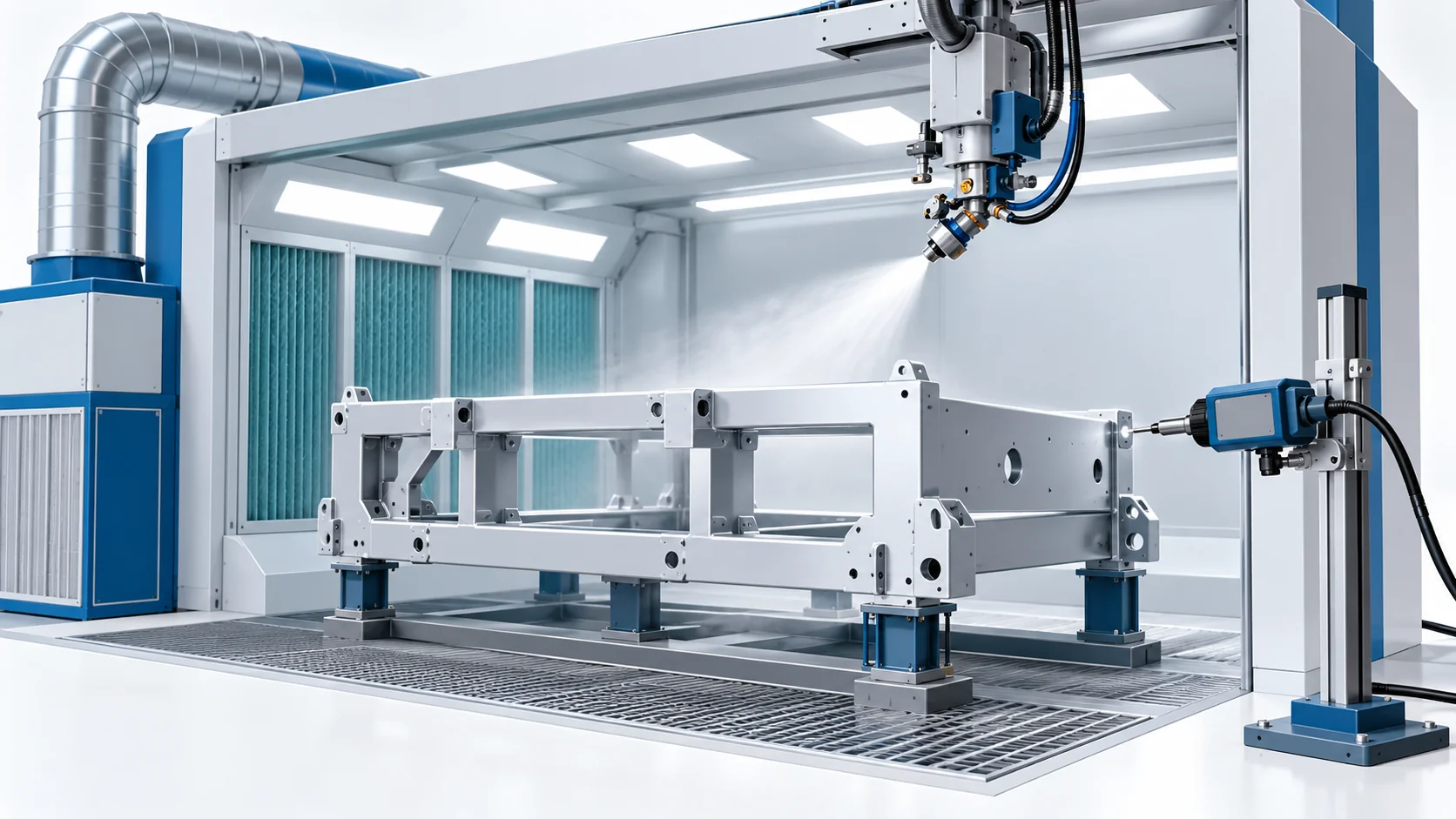
3.2 التطبيق بالرشّ
3.2.1 التحكم في معلمات الرش
| المعامل | معيار Haifeng | إجراء تحكم |
| مسافة مسدس الرش | 200–300 مم | اتّباع إجراء التشغيل |
| زاوية مسدس الرش | عمودية على سطح العمل | الانحراف ≤15° |
| سرعة حركة المسدس | 300–600 مم/ث | التحرك بانتظام |
| تداخل الأشواط | 50% (يغطي كل شوط نصف الشوط السابق) | الرش المتقاطع |
| ضغط الهواء (الرش الهوائي) | 0.3–0.5 MPa | المراقبة بمقياس ضغط |
| عدد الطبقات | طبقتان أساس، وطبقتان وسيطة، وطبقتان نهائية | اتبع نظام الطلاء |
| فترة التطاير بين الطبقات | حسب المواصفات (عادةً 10–30 دقيقة عند 23°C) | المراقبة باستخدام مؤقت |
3.2.2 نظام الطلاء والتحكم في سُمك الغشاء
يستخدم Haifeng نظامًا من ثلاث طبقات مع متطلبات سُمك الغشاء الجاف المختارة وفقًا لفئة التآكل:
| الطبقة | نوع الدهان | سُمك الغشاء الجاف وفق Haifeng (C3) | سُمك الغشاء الجاف وفق Haifeng (C4) | عدد المرات |
| طبقة البرايمر | برايمر إيبوكسي غني بالزنك | 60–80 ميكرومتر | 60–80 ميكرومتر | 2 |
| الطبقة الوسيطة | إيبوكسي أكسيد الحديد الميكاسي | 80–100 ميكرومتر | 100–120 ميكرومتر | 2 |
| الطبقة النهائية | البولي يوريثان الأليفاتي | 60–80 ميكرومتر | 60–80 ميكرومتر | 2 |
| إجمالي سُمك الغشاء الجاف | — | 200–260 ميكرومتر | 220–280 ميكرومتر | — |
3.2.3 طلاء المناطق الخاصة
| المجال | متطلب الطلاء | معيار الدقة |
| اللحامات والمناطق المتأثرة بالحرارة | Stripe-coat with primer | Stripe-coat at least 50 mm on each side of weld |
| Edges and corners | Stripe-coat or apply extra spray | Film thickness ≥120% of standard |
| Bolt-joint faces | Coat or mask as required for assembly | Mating faces must retain electrical conductivity |
| Pipeline supports | Fully coat undersides and backs | No missed areas; uniform thickness |
| Marking areas | Apply as required after topcoat | Color difference ΔE ≤1.5 |
3.3 ضبط المعالجة والتجفيف
| Curing stage | معيار Haifeng | Ambient condition |
| Touch-dry | As specified (typically ≤30 min at 23°C) | Ventilated; temperature ≥15°C |
| Hard-dry | As specified (typically ≤24 h at 23°C) | Prevent dust contamination |
| Full cure | 7 days at 23°C; accelerated cure as specified | Temperature ≥15°C; humidity ≤75% |
| Forced drying, if used | 60–80°C for 30–60 min | Follow paint product requirements |
Do not move, assemble, or apply mechanical loads to the workpiece before the coating is fully cured. For accelerated curing, confirm the oven temperature does not exceed the paint manufacturer’s limit; excessive baking can embrittle the coating.
4. المعاملات الرئيسية لدقة الطلاء
| الرقم | Accuracy category | المعامل | معيار Haifeng | أداة الفحص | التكرار |
| 1 | Pretreatment | Rust-removal grade | Sa 2.5 | Visual comparison with ISO 8501-1 | 100% inspection |
| 2 | Pretreatment | خشونة السطح (Rz) | 40–70 ميكرومتر | Comparator coupon/roughness tester | Sampling (≥3 points per batch) |
| 3 | Pretreatment | نظافة الغبار على السطح | ≤الدرجة 2 | Tape test (ISO 8502-3) | 100% inspection |
| 4 | Paint control | Mixing-ratio deviation | ±1% by weight | Electronic scale | Each batch |
| 5 | Paint control | Application-viscosity deviation | ±5 seconds (No. 4 cup) | Viscometer | Each batch |
| 6 | Film-thickness control | Primer dry-film thickness | 60–80 μm (C3/C4) | Magnetic thickness gauge | After each coat |
| 7 | Film-thickness control | Intermediate dry-film thickness | 80–100 μm (C3)/100–120 μm (C4) | Magnetic thickness gauge | After each coat |
| 8 | Film-thickness control | Topcoat dry-film thickness | 60–80 μm (C3/C4) | Magnetic thickness gauge | After each coat |
| 9 | Film-thickness control | إجمالي سُمك الغشاء الجاف | 200–260 μm (C3)/220–280 μm (C4) | Magnetic thickness gauge | 100% inspection |
| 10 | Appearance | Color difference (ΔE) | ≤1.5 | Colorimeter | Sampling inspection |
| 11 | Appearance | Gloss deviation | ≤5 GU (60°) | Gloss meter | Sampling inspection |
| 12 | Coating performance | Adhesion (cross-cut) | ≤الدرجة 1 | Cross-cut tool and tape (GB/T 9286) | Each batch |
| 13 | Coating performance | Adhesion (pull-off) | ≥6.0 ميجاباسكال | Pull-off tester (GB/T 5210) | Each batch |
5. المشكلات الشائعة ومزالق العمليات
5.1 خشونة المعالجة المسبقة غير المضبوطة تسبب ضعف الالتصاق
Symptom: Adhesion-test results fall below standard (cross-cut worse than Grade 2 or pull-off below 4.0 MPa), and the coating peels after mechanical impact or temperature cycling.
Root cause: Surface roughness after blasting is outside the specified range. If it is too low (Rz <30 μm), mechanical anchoring between coating and substrate is insufficient. If too high (Rz >75 μm), coating over surface peaks is too thin; peaks become stress concentrations and corrosion-initiation points. Incorrect abrasive size, unstable compressed-air pressure, or excessive blasting distance can all shift roughness out of range.
Corrective actions:
1. After blasting each batch, use comparator coupons to confirm roughness is Rz 40–70 μm.
2. Select abrasive size according to sheet thickness and coating system; screen regularly to remove fractured abrasive.
3. Keep compressed-air pressure stable at 0.6–0.8 MPa. Stop and inspect if pressure fluctuates by more than 0.1 MPa.
4. Maintain blasting distance at 150–250 mm and angle at 60°–75°.
5.2 الرطوبة المفرطة تسبب الابيضاض وفقدان الالتصاق
Symptom: A milky haze appears on the coating, gloss decreases, and adhesion tests fail.
Root cause: When relative humidity in the spray environment exceeds 70%, solvent evaporation absorbs heat and cools the coating surface. Water vapor then condenses on the wet film, causing blushing. Moisture at the coating interface also weakens adhesion. Data indicate that above 70% relative humidity, the likelihood of blushing and reduced adhesion increases by more than 30%.
Corrective actions:
1. Install dehumidification equipment and maintain spray-booth humidity at 40%–65%.
2. Record ambient temperature and humidity every two hours; stop spraying immediately if humidity exceeds the limit.
3. Keep substrate temperature at least 3°C above the dew point.
4. Sand off any blushed coating and reapply it.
5.3 السيلان والتدلّي يسببان عيوبًا في المظهر وتفاوتًا في سُمك الغشاء
Symptom: Tear-shaped or curtain-like downward streaks appear, and local film thickness is far above specification.
Root cause: Runs and sags can result from excessive paint delivery or an overly thick single coat, high humidity, low temperature, a spray gun held too close, slow gun travel, or paint viscosity that is too low.
Corrective actions:
1. Keep single-coat wet-film thickness at 50%–60% of the design value; avoid applying too much paint in one pass.
2. Maintain a spray distance of 200–300 mm and gun travel speed of 300–600 mm/s.
3. Adjust viscosity to product requirements; do not add thinner arbitrarily.
4. Do not spray below 15°C or above 70% relative humidity.
5. Before the coating becomes touch-dry, brush or scrape away runs. After curing, sand and recoat.
5.4 قشر البرتقال يجعل سطح الطلاء خشنًا
Symptom: The surface has an uneven orange-peel texture, lower gloss, and poor image clarity.
Root cause: Orange peel is usually caused by paint viscosity that is too high, excessive spray distance, insufficient air pressure, or solvent that evaporates too quickly. In manual spraying, variations in gun speed, distance, and angle make it difficult to distribute paint evenly and can also reduce gloss and image clarity.
Corrective actions:
1. Adjust viscosity to the product data-sheet range (typically 18–25 seconds with a No. 4 cup).
2. Keep spray distance stable at 200–300 mm and air pressure at 0.3–0.5 MPa.
3. Add an appropriate amount of slow-drying thinner to regulate solvent evaporation.
4. Maintain spray-booth temperature at 20–30°C to prevent solvent evaporation from becoming too rapid.
5. Light orange peel can be sanded and polished; severe defects require sanding and recoating.
5.5 الثقوب الدقيقة في الطلاء تضر بالحماية من التآكل
Symptom: Small holes appear in the coating, allowing corrosive media to reach the substrate and cause pitting.
Root cause: Causes include residual oil or water on the substrate, oil or water in compressed air, trapped bubbles in paint that has not been allowed to deaerate, and excessive film thickness that prevents solvent from escaping. Every pinhole in a protective coating is a potential corrosion-initiation point.
Corrective actions:
1. Where the process requires a pressure dew point of ≤−20°C, specify a desiccant dryer or another validated drying system capable of meeting that target at the operating pressure and flow. Select filtration to meet the specified oil limit of ≤0.01 mg/m³ and particle requirements; filters alone do not lower pressure dew point.
2. Allow mixed paint to stand for 5–15 minutes so bubbles can escape.
3. Do not exceed the product data-sheet thickness for a single coat, which can trap solvent.
4. Keep substrate temperature at least 3°C above the dew point to prevent condensation.
5. After the coating is touch-dry, inspect 100% with a pinhole detector (wet-sponge or high-voltage spark test).
5.6 تجاوز نافذة المعالجة المسبقة يسبب صدأً مبكرًا تحت الطلاء
Symptom: After one or two years of operation, rust spreads beneath the coating and local areas blister or peel.
Root cause: Too much time passes between blasting and coating, allowing steel to reoxidize in humid air. A microscopic oxide layer can form and significantly weaken adhesion even when no obvious rust is visible. Above 80% relative humidity, detectable oxidation can occur on a blasted surface within one hour.
Corrective actions:
1. Follow the pretreatment time limits: ≤4 hours at relative humidity ≤60%; ≤2 hours at 60%–80%; and ≤1 hour above 80%.
2. Reblast any surface that has exceeded the limit; wiping or sanding is not a substitute.
3. Coordinate blasting and coating closely so workpieces do not remain exposed for an extended period.
4. If a large workpiece cannot be processed continuously, blast and coat it section by section.