
لماذا يحدد الإيزوسيانات الأساسي الاستقرار الضوئي وعمر الخدمة
إن اصفرار قطعة بولي يوريثان شفافة في غضون ستة أشهر من التعرض للهواء الطلق هو عطل شائع ومكلف في الطلاءات والمكونات البصرية والجلد الصناعي والإيلاستومرات المستقرة ضوئيًا. والسبب عادةً ليس البوليول ولا القالب ولا معدات قياس الجرعات، بل الإيزوسيانات الأساسي. فالإيزوسيانات العطرية مثل MDI وTDI تكوّن بنى مترافقة حساسة للأشعة فوق البنفسجية أثناء تحللها؛ إذ يحوّلها ضوء الشمس إلى نواتج ثانوية كينونية ملوّنة، ولهذا يتحول البولي يوريثان العطري التقليدي إلى اللون الكهرماني ويفقد سلامته الميكانيكية بمرور الوقت [1]، [2].
الإيزوفورون ثنائي الإيزوسيانات (IPDI) هو ثنائي إيزوسيانات حلقي أليفاتي واسع الاستخدام يحل هذه المشكلة. فأنظمة البولي يوريثان القائمة على IPDI تحافظ على الشفافية والخصائص الميكانيكية لفترة أطول بكثير تحت الأشعة فوق البنفسجية والعوامل الجوية، لكنها تفرض أيضًا متطلبات معالجة مختلفة على المعدات: تفاعل أقل، ولزوجة أعلى للمبلمر الأولي، وضبط أدق لدرجة الحرارة، وإدارة أكثر حرصًا للنسب. والسؤال المفيد لمديري الإنتاج ليس ما إذا كان IPDI يعمل، بل ما إذا كان الخط الحالي قادرًا على الحفاظ على نافذة المعالجة التي يتطلبها النظام.
ما الذي يجعل IPDI مختلفًا كيميائيًا
IPDI هو ثنائي إيزوسيانات حلقي أليفاتي مبني حول حلقة سيكلوهكسان مستبدلة. وهناك سمتان بنيويتان تحددان سلوكه.
أولاً، لا تحتوي الحلقة المشبعة على اقتران عطري، لذا لا تُشكّل الشبكة المتصلبة الأنواع الملوّنة الناتجة عن التدهور التي تميّز MDI وTDI [1]، [2]. ويشكّل هذا الاختلاف البنيوي أساس الثبات الضوئي لـ IPDI.
ثانياً، يحمل IPDI مجموعتي إيزوسيانات غير متساويتين في التفاعلية: مجموعة NCO مرتبطة بذرة كربون أليفاتية أولية، وأخرى مرتبطة بذرة كربون ثانوية على حلقة السيكلوهكسان، مع إعاقة فراغية تُخفض معدل تفاعل الأخيرة بدرجة أكبر [3]. عملياً، تتصلى الأنظمة القائمة على IPDI بشكل أبطأ من نظيراتها القائمة على MDI، وتتطلب عادةً محفزاً — غالباً مركبات عضوية من القصدير أو البزموت أو الزنك في التركيبات المائية والمذيبات [4]. كما يُنتج التفاوت في التفاعلية بناءً أكثر ضبطاً للبريبوليمر، وهو أمر قيّم عند استهداف توزيعات ضيقة للأوزان الجزيئية للحصول على أفلام وعناصر مصبوبة عالية الشفافية.
يبلغ الوزن الجزيئي نحو 222 g/mol، ويبلغ محتوى NCO النظري نحو 37.8%، وهو أقل قليلاً في المنتجات التجارية التي تحتوي على أيزومرات أو شوائب طفيفة [3]، [4]. الـ IPDI النقي سائل منخفض اللزوجة في درجة حرارة الغرفة، ويكون عادةً في نطاق 10–15 mPa·s؛ أما اللزوجات المرتفعة التي تُصادَف في الإنتاج فتنشأ عادةً من بريبوليمرات IPDI لا من المونومر [3].
الخصائص الأساسية لأنظمة البولي يوريثان القائمة على IPDI
مقاومة الضوء والتجوية هي الميزة المحدِّدة. يصفر البولي يوريثان العطري عند التعرض المطوّل للأشعة فوق البنفسجية؛ وتُحدَّد الأنظمة القائمة على IPDI بشكل معتاد حيثما كانت الحفاظ على اللون والحفاظ على اللمعان وطول عمر الخدمة في الهواء الطلق من المتطلبات [2]. والتجوية المتسارعة وفق ISO 4892-3 هي مسار التأهيل الشائع لهذه الادعاءات [5].
يمكن ضبط الخصائص الميكانيكية عبر نطاق واسع من الصلادة. فبحسب العمود الفقري للبوليول ومطيل السلسلة ومؤشر الإيزوسيانات، تمتد أنظمة IPDI من إيلاستومرات مصبوبة شديدة اللين في نطاق Shore A 40 إلى طلاءات صلبة زجاجية المظهر تتجاوز Shore D 70. ويُحقَّق الثبات الضوئي دون التضحية بالضرورة بالصلادة أو مقاومة التمزق أو مقاومة البري، شرط أن تكون التركيبة متوازنة [1]، [2].
تعتمد المقاومة الكيميائية ومقاومة التحلل المائي أساساً على المقطع اللين. فـ IPDI مع ثنائيولات البولي كربونات أو بعض بوليولات البولي إستر يمنح مقاومة قوية للعرق والمذيبات والتحلل المائي؛ أما مع بوليولات البولي إيثر فتحسّن المرونة والأداء في درجات الحرارة المنخفضة لكن الثبات المائي يتراجع [2]. وهذه مقايضة في التركيبة لا ضمان من IPDI — إذ يبقى على خط المعالجة الخلط بالنسبة الصحيحة للحفاظ عليها.
اختيار الصلادة يشكّل القطعة المصبوبة وخط الصبّ معاً. صلابة Shore A مقابل Shore D في البولي يوريثان يغطي كيفية ارتباط المقياسين بالأداء الفعلي للقطعة وبضبط العملية.
بالنسبة للقراء الذين يدرسون التحول من العطري إلى IPDI، فإن تدقيق المعالجة في الأقسام التالية هو نفس المرشح الذي يستخدمه مهندسونا في تقييمات خطوطهم الخاصة.
IPDI مقابل الإيزوسيانات العطرية في لمحة
يلخّص الجدول أدناه فروقاً منشورة على نطاق واسع وموثّقة. والقيم هي نطاقات نموذجية لا ضمانات شاملة [1]–[4].
| الخاصية | IPDI | MDI | TDI |
|---|---|---|---|
| فئة الإيزوسيانات | سيكلوأليفاتي | عطري | عطري |
| الثبات تجاه الضوء فوق البنفسجي | ممتاز | ضعيف (يصفر) | ضعيف (يصفر) |
| التفاعلية، نسبية | منخفض–متوسط | عالية | عالية |
| محتوى NCO النموذجي، المونومر | ~37.8% | ~33.6% (pure 4,4′-MDI) | ~48.3% (TDI 80/20) |
| Monomer viscosity at 25 °C | ~10–15 mPa·s | Solid at room temperature | ~3 mPa·s |
| Catalyst requirement | Usually required | Often optional | Often optional |
| Color and clarity retention | ممتاز | Limited | Limited |
ما الذي تتطلبه أنظمة IPDI من معدات المعالجة
IPDI’s chemistry flows directly into equipment decisions. Four factors matter most on a production line.
Viscosity control is the first. IPDI prepolymers used in cast elastomers and coatings can reach several thousand to tens of thousands of mPa·s at processing temperature, far higher than many TDI/MDI prepolymers. Day tanks, metering pumps, and mixing heads must be heated and sized for that viscosity, and the lines must be insulated to keep material flowing [2].
Temperature precision is the second. Because IPDI reactivity is low, reaction rate is strongly temperature-driven. A tank or hose temperature drift of a few degrees changes gel time and can shift final hardness and conversion. Closed-loop temperature control with tight setpoint tolerance is more valuable here than on many aromatic lines [3].
Ratio and metering accuracy is the third. The NCO:OH index has an outsized effect on final mechanical properties in slow-curing systems. A deviation of even one index point can measurably move hardness and crosslink density. High-precision dynamic metering with full-range accuracy of ±0.3% or better is the practical floor for repeatable IPDI casting.
Moisture discipline is the fourth. Isocyanates react readily with water, and slow IPDI systems give moisture more time to act, creating CO₂ bubbles, surface defects, and reduced properties in films and castings [1]. Dried raw materials, nitrogen blanketing on tanks, and short open-path handling are standard countermeasures.
The practical message is that an IPDI line is less forgiving of loose temperature and metering control than a high-reactivity aromatic foaming line. Dynamic accuracy and thermal stability usually matter more than nominal throughput.
Metering accuracy affects shot consistency in cast and thin-film applications alike. كيفية حساب وزن القذفة في البولي يوريثان covers the calculation and why component ratio control determines part repeatability.
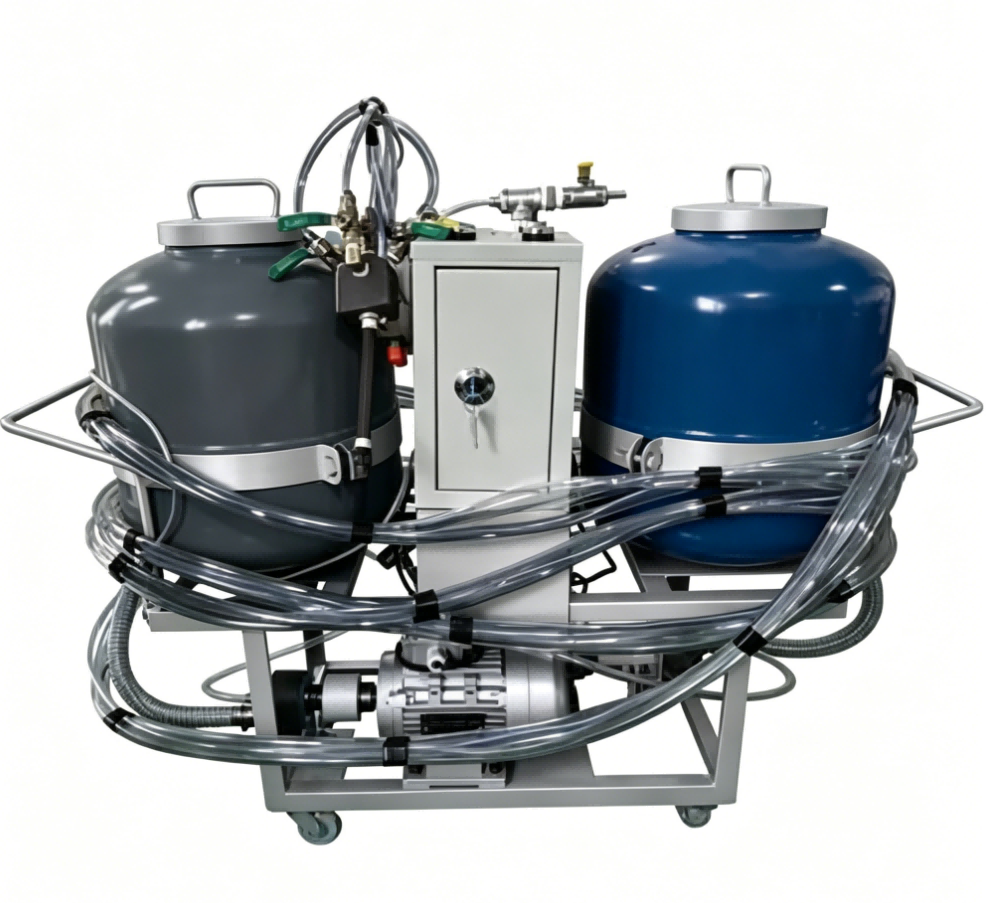
If your current machine was sized for a fast aromatic system, it is worth checking temperature uniformity and full-range metering accuracy before committing to an IPDI product. Reach us at info@chinahaifeng.com or WhatsApp 86 13566296633 and we will help you run that check against your target formulation.
أين تقدم أنظمة IPDI أفضل قيمة
IPDI’s light stability and hardness range create a clear application niche: parts that must stay clear or light-colored while facing sunlight, abrasion, and chemicals.
Waterborne PU dispersions for synthetic leather are a major use. In high-end synthetic leather, an IPDI-based polyurethane topcoat delivers the color fastness and solvent resistance that European brand audits demand, without the yellowing that aromatic systems show after exposure [4]. On one synthetic leather expansion for a Turkish manufacturer supplying European light-luxury brands, Haifeng delivered three XJJF-series pouring lines with precise metering and constant-temperature closed-loop control. The result was stable density, consistent peel strength and hand-feel, full EU REACH/RoHS compliance, and a 100% inspection pass rate through European brand factory audits.
Other established IPDI applications include:
- Transparent cast elastomers and optical-grade parts where clarity must survive years of light exposure.
- Automotive OEM and refinish clear coats, where gloss retention and weatherability are specification barriers.
- Light-stable rollers and seals for printing, converting, and outdoor equipment, combining IPDI’s non-yellowing behavior with abrasion-resistant polyol backbones.
- Medical, consumer, and apparel coatings where skin-contact stability and color neutrality are required.
Rollers are a clear example of how the aliphatic backbone changes product economics. كيف تُصنع بكرات البولي يوريثان من الصب حتى المعالجة covers the casting steps and where material choice affects cure, clarity, and service life.
قائمة تحقق للقرار قبل الالتزام بخط IPDI
Before committing to an IPDI-based system, verify five things. These checks come from field experience with slow-reacting, high-viscosity, moisture-sensitive systems.
- Confirm the light-stability requirement is load-bearing. If the part is indoor, hidden, or painted, an aromatic system may cost less with equal mechanical performance.
- Match the polyol and chain extender to the service environment: polycarbonate diol for hydrolysis and chemical resistance; polyether for low-temperature flexibility.
- Specify full-range dynamic metering accuracy at ±0.3% or tighter, and confirm the machine holds that accuracy across the entire shot-weight range, not just at maximum flow.
- Verify heated tank, hose, and mixing-head controls with setpoint tolerance that matches the prepolymer viscosity curve. Ask for temperature uniformity data, not just a setpoint number.
- Plan moisture controls — dried raw materials, nitrogen blanketing, purge routines — before startup, not after the first batch of bubbles appears.
If the product is new and the formulation is still moving, a line with multi-formula storage and one-touch recipe switching reduces the cost of iteration.
اطرح أسئلتك حول معالجة IPDI على مختص قياس الجرعات
IPDI-based systems do not typically fail because of the chemistry alone; they fail when the line cannot hold viscosity, temperature, and ratio inside the system’s narrow processing window. If you are evaluating IPDI prepolymers for a light-stable casting, coating, or synthetic leather project and want to check the equipment requirements against a real line calculation, contact Haifeng Polyurethane Machinery. Share your target output, shot weight or coating width, material viscosity, and cure schedule, and we will specify the metering, heating, and cleaning configuration that matches the process.
البريد الإلكتروني: info@chinahaifeng.com
WhatsApp: 86 13566296633
الأسئلة الشائعة
لماذا يُعد IPDI أغلى من MDI أو TDI، وهل يستحق ذلك؟
The cycloaliphatic structure costs more to manufacture, and lower reactivity often adds cycle time. It is worth it when the part must retain clarity, color, or outdoor service life. For hidden structural parts, aromatic systems usually deliver equivalent mechanics at lower cost.
هل يصفر IPDI إطلاقًا؟
Under normal UV exposure, cured IPDI-based systems resist yellowing far longer than aromatic polyurethanes. Prolonged high-dose UV, aggressive amines, or an improper catalyst package can still cause discoloration, so “non-yellowing” is relative, not absolute.
هل يمكنني تشغيل أنظمة IPDI وMDI على ماكينة البولي يوريثان نفسها؟
Often yes, if the machine has independent temperature control, multi-formula storage, and a cleaning system designed for isocyanate flushing. The main constraint is residual contamination: small MDI carryover can compromise the light stability of an IPDI run. Thorough purging and, where possible, dedicated tank sets are the safer route.
ما نطاق الصلادة الواقعي مع الإيلاستومرات المصبوبة القائمة على IPDI؟
From roughly Shore A 40 to Shore D 70-plus, depending on polyol, chain extender, and isocyanate index. The hardness target should be fixed before equipment sizing because it drives viscosity and shot parameters.
كيف يغيّر التفاعل المنخفض عمر الخليط القابل للاستخدام ووقت فك القالب؟
Pot life extends, which is useful for large or complex molds, but demold and full-property cure take longer without heat or catalyst. Most production IPDI systems are accelerated with catalysts and elevated mold temperature to keep cycle times commercially viable.
المراجع
[1] G. Oertel، محرر، Polyurethane Handbook, 2nd ed. Munich, Germany: Hanser Publishers, 1993.
[2] M. Szycher، Szycher’s Handbook of Polyurethanes، الطبعة الثانية. بوكا راتون، فلوريدا، الولايات المتحدة الأمريكية: CRC Press، 2012.
[3] Covestro AG, “Desmodur I (IPDI) technical data sheet,” Leverkusen, Germany. [Online]. Available: https://solutions.covestro.com/en/products/desmodur/desmodur-i_000000000000480770
[4] Evonik Industries AG, “VESTANAT IPDI product information,” Essen, Germany. [Online]. Available: https://www.evonik.com/en/products/cl/pr_52001112.html
[5] ISO 4892-3:2016, Plastics — Methods of exposure to laboratory light sources — Part 3: Fluorescent UV lamps، ISO، جنيف، سويسرا، 2016.
إذا كنت مهتمًا، فاطّلع على هذه المقالات ذات الصلة:
كيف تُصنع بكرات البولي يوريثان من الصب حتى المعالجة
أسباب الانكماش في رغوة البولي يوريثان وكيفية التحكم فيه
RRIM مقابل RIM: أي عملية تناسب الجزء الإنشائي لديك