
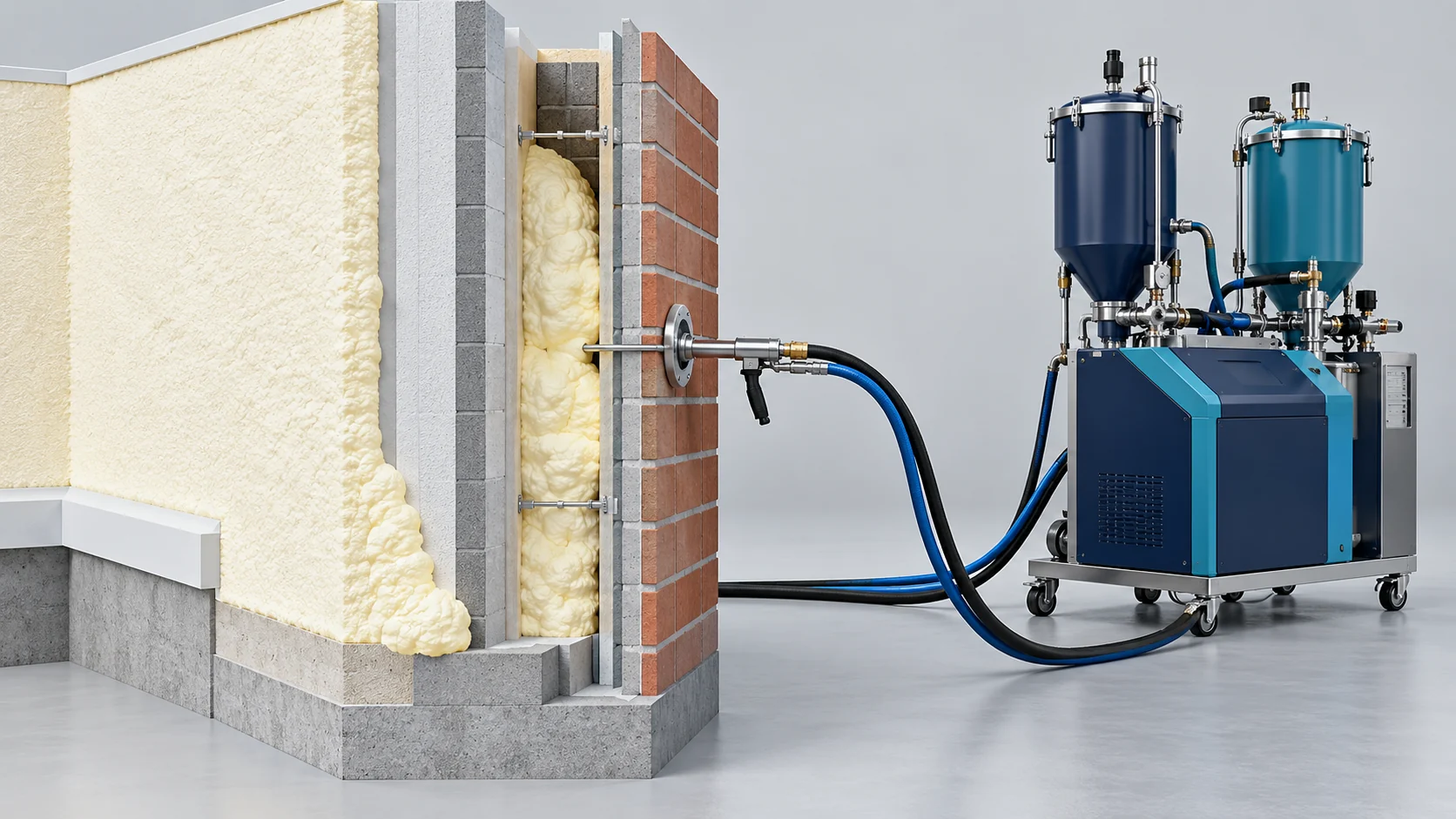
Solución de aislamiento con espuma de PU para cavidades de edificios
Configure el relleno de cavidades con PU o la pulverización exterior para envolventes de edificios, revisando para la solución de muro seleccionada el estado del sustrato, la secuencia de llenado, la presión de expansión y la inspección.
Precision PU Spray & Cavity Injection Solutions for Building Envelopes
Configure cavity filling or exterior spraying for the selected substrate and wall construction. Shot volume, venting, rise pressure and substrate movement are validated through trials; insulation thickness and fixing requirements follow the building design.
Thermal and Thickness Selection
Choose thickness from the required thermal design and the selected material properties. Comparisons with other insulation materials require the same performance target and construction basis. Select open-cell or closed-cell material for the actual wall construction, vapor design and intended use. Exterior spray blends and cavity-fill blends can have different rise, flow and reaction behavior; a material datasheet for one route does not qualify the other.
Cavity and Facade Design
Check substrate condition, cavity access, venting, expansion pressure and movement. Fixings, wind resistance and structural requirements remain part of the complete wall design.
Comparar rutas de producción relacionadas
Choose cavity filling or exposed-surface spraying first. Cavity work needs an approved shot, vents and substrate-movement trial; surface spraying instead needs access, pass build and finishing. Do not apply a reference port grid to every wall construction.
Production Workflow for Building Envelope PU Insulation Machine System
The sequence is configured for the selected application and material. Temperatures, pressures, reaction timing and pass thickness are reference conditions reviewed through project trials.
Substrate Preparation & Injection Port Setup
For cavity injection, injection ports are drilled in predetermined grid patterns; for exterior spraying, the wall surface is cleared of dust and moisture-tested.
High-Pressure Precursor Thermal Conditioning
Prepare polyol A and isocyanate B separately using the approved formulation conditions. Check working viscosity, operating temperature, delivered component quantities and ratio before selecting the spray gun or cavity-fill interface.
Dual-Mode High-Pressure Spray or Cavity Injection
Select separate spraying or cavity-injection interfaces. Cavity shots, vents and expansion pressure are validated for the actual wall construction.
Especificaciones técnicas
Supplied application and equipment references for configuration review. Material properties, operating conditions and acceptance tests are agreed for the selected project.
| Parámetro técnico | Supplied Reference / Configuration | Contexto de ingeniería y verificación |
|---|---|---|
| Aplicación objetivo | Exterior Building Walls, Steel Structure Wall Cladding | Vertical envelope thermal and acoustic protection |
| Matriz del material | Rigid Polyurethane (PUR) / Polyisocyanurate (PIR) | Formulation selected for the project |
| Densidad de la espuma del núcleo | 35 – 45 kg/m³ | Optimized for thermal efficiency and lightweight |
| Conductividad térmica (λ) | 0.021–0.023 (supplied reference) W/(m·K) | Thermal test method, mean temperature, conditioning and aging to be agreed |
| Tensile Adhesion Strength | >0.3 MPa (To steel / concrete) | Tensile pull-off adhesion testing |
| Proportioner Fluid Output | 6 – 14 kg/min | Variable displacement for controlled cavity fills |
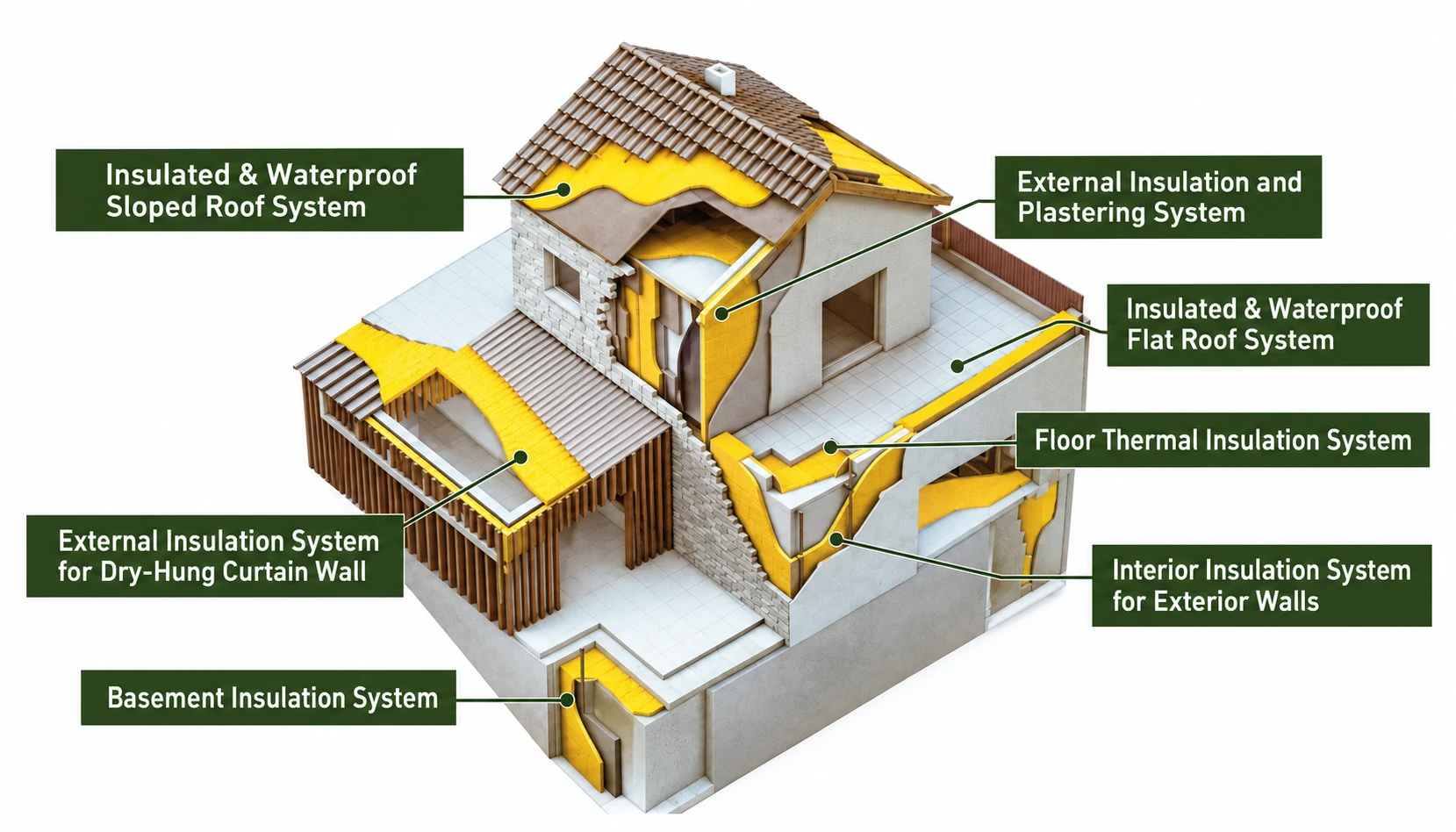
This cutaway locates thermal-insulation zones across a building envelope. It is an application-planning schematic, not verification of a particular material, spray method or completed customer installation.
Building Envelope Insulation Zones
Reference Haifeng Insulation Equipment
The linked spray platform needs a verified injection connection/control configuration for cavity work; confirm that adaptation separately.
Ventajas técnicas clave
Application-specific process controls, tooling and equipment integration.
Thermal-Design Coordination
Select thickness for the target thermal performance and wall construction.
Controlled Cavity Filling
Review shot size, vents and substrate movement through representative trials.
Wall-System Integration
Coordinate finishes, fixings and structural requirements with the building design.
Proyectos relacionados
Exterior-wall spraying and steel-building cavity injection are different applications. Use each project only for its documented route.
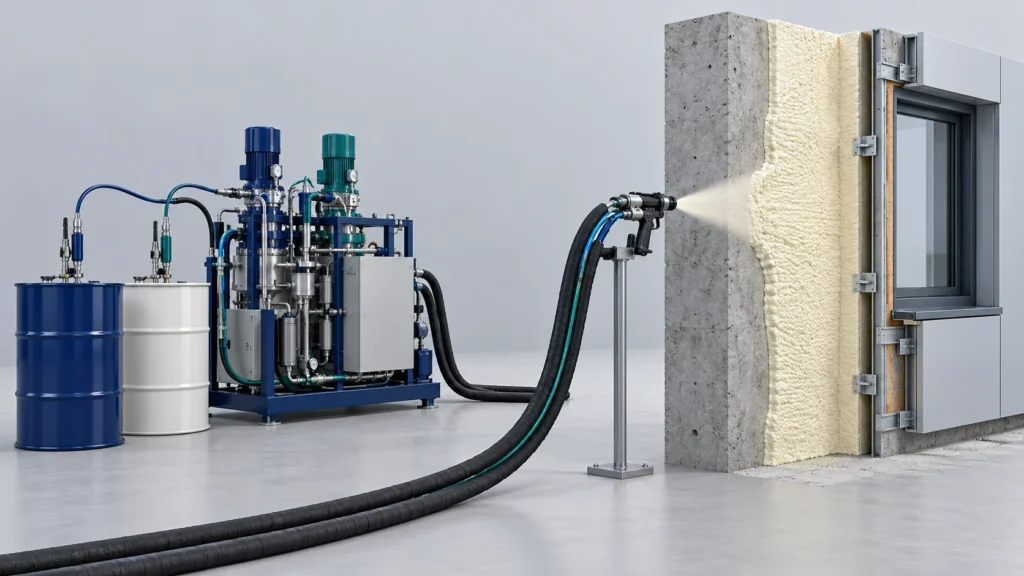
Proyecto de aislamiento de PU para pared exterior comercial en Brasil
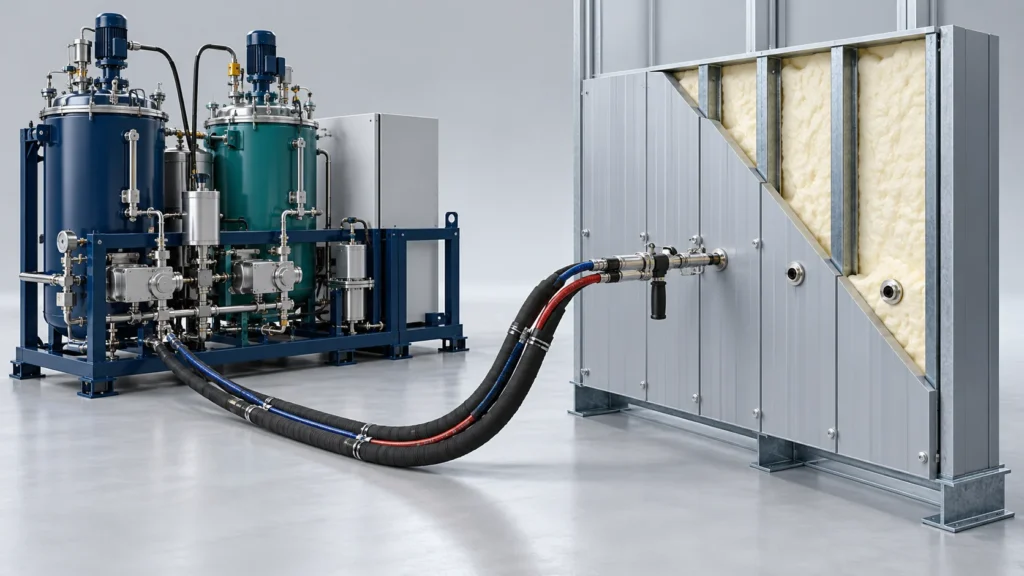
Proyecto de línea de inyección de PU en cavidades para edificios de acero en China
Preguntas frecuentes
Compare rutas de producción, requisitos de materiales, configuraciones de equipos y datos de entrada del proyecto.
When should I choose cavity filling rather than spraying?
How is foam expansion pressure controlled?
Does foam replace wall anchors or structural fixings?
Can thermal imaging verify every void?
What inputs are needed for equipment selection?
Can one blended-polyol grade be assumed suitable for both exterior spraying and cavity filling?
Can low-density open-cell foam replace a specified closed-cell wall insulation?
How should cavity filling be trialed before full installation?
Discuss Your Insulation Equipment and Application
Share the following for this application: Wall section, cavity depth, facing/substrate stiffness, openings/vents, formulation, allowed movement and inspection access. Our team will reply within one business day. Once requirements are clear, we provide a preliminary proposal within two business days.


