
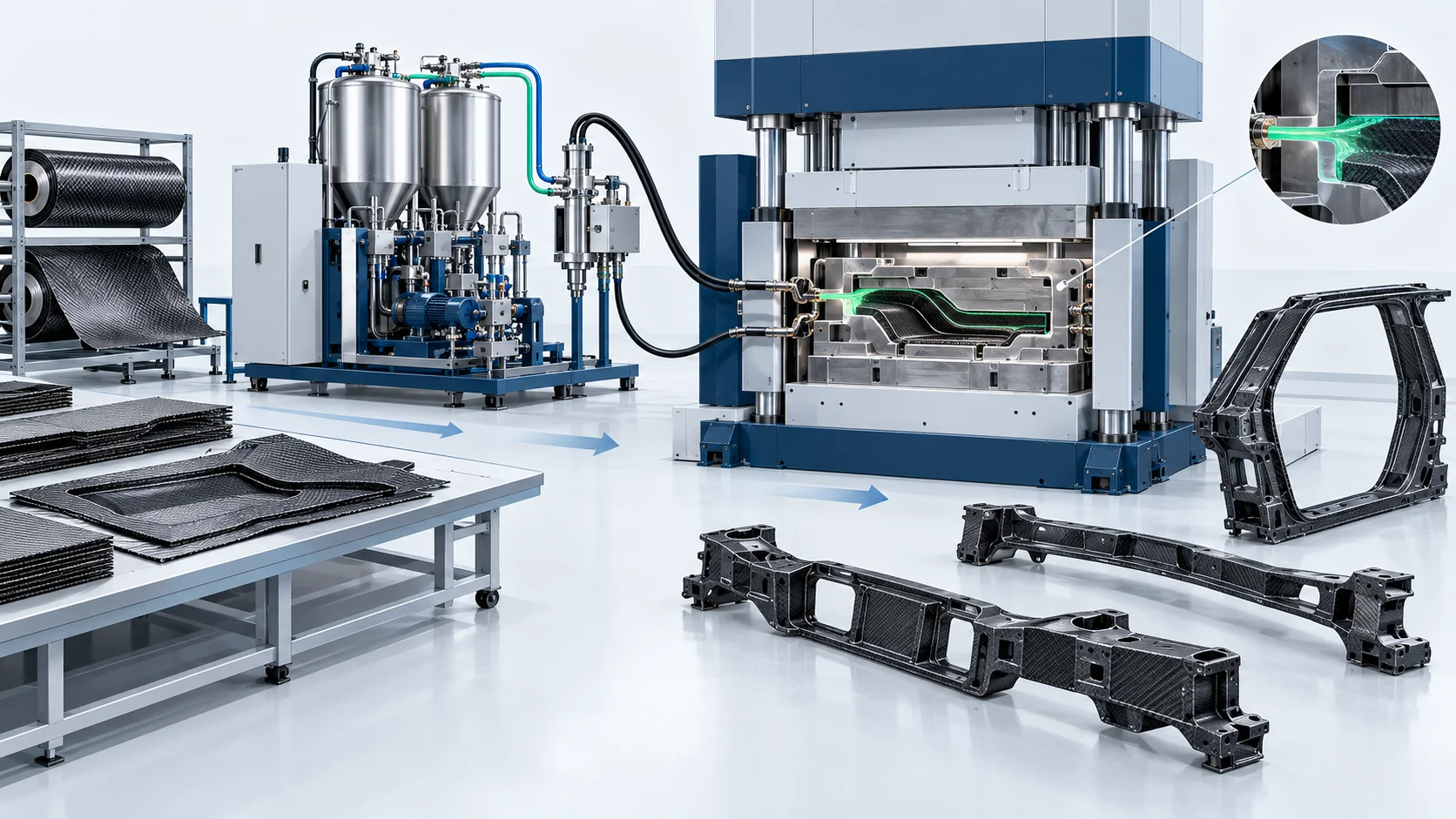
Máquina HP-RTM | Carrocería en blanco de fibra de carbono
Equipo de dosificación e inyección HP-RTM para pilares B, travesaños de techo y vigas de piso de fibra de carbono, que integra control de proporción, utillaje cerrado asistido por vacío y gestión del curado específica para cada resina.
Referencia de precisión
Objetivo de aceptación en la aplicación de ±0,5 %; punto de funcionamiento y método definidos en la oferta
Presión de trabajo
30–150 bar reference injection-system range; mold-cavity limit specified separately
Circuitos de materiales
2 componentes reactivos; dosificación separada de aditivos opcional
Mold Temperature Reference
90–130°C for the listed application; resin-specific mold window
Descripción general del producto
An application configuration for repeatable filling of structural carbon-fiber preforms.
The HF-RTM-HP150-BIW application configuration is a reactive resin metering and injection system for selected carbon-fiber body-in-white components. Typical targets include B-pillar reinforcements, roof crossmembers and floor beams produced from dry carbon-fiber preforms in matched, sealed tooling.
The configuration emphasizes component ratio control, shot sizing and filling of locally reinforced sections. The material system, preform architecture and gate layout determine the viable injection window. Tool evacuation and controlled press movements support filling while limiting preform displacement and air entrapment.
A fast-curing polyurethane or epoxy system is selected for the structural program. Tank conditioning and tool temperature have distinct roles: component temperature controls viscosity before mixing, while the mold thermal profile controls filling and cure. The supplied 90–130°C tool reference must be matched to the selected resin data, rather than used as a universal epoxy processing window.
The scope can include metering, the impingement head, vacuum, temperature control and a master PLC interface, with optional handling, press and tooling. Dimensional repeatability, residual cure, void content and laminate quality are assessed separately from crashworthiness, which is established through the component and vehicle validation program.
Descubra la solución de aplicación completa · Ver el caso de proyecto correspondiente
Ilustración conceptual — no es una fotografía del equipo entregado ni de una instalación de un cliente.
Flujo de trabajo de aplicación HP-RTM
Define the Structural Preform
Establish the fiber orientations, local reinforcement, insert locations and thickness zones from the structural part design. Prepare a repeatable dry-preform loading method.
Condition the Reactive Components
Condition the selected polyurethane or epoxy streams separately, set the resin-specific ratio and confirm viscosity and gel-time requirements before an injection recipe is released.
Close and Evacuate the Matched Tool
Load and locate the preform, close the mold to the prescribed position and evacuate the cavity. Interlock injection with press readiness, vacuum and tool temperature.
Meter, Mix and Inject the Resin
Use closed-loop component dosing and the impingement mixing head to deliver the specified resin shot. Coordinate flow, pressure ramp and gate sequence with the preform permeability and tool limits.
Control Structural Cure
Run the resin-specific mold thermal and press holding profile to develop demolding strength. The supplied reference complete molding window is 180–300 seconds, depending on geometry and formulation.
Trim and Qualify the Component
Trim or machine mounting interfaces, inspect dimensions and internal laminate quality, and verify cure and mechanical performance against the structural program acceptance plan.
¿Necesita una cotización de este equipo?
Solicitar presupuestoEspecificaciones técnicas
Referencia de ingeniería de aplicación para la configuración propuesta. Las capacidades finales de los equipos y las condiciones de aceptación se definen para la resina, la preforma, el útil y la prensa seleccionados. La presión de mezcla, la presión del circuito de inyección y la presión de la cavidad del molde se especifican por separado. El ciclo de referencia es una ventana de moldeo completa, no solo el tiempo de inyección.
| Parámetro técnico | HF-RTM-HP150-BIW |
|---|---|
| Componentes | 2 componentes reactivos; dosificación separada de aditivos opcional |
| Rango de salida | Sized from part resin mass and qualified fill-time window |
| Rango de relación de mezcla | Seleccionado a partir de la formulación del proveedor de resina; configurado durante la ingeniería de aplicación |
| Referencia de precisión | Objetivo de aceptación en la aplicación de ±0,5 %; punto de funcionamiento y método definidos en la oferta |
| Presión de trabajo | 30–150 bar reference injection-system range; mold-cavity limit specified separately |
| Componentes objetivo | Carbon-fiber B-pillars, roof crossmembers and floor beams |
| Sistemas de resina compatibles | Fast-curing polyurethane or epoxy; material-specific pump, seal and mixing-head configuration |
| Preform Design Reference | 50–60% fiber volume fraction in supplied brief; laminate property, not a machine output setting |
| Mold Temperature Reference | 90–130°C for the supplied application; final window follows the selected resin |
| Referencia de vacío en el molde | <10 mbar absolute before injection; qualified with actual tool seals and venting |
| Ventana de moldeo completa de referencia | 180–300 s; geometry, resin, cure and handling dependent |
| Sistema de control | PLC recipes, component ratio/flow records and press synchronization |
| Cabezal de mezcla | High-pressure impingement and mechanical self-cleaning; no dynamic stirring speed assumed |
| Optional Process Interface | Gap injection or compression sequence when supported by the qualified press and tool |
Diseñado en torno al proceso de aplicación
An application configuration for repeatable filling of structural carbon-fiber preforms.
Ratio-Controlled Reactive Dosing
A ±0.5% application acceptance target provides a basis for configuring and checking component metering at the agreed resin viscosity and operating flow.
Local Reinforcement Filling
Injection profiles and gate positions are selected for the transitions between thin sections, dense reinforcement zones and structural inserts.
Resin-Specific Temperature Recipes
Separate component conditioning and mold thermal recipes coordinate viscosity, fill time and cure without treating every resin system as interchangeable.
Tool and Press Synchronization
The control interface coordinates mold position, vacuum, shot permission and pressure release. Gap injection or compression sequences are options when the mold and press support them.
Shot Traceability for Structural Parts
Recipe and shot records connect material ratio, flow, temperature and cavity feedback with the production lot and the agreed quality inspection plan.
Hablemos de la configuración de su equipo
Comparta su producto, materiales, utillaje y requisitos de producción para que podamos revisar el equipo y las interfaces para su proyecto.
Comparar configuraciones de aplicación
Compare configuraciones de inyección de resina para ballestas de suspensión, bandejas de batería para vehículos eléctricos y estructuras de carrocería de fibra de carbono.
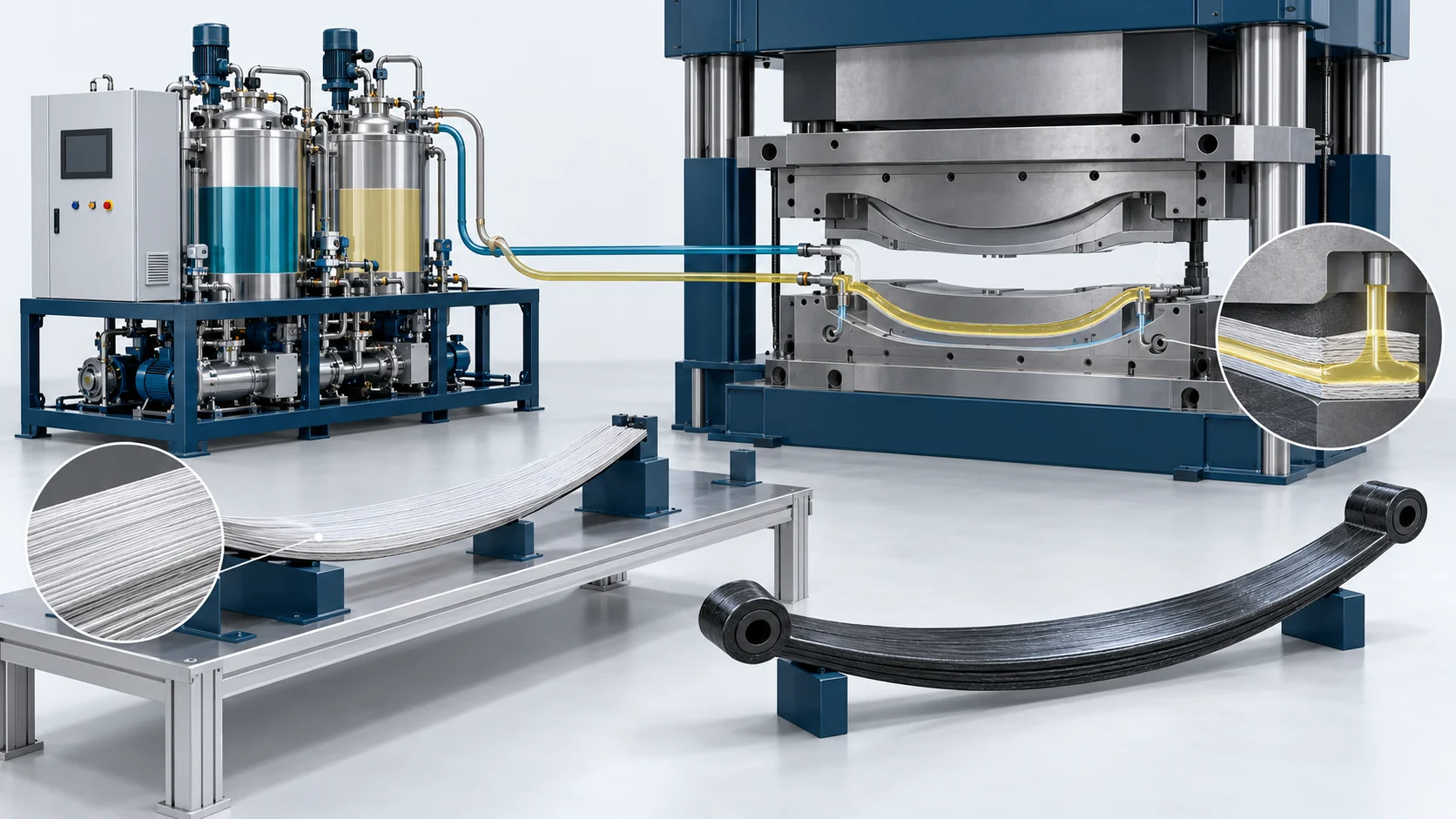
Máquina HP-RTM | Ballestas de material compuesto
Equipos de dosificación y moldeo para composites
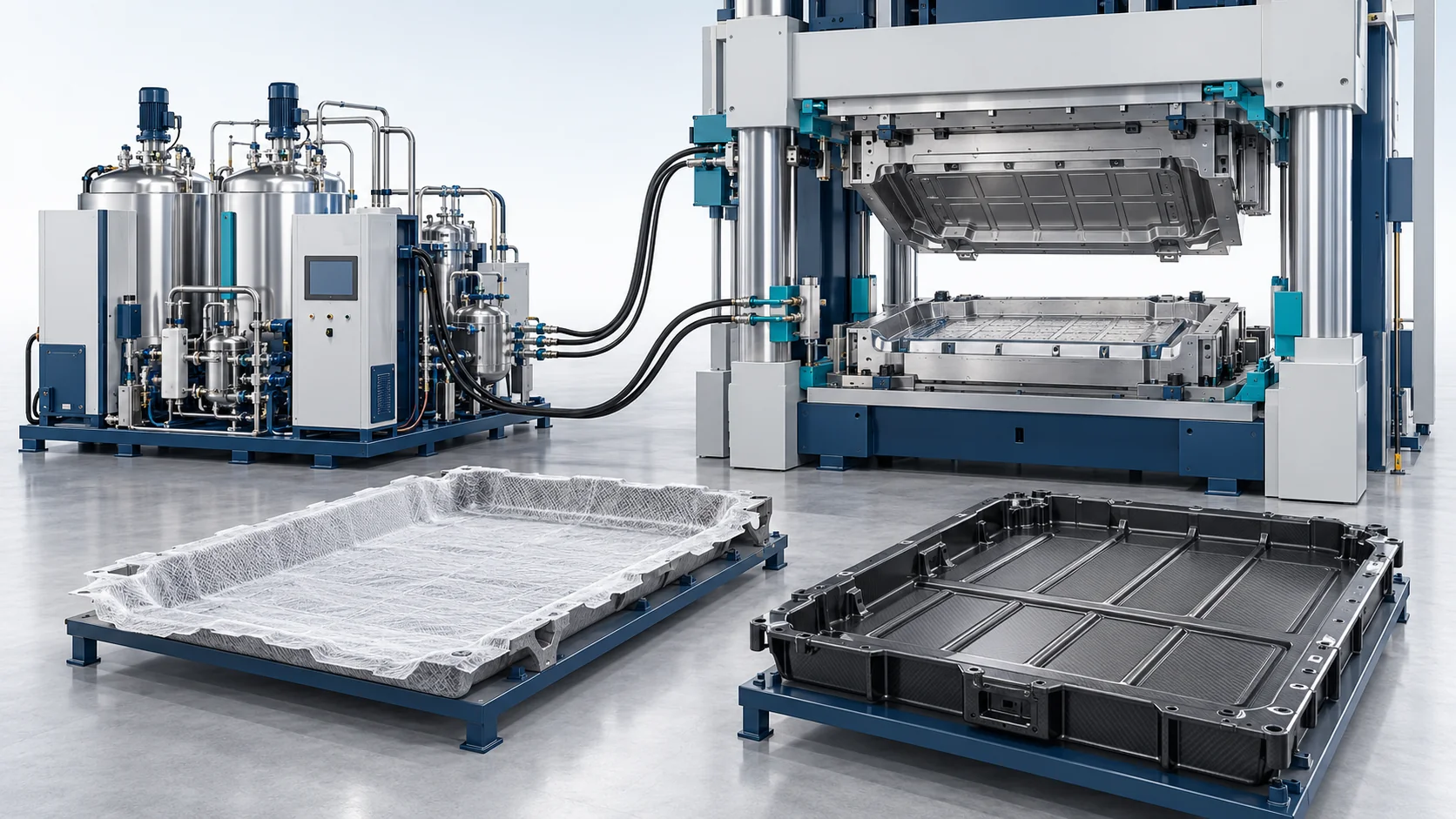
Máquina HP-RTM | Bandejas de batería para vehículos eléctricos
Equipos de dosificación y moldeo para composites
Preguntas frecuentes
Which body-in-white components can this configuration produce?
Is the 90–130°C mold window suitable for every resin?
What does the ±0.5% accuracy refer to?
Can the equipment be integrated with an existing composite press?
Does the equipment guarantee carbon-fiber part crash performance?
How are injection shot size and production cycle selected?
¿Listo para hablar de su proyecto?
Contacte con nuestro equipo


