
Dos polioles pueden llegar de proveedores distintos con una viscosidad, un color y un contenido de humedad casi idénticos y, aun así, obligar a una línea de poliuretano a funcionar con relaciones de componentes notablemente distintas. La cifra que suele explicar la diferencia es el valor hidroxilo.
En un certificado de análisis de poliol, el valor hidroxilo no es una nota menor de control de calidad. Determina el cálculo del peso equivalente, la demanda de isocianato, la densidad de reticulación, la vida útil de la mezcla (pot life) y la relación de dosificación que debe mantener su cabezal de mezcla. Si el laboratorio de formulación se fía de un valor hidroxilo y la planta carga los tanques con otro distinto, el resultado suele ser un lote blando, una pieza frágil o una espuma que crece según un calendario equivocado.
Qué mide realmente el valor hidroxilo
El valor hidroxilo es una medida de los grupos hidroxilo reactivos disponibles en un poliol, un extensor de cadena o un intermedio de poliéter/poliéster. Se expresa como miligramos de hidróxido de potasio equivalentes al contenido de hidroxilo en un gramo de muestra [1].
Lo importante es que el valor hidroxilo es una cifra basada en equivalentes, no una simple lectura del hidroxilo en porcentaje en peso. Dos polioles con el mismo valor hidroxilo tienen el mismo peso equivalente, aunque sus pesos moleculares sean distintos. Por eso el valor hidroxilo es la cifra que las formulaciones utilizan para calcular cuánto isocianato se requiere.
Según ASTM D4274 e ISO 14900, el índice de hidroxilo se determina por acetilación o ftalación, seguidas de una valoración del reactivo residual [1][2]. El resultado se expresa en mg de KOH/g. En la práctica, muchos fabricantes usan «valor hidroxilo» e «índice de hidroxilo» de forma intercambiable.
Valor hidroxilo alto frente a bajo: qué le indica la cifra
El valor hidroxilo indica la longitud de las cadenas de poliol y el potencial de reticulación que aporta el sistema.
Low hydroxyl values, such as 28–56 mg KOH/g, are typical of long-chain polyether polyols used in flexible foam and soft elastomer segments. The molecules have fewer hydroxyl groups per gram, so the resulting polymer has longer flexible segments between urethane linkages [4].
Mid-range values, roughly 100–250 mg KOH/g, appear in polyols for coatings, cast elastomer intermediates, semi-flexible foam, and adhesives. These systems balance flexibility with enough reactive sites for useful crosslinking.
High hydroxyl values, commonly 300–500 mg KOH/g or more, are typical of rigid foam polyols and highly branched systems. A small diol chain extender like 1,4-butanediol sits far higher at about 1,245 mg KOH/g because its molecule is small and carries two hydroxyl groups per very low molecular weight [3].

The hydroxyl value alone does not tell you whether a polyol is linear or branched. Functionality does that work. A 2,000-molecular-weight polyether diol with an OHV of 56 has an equivalent weight near 1,000 and a functionality near 2. A sucrose-based rigid-foam polyol may have a similar equivalent weight on paper but functionality above 4. The same hydroxyl value can therefore produce very different polymer networks.
El cálculo que hay detrás de la cifra
The core formula is straightforward:
Equivalent weight = 56,100 ÷ hydroxyl value
The constant 56,100 comes from the molecular weight of potassium hydroxide expressed in the appropriate units for the mg KOH/g convention [3].
For example, a polyol with a hydroxyl value of 56 has:
Equivalent weight = 56,100 ÷ 56 = 1,001.8
That equivalent weight is then used to determine isocyanate demand. A common practical expression is:
Parts isocyanate = (polyol equivalent weight ÷ isocyanate equivalent weight) × isocyanate index
The isocyanate equivalent weight is derived from the NCO content. If a prepolymer or isocyanate has an NCO content of 31.5%, its equivalent weight is approximately 42 ÷ 0.315, or about 133.4. A 100:50 ratio that worked for an old polyol shipment can drift noticeably when the new lot has a hydroxyl value that is 10% different, because the polyol equivalent weight moves in the opposite direction by roughly 9–11%.
Hydroxyl value sets the component ratio before a machine is ever started. Cómo calcular el peso de dosificación en poliuretano covers the equipment-side calculation once the formula weights leave the lab.
Por qué el valor hidroxilo controla la mezcla y el comportamiento de la reacción
Hydroxyl value matters because hydroxyl groups are the reaction sites that consume isocyanate. If the calculated isocyanate demand is wrong, the whole index shifts.
A hydroxyl value that is lower than the formulation assumes means fewer hydroxyl sites are available. The system may end up isocyanate-rich, which can produce brittle parts, high exotherm, and dimensional instability. A hydroxyl value higher than assumed leaves unreacted polyol or insufficient NCO, creating soft, sticky, or under-cured material [4].
The reaction rate also changes. Low-hydroxyl-value, long-chain polyols generally build viscosity more slowly and give longer pot life. High-hydroxyl-value, short-chain materials create more urethane links in the same volume, which can accelerate gel time, reduce working time, and raise peak exotherm [5]. These differences change how the mixing head, mold temperature, and pour pattern should be set.
A high-hydroxyl-value system moves through cream, rise, and gel phases differently from a low-hydroxyl-value elastomer. El papel del tiempo de subida en el espumado de poliuretano covers the reaction-timing side of that behavior.
If your polyol lot report shows a hydroxyl value that has drifted 10% from the formula master, do not adjust the pump strokes before rechecking the equivalent-weight math. Metering precision and formulation math need to agree before anything changes on the machine. For help matching pump ratio, temperatures, and pour output to a new polyol data sheet, send the hydroxyl value, acid value, water content, and current machine ratio to info@chinahaifeng.com or WhatsApp 86 13566296633.
El valor hidroxilo y la selección de equipos
Hydroxyl value also influences how demanding the metering and temperature-control system needs to be.
Short-chain, high-hydroxyl-value systems tend to be reactive and exothermic. They reward tight ratio control, rapid mixing, consistent mold temperature, and short residence time. Long-chain, low-hydroxyl-value systems often bring higher viscosity and longer flow paths. They reward adequate heating, proper tank circulation, and pumps sized for the actual viscosity range rather than a nominal output [4].

In practice, a high-pressure metering unit should never be selected from hydroxyl value alone. The polyol chain length, functionality, viscosity, filler content, NCO index target, and pour rate all interact. However, when a formulation changes from a 350-mg-KOH/g rigid polyol to a 470-mg-KOH/g system, the equipment must hold the same ratio tolerance against a more reactive, faster-building material.
Errores comunes al comparar datos de polioles
The most expensive mistakes are usually made before a machine is started.
First, hydroxyl value is not hardness. A high hydroxyl value does not by itself guarantee a hard part. Hardness depends on crosslink density, NCO index, chain-extension type, and network structure. A hard elastomer can be built from a moderate-hydroxyl-value polyol with the right chain extender and index, while a mis-indexed high-OHV system can come out soft or friable [5].
Second, do not ignore acid value and water content. Acid value consumes catalyst and can affect reaction balance. Dissolved water reacts with isocyanate to form carbon dioxide, changing density, blowing behavior, and effective NCO demand [2]. A hydroxyl value without its companion acid and moisture data is incomplete.
Third, check the batch tolerance, not just the typical value. A data sheet may list 56 mg KOH/g with a tolerance of ±3 mg KOH/g. That is enough to move equivalent weight by several percent. When a plant switches suppliers, the formula should be recalculated against the new lot’s reported value.
Hydroxyl value alone will not tell you the finished hardness; crosslink density and chain extension do. Dureza Shore A frente a Shore D en poliuretano covers how those variables show up in a durometer reading.
Una lista de comprobación práctica del valor hidroxilo
Before releasing a polyol lot to production, confirm the following:
- Request hydroxyl value, acid value, water content, viscosity, and functionality for every new lot.
- Recalculate equivalent weight using 56,100 ÷ OHV.
- Recalculate isocyanate demand and confirm the target NCO index.
- Record the new component ratio and compare it with the previous production setting.
- Run a small-scale or laboratory mix before committing the full line.
- Check pot life, gel time, rise profile, and exotherm against the reference formulation.
- Monitor the first production parts for hardness, density, and surface cure.
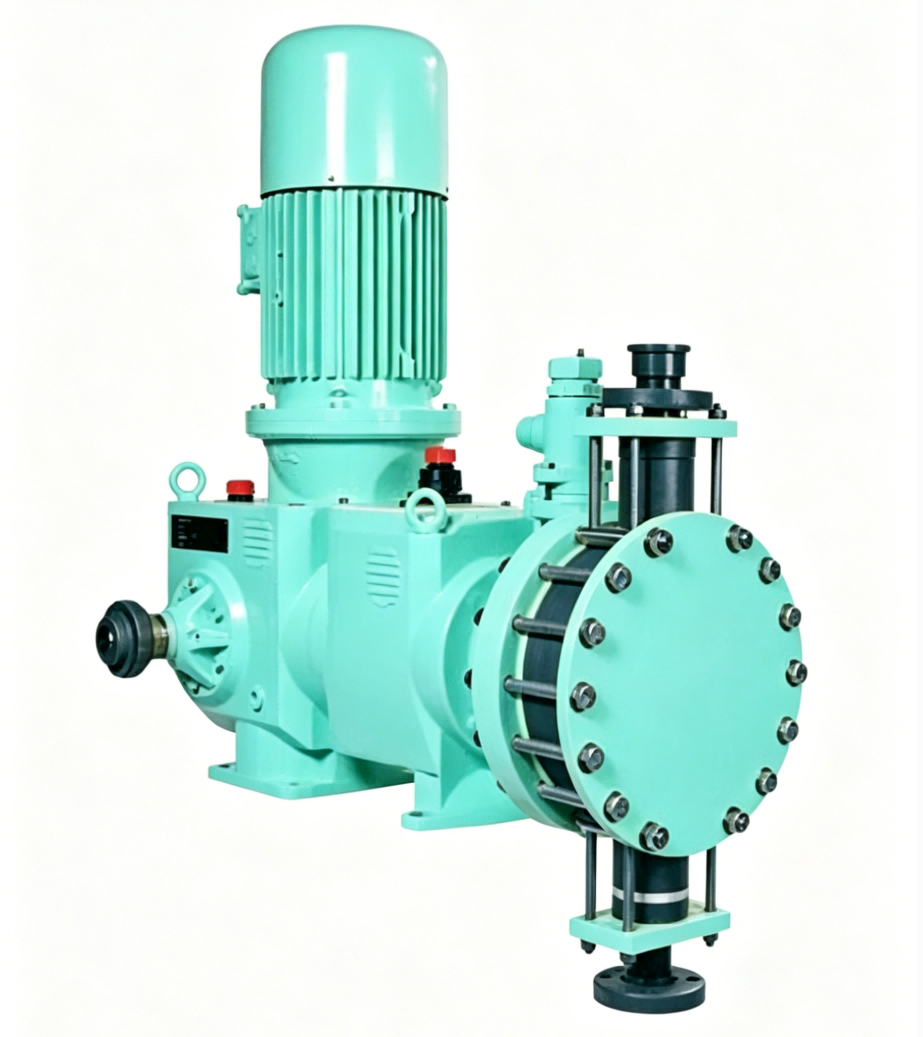
A hydroxyl value that is in specification but at the edge of the tolerance band may still require a ratio adjustment. The batch report should trigger a calculation, not just a paper approval.
Hable con un ingeniero de equipos de poliuretano
If you are qualifying a new polyol, changing suppliers, or troubleshooting off-ratio parts, send the data early. The most useful inputs are:
- Polyol and curing-agent data sheets, including current hydroxyl value, NCO content, acid value, and water content
- The target component ratio or isocyanate index
- The part type, hardness, density, or rise profile you are trying to hold
- The current machine type, tank temperatures, mixing-head pressure, and pour output
With those inputs, the formulation and the machine can be matched before the first pour. Contact info@chinahaifeng.com or WhatsApp 86 13566296633.
Preguntas frecuentes
¿Cuál es la diferencia entre valor hidroxilo e índice de hidroxilo?
For polyurethane raw materials, the two terms are usually interchangeable. Both are reported in mg KOH/g and both describe the same hydroxyl equivalent concentration [1].
¿Puedo calcular el peso equivalente a partir del valor hidroxilo?
Yes. Divide 56,100 by the hydroxyl value. A polyol with an OHV of 56 has an equivalent weight near 1,000. The equivalent weight is then used to calculate isocyanate demand [3].
¿Cómo afecta el valor hidroxilo a la dureza Shore?
Hydroxyl value contributes to crosslink density, but it does not act alone. High-hydroxyl-value, high-functionality systems made at a full NCO index generally produce harder, more rigid networks. Low-hydroxyl-value systems with longer flexible segments generally produce softer elastomers and flexible foam. The final durometer also depends heavily on NCO index and chain-extension choice [5].
¿Qué ocurre si el valor hidroxilo está fuera de especificación?
Off-spec hydroxyl value changes the reactive balance of the system. If the value is high relative to the formula, the system may be under-indexed, leaving soft or under-cured material. If the value is low, the system may be over-indexed, producing brittle parts, high exotherm, or shrinkage. The correct response is to recalculate the ratio and verify the new value by a small-scale mix before full production [2][4].
Referencias
[1] ASTM D4274-23, Standard Test Methods for Testing Polyurethane Raw Materials: Determination of Hydroxyl Number of Polyols, ASTM International, 2023.
[2] ISO 14900:2017, Plastics — Polyols for Use in the Production of Polyurethane — Determination of Hydroxyl Number, International Organization for Standardization, 2017.
[3] M. Ionescu, Chemistry and Technology of Polyols for Polyurethanes, 2nd ed., Shawbury, UK: Smithers Rapra Technology, 2016.
[4] M. Szycher, Szycher’s Handbook of Polyurethanes, 2.ª ed., Boca Raton, FL: CRC Press, 2012.
[5] C. Hepburn, Polyurethane Elastomers, 2nd ed., London, UK: Elsevier Applied Science, 1992.
Si te interesa, echa un vistazo a estos artículos relacionados:
¿Qué es la espuma de poliuretano proyectada? Composición y aplicación
Dureza Shore A frente a Shore D en poliuretano