El espumado de asientos de doble dureza suele fallar en la frontera entre el centro blando y el refuerzo lateral firme, no en el centro de ninguna de las dos zonas. Un cojín puede superar una comprobación de indentación en el centro de ambas zonas y aun así mostrar una línea de transparencia donde se encuentran las dos espumas, o un refuerzo lateral que se ablanda a 20 mm del borde. Ambos son síntomas de la zonificación y de la sincronización. El mapa de zonas decide dónde corresponde el escalón de dureza, la secuencia de vertido decide si la segunda inyección se une a la primera, y solo entonces tiene sentido la especificación de la máquina. Invierta ese orden y una línea bien dosificada seguirá enviando cojines al banco de recorte.
Por qué el escalón de dureza falla en el límite
Pueden ocurrir tres cosas cuando la segunda inyección se deposita sobre la primera, y solo una de ellas es aceptable.
Si la primera inyección aún está líquida, el flujo entrante la empuja a través de la cavidad. Las dos formulaciones se mezclan en una banda cuya anchura depende de la velocidad del flujo y de la diferencia de viscosidad entre ambas. Esa banda cura con una dureza intermedia entre los dos objetivos, con una estructura celular diferente, y se desplaza cada vez que cambian la trayectoria de vertido o el peso de la inyección. Nada en el plano la describe.
Si la primera inyección ha cremado y ha empezado a expandirse pero aún no ha gelificado, su superficie todavía presenta grupos reactivos. La segunda inyección la moja, ambas zonas se expanden juntas en la frontera y el resultado es una espuma continua con un escalón de dureza y sin costura. Esta es la ventana que hay que buscar, y es estrecha.
Si la primera inyección ha curado, la segunda solo puede anclarse a la superficie. La unión resiste la manipulación y se separa durante los ciclos de durabilidad, y como las dos zonas se contraen en distinta medida al enfriarse, la frontera se transparenta como una línea bajo un revestimiento fino.
Por qué las dos formulaciones rara vez reaccionan a la misma velocidad
La dureza en la espuma moldeada de alta resiliencia proviene de la densidad, la densidad de reticulación y el contenido de urea producido por la reacción del agua y el isocianato. Endurecer el refuerzo lateral elevando el índice de isocianato o la funcionalidad del poliol también hace que ese lado reaccione más rápido. Añadir agua eleva la dureza mediante la urea y aumenta al mismo tiempo la producción de gas, lo que reduce la densidad. Por eso la zona firme y la zona blanda rara vez comparten un tiempo de crema, y la diferencia se amplía a medida que aumenta la diferencia de dureza.
La ventana de vertido la determina, por tanto, el par de formulaciones, no un número fijo que un proveedor de máquinas pueda garantizar. Mida el tiempo de crema y de gel en ambos lados del par propuesto y luego decida si el equilibrio de catalizadores puede acercar ambos lo suficiente para un proceso de dos inyecciones en una sola cavidad. Una unidad de dosificación puede mantener un intervalo con precisión de una fracción de segundo. No puede hacer que dos formulaciones coincidan.
El intervalo entre dos inyecciones es tan repetible como el comportamiento de expansión de cada formulación, porque una deriva en el tiempo de expansión desplaza la frontera incluso cuando se mantiene la relación de dosificación. <El papel del tiempo de subida en el espumado de poliuretano> abarca cómo se mide el tiempo de expansión y qué lo modifica.
El hábito con el desmoldante que rompe la unión
Los operarios formados en moldes de dureza única rocían agente desmoldante siempre que la cavidad parece seca. En un proceso de dos inyecciones, el agente desmoldante rociado entre la primera y la segunda inyección se deposita exactamente sobre la superficie que tiene que unirse. La pieza se desmoldea limpiamente, supera una inspección visual y se separa en la frontera más adelante. La hoja de proceso debe indicar cuándo se aplica el agente desmoldante, y la respuesta es solo antes de la primera inyección, o bien se sustituye el agente desmoldante por un recubrimiento en molde compatible con ambas formulaciones.
Fijar el mapa de zonas antes de la máquina
Un plano que dice centro blando y refuerzo lateral firme no es una especificación. Tres cantidades por zona lo convierten en una: la base de dureza, la densidad y la ubicación y anchura de la frontera.
La base de dureza significa una fuerza de indentación a dos niveles de indentación sobre una geometría de probeta definida, más el factor de flecha, que es la relación entre el valor al 65 % y el valor al 25 %. Una lectura de durómetro sobre espuma flexible para asientos no es un sustituto. El factor de flecha también indica al moldeador si las dos zonas se notarán distintas bajo una carga sentada o solo en el laboratorio, porque dos espumas pueden compartir el mismo valor al 25 % y comportarse de forma muy diferente al 65 %.
La densidad es la segunda decisión. Si la zona firme también necesita mayor densidad para alcanzar su dureza, la pieza gana peso y las dos zonas se contraen en distinta medida al enfriarse. Esa diferencia es la que se transparenta a través del cuero. Si la dureza del refuerzo lateral se puede alcanzar mediante el índice y el reticulante con una densidad igualada, la frontera es mucho más fácil de mantener invisible.
La propia frontera necesita una posición en el plano con una tolerancia, no una descripción con palabras. Los puntos de vertido se colocan para servir a esa línea, el desaireo se coloca a su alrededor y el margen de recorte se establece a partir de ella.
| Elemento | Qué incluir en el plano | Por qué lo necesita el moldeador | Qué falla sin ello |
|---|---|---|---|
| Zona central | Fuerza de indentación al 25 % y al 65 %, factor de hundimiento, densidad, tolerancia de espesor | Determina la formulación y el peso de inyección | El centro mide dentro de rango pero se nota duro a los veinte minutos |
| Refuerzo | Misma base más un límite de deformación permanente | Determina el índice y el reticulante, y el tiempo de curado que rige el desmoldeo | El refuerzo se ablanda en el borde más próximo a la frontera |
| Frontera | Posición con tolerancia, ancho permitido de la banda mezclada, método de ensayo de adherencia | Decide los puntos de vertido, los respiraderos y la posición del separador | La banda mezclada se desplaza con el recorrido del vertido y se ve bajo el desbaste |
| Interfaz de desbaste | Hundimiento o transparencia permitidos bajo la funda real | Determina si las dos densidades deben igualarse | La línea aparece solo después de tapizar el asiento |
Tres vías para lograr dos zonas de dureza en un mismo asiento
La elección de ruta es la decisión que fija el número de máquinas, la superficie de planta y la mano de obra, así que corresponde antes del presupuesto de equipos, no después.
| Ruta | How the step is made | Fits when | Do not choose it when |
|---|---|---|---|
| Two sequential pours, one cavity | Second shot lands on the first while it is still reacting | Both formulations can be trimmed to converge cream and gel, and the zone map is stable across the model range | Reactivities cannot be converged, or the pour path cannot be repeated from part to part |
| Split cavity with a removable divider | Zones pour independently, divider pulled on a set schedule | Hardness difference is large, or the two formulations need very different catalyst packages | The trim cannot hide a seam, or the divider would mark a visible skin |
| Pre-formed insert in a single pour | A firmer pad is located in the bolster before one shot | One metering system is enough, volumes are low, or designs change often | Insert placement time exceeds the takt, or the insert shifts under the pour |
A single-cavity two-shot process needs two polyol lines against one isocyanate, plus either two pour stations or one station with a dwell. A split-cavity process can run on two independent machines feeding one line, which is sometimes cheaper than a two-polyol metering unit when a plant already owns a spare machine. The insert route needs one stream and more labor. Routes can be mixed across a seat set, with the cushion on one and the backrest on another, but not within one cavity.
Qué debe hacer el sistema de dosificación cuando la receta cambia a mitad de ciclo
The architecture follows the chemistry. If both zones share the same isocyanate and differ only in polyol, water, catalyst and crosslinker, one isocyanate line and two polyol lines will do. If the isocyanates differ, for instance a TDI-based system against an MDI-based one, the cell needs two complete component sets or two machines, because blending isocyanates in one manifold invites ratio error and gelling at the head.
The HF-HPM-1A1B-CarSeat head covers 50 to 1000 g/s, holds a polyether to isocyanate ratio of 100:45 to 60, and meters within ±0.3% across the range, with 100 L and 150 L tanks and 10 to 18 MPa mixing pressure. Those figures matter in three ways for a dual-hardness cell. The pour rate has to cover the larger of the two shots inside the takt. The ±0.3% figure is effectively the hardness tolerance, because index drift moves hardness and cure speed together. And tank size must be set on consumption split rather than total shot weight, since a bolster polyol that accounts for a third of the shot drains at a third of the rate and needs its own changeover schedule.
Calculate shot weight per zone rather than per part, then check both numbers every cycle.
Shot weight errors show up as density drift long before they show up as scrap, and two shots per cycle give you two chances to drift. <Cómo calcular el peso de dosificación en poliuretano> covers how the volume, density and loss terms are put together.
Every switch between polyols at the head needs a purge, and every purge is material loss plus time inside the takt. Count it in the cycle before you promise an output figure.
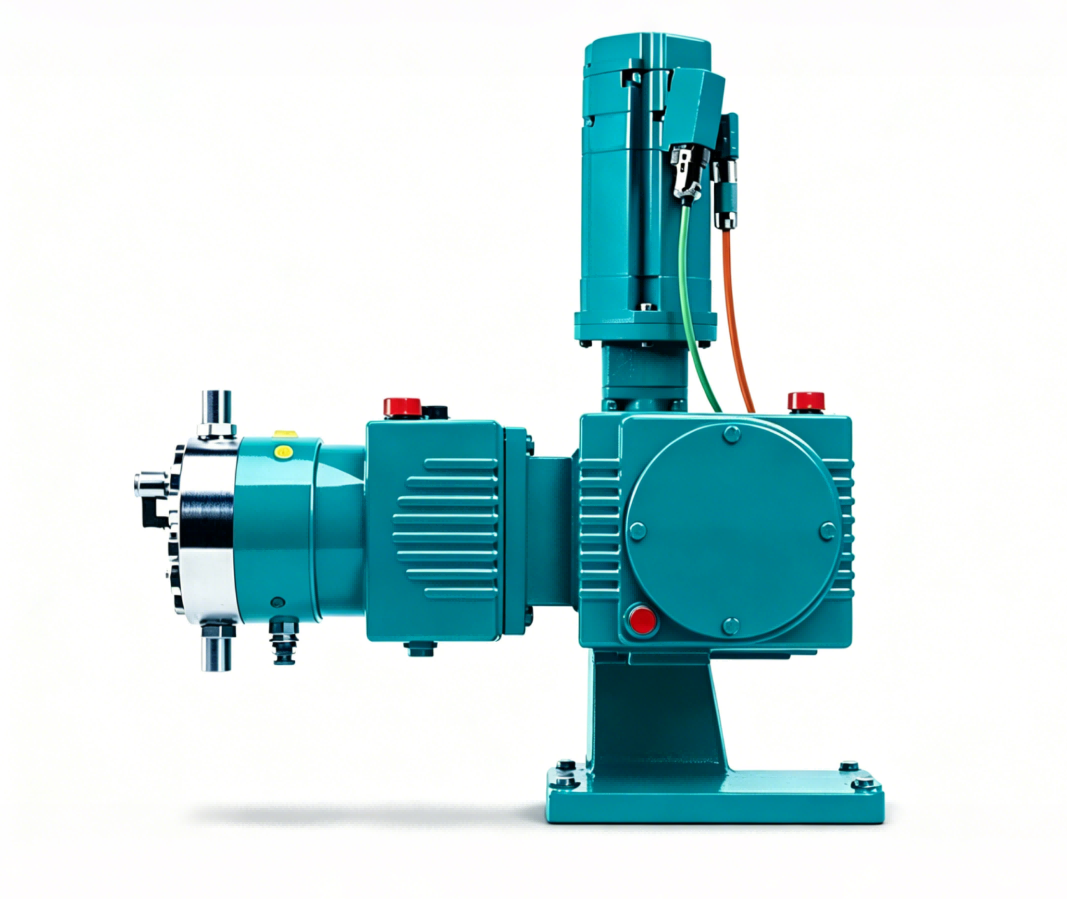
Distribución del molde, el separador y el punto de vertido
Pour points should be placed so each zone’s flow front arrives at the boundary at the end of fill, and so the second shot never has to travel across the first zone. A front that reaches the boundary late leaves that surface fresh and reactive when the second shot lands. A front that arrives early leaves a cooled, coarser free-rise skin on exactly the line that needs to bond.
Vent each zone at its high point and vent the boundary as well. Gas trapped along the boundary becomes a void band, which reads as a soft strip and fails a cross-section check even when the indentation values are correct.
The divider, where one is used, should be thin, drafted, and located where the trim can cover it. Pull it before the first zone gels if a chemical bond across the line is required, or after demold if a mechanical seam is acceptable. Record the pull time on the process sheet, because it drifts when the line gets busy.
Hold both zones at the same mold setpoint within the tolerance the trial establishes. A temperature difference between zones changes cream and gel locally and moves the boundary with no change to the recipe at all, so check temperature at the mold face rather than at the heater controller.
Locate any insert with pins or pockets rather than operator judgement. An insert that shifts 5 mm under the pour produces a bolster that is firm on one part and soft on the next, with no metering fault to find.

Distribución de la línea para un ciclo de dos inyecciones
On a rotary carousel the interval between pours is a multiple of the index time plus any dwell. That turns the geometry of the line into a process constraint, and it is the part most often missed at the quotation stage.
| Interval the formulation pair needs | Pour head layout | Effect on the carrier |
|---|---|---|
| Less than one index time | Both heads at one station, second pour on a dwell | Carrier waits; takt becomes both pours plus the dwell |
| About one index time | Heads one station apart | No dwell, interval fixed by the machine index |
| About two index times | Heads two stations apart | No dwell, but the first zone cures further than a clean bond may tolerate |
If the trial says the pair needs 130 seconds and the index is 94 seconds, the carousel offers 94 or 188 and neither is right. The pair then has to be trimmed to fit an achievable interval, or the index time has to change.
A seat project delivered by Haifeng Polyurethane Machinery in Changzhou shows how the arithmetic behaves. Sixteen-station rotary carriers on three lines, running at 25 minutes per cycle, produced about 550 seat sets a day over two shifts, which works out to roughly a 94 second takt, while the defect rate fell from 11% to 1.5% after metering and carrier changes. Add a second pour and that cycle grows by the interval unless the interval hides inside the index, and the station count grows with it.
Those figures describe what a metering and carrier change achieved on a single-formulation seat line. They do not predict what a dual-hardness conversion will deliver, because the interface yield and the extra station are new variables that only a trial on the actual mold can settle.
Comprobaciones antes de liberar un asiento de doble dureza a producción
- Peel the boundary at three locations. The failure must be a foam tear, not a clean separation. A clean pull means the second shot keyed instead of bonding.
- Cut cross-sections at the center, the boundary and the bolster. Measure the mixed band width and count voids against the limit on the drawing.
- Run indentation force at 25% and 65% in each zone center and at the boundary, then calculate the sag factor per zone.
- Weigh every part in the first twenty and compare against the calculated shot weight for each zone.
- Apply a static load or compression set check at the boundary, since that is where the two cell structures meet.
- Check the demolded part under the actual trim, not bare foam, because a read-through line appears only after upholstery.
- Record the pour interval, ratio actuals, mold temperature and both shot weights for the first twenty parts, so a later drift can be traced to one variable.
Comfort checks and bond checks answer different questions, and a seat can pass one while failing the other. <Medición de la resiliencia de la espuma de poliuretano: guía práctica de ensayo> covers how resilience is measured and what the result does and does not tell you about a finished seat.
Qué enviar para la revisión de la distribución
Send the zone map with the boundary position and tolerance, the hardness basis and density for each zone, your preferred route, the required interval if the trials have produced one, takt time and shift pattern, cavity count and mold footprint, available floor length, and the metering assets you already own. With those, the station count and the pour head spacing can be worked out before any quotation, and the formulation pair can be checked against the interval the line can actually deliver.
Haifeng Polyurethane Machinery, Info@chinahaifeng.com, WhatsApp 86 13566296633.
Preguntas frecuentes
¿Puede una sola máquina de espumado producir ambas zonas de dureza?
Yes, when both zones share the same isocyanate and differ only in the polyol side, which is the common case for molded high-resilience seat foam. The machine needs one isocyanate line, two polyol lines and a head that can switch and purge between them. If the two zones require different isocyanates, for example a TDI system against an MDI system, one machine with two full component sets is needed, or two separate machines feeding the same line. Confirm the isocyanate question before comparing quotations, because it changes the machine count.
¿Cuánto más duro puede ser el refuerzo lateral que el centro?
There is no universal ratio, because the limit comes from the reactivity gap rather than from hardness alone. The further the bolster formulation is pushed on index or crosslinker, the faster it reacts, and the harder it becomes to land the second shot inside the bonding window. If the pair can be brought close in cream and gel time, a substantial step is achievable in one cavity. If the gap stays wide, a split cavity or a pre-formed insert is the more reliable route.
¿La doble dureza cambia el tiempo de desmoldeo?
Usually yes, because the cycle is set by the slower of the two zones rather than by the average. A firm bolster with a high index may cure quickly while the soft center, with more water and a lower crosslink density, needs longer before it can be handled without tearing. The interval between shots also consumes cycle time unless it is absorbed by the carrier index. Measure both zones separately, then set demold on the slower one.
¿Por qué se transparenta la línea de frontera a través del cuero?
Two mechanisms, often together. The first is a density step, which makes the firmer zone shrink less than the softer one as the part cools, leaving a small ridge along the boundary. The second is a mixed band of intermediate hardness that cures at a different rate and pulls differently from both zones. Matching densities reduces the first. Placing the boundary under a seam or a bolster crease hides what remains, and that placement is a design decision, not a molding one.
Si te interesa, echa un vistazo a estos artículos relacionados:
El papel del tiempo de subida en el espumado de poliuretano
Cómo calcular el peso de dosificación en poliuretano
Medición de la resiliencia de la espuma de poliuretano: guía práctica de ensayo
Cómo se fabrican los rodillos de poliuretano, desde la colada hasta el curado